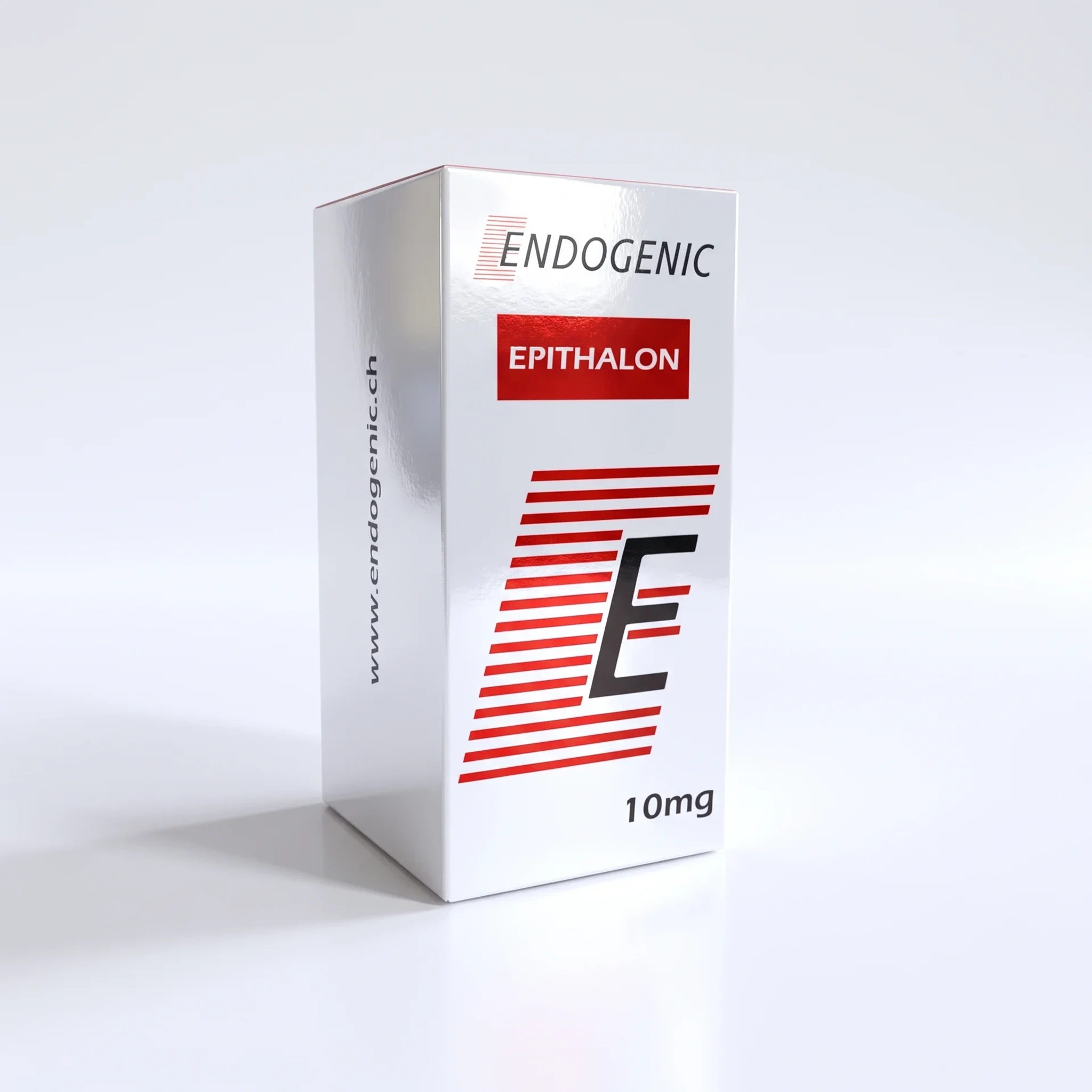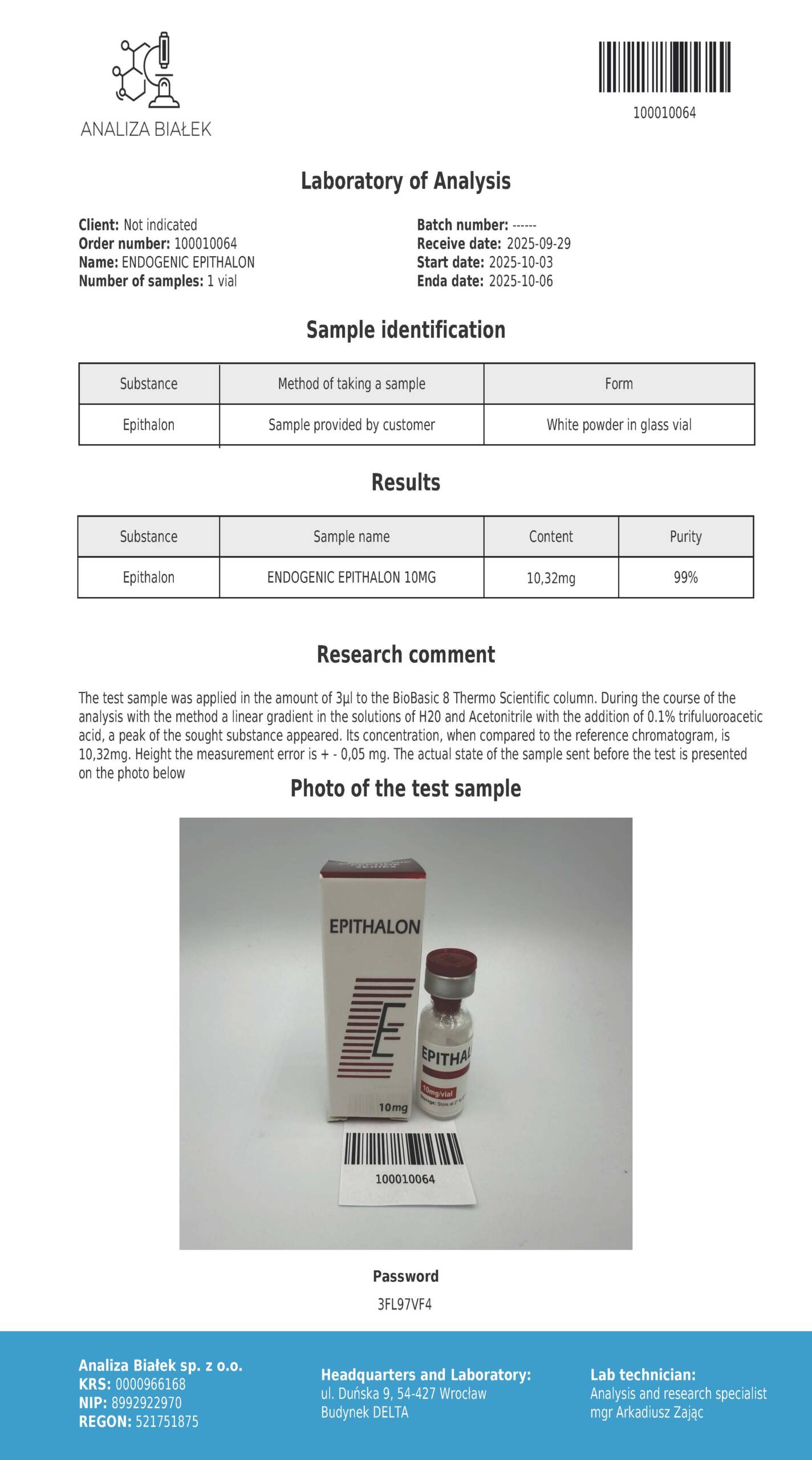
The sequence core is identical (TKPRPGP), but Adalank (N-Acetyl Selank Amidate) has two terminal modifications: acetylation of the α-amino group of the N-terminus and amidation of the α-carboxyl group of the C-terminus (Ac-TKPRPGP-NH₂). Both changes block the attack sites of amino- and carboxypeptidases — enzymes that degrade the free terminal groups of the peptide — which in research models extends the half-life from 7–15 minutes (Selank) to approximately ~30–60 minutes. The pharmacophore core remains the same, so the mechanistic profile is probably close to that of Selank, although it requires separate validation for the modified molecule.
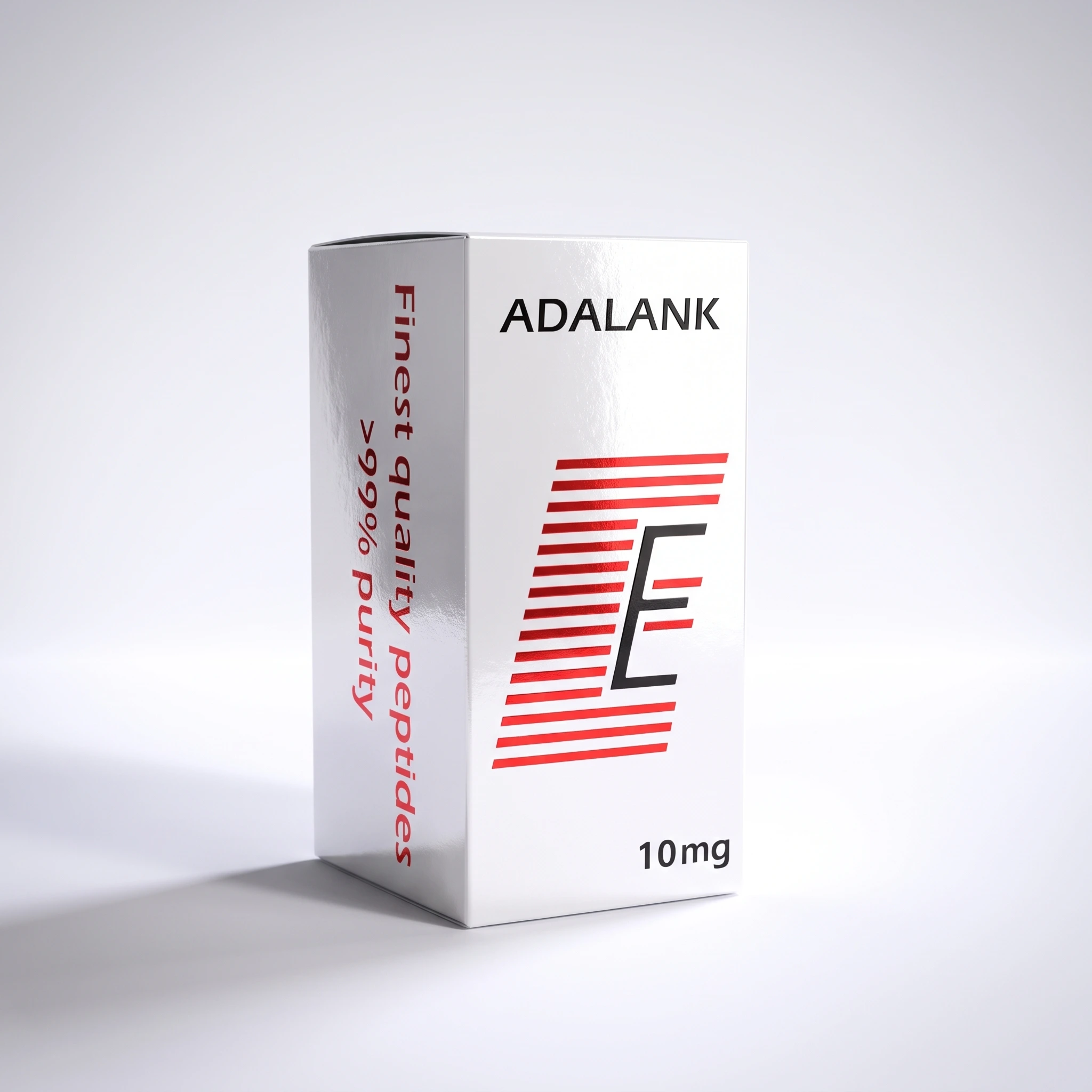
ADALANK 10mg
Adalank 10 mg is N-Acetyl Selank Amidate (Ac-TKPRPGP-NH₂) — an N-acetylated and C-amidated Selank derivative in the form of a lyophilized powder in a vial for reconstitution with bacteriostatic water. It is the same compound as the spray version, supplied as a vial of lyophilisate; the spray kit additionally contains water and an atomizer. The Selank family’s profile includes non-classical GABA-A modulation and BDNF modulation.
52,99 €
With code BLACK: 42,39 €
Lowest price in the 30 days before the discount:
52,99 €
Fast shipping
Free delivery from 350 €
Returns policy
Adalank 10 mg — N-Acetyl Selank Amidate in a vial (lyophilizate), research reagent (RUO)
- Adalank: N-Acetyl Selank Amidate.
- Vial of lyophilisate with a nominal content of 10 mg.
- Research Use Only reagent, not a medicinal product.
Adalank – Chemical reagent intended exclusively for laboratory research (Research Use Only). It is not a medicinal product, dietary supplement or foodstuff. It is not intended for use in humans or animals. Sold exclusively to registered research entities and laboratories.
Native Selank degrades in serum within a few hours — the half-life of the heptapeptide Thr-Lys-Pro-Arg-Pro-Gly-Pro in the bloodstream is counted in minutes, not hours. This is a well-known problem with regulatory peptides: the pharmacophore core is active, but the free terminal groups become a target for exopeptidases before the molecule reaches its site of action.
Adalank is the trade name under which Pro-Body supplies peptide chemistry’s answer to this limitation — N-Acetyl Selank Amidate, the same sequence core as Selank, but with two terminal modifications: N-terminal acetylation and C-terminal amidation (Ac-TKPRPGP-NH₂). Both changes block the attack sites of amino- and carboxypeptidases, which in research models translates into a longer half-life of the peptide in solution and tissue.
Adalank is supplied as a lyophilizate in a 10 mg vial — a powder form that the researcher reconstitutes themselves with bacteriostatic water to match the parameters of the planned experiment. It is the same compound as N-acetyl Selank nasal spray, supplied as lyophilisate in a vial. The spray kit additionally contains water and an atomizer.
Both formats require solution preparation according to the batch documentation and research protocol. The molecule belongs to the group of peptides for brain function — regulatory reagents studied for their nootropic-anxiolytic profile. The vial format is a standard starting point in preclinical protocols on regulatory peptides — it gives full control over the concentration and volume of the solution.
In terms of pharmacological profile, N-Acetyl Selank inherits the mechanisms of Selank: non-classical modulation of the GABA-A receptor through subunit expression, effect on BDNF content in the hippocampus, influence on monoaminergic transmission, tuftsin-like immunomodulatory activity, and inhibition of enkephalinases. Purity verified by HPLC ≥98%, identity confirmed by mass spectrometry, COA available for each batch.
REGULATORY STATUS
N-Acetyl Selank Amidate (Adalank) is not registered as a medicinal product in the EU or the USA. Native Selank is registered as a medicinal product in Russia, and not in the EU or the USA. The modified N-acetylated analog has no registration as a medicine in the EU, the USA or Russia (EMA, Drugs@FDA, GRLS). Communicating the product as an “over-the-counter anxiolytic”, “anti-stress preparation” or “anti-anxiety peptide” is contrary to the Research Use Only framework.
Selank, tuftsin and the Russian school of regulatory peptides
To understand Adalank, one has to go back to tuftsin. This is the natural tetrapeptide Thr-Lys-Pro-Arg — a fragment of the CH2 domain of immunoglobulin G, described in 1970 by Victor Najjar as a peptide that stimulates phagocytosis. Tuftsin was one of the first molecules on which the strategy of designing synthetic analogs of endogenous peptides was based: take an active fragment of a natural protein, stabilize it, and check what physiological functions it brings.
In the 1990s, the team of Nina Myasoedov at the Institute of Molecular Genetics of the Russian Academy of Sciences in Moscow added the C-terminal tripeptide Pro-Gly-Pro to tuftsin, creating the heptapeptide Selank. The addition of the proline tripeptide changed the profile of the molecule: in addition to tuftsin-like immunomodulatory activity, a distinct anxiolytic and nootropic profile emerged in behavioral models in rodents.
Selank entered clinical trials on anxiety disorders, and in 2009 it was registered in the Russian Federation as an anxiolytic in the form of a nasal solution. Selank, however, remains a peptide of limited proteolytic stability. Adalank — N-Acetyl Selank Amidate — is the next step in the same design strategy: a stabilized modification in which both ends of the peptide have been blocked (capping) to hinder enzymatic degradation. This is a standard method of regulatory peptide chemistry — extending stability without changing the core responsible for activity.
What is Adalank (N-Acetyl Selank Amidate)?
Adalank is a synthetic heptapeptide — an N-acetylated and C-amidated derivative of Selank.
- Trade name: Adalank (Pro-Body)
- Chemical name: N-Acetyl Selank Amidate, N-Acetyl Selank, NA-Selank Amidate
- Sequence: Ac-Thr-Lys-Pro-Arg-Pro-Gly-Pro-NH₂ (single-letter: Ac-TKPRPGP-NH₂)
- Modifications relative to Selank: acetylation of the α-amino group of the N-terminus (threonine) + amidation of the α-carboxyl group of the C-terminus (proline)
- Chemical class: modified regulatory heptapeptide; tuftsin derivative (the first four residues TKPR correspond to tuftsin)
- Supplied form: lyophilizate (powder) in a vial, 10 mg of peptide per vial, for reconstitution with bacteriostatic water; pharmaceutical grade ≥98% HPLC
Physicochemical characteristics table
| Parameter | Value | Note |
|---|---|---|
| Sequence | Ac-TKPRPGP-NH₂ | heptapeptide, Selank derivative |
| CAS number | no standard one | CAS being indexed for the modified form |
| Molecular formula | ~C₃₅H₆₀N₁₂O₉ | approximate for the acetylated-amidated form; MS confirmation in COA |
| Molar mass | ~790–795 g/mol | Selank core ~751.9 Da + acetyl (+42 Da) + amidation (−1 Da); exact value to be verified in the batch COA |
| Isoelectric point | strongly basic | presence of lysine and arginine; C-terminal amidation reduces negative charge |
| Form | white to off-white lyophilizate | lyophilized powder in a vial |
| Peptide content | 10 mg / vial | before reconstitution |
| Purity | ≥98% HPLC | UV detection, verification per batch |
| Solubility | good in water | reconstitution with bacteriostatic water |
SCIENTIFIC PERSPECTIVE
Some of the data cited for Adalank comes from the literature on native Selank (TKPRPGP), not on its N-acetylated analog. The terminal modifications change the pharmacokinetics (stability, distribution profile), and potentially also the affinity for molecular targets. Extrapolating the Selank profile onto N-Acetyl Selank Amidate is a working hypothesis, not a documented fact — it requires independent validation for the modified molecule. Moreover, most of the mechanistic work on the Selank family comes from Russian-language groups and was carried out in animal models and in vitro.
Mechanism of action at the molecular level
N-Acetyl Selank — as a derivative of Selank — probably acts through several parallel neurobiological pathways. The mechanisms below have been documented for native Selank in preclinical models; their transfer to the acetylated analog remains the subject of research. Pharmacological profile described for the Selank family in research models:
- Non-classical modulation of the GABA-A receptor — the best-described mechanism. Selank in rodent models does not bind to the receptor’s benzodiazepine site, but acts indirectly — among other things through the neuropeptide Y (NPY) system — and modulates the expression of GABA-A receptor subunits in the frontal cortex and hippocampus. This is a mechanism fundamentally different from benzodiazepines: benzodiazepines bind allosterically to the benzodiazepine site of an existing receptor, whereas Selank affects the very level of GABAergic signaling through modulation of expression and transmission. The consequence in models: enhancement of inhibitory signaling without the sedation, ataxia and tolerance typical of benzodiazepines
- Effect on BDNF in the hippocampus — in the only experimental paper with an available abstract, Selank prevented the chronic-ethanol-induced increase in BDNF content in the hippocampus and frontal cortex of rats (Kolik et al., 2019, PMID 31625062); the paper by Inozemtseva et al. (2008) on regulation of BDNF expression has no available abstract. There are no NGF data for Selank, and the direction and size of the effect on BDNF are not established
- Modulation of dopaminergic and serotonergic transmission — some work indicates an influence of Selank and tuftsin on the concentration of monoamines (dopamine, serotonin) and their metabolites in brain structures, which in rodent models correlates with an anxiolytic and nootropic profile (Semenova et al. 2008). The mechanism probably involves modulation of the release or degradation of monoamines
- Tuftsin-like immunomodulatory activity — as a tuftsin analog, Selank modulates macrophage function and the cytokine profile, including interferons (IFN-α/β) and interleukins (IL-6) (Uchakina et al. 2008). Antiviral activity was observed in some animal models. The effect is peripheral relative to the main anxiolytic profile, but interesting for hypotheses on disorders with an inflammatory component
- Inhibition of enkephalinases — Selank inhibits the activity of enzymes degrading enkephalins in serum and brain tissue, which raises the concentration of endogenous Met- and Leu-enkephalins in synapses and prolongs enkephalinergic signaling. The opioid activity of endogenous peptides probably contributes to the anxiolytic and mood-stabilizing effect
Applications in scientific research
Adalank in lyophilizate format finds application in research directions analogous to native Selank, with additional emphasis on characterizing the profile of the modified molecule:
- Models of experimental anxiety — classic behavioral tests in rodents (open field, elevated plus maze, light-dark box, Vogel conflict test); comparison of the effect size of the acetylated analog relative to native Selank and benzodiazepines
- Models of resistance to chronic stress — physical (immobilization, cold stress) and psychosocial (defeat model); assessment of the influence on the development of depressive behaviors and the HPA axis response
- Neuropsychiatric models — experimental models of PTSD and adjustment disorders; modulation of synaptic plasticity in the amygdala and hippocampus
- Expression of BDNF and GABA-A subunits — transcriptional and protein studies in the cortex and hippocampus; comparison of the modulation kinetics for the acetylated analog relative to native Selank
- Cognitive models — memory and learning tests (Morris water maze, passive avoidance), particularly under conditions of cognitive impairment caused by stress
- Pharmacokinetic characterization of the modification — comparative assessment of the proteolytic stability and distribution profile of the acetylated-amidated form relative to native Selank
- Immunomodulatory studies — assessment of tuftsin-like activity on macrophage function and the cytokine profile (IFN, IL-6) in in vitro and in vivo models
Summary
Adalank is the trade name of N-Acetyl Selank Amidate — an N-acetylated and C-amidated derivative of Selank (Ac-TKPRPGP-NH₂), supplied as a lyophilizate in a 10 mg vial for reconstitution with bacteriostatic water. It is the same compound as Selank spray, supplied as a vial of lyophilisate; the spray kit additionally contains water and an atomizer.
The terminal modifications block amino- and carboxypeptidases, extending the half-life from the minutes of native Selank to approximately ~30–60 minutes for the analog. The pharmacological profile inherited from Selank includes non-classical modulation of the GABA-A receptor (through NPY and subunit expression, not through the benzodiazepine site), effect on BDNF content in the hippocampus, influence on dopaminergic and serotonergic transmission, tuftsin-like immunomodulatory activity (IFN, IL-6), and inhibition of enkephalinases — all documented for native Selank in rodent models and in vitro, with the need for separate validation for the acetylated analog.
Regulatory status — exclusively Research Use Only. Adalank fits into the group of Semax and related nootropic reagents studied for their influence on cognitive functions and resistance to stress; both peptides are also available as a ready-made Selank + Semax set. The broader context of the classification and mechanisms of nootropic compounds is discussed in the review nootropic substances — what are they and when to use them.
Bibliography
- Inozemtseva LS, Karpenko EA, Dolotov OV, Levitskaya NG, Kamensky AA, Andreeva LA, Grivennikov IA (2008). Intranasal administration of the peptide Selank regulates BDNF expression in the rat hippocampus in vivo. PubMed
- Kolik LG, Nadorova AV, Antipova TA, Kruglov SV, Kudrin VS, Durnev AD (2019). Selank, Peptide Analogue of Tuftsin, Protects Against Ethanol-Induced Memory Impairment by Regulating of BDNF Content in the Hippocampus and Prefrontal Cortex in Rats. PubMed
- Uchakina ON, Uchakin PN, Miasoedov NF, Andreeva LA, Shcherbenko VE, Mezentseva MV, et al. (2008). Immunomodulatory effects of Selank in patients with anxiety-asthenic disorders. PubMed
- Zozulia AA, Neznamov GG, Siuniakov TS, Kost NV, Gabaeva MV, Sokolov OIu, et al. (2008). Efficacy and possible mechanisms of action of a new peptide anxiolytic Selank in the therapy of generalized anxiety disorders and neurasthenia. PubMed
- Semenova TP, Kozlovskaia MM, Zuĭkov AV, Kozlovskiĭ II, Zakharova NM, Andreeva LA (2008). Use of Selank to correct measures of integrative brain activity and biogenic amine levels. PubMed
- Kolomin T, Morozova M, Volkova A, Shadrina M, Andreeva L, Slominsky P, Limborska S, Myasoedov N (2014). The temporary dynamics of inflammation-related genes expression under tuftsin analog Selank action. PubMed
FAQ
Both formats require solution preparation before laboratory work. The vial contains lyophilisate, whereas the spray kit additionally contains water and an atomizer. Preparation parameters, working concentration and storage conditions must follow the specific batch documentation and research protocol. Peptide identity and terminal modifications must be confirmed in the COA; the trade name or packaging alone does not establish them.
The lyophilizate before reconstitution is the most stable form — the powder stored at −20°C retains stability for months, because the absence of water slows hydrolysis and degradation processes. After reconstitution with bacteriostatic water, the peptide in the aqueous phase is less stable; store the working solution in a refrigerator at 2–8°C and use it within a window of typically a few weeks (the preservative system of bacteriostatic water limits microbial growth). The solution should not be repeatedly frozen and thawed — each cycle promotes peptide aggregation.
Native Selank has clinical trials and registration as a medicinal product behind it — in the Russian Federation, where it was approved as an anxiolytic in the form of a nasal solution in 2009. These trials, however, concerned native Selank, not the modified N-acetylated analog. Adalank, as a separate, stabilized modification, has not undergone an independent registration pathway in the EU, the USA or Russia — it remains a Research Use Only research reagent. This is one of the reasons why Selank data is not fully transferable to Adalank.
Yes. The List does not name Adalank, but as a compound with no marketing authorisation in any country it falls under class S0 (non-approved substances) and is prohibited at all times, in and out of competition. Selank’s registration in Russia does not extend to its modified derivatives. Registered athletes (ADAMS) must check the current list of prohibited substances before any decision — the status of the compound may change in subsequent updates.
Benzodiazepines bind allosterically to a specific benzodiazepine site on the existing GABA-A receptor and directly enhance its response — hence their sedation, ataxia and the development of tolerance. Selank acts differently: it does not occupy the benzodiazepine site, but influences GABAergic signaling indirectly — among other things through the neuropeptide Y (NPY) system — and modulates the expression of receptor subunits. In rodent models this translates into enhancement of inhibitory signaling without the typical sedative profile of benzodiazepines. This is a mechanism described for native Selank; for the acetylated analog it requires separate confirmation.
0.0
0 reviews
This product has no reviews yet.
Related products
SEMA G 8mg PEN
SEMA G 8mg PEN
166,99 €