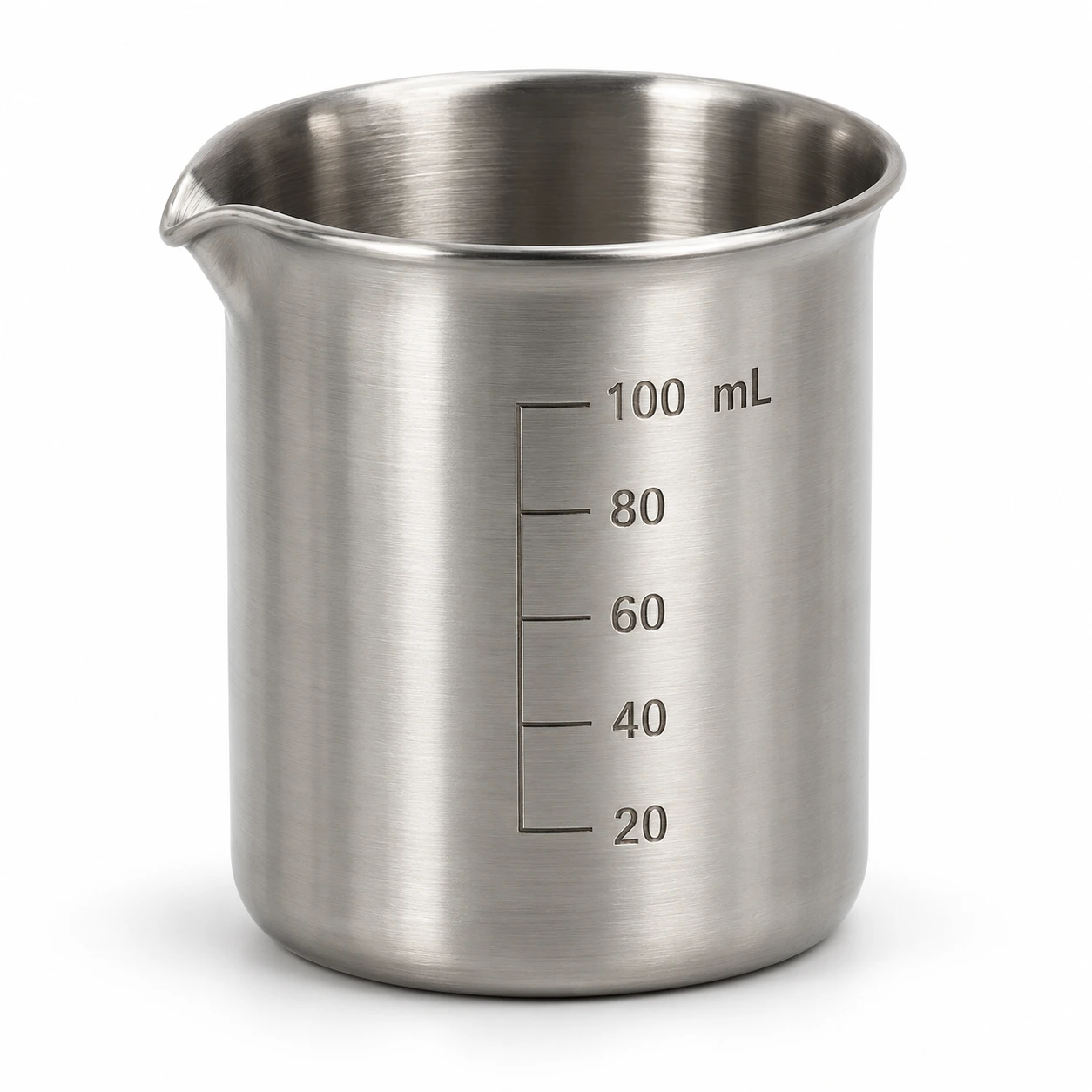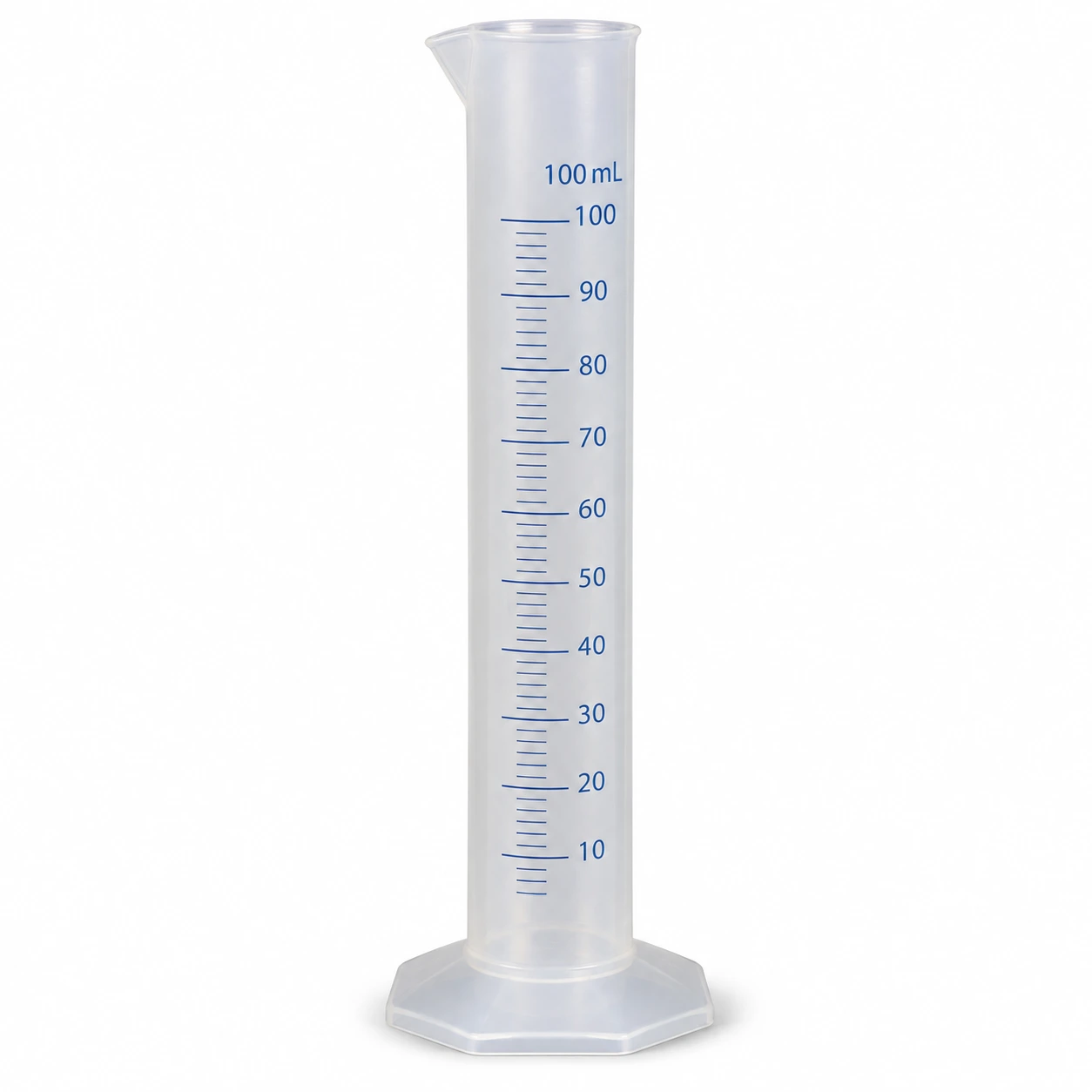
Polypropylene measuring cylinder with an embossed scale, 100 ml
A polypropylene measuring cylinder of 100 ml, with the scale embossed in the wall, serves for measuring out volumes quickly in laboratory work.
Polypropylene measuring cylinder with an embossed scale, 100 ml
A polypropylene measuring cylinder of 100 ml, with the scale embossed in the wall, serves for measuring out volumes quickly in laboratory work. An embossed graduation does not come off under solvent or after a cycle in the autoclave, because it is not printed. A general-purpose laboratory product from the Laboratory accessories category.
What it is for
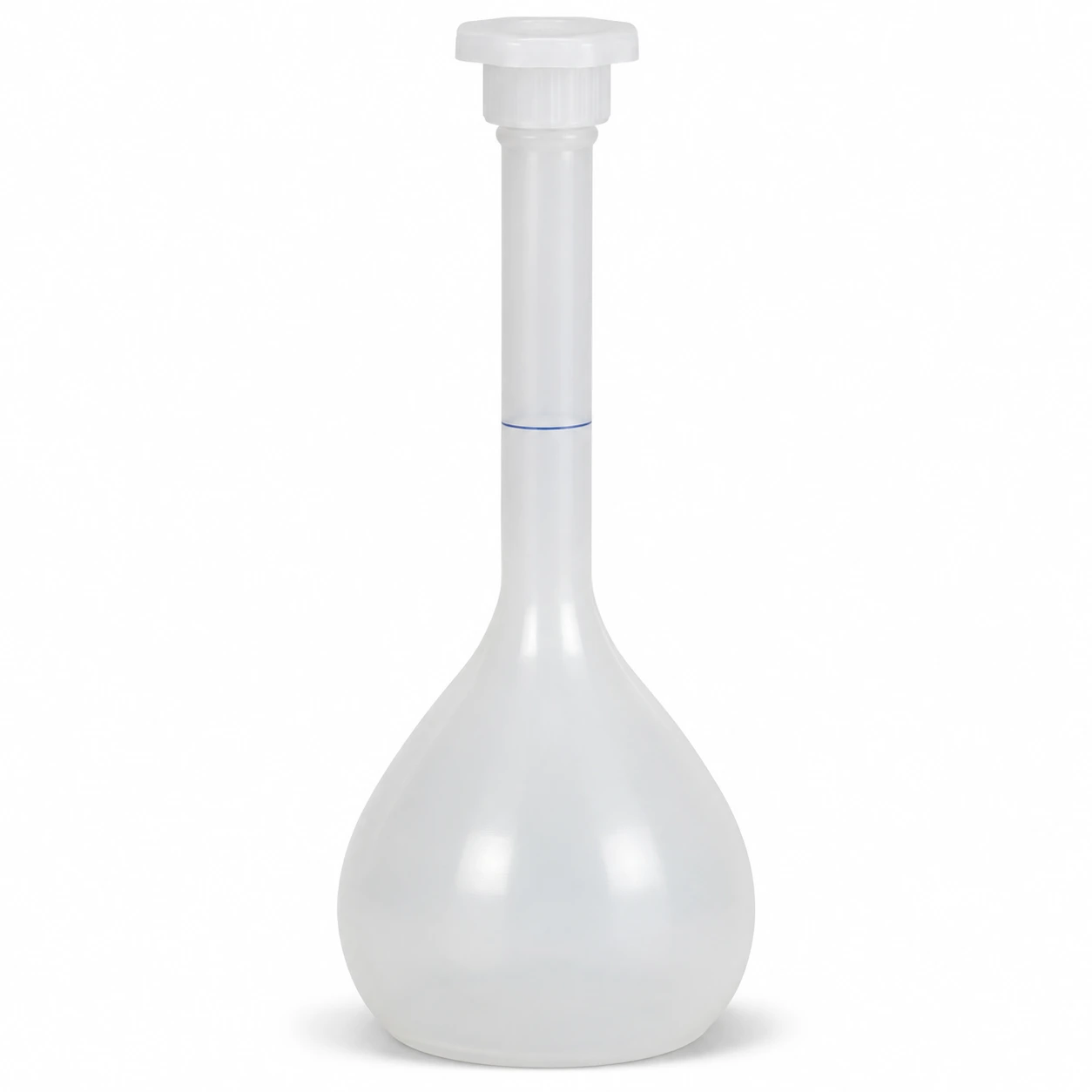
A cylinder measures out volumes in the tens of millilitres: solvent for a dilution, water for a working solution, a portion to be poured out. The reading is taken at the bottom edge of the meniscus, with the eye level with the graduation. Unlike a volumetric flask, which has a single mark and higher accuracy, a cylinder reads across its whole height and suits work where the pace matters more than the third significant figure.
What to watch for in use
Polypropylene is translucent rather than clear like glass, so the meniscus is read more carefully and in good light. The material tolerates acids and alkalis as well as a fall from bench height, yet glass does better with strong oxidisers and with some organic solvents. Autoclaving is possible, and the permissible temperature and number of cycles are stated by the manufacturer of the item. After work with salt solutions, rinse the cylinder with demineralised water so that deposits do not cover the graduation.
Parameters
- Name and variant: measuring cylinder with an embossed scale
- Capacity: 100 ml
- Material: polypropylene (PP)
Frequently asked questions (FAQ)
What does an embossed scale give?
A durable reading. The graduation is formed in the wall, so it does not rub off in washing, does not dissolve in solvents and comes through an autoclave cycle unchanged.
How does a cylinder differ from a volumetric flask?
By the number of reference points. A cylinder has a graduation across its whole height and serves for measuring out quickly, while a flask has one calibration mark and serves to prepare a solution of defined concentration.
Is polypropylene suitable for organic solvents?
Not for all of them. Acids and alkalis are no problem, while glass is the safer bet for strong oxidisers and for some organic solvents; compatibility with a particular reagent is checked in the manufacturer’s data sheet.
0.0
0 reviews
This product has no reviews yet.
Black Week
Black Week deals before everyone else
Sign up for the newsletter and get access to the Black Week promotion before other customers.
By signing up you agree to receive the Pro-Body newsletter with news and promotions. You can unsubscribe at any time with one click in the e-mail. Privacy policy
Related products