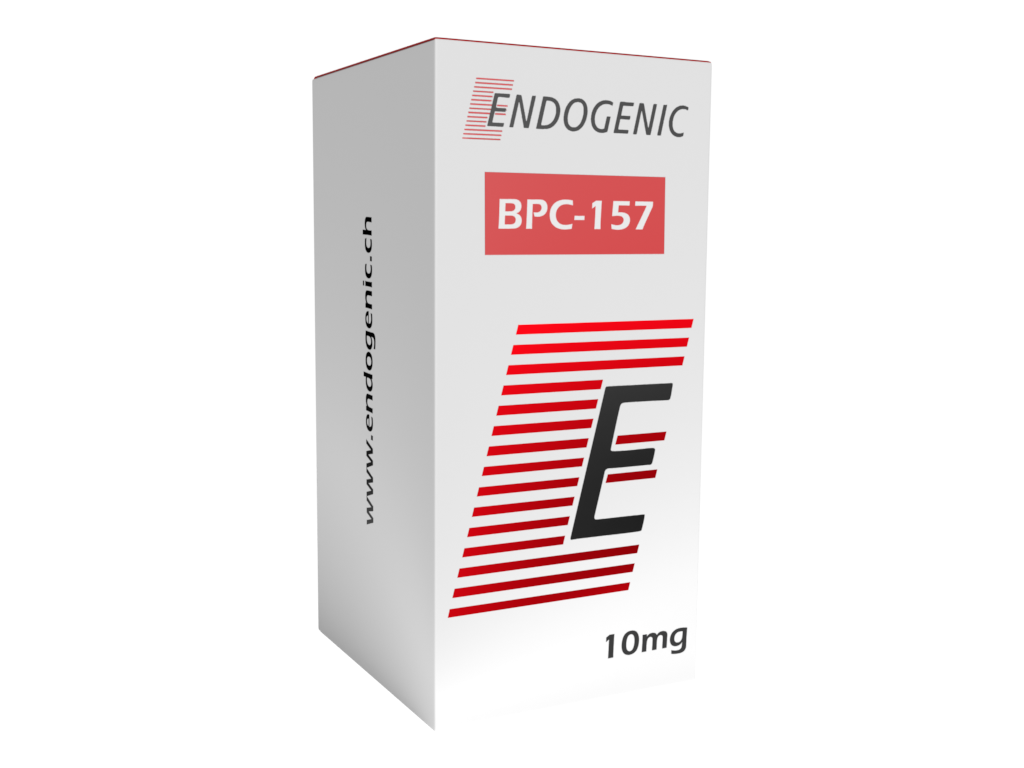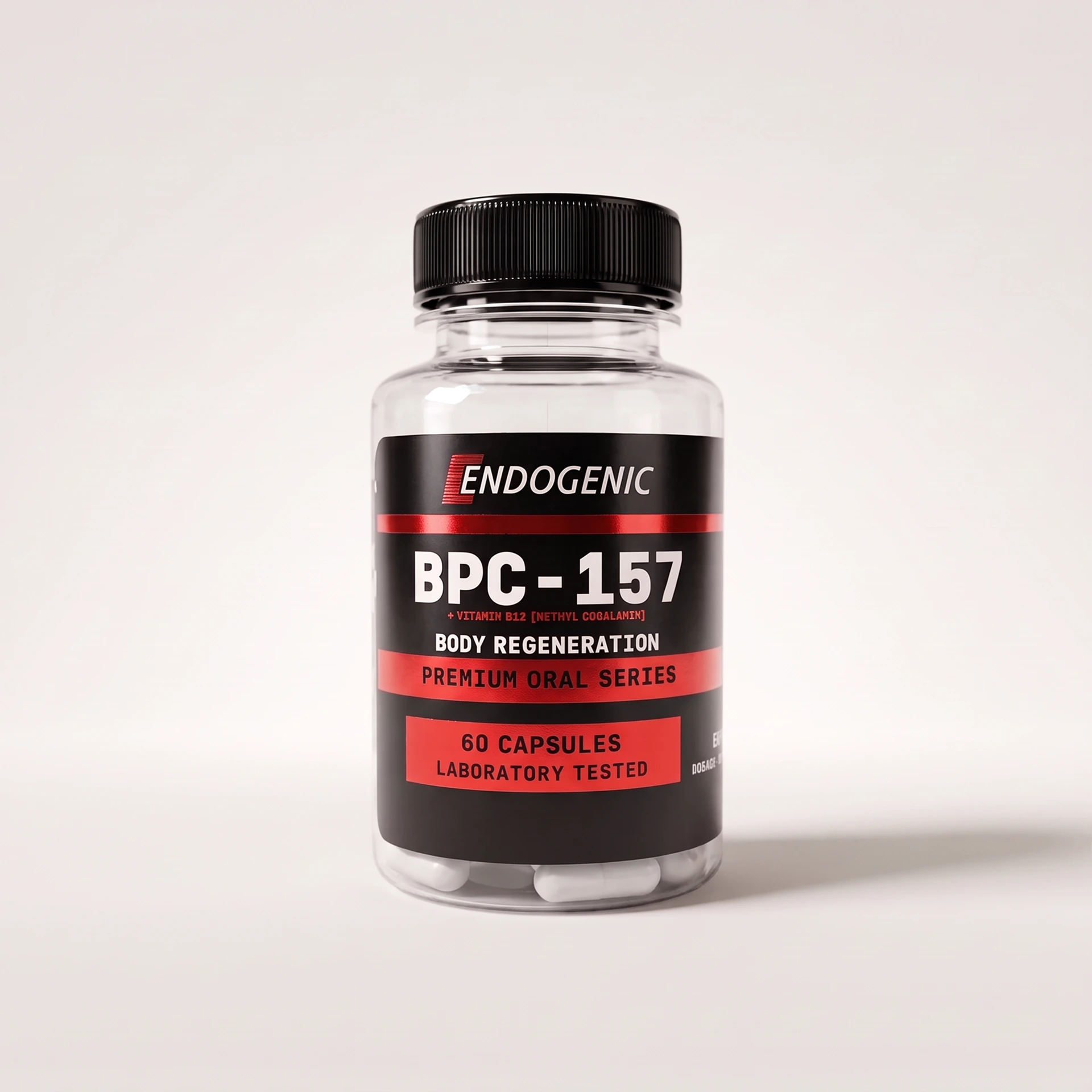
The form and way of working with the reagent. Capsules contain ready-made blend of two peptide salts (100 µg ARG + 100 µg HCl per capsule) with a standardized dose, intended for oral exposure models – without a reconstitution step. The lyophilisate vial contains a dry powder for self-dissolution, which gives the researcher the freedom to select the working concentration for a specific experimental system. The capsule organizes the repeatable sample and simplifies work with a large number of samples; vial wins with molarity flexibility. Compare forms: ARG-BPC-157 5mg in a vial.
BPC-157 60 caps
ARG BPC-157 in capsules (60 capsules, Endogenic line) — regenerative pentadecapeptide (Body Protection Compound) in oral form, for laboratory tests. Each capsule contains a blend of two salts: 100 µg ARG-BPC-157 (arginine salt) + 100 µg BPC-157 HCl (~200 µg peptide). RUO reagent
64,99 €
With code BLACK: 51,99 €
Lowest price in the 30 days before the discount:
64,99 €
Product unavailable
Notify me when it is back
Leave your e-mail and we will send you one message when the product is available again.
ARG BPC-157 in capsules - RUO research reagent
- BPC-157: a blend of the arginine and hydrochloride salts of a pentadecapeptide.
- 100 µg ARG-BPC-157 + 100 µg BPC-157 HCl per capsule; 60 capsules.
- Research Use Only reagent, not a medicinal product.
Product status information
Chemical reagent intended exclusively for laboratory tests (Research Use Only). It is not a medicinal product, dietary supplement or food. It is not intended for use on humans or animals. Sales only to registered research units and laboratories.
Regulatory framework – WADA S0 status
BPC-157 has been listed from 2022 on the WADA prohibited list – category S0 (unapproved substances). The S0 category includes pharmacological compounds that have not been approved by any regulatory agency for use in humans (no registration as a drug) and yet are used in the context of supportive care. BPC-157 never went through the full registration path – phase II of clinical development (PL 14736, Diagen) was abandoned in 2014.
In the Pro-Body catalog, ARG BPC-157 in capsules is available only as RUO research reagent, not as an adjunct. Registered athletes (ADAMS) must check the current list of prohibited substances before making any decision.
ARG BPC-157 in capsules from the Endogenic line is the same gastric pentadecapeptide that Predrag Sikiric’s team isolated in Zagreb in 1991 as a fragment of a larger protective protein of the gastric mucosa (Body Protection Compound). It differs from a lyophilized vial by one format decision: instead of a dry powder for reconstitution, the researcher receives a ready-made oral capsule in which the peptide is present in a blend of two forms – arginine salt (ARG-BPC-157) and hydrochloride (BPC-157 HCl).
This format is designed for oral exposure models, in which a uniform peptide weight in the capsule simplifies work with a large number of samples. The molecule itself remains a paradox embedded in the sequence: a peptide isolated from the most chemically aggressive environment of the body – highly acidic gastric juice – is described in the literature as exceptionally resistant to digestion, which breaks down most peptides within minutes.
BPC-157 remains one of the most studied peptides for regeneration in the preclinical literature on connective tissue repair and gastrointestinal protection – with dozens of publications by Sikiricia’s team and independent groups. Thirty years later, it is still not approved as a drug in any jurisdiction, and its clinical development is stuck in Phase II.
This paradox is typical for the entire class of regenerative peptides: strong signal from animal models, lack of closure in phase III clinical trials in humans. This is why ARG BPC-157 is marketed as Research Use Only reagent — a molecular tool for laboratory work, not a medicinal form. This format is provided as 60 capsules, each containing a blend of 100 µg ARG-BPC-157 (arginine salt) and 100 µg BPC-157 HCl – a total of approximately 200 µg of peptide per capsule. Purity verified by HPLC ≥98%, identity and salt identity confirmed by Q-TOF mass spectrometry, COA available for each batch.
BPC-157 as a fragment of gastric protein
BPC-157 (Body Protection Compound 157, PL 14736) is stable gastric pentadecapeptide with a sequence of fifteen amino acids. Unlike many research peptides, it does not come from de novo design – it is a fragment of a naturally occurring protective protein of human gastric juice. This feature explains one of its most frequently reported properties: proteolytic stability described in the literature, i.e. resistance to digestion in the gastrointestinal environment, where most peptides are quickly degraded.
In the preclinical literature, BPC-157 is described primarily in context connective tissue reparation — models of Achilles tendon rupture and cutting, ligament and muscle damage — and protection of the digestive tract (models of stomach ulcers, colitis). Secondary research areas include the brain-gut axis, nitric oxide (NO) modulation, and angiogenesis, or the formation of new blood vessels.
In the oral form, the gastrointestinal axis is particularly important in the literature – it is historically the first and closest area of research to the origin of the molecule. In the Pro-Body catalog ARG BPC-157 in capsules belongs to Pillar I – regenerative peptides and enters the segment peptides in capsules. The oral capsule format is technical: a standardized peptide weight in each unit simplifies standardization in oral exposure protocols in rodent models and streamlines the work with large numbers of samples.
This is how the capsule differs from the lyophilisate vial – the vial has the freedom to select the working concentration during reconstitution, while the capsule organizes a unified dose for chronic oral models. A blend of two salts (ARG + HCl) is an approach to the solubility and physicochemical characteristics of the peptide in the gastrointestinal environment.
What is ARG BPC-157 in capsules - a blend of arginine salt and HCl
ARG BPC-157 in capsules is blend of two salt forms the same pentadecapeptide. The core peptide sequence remains identical in both forms – Gly-Glu-Pro-Pro-Pro-Gly-Lys-Pro-Ala-Asp-Asp-Ala-Gly-Leu-Val (single letter notation: GEPPPGKPADDAGLV), core sum formula C₆₂H₉₈N₁₆O₂₂, molar mass of free peptide 1419.53 g/mol, number CAS 137525-51-0. However, the form of salt and the resulting physicochemical parameters change. ARG-BPC-157 is an arginine salt – a variant in which arginine is added to the molecule.
According to the manufacturer, the arginine form is intended to improve the solubility and characteristics of the peptide solution. BPC-157 HCl is a hydrochloride salt with hydrochloric acid, a classic form that improves the solubility of many peptides in an aqueous environment. The combination of both in one capsule (100 µg of each form, a total of ~200 µg of peptide) is the Endogenic line’s proprietary approach to characterizing peptide solubility in the gastrointestinal tract.
The three proline residues in positions 3–5 (PPP motif) have a structural function – they stiffen the chain and impede access by proteolytic enzymes. This is a molecular explanation for the peptide stability observed in the literature in the gastrointestinal environment, where free peptides degrade within minutes. Unlike acylated peptides (like semaglutide), BPC-157 does not have an attached fatty acid chain – its reported stability is due to the sequence itself, not to post-translational modification.
He isolated the molecule Predrag Sikiric’s team in Zagreb in 1991. Clinical development was conducted by Diagen under the designation PL 14736; Phase II was abandoned in 2014 and the peptide was never registered as a drug. Since then, BPC-157 has functioned solely as a research reagent.
Chemical characteristics – capsule composition
| Parameter | Value |
|---|---|
| Name | ARG BPC-157 in capsules (Body Protection Compound 157), PL 14736 |
| Line | Endogenic |
| Class | Gastric pentadecapeptide (protective protein fragment) |
| Root sequence (1-letter) | GEPPPGKPADDAGLV |
| Root sequence (3-letter) | Gly-Glu-Pro-Pro-Pro-Gly-Lys-Pro-Ala-Asp-Asp-Ala-Gly-Leu-Val |
| Number of amino acids | 15 |
| Core sum formula | C₆₂H₉₈N₁₆O₂₂ |
| Molar mass (free peptide) | 1419.53 g/mol |
| CAS number | 137525-51-0 |
| Salt molds in a blender | ARG-BPC-157 (arginine salt) + BPC-157 HCl (hydrochloride) |
| Peptide content/capsule | 100 µg ARG-BPC-157 + 100 µg BPC-157 HCl (~200 µg total) |
| Number of capsules | 60 |
| Physical form | Hard capsule (blend of peptide powder with filler) |
| HPLC purity | ≥98% |
| Confirmation of identity and salt | Q-TOF mass spectrometry |
Mechanism of action at the molecular level
In the preclinical literature, BPC-157 is described as a multidirectional compound – the literature indicates six complementary axes of molecular activity. Below, each of them with the name of the route and the practical ratio observed in the research models. In the oral form, the gastrointestinal axis and the brain-intestinal axis are particularly important – these are the areas closest to the origin of the molecule and the route of administration.
VEGF/VEGFR2 modulation – angiogenesis
The best documented axis. VEGF (vascular endothelial growth factor) and its receptor VEGFR2 are the central pathway of angiogenesis – the formation of new blood vessels. In rat Achilles tendon rupture models (Chang et al. 2011), BPC-157 increased VEGFR2 expression in tendon cells and increased neovascularization in the area of injury. In experimental practice, better vascularization of the regenerating connective tissue resulted in faster repair in an animal model.
Angiogenesis is a bottleneck here – the tendon is a poorly vascularized tissue, and without a blood supply, repair progresses slowly. This makes BPC-157 a common reference point in research peptides for injuries soft tissues.
FAK-paxillin pathway – fibroblast migration
FAK (focal adhesion kinase) and paxillin regulate cell adhesion and migration. Chang et al. (2011) showed that BPC-157 activates the FAK-paxillin cascade in tendon fibroblasts, increasing their migration towards the wound. Fibroblasts are repair cells of connective tissue – they produce collagen and rebuild the matrix. Faster migration means faster settlement of the damaged area.
Protection of the gastrointestinal mucosa – gastrointestinal axis
This is historically the first area of research on the molecule, consistent with its gastric origin and particularly important in the oral form. In models of ethanol- or NSAID-induced gastric ulcers and in models of colitis (Sikiric et al. 1993; Hsieh et al. 2017), BPC-157 has been associated with protection of mucosal integrity and accelerated repair of the gastrointestinal epithelium. The literature links this effect, among others: with modulation of angiogenic pathways and improvement of microcirculation in the gastrointestinal tract wall.
Modulation of the brain-gut axis and the NO pathway
Sikiric et al. (2016) described BPC-157 in the context of the gut-brain axis – a bidirectional connection between the digestive tract and the central nervous system, in which the nitric oxide (NO) pathway plays an important role. Nitric oxide dilates blood vessels and improves microcirculation. This is a complementary axis to VEGF: VEGF builds new vessels, NO regulates the flow in existing ones. The brain-gut axis is a particularly interesting context for oral exposure models, where the first place of peptide contact is the gastrointestinal tract.
Effect on tendons and fibroblasts – cytoprotection
In addition to the FAK-paxillin cascade, the literature describes a broader cytoprotective profile of the molecule within connective tissues – protection of tendon cells and fibroblasts and support for the organization of the collagen matrix in reparation models (Hsieh et al. 2017). Cytoprotection here means the reduction of cell damage in the area of injury, observed in the models.
Proteolytic stability
The sixth axis concerns the molecule itself: BPC-157 has been shown in the literature to be resistant to digestion in the gastrointestinal environment. The three-proline motif stiffens the chain and limits the access of proteases. This is the same feature that explains the gastric origin of the molecule in the introduction – and the literature context relevant when considering the oral form.
This is a description of the molecule profile in the literature, not a claim of oral bioavailability of this product. Reference data mainly comes from the work of Sikiric’s team (e.g. Sikiric et al. 2016, 2018) and groups working on tendon repair (Chang et al. 2011; Hsieh et al. 2017).
Important distinction - capsules, salts and units
Capsules (ARG + HCl blend) vs. lyophilisate vial. This product is oral capsules containing a ready-made blend of two peptide salts – without a reconstitution step. This is a different format than ARG-BPC-157 5mg in a vial, where the peptide is delivered as a dry powder for self-dissolution. The capsule organizes a standardized dose for oral models; the vial gives you the freedom to choose the working concentration for reconstitution. These are two different tools for two different types of protocols.
Salts: ARG (arginine) vs HCl (hydrochloride) vs acetate. BPC-157 is commercially available in several salt forms. Arginine salt (ARG) contains added arginine; hydrochloride (HCl) is a salt with hydrochloric acid; acetate is a salt with acetic acid – common with synthetic peptides. The core sequence (GEPPPGKPADDAGLV) is identical in all of them, but the salt form changes solubility, salt mass and some physicochemical parameters. This product is blend ARG + HCl — not an acetate and not a single salt.
Peptide amount (µg) vs capsule weight (mg of filler). The declaration “100 µg ARG + 100 µg HCl” refers to pure peptide content in each capsule, not to the total weight of the capsule. The mass of the capsule (in the order of milligrams) includes the filler, which is a carrier of a microgram dose of the peptide. These two quantities should not be confused: ~200 µg of peptide fits into a capsule weighing in milligrams.
COA as a binding identity document. It remains a binding signal of the party’s identity sequence and mass confirmed by mass spectrometry in COA, along with determining the salt form and peptide content per capsule. The trade name, color of the capsule or description on the packaging does not replace the certificate of analysis. Any discrepancy in party identity is resolved by the COA, not the label.
Applications in scientific research
ARG BPC-157 in capsules as an RUO reagent is used in several research directions. The capsule format is especially useful where the researcher needs a standardized dose of the peptide oral exposure models and standardizing large numbers of samples without having to weigh microgram amounts of powder.
Gastrointestinal tract – models of ulcers and colitis. Gastric ulcer models induced by ethanol or NSAIDs, models of colitis (acetic acid, TNBS). Endpoints: ulcer area, inflammatory index, mucosal integrity, angiogenesis markers. This is historically the first area of research on the molecule, consistent with its gastric origin – and a natural context for an oral form, where the first point of contact of the peptide is the gastrointestinal tract. In oral intestinal blends, BPC-157 is sometimes combined with an anti-inflammatory tripeptide – an example is the capsule stack ARG-BPC-157 + KPV.
The brain-gut axis and neuroactivity. Rodent behavioral models combined with analysis of the gastrointestinal axis, studies of the NO pathway and bidirectional gut-brain communication (Sikiric et al. 2016). The oral form is a particularly coherent system here – the route of administration coincides with the first link of the brain-gut axis.
Tendon, ligament and muscle repair. Models of rupture and cutting of the Achilles tendon, patellar ligament injuries, and skeletal muscle injuries. Endpoints: mechanical breaking strength, histology (collagen density, fiber organization), markers of angiogenesis (VEGF, VEGFR2) and migration (FAK, paxillin). BPC-157 functions as a reference pro-angiogenic compound in comparative work on connective tissue reparation.
Studies on the oral bioavailability of peptides. The capsule format with a blend of two salts is a tool for research on the oral route itself – comparison of the stability of salt forms in the gastrointestinal environment and the characteristics of peptide absorption in in vivo models.
Summary
ARG BPC-157 in capsules is a stable gastric pentadecapeptide (GEPPPGKPADDAGLV, 1419.53 g/mol) isolated in Zagreb in 1991 as a fragment of the protective protein of gastric juice, supplied in the form of 60 oral capsules. Each capsule contains a blend of two salt forms – 100 µg of ARG-BPC-157 (arginine salt) and 100 µg of BPC-157 HCl (hydrochloride), a total of approximately 200 µg of peptide.
Six axes of molecular activity of the peptide have been described in the preclinical literature – with the best documented modulation of the VEGF/VEGFR2 pathway (angiogenesis) and the FAK-paxillin cascade (fibroblast migration) in tendon repair models, and the protection of the mucosa and the brain-gut axis important in the oral form. The capsule format organizes a unified dose of the peptide for oral exposure models, and the two-salt blend is the Endogenic line’s proprietary approach to peptide solubility in the gastrointestinal tract.
The oral bioavailability of peptides remains an open scientific area – the gastric stability of BPC-157 reported in the literature is a context of the molecule profile, not a proven claim of absorption in humans. The regulatory profile remains clear: BPC-157 is not registered as a drug (phase II abandoned in 2014), and as of 2022 it is on the WADA list in category S0.
Pro-Body is listed in the Pro-Body catalog as a Research Use Only reagent – with HPLC purity ≥98%, MS Q-TOF confirmation and COA for each batch. The broader context of peptide regeneration is discussed in the review BPC-157 and TB-500 for regeneration, and the profile of the oral form of this peptide itself – entry o BPC-157 capsules.
Related forms of the same peptide in the catalog are the intranasal variant ARG-BPC-157 spray, lyophilisate vial BPC-157 10mg and savings set of 3x BPC-157 in capsules.
Bibliography
- Sikiric P, Rucman R, Turkovic B, Sever M, Klicek R, et al. (2018). Novel Cytoprotective Mediator, Stable Gastric Pentadecapeptide BPC 157. Vascular Recruitment and Gastrointestinal Tract Healing. PubMed
- Chang C. H., Tsai W. C., Lin M. S., Hsu Y. H., Pang J. H. S. (2011). The promoting effect of pentadecapeptide BPC 157 on tendon healing involves tendon outgrowth, cell survival, and cell migration. PubMed
- Hsieh MJ, Liu HT, Wang CN, Huang HY, Lin Y, et al. (2017). Therapeutic potential of pro-angiogenic BPC157 is associated with VEGFR2 activation and up-regulation. PubMed
- Sikiric P, Seiwerth S, Rucman R, Kolenc D, Vuletic LB, et al. (2016). Brain-gut Axis and Pentadecapeptide BPC 157: Theoretical and Practical Implications. PubMed
- Vukojević J, Siroglavić M, Kašnik K, Kralj T, Stanćić D, et al. (2018). Rat inferior caval vein (ICV) ligature and particular new insights with the stable gastric pentadecapeptide BPC 157. PubMed
FAQ
Arginine salt (ARG-BPC-157) and hydrochloride (BPC-157 HCl) differ in solubility characteristics. The combination of both in one capsule is the Endogenic line’s proprietary approach to the physicochemical profile of the peptide in the digestive tract environment – according to the manufacturer, the arginine form is intended to improve the solubility of the solution. The core peptide sequence (GEPPPGKPADDAGLV) is identical in both forms; only the form of the salt and the resulting parameters change. This is a formulation assumption regarding solubility, an unproven claim of absorption.
The gastrointestinal tract degrades most peptides into amino acids before they enter the bloodstream – the acidic pH of the stomach and pancreatic-intestinal proteases are the main barriers. BPC-157 is unusual because, as a fragment of the protective protein of gastric juice, it is described in the literature in terms of stability in the gastric environment (the motif of three prolines stiffens the chain).
This is literature context regarding the molecule’s profile, not a declaration of specific bioavailability in humans – the full oral pharmacokinetics of BPC-157 in humans have not been characterized. The capsule form is a tool for research on the oral route of exposure, not a product with proven absorption.
The gastrointestinal axis is historically the first and closest area of research to the molecule’s origin – in gastric ulcer and colitis models, BPC-157 has been associated with protection of mucosal integrity and epithelial repair. The gut-brain axis is a bidirectional communication between the digestive tract and the central nervous system, in which the nitric oxide (NO) pathway plays an important role; Sikiric et al. (2016) described BPC-157 in this context.
In the oral form, both axes are particularly consistent because the route of administration coincides with the first site of peptide contact. These are observations from preclinical models, not an effect confirmed in humans.
As of 2022, BPC-157 is on the WADA prohibited list in the category S0 – unapproved substances. S0 includes pharmacological compounds that have not been approved by any regulatory agency for use in humans (no drug registration) and yet are used in the context of supportive care. BPC-157 meets this criterion: clinical development stalled in Phase II and never achieved approval. The ban applies permanently (in- and out-of-competition). The capsule form does not change this status. Registered Athletes (ADAMS) must check the current list before making any decision.
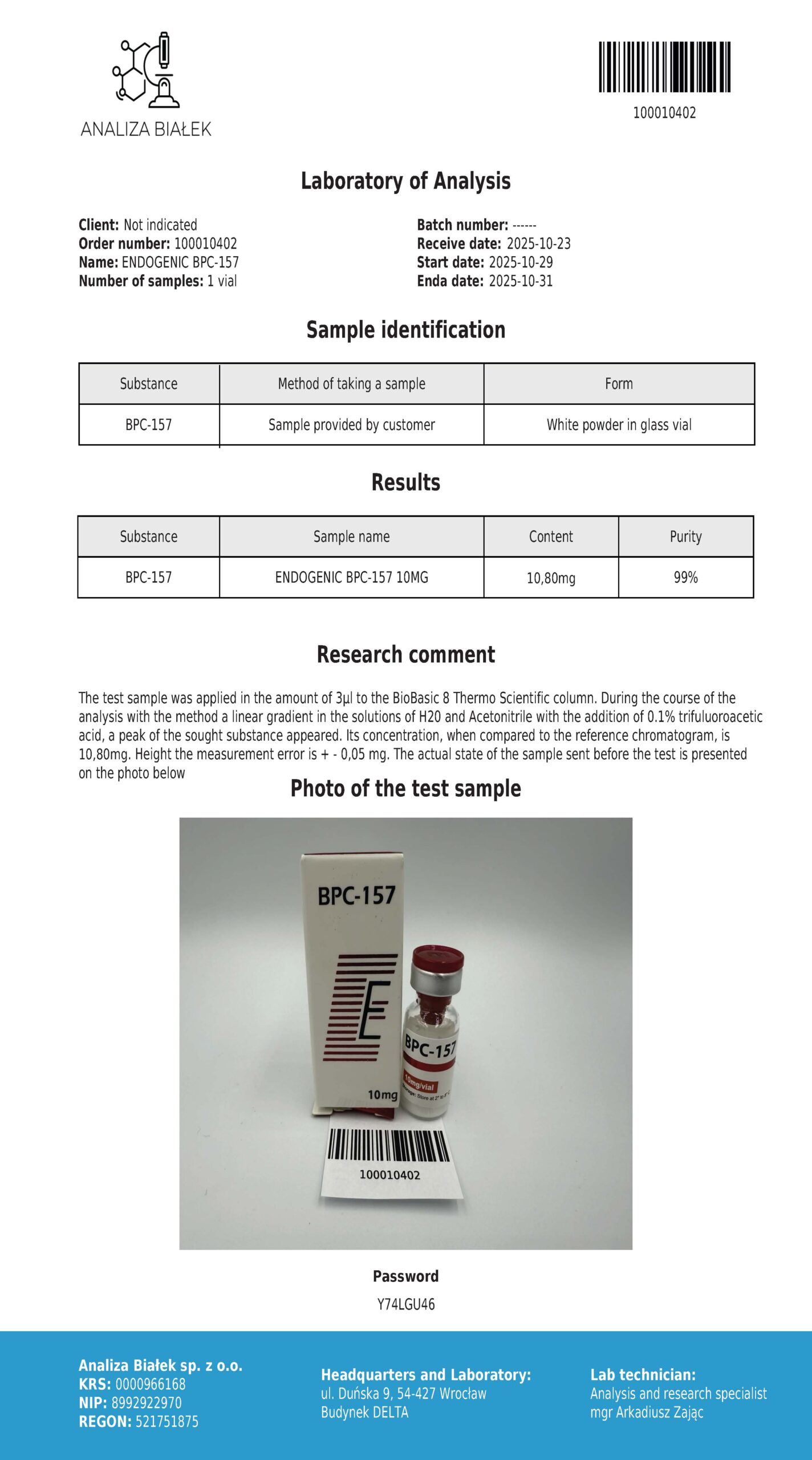
COA (certificate of analysis) confirms the identity of the batch with the sequence and mass of the peptide in mass spectrometry and the salt affiliation of both forms (ARG and HCl). It also records the declared peptide content per capsule (100 µg ARG + 100 µg HCl, ~200 µg total) and uniformity between capsules. This microgram weight of the peptide should be distinguished from the total weight of the capsule (in the order of milligrams), which consists of the filler that carries the peptide.
The binding document of identification is the COA, not the label or trade name – any discrepancies will be resolved by the batch certificate of analysis.
5.0
2 reviews
-
Bartoo
 Polski
Świetny wariant BPC 157 w kapsułkach
Zamówiłem BPC157 w kapsułkach z myśleniem o wygodnej suplementacji i produkt w 100% zrobił swoją robotę. Etykieta bardzo czytelna, wysoki standard wykonania i brak zbędnych wypełniaczy. W moim przypadku ten zakup naprawdę bardzo pomógł i przyniósł oczekiwane rezultaty. Wysyłka do paczkomatu zrealizowana w mniej niż 24h.
-
Sajmon
Polski
Product review
Super!
Customers also bought