
DNP is a classic 1930s mitochondrial proton uncoupler that uncouples both the mitochondrial membrane and plasma membrane potential—resulting in uncontrolled systemic toxicity, severe hyperthermia, and multi-organ failure. DNP is banned for consumption in the EU, US and most jurisdictions following the reported deaths. BAM-15 represents a new generation of selective uncouplers – it acts only on the inner mitochondrial membrane, does not depolarize the plasma membrane, and in animal models did not cause hyperthermia in the range of effectively decoupling doses.


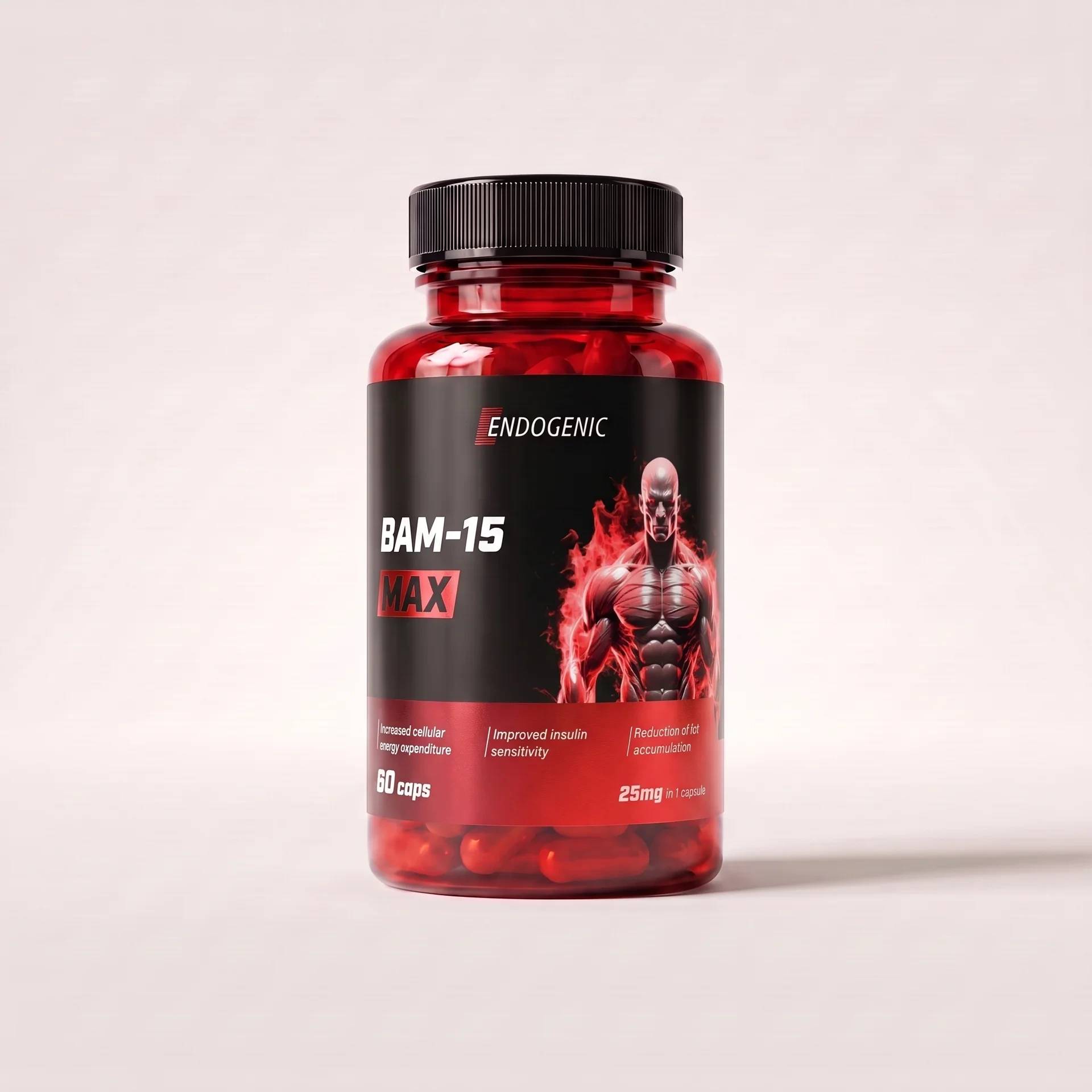
BAM-15 MAX 25mg 60 caps
BAM-15 MAX is a new generation low-molecular-weight mitochondrial proton uncoupler with an oxadiazolopyrazine core, selective for the inner mitochondrial membrane. Capsule form: 25 mg in a package of 60 pieces. Research Use Only – a substance in the preclinical and early clinical research phase is not a registered drug or dietary supplement and is not intended for human use.
118,99 €
With code BLACK: 95,19 €
Lowest price in the 30 days before the discount:
118,99 €
Fast shipping
Free delivery from 350 €
Returns policy
BAM-15 MAX 25 mg, 60 capsules
- BAM-15: a mitochondrial proton uncoupler.
- 25 mg per capsule, 60 capsules.
- Research Use Only reagent, not for human consumption.
BAM-15 is a new generation small-molecule mitochondrial protonophore uncoupler, described for the first time in 2014 by Kyle L. Hoehn’s team from the University of Virginia in a publication in Molecular Metabolism (Kenwood et al., 2014). The molecule functions as a selective proton transporter across the inner mitochondrial membrane, uncoupling the proton gradient responsible for ATP synthesis and redirecting energy from the oxidation of substrates to dissipation in the form of heat.
In the Pro-Body catalog BAM-15 MAX is located in the section reagents tested for their effect on fat reduction, next to peptide analogues (GLP-1, retatrutide). The acronym BAM refers to the chemical structure of the molecule – a bis-aryl mannose derivative containing an oxadiazolopyrazine core.
Context of the substance class BAM-15 mitochondrial uncouplers
BAM-15 belongs to the class of mitochondrial proton uncouplers (protonophore mitochondrial uncouplers) – molecules capable of transferring protons across the inner mitochondrial membrane bypassing ATP synthase. This mechanism uncouples the mitochondrial respiratory chain (NADH/FADH₂ oxidation in complexes I–IV) from oxidative phosphorylation (ATP synthesis in complex V) – the oxidized substrates are still “burned” in the mitochondria, but the energy released in the form of proton membrane potential is dissipated as heat instead of driving ATP synthesis.
First generation – DNP (2,4-dinitrophenol)
The classic and best described uncoupler. Historically used in the 1930s as a weight loss agent – withdrawn after multiple deaths were reported from severe hyperthermia, multi-organ failure, and metabolic acidosis. Currently banned for consumption in the EU, US and most jurisdictions. DNP uncouples the proton gradient in both mitochondria and the plasma membrane, which significantly increases the risk of uncontrolled systemic toxicity.
Classic in vitro tools – FCCP, CCCP
Carbonyl cyanide-p-trifluoromethoxyphenylhydrazone (FCCP) and carbonyl cyanide m-chlorophenylhydrazone (CCCP) – protonophores used exclusively as in vitro laboratory tools. They have a narrow therapeutic window and depolarize the plasma membrane – not useful for in vivo applications.
Niclosamide ethanolamine (NEN)
A decoupling derivative of the antiparasitic drug niclosamide. Mild profile in vivo (Tao et al., 2014, Nature Medicine), but limited bioavailability.
Third generation – selective mitochondrial uncouplers (class BAM-15)
Molecules designed to act only on the inner mitochondrial membrane, without affecting the plasma membrane potential. BAM-15 is the first representative of this class described (Kenwood et al., 2014). Additional features: wider in vivo therapeutic window, no hyperthermia in animal models within the dose range tested, oral bioavailability enabling dosing in capsules.
In the literature, BAM-15 is described as a “mild mitochondrial uncoupler” – unlike full uncouplers (FCCP, CCCP), the molecule does not cause a complete uncoupling of the proton gradient, but a partial, controlled increase in proton leak. Continuum Biosciences (USA) is currently developing BAM-15 for three indications: obesity, NASH/MASH (non-alcoholic fatty liver disease), and acute kidney injury (AKI). 💡 SCIENTIFIC PERSPECTIVE Most of the published data on BAM-15 comes from preclinical studies of the Hoehn laboratory (University of Virginia) and related research groups: in vitro characterization in isolated mitochondria and C2C12 cells, in vivo studies in mouse models of diet-induced obesity (DIO), STAM (NASH model), cisplatin-induced AKI.
Early Phase I clinical trials are ongoing – final human safety and pharmacokinetics data have not been published. Each statement in this description refers to laboratory observations in animal models or in vitro systems.
INTENDED FOR RESEARCH PURPOSES! All the above-mentioned properties are observed in laboratory tests, not performed on humans, they are for information purposes only. All information contained in the descriptions has not been approved by GIS, GIF or EFSA. The substance is not a medicine, food product or dietary supplement and is therefore not suitable for human consumption.
The product qualifies as a chemical reagent/reference material authorized for marketing in the EU. It can only be used for scientific research. Other information about the agent is included in the safety data sheet for the chemical substance, which we make available for viewing. Products are available only to institutions or private individuals associated with research or laboratory activities.
What is BAM-15?
- Chemical name (IUPAC): (2-fluorophenyl){6-(2-fluorophenyl)amino}amine
- Alternative name: N5,N6-bis(2-fluorophenyl)-[1,2,5]oxadiazolo[3,4-b]pyrazine-5,6-diamine
- Compound Class: Next Generation Low Molecular Mitochondrial Proton Uncoupler, Oxadiazolopyrazine Derivative
- Molecular formula: C₁₆H₁₀F₂N₆O
- Molar mass: ~340.29 g/mol
- Pharmacokinetic characterization: good oral bioavailability in animal models; half-life in mouse serum of several hours
- Physical form: hard capsules with powder containing 25 mg BAM-15 (25 mg API per capsule × 60 capsules per package)
The molecule is a low-molecular-weight heterocyclic compound built on an oxadiazolopyrazine core (1,2,5-oxadiazolo[3,4-b]pyrazine) – a chemical skeleton with electroacceptor properties that determines the ability of the molecule to transfer a proton through the lipid membrane. Two (2-fluorophenyl)amino substituents in positions 5 and 6 of the oxadiazolopyrazine core give the molecule appropriate lipophilicity and control selectivity towards the inner mitochondrial membrane.
Chemical characteristics table
|
Parameter |
Value |
| The name of the molecule | BAM-15 |
| Relationship class | low molecular weight mitochondrial proton uncoupler (mitochondrial protonophore uncoupler) |
| Summary formula | C₁₆H₁₀F₂N₆O |
| Molar mass | ~340.29 g/mol |
| Structural core | 1,2,5-oxadiazolo[3,4-b]pyrazine |
| Purity (HPLC) | ≥98% |
| Identity confirmation | high resolution tandem mass spectrometry (HRMS) |
| Character | hard capsules, pack of 60 pieces |
| API content per capsule | 25 mg BAM-15 |
| API content per package | 1500 mg BAM-15 (60 × 25 mg) |
| Excipients | microcrystalline cellulose, colloidal silica, magnesium stearate, HPMC capsule |
| Storage conditions | 15–25°C, dry location, protect from light |
| Stability | 24 months from the production date in the original packaging |
| Selectivity | inner mitochondrial membrane (no significant depolarization of the plasma membrane) |
| EC₅₀ for OCR decoupling | submicromolar to micromolar order, depending on the measurement method and preparation (C2C12 cells vs. isolated mitochondria); full uncoupling effect in C2C12 achieved ~5–10 µM (Kenwood et al., 2014) |
| COA per batch | PDF inline on the product card |
Structure and physicochemical properties
BAM-15 is a low molecular weight heterocyclic compound built on a 1,2,5-oxadiazolo[3,4-b]pyrazine core. This polycyclic core constitutes a pharmacophore of a class of new uncouplers – nitrogen atoms in the pyrazine ring and oxygen in the oxadiazole ring form an electroacceptor system capable of reversible deprotonation under physiological pH conditions, which enables the transport of protons across the lipid membrane.
Physicochemical characteristics
Lipophilicity (logP): moderately high (~3.5–4) – in the range favorable for penetration of biological membranes while maintaining the ability to diffuse in the aqueous phase Solubility in water: limited (typical for heterocyclic molecules with two fluorophenyl substituents) Solubility in organic solvents: good in DMSO (up to 50 mg/ml), moderate in ethanol, good in methanol Thermal stability: stable at room temperature in the solid phase pKa: of the order of 5–7 – which allows for partial deprotonation at physiological pH 7.4 (crucial for the protonophore mechanism) Sensitivity to hydrolysis: limited at neutral and physiological pH
Mechanism of proton transport – membrane selectivity
The distinguishing feature of BAM-15 within the class of uncouplers is its selectivity towards the inner mitochondrial membrane. This mechanism is based on the specific physicochemical properties of the molecule: the pKa of BAM-15 and the lipophilicity of its deprotonated form (anion) are optimized for the mitochondrial membrane potential (ΔΨ 150–180 mV) and do not operate effectively in conditions of lower plasma membrane potential (50–80 mV). In cellular models, Kenwood et al. (2014) showed that exposure to BAM-15 at concentrations that effectively uncouple mitochondria does not depolarize the plasma membrane – unlike DNP, FCCP and CCCP.
Mechanisms of action of BAM-15
BAM-15 functions as a selective protonophore of the inner mitochondrial membrane. Within the mitochondrial matrix, the molecule deprotonates (gives up a proton), diffuses as an anion through the membrane into the intermembrane space, where it protonates (accepts a proton from the gradient) and returns to the matrix in a neutral form. This cyclic mechanism efficiently transports protons along their electrochemical gradient, bypassing ATP synthase (complex V) and uncoupling the respiratory chain from oxidative phosphorylation.
Increase in proton leak and OCR
In in vitro studies on isolated mitochondria and cell lines (C2C12, HepG2, fibroblasts), exposure to BAM-15 leads to:
- Increase in oxygen consumption rate (OCR) measured by the Seahorse XF method
- Decrease in the ATP/ADP ratio in the cytoplasm
- Activation of the AMPK (5’AMP-activated protein kinase) pathway due to a decrease in ATP levels
- Increased oxidation of substrates (fatty acids, glucose, ketone bodies) to compensate for the ATP deficiency
EC₅₀ values for OCR decoupling are inconsistent between methods and preparations (cells vs. isolated mitochondria) – in C2C12 cells the full decoupling effect is reported in the range of ~5–10 µM, with lower values for the submitochondrial fractions (Kenwood et al., 2014). It is a good idea to cite a specific source of value in research protocols.
AMPK pathway activation and metabolic adaptations
The decrease in the intracellular ATP/AMP ratio after exposure to BAM-15 activates AMPK, the central sensor of the cell’s energy state. AMPK activation leads to a cascade of metabolic changes:
- Increased fatty acid oxidation (β-oxidation in mitochondria)
- Inhibition of de novo lipogenesis (by inhibition of ACC and SREBP-1c)
- Increase in GLUT4-dependent glucose uptake (skeletal muscle)
- Inhibition of hepatic gluconeogenesis (via PEPCK and G6Pase inhibition)
- Activation of mitochondrial biogenesis (PGC-1α, TFAM, NRF1)
Effects on body weight and body composition in animal models
Alexopoulos et al. (2020, Nature Communications) showed in a mouse model of obesity induced by a high-fat diet (DIO C57BL/6 on HFD) that BAM-15 administered orally:
- Reverses obesity without caloric restriction (mice maintain normal food intake but lose body weight)
- Improves insulin sensitivity parameters (GTT, ITT, HOMA-IR tests)
- Reduces fatty liver disease
- Improves the lipid profile (decrease in cholesterol and serum triglycerides)
- Does not cause hyperthermia in the range of effectively decoupling doses (unlike DNP)
This profile places the BAM-15 among the experimental ones thermogenics new generation – acting by increasing energy expenditure, not by suppressing appetite. For a comparison of mechanisms and classes of lipolytic products, see a guide to effective fat burners.
Effects on NASH/MASH (non-alcoholic fatty liver disease)
Salamoun et al. (2020, Journal of Medicinal Chemistry) studied BAM-15 and its structural derivatives in the STAM NASH mouse model. Observations include:
- Reduction of hepatic steatosis (steatosis)
- Reduction of inflammatory markers (TNF-α, IL-6 in liver tissue)
- Decreased expression of fibrosis markers (type I collagen, α-SMA)
- Improving liver function (ALT, AST serum)
Impact on acute kidney injury (AKI)
Original publication by Kenwood et al. (2014) described the protective activity of BAM-15 in an ischemia-reperfusion-induced AKI mouse model. Postulated mechanism: mitochondrial uncoupling limits the production of reactive oxygen species (ROS) in proximal renal tubule cells, limiting apoptosis and oxidative stress. Cisplatin AKI models were investigated in subsequent work by Hoehn’s group as an extension of observations from the IRI model.
No effect on plasma membrane potential – key difference vs DNP
Kenwood et al. (2014) showed that BAM-15 at concentrations that effectively uncouple mitochondria does not change the plasma membrane potential in C2C12 cells and fibroblasts (measured with DiBAC₄(3) and TMRM fluorescent probes). This selectivity is the basis for a safer pharmacological profile compared to DNP – DNP uncouples both mitochondria and plasma potential, leading to dysregulation of ion exchange, impaired calcium signaling, and uncontrolled systemic thermogenesis. ⚠️ IMPORTANT DISTINCTION The term “effect on body weight and metabolic parameters” in the context of this description means: “In vivo studies in mouse models of diet-induced obesity (Alexopoulos et al., 2020) observed dose-dependent modulation of mitochondrial bioenergetics, activation of the AMPK pathway, reduction of visceral fat mass and improvement of insulin sensitivity.”
This is not a guarantee of effect in humans, nor is it a claim of therapeutic effectiveness for the registered indication – the substance is at the stage of preclinical and early clinical trials.
Research applications
BAM-15 MAX is used as a molecular tool in several separate research areas. The 25 mg hard capsule form corresponds to dosing protocols tested in animal models of obesity and NASH (of the order of 5–50 mg/kg body weight in mice, based on typical oral dosing protocols). Construction of switching experiments – analogous to typical ones protocols for fat reduction described in the research literature – requires taking into account the PK profiles of the substance and precise control of washout windows between cycles.
Characteristics of mitochondrial bioenergetics
Cell cultures (C2C12, HepG2, fibroblasts, primary myocytes, primary hepatocytes) – BAM-15 as a reference mild uncoupler for comparative studies with DNP, FCCP, CCCP and niclosamide ethanolamine. Measurements include OCR (oxygen consumption rate on the Seahorse XF), ECAR (extracellular acidification rate), ATP/ADP/AMP ratio, mitochondrial membrane potential (TMRM, JC-1) and plasma membrane potential (DiBAC₄(3)).
Studies of the AMPK pathway and metabolic adaptations
Cell lines and animal models – BAM-15 as a tool for research on the mechanism of AMPK activation by a decrease in the ATP/AMP ratio. Measurements include AMPK-Thr172 phosphorylation, AMPK substrate phosphorylation (ACC-Ser79, raptor-Ser792), and expression of AMPK-regulated genes (PGC-1α, GLUT4, CPT-1).
Research on obesity and insulin resistance
DIO (diet-induced obesity) animal models, db/db, ob/ob genetic models – BAM-15 as a tool for research on the mechanism of mitochondrial etiology of obesity and insulin resistance. Measurements include body weight, body composition (DEXA, MRI), GTT/ITT parameters, HOMA-IR, lipid profile, expression of lipid metabolism genes in the liver and adipose tissue.
NASH/MASH research
STAM mouse models, methionine-and-choline-deficient (MCD) diet, choline-deficient L-amino acid-defined high-fat diet (CDAHFD) – BAM-15 as a tool for research on the mitochondrial etiology of hepatic steatosis, oxidative stress, and fibrosis. Measurements include liver histopathology (NAS score), serum markers (ALT, AST), expression of lipogenesis, β-oxidation and fibrosis markers.
Acute kidney injury (AKI) research
Mouse models of AKI induced by cisplatin, ischemia-reperfusion, lipopolysaccharide (LPS) – BAM-15 as a tool for research on the protective role of mild mitochondrial uncoupling in proximal renal tubule cells. Measurements include serum creatinine and urea, kidney histopathology (ATN score), and oxidative stress markers (GSH, MDA, 4-HNE).
Comparative studies of classes of mitochondrial uncouplers
Cell cultures and animal models – comparison of pharmacological profiles: BAM-15 (selective mitochondrial) vs DNP (classic, non-selective) vs FCCP/CCCP (in vitro tools) vs niclosamide ethanolamine (oral mild uncoupler). Measurements include membrane selectivity, therapeutic window, hyperthermia safety profile, and oral bioavailability.
Studies on mitochondrial biogenesis
In vitro and in vivo models – BAM-15 as a tool for research on the induction of mitochondrial biogenesis in response to mild uncoupling. Measurements include mitochondrial density (mtDNA/nDNA ratio), expression of PGC-1α, TFAM, NRF1, NRF2, and oxidative capacity of tissues (skeletal muscle, brown tissue).
Summary
BAM-15 MAX (BAM-15, MW ~340.29 g/mol) is a new generation low-molecule mitochondrial proton uncoupler with an oxadiazolopyrazine core and two fluorophenylamine substituents, first described in 2014 by the team of Kyle L. Hoehn from the University of Virginia. The substance is a molecular tool for research on mitochondrial bioenergetics, activation of the AMPK pathway, mechanisms of obesity and insulin resistance, non-alcoholic fatty liver disease (NASH/MASH), acute kidney injury and comparative pharmacological protocols in the class of mitochondrial uncouplers – in animal models and in vitro systems.
The form of 25 mg hard capsules in a package of 60 pieces corresponds to the dosage protocols tested in mouse models of diet-induced obesity.
The distinguishing feature of BAM-15 within the class of uncouplers is its selectivity towards the inner mitochondrial membrane – the molecule uncouples the mitochondrial proton gradient without significantly affecting the plasma membrane potential, which theoretically reduces the risk of uncontrolled systemic toxicity historically observed for DNP. BAM-15 is being developed by Continuum Biosciences (USA) as a candidate in three indications: obesity, NASH/MASH and acute kidney injury (AKI). The substance is not a registered drug and is not authorized by EMA/FDA – most published data comes from preclinical studies, early phase I clinical trials are ongoing.
Scientific References
- Kenwood BM, Weaver JL, Bajwa A, et al. (2014). Identification of a novel mitochondrial uncoupler that does not depolarize the plasma membrane.
- Alexopoulos SJ, Chen SY, Brandon AE, et al. (2020). Mitochondrial uncoupler BAM15 reverses diet-induced obesity and insulin resistance in mice.
- Salamoun JM, Garcia CJ, Hargett SR, et al. (2020). 6-Amino[1,2,5]oxadiazolo[3,4-b]pyrazin-5-ol Derivatives as Efficacious Mitochondrial Uncouplers in STAM Mouse Model of Nonalcoholic Steatohepatitis.
- Childress ES, Alexopoulos SJ, Hoehn KL, Santos WL. (2018). Small Molecule Mitochondrial Uncouplers and Their Therapeutic Potential.
- Tao H, Zhang Y, Zeng X, Shulman GI, Jin S. (2014). Niclosamide ethanolamine-induced mild mitochondrial uncoupling improves diabetic symptoms in mice.
- Goedeke L, Murt KN, Di Francesco A, et al. (2022). Sex- and strain-specific effects of mitochondrial uncoupling on age-related metabolic diseases in high-fat diet-fed mice.
- Demine S, Renard P, Arnould T. (2019). Mitochondrial Uncoupling: A Key Controller of Biological Processes in Physiology and Diseases
FAQ
Limited in water due to the lipophilic nature of the molecule (logP ~3.5–4 and two fluorophenyl substituents). Good in DMSO (up to 50 mg/ml), moderate in ethanol, good in methanol. In in vitro laboratory conditions, DMSO is usually used for stock solutions with further dilution with buffer according to the protocol.
In mouse serum, the half-life is in the range of several hours (in vivo pharmacokinetic studies described in the works of Hoehn lab). Complete human pharmacokinetic data have not been published – early Phase I clinical trials conducted by Continuum Biosciences are ongoing.
Avoid strongly acidic (pH <2) and strongly alkaline (pH >10) aqueous environments – possible hydrolysis of the molecule. Avoid exposure to direct UV light, high temperatures (>30°C) and humidity (>65% RH) – they accelerate the degradation of API in the solid phase. In in vitro protocols, interactions with other molecules affecting mitochondrial bioenergetics (oligomycin, antimycin, rotenone, FCCP) are important – combined protocols require precise control of the exposure sequence in the Seahorse XF analyzer.
0.0
0 reviews
This product has no reviews yet.