


SARMs for Bodybuilders – Which Ones to Choose?
This article explains what SARMs are as a class of compounds: how they act at the receptor level, what research shows, which risks have been documented, and what their legal and anti-doping status is.
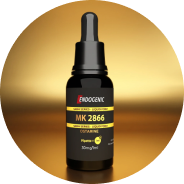
This article explains what SARMs are as a class of compounds: how they act at the receptor level, what research shows, which risks have been documented, and what their legal and anti-doping status is. It does not provide doses, cycle lengths, or combination protocols. All substances discussed are research-grade compounds that have not been approved for marketing as medicines. The question “which ones to choose” has a different answer from the one suggested by the popular narrative, and we return to it near the end of the article.
All substances discussed in this article are research compounds and are not intended for human consumption. The description of their activity is based solely on laboratory findings and experimental observations, not on clinical use.
What are SARMs?
SARM (selective androgen receptor modulator) is a non-steroidal molecule that binds the androgen receptor. The name describes the intended design feature: inducing an anabolic response in muscle and bone with less impact on tissues such as the prostate and skin.
The mechanism of this selectivity is not that a compound “goes only to muscle”. The androgen receptor is the same in every tissue. The difference comes from the conformation the receptor adopts after binding a particular ligand and from the set of coregulatory proteins recruited in that tissue. The development of this class and the basis of its selectivity are described in a review by researchers involved in several SARM development programs (Narayanan et al., 2018, PMID 28624515).
The basic point from which the rest of this article begins: no SARM has been approved for marketing as a medicinal product – neither in the European Union nor in the United States. All of them remain at the research stage or have already completed this stage without registration.
SARMs for bodybuilders – how do they work?
After a ligand binds, the androgen receptor moves into the cell nucleus and acts as a transcription factor, altering the expression of genes involved in processes such as muscle protein synthesis. This is the same signaling pathway used by androgens; the difference lies in the tissue profile of the response, not in the underlying mechanism.
A practical consequence is often overlooked: because the molecular target is shared with androgens, the effect on the hypothalamic-pituitary-gonadal axis is also shared. The negative-feedback mechanism that suppresses luteinizing hormone secretion does not distinguish whether a ligand has a steroidal structure. This has been documented in a clinical study, which we discuss in the harm-reduction section.
What is a SARM, and what is merely mistaken for one?
This classification is not terminological pedantry. The three groups most often confused with one another have different molecular targets, different risk profiles, and different categories on the WADA Prohibited List. Confusing them leads to incorrect conclusions about everything from mechanism of action to the consequences of anti-doping testing.
| Compound | What it is NOT | What it is | WADA |
|---|---|---|---|
| Ostarine (MK-2866), LGD-4033, RAD-140, S-4 (andarine), S-23, YK-11 | — | true SARMs – androgen receptor ligands | S1.2 |
| MK-677 (ibutamoren) | is not a SARM | growth hormone secretagogue – ghrelin mimetic acting on the GHS-R receptor | S2 |
| SR-9009 / SR-9011 (stenabolic) | is not a SARM | REV-ERB agonist – metabolic modulator | S4.4 |
| GW-501516 (cardarine) | is not a SARM | PPARδ agonist – metabolic modulator | S4.4 |
MK-677 does not bind the androgen receptor at all. It acts on the ghrelin receptor and increases growth hormone secretion; we discuss it in detail in a separate article on MK-677. SR-9009 and GW-501516 act on nuclear receptors that regulate energy metabolism, not androgen signaling. Grouping them together with ostarine or ligandrol is a substantive error that then distorts both expectations and risk assessment.
Difference between SARMs and anabolic steroids
The structural difference is clear: SARMs are non-steroidal molecules and do not undergo aromatization to estrogens or conversion to dihydrotestosterone. That is a chemical fact.
Much greater caution is required with the conclusion often drawn from that fact. The claim that “SARMs are safer than steroids” is not supported by comparative evidence; no studies have directly compared the safety profiles of both classes in healthy people. The lack of such a comparison is not evidence for either side. It is simply a gap in the data.
What has been documented for SARMs regardless of any comparisons includes drug-induced liver damage, tendon ruptures, myocarditis, and testosterone suppression. We discuss these observations below – and it is they, and not comparisons with another class of compounds, that describe the real risk profile.
What the research data show – and what they do not show
The best-studied compound in this class is enobosarm (ostarine, MK-2866), which was evaluated in phase II and phase III studies involving patients with cancer-related muscle wasting (Dobs et al., 2013, PMID 23499390), (Crawford et al., 2016, PMID 27138015). These populations consisted of oncology patients under clinical supervision, not healthy people who train, and enobosarm was not approved for this indication.
For LGD-4033, a phase I study was conducted in healthy young men. Lean body mass increased in a dose-dependent manner, alongside dose-dependent suppression of total testosterone, SHBG, HDL cholesterol, and triglycerides; the parameters returned to baseline after discontinuation (Basaria et al., 2013, PMID 22459616).
For the remaining compounds in this class – RAD-140, S-4, S-23, YK-11 – evidence remains preclinical. There are no published clinical studies to describe their efficacy or safety profile in humans. A class-wide clinical review summarizes the state of the art and its limitations (Solomon et al., 2019, PMID 30503797). The RAD-140 ester known as RAD-150 has its own article.
The resulting conclusion is less eye-catching than a typical list of benefits: studies report changes in body-composition measures in clinical populations over relatively short follow-up periods, while also documenting specific organ-related risks.
SARMs for bodybuilders – what compounds are most frequently tested?
A compound-by-compound review of mechanisms and the state of evidence for ostarine, LGD-4033, RAD-140, andarine, S-23, YK-11, and growth-hormone-axis secretagogues appears in our more extensive article on peptides and SARMs for muscle building. That article examines individual compounds; this one addresses the class as a whole.
The question “which ones to choose” should itself be challenged. It assumes that the differences between these compounds come down to efficacy and that choosing one is simply a matter of matching a tool to a goal. The evidence tells a different story: most have no human studies, none has an established safety profile for prolonged exposure, and the class has a documented effect on the hormonal axis. The factor that genuinely distinguishes research materials is the quality of the analytical documentation for a specific batch, as discussed in the penultimate section.
Harm reduction – hormonal axis, liver, and cardiovascular system
This section summarizes findings from systematic reviews and case reports. It is not intended as alarmism; it is a record of what has actually been described in the literature.
Hypothalamic-pituitary-gonadal axis
Suppression is a documented class effect demonstrated in a clinical trial for LGD-4033: dose-dependent reduction in total testosterone, SHBG and FSH (PMID 22459616). A systematic review from a sports medicine perspective lists testosterone suppression among the consistently reported effects of SARM exposure (Vasireddi et al., 2025, PMID 39755947).
The claim that a compound is “non-axis-blocking” is not supported by the data – for most SARMs, there is simply no research to say either way.
Liver
A systematic review of SARM safety in healthy people included 33 studies and 2,136 participants, of whom 1,447 were exposed. It identified 15 case reports of drug-induced liver injury, one case of Achilles tendon rupture, and one case of rhabdomyolysis. Elevated ALT occurred in clinical studies in an average of 7.1% of exposed participants. The authors, from teams at the Walter Reed Army Institute of Research and the Naval Medical Center, concluded that recreational SARM use should be strongly discouraged (Vignali et al., 2023, PMID 37218811).
Liver damage after ostarine has been described independently in several reports (Bedi et al., 2021, PMID 34368386), (Weinblatt and Roy, 2022, PMID 35655632), (Khan et al., 2022, PMID 35340496).
Cardiovascular system
A case of acute myocarditis associated with RAD-140 exposure has been reported (Padappayil et al., 2022, PMID 35233331). LGD-4033 has also been associated with a documented reduction in HDL cholesterol, a parameter relevant to cardiovascular risk assessment.
Combining compounds
A separate report describes a case of poisoning following simultaneous exposure to GW1516 (cardarine) and MK2866 (ostarine), supported by full clinical, analytical, and biological data (Kintz et al., 2021, PMID 34678947). This is the same combination sometimes described as a “stack”, but here with a documented toxic outcome.
GW-501516 – a case requiring separate consideration
Cardarine is often listed alongside SARMs, sometimes with emphasis on reported changes in lipid profiles. This part of the picture is supported by short-term human studies that assessed the effects of PPARδ agonism on lipid and metabolic parameters (Risérus et al., 2008, PMID 18024853), (Olson et al., 2012, PMID 22814748).
Omitting the other part of the picture would mean omitting the most important information about this compound. Clinical development of GW-501516 was halted after long-term animal toxicology studies revealed tumors in multiple organs. In a mouse model of mammary tumorigenesis, animals receiving GW501516 showed accelerated tumor formation (Yin et al., 2005, PMID 15867396). In 2013, WADA issued a rare public health warning about the compound, going beyond simply placing it on the Prohibited List.
We state this directly even though the material appears in our catalog, because the suspension of the development program for toxicological reasons is more important than any single lipid-related finding. A full discussion appears in our separate article on the mechanism and research data for cardarine.
Regulatory status and anti-doping notice
None of the compounds discussed in this article is a medicinal product, dietary supplement, or food.
All listed groups are prohibited at all times, both in and out of competition:
- SARMs (ostarine, LGD-4033, RAD-140, andarine, S-23, YK-11) – category S1.2, other anabolic agents
- MK-677 – category S2, peptide hormones, growth factors, and mimetics
- GW-501516 and SR-9009 – category S4.4, metabolic modulators
It is worth dispelling a common misconception: anti-doping rules do not apply only to professionals. In Poland, the WADA Prohibited List is implemented through the Polish Anti-Doping Agency (POLADA), and amateur athletes taking part in events organized by sports associations covered by anti-doping rules may also be tested. Participation in a mass-participation or federation event does not itself provide an exemption.
Because the substances discussed are not registered medicines, there is no route to obtain a therapeutic use exemption (TUE). An athlete registered in the ADAMS system should treat exposure to any of these compounds as a risk of an anti-doping violation without the option of relying on an approved medical indication. The current status should always be checked against the applicable version of the Prohibited List.
What’s actually in the product
One practical risk may be even more immediate than the pharmacological profile of the molecule itself: a mismatch between the label and the actual contents of the package.
An analysis published in JAMA examined 44 products sold online as SARMs using WADA-approved analytical procedures. Only 23 products (52%) contained any SARM. Seventeen products (39%) contained another unapproved drug, including ibutamoren, GW501516, or SR9009. No active compound was detected in 4 products (9%), and the labeled quantity matched the measured quantity in only 18 of 44 cases (41%) (Van Wagoner et al., 2017, PMID 29183075).
For an athlete subject to testing, this creates the possibility of a violation involving a substance they did not knowingly choose. For everyone else, it means that the risk profile described in the literature applies to the molecule actually present in the package, which did not match the label in most products examined.
The decisive document is a batch-specific certificate of analysis showing purity determined by HPLC and identity confirmed by mass spectrometry.
Frequently asked questions
Are SARMs safer than anabolic steroids?
There have been no studies comparing the two classes for safety in healthy people, so this claim is not supported by the data. Drug-induced liver damage, tendon ruptures, myocarditis and testosterone suppression have been documented for SARMs (PMID 37218811, PMID 39755947).
Is MK-677 a SARM?
No. MK-677 does not bind the androgen receptor; it is a growth hormone secretagogue that acts through the ghrelin receptor. On the WADA Prohibited List, it appears in category S2 rather than category S1.2 assigned to SARMs.
Are cardarine and stenabolic SARMs?
No. GW-501516 is a PPARδ agonist and SR-9009 is a REV-ERB agonist. Both are metabolic modulators that act on nuclear receptors involved in energy metabolism rather than on the androgen receptor. WADA category: S4.4.
Do anti-doping rules apply to amateurs?
Yes, if an athlete competes in events covered by anti-doping rules. In Poland, POLADA applies the WADA Prohibited List. Amateur status does not itself provide an exemption.
Why does the article not provide doses or cycle lengths?
Because the substances discussed are not approved medicinal products and have not undergone a registration process in which dosing is established. The figures circulating online do not come from registration trials.
Summary
SARMs are non-steroidal androgen receptor ligands designed for tissue selectivity, none of which has been approved for marketing as a medicine. Enobosarm is the best studied and has been evaluated in oncology patients. For LGD-4033, a phase I study showed an increase in lean body mass alongside dose-dependent suppression of testosterone and HDL. Evidence for the remaining compounds is still preclinical. Systematic reviews document drug-induced liver injury, tendon rupture, and myocarditis, and one explicitly advises against recreational use. MK-677, SR-9009, and GW-501516 are sometimes grouped with SARMs even though they are not SARMs; they have different molecular targets and different WADA classifications. All groups discussed are prohibited at all times, and those prohibitions may also apply to amateur athletes covered by POLADA rules, without a route to a therapeutic use exemption for these unapproved compounds. An analysis of products sold online found that only 52% contained any SARM, making a batch-specific certificate of analysis the decisive document for establishing the material’s identity.
Product documentation
Research material records and batch analytical documentation are available in the SARMs and modulators category. These materials are intended for research use only.
Bibliography
- Narayanan R, Coss CC, Dalton JT. Development of selective androgen receptor modulators (SARMs). Mol Cell Endocrinol. 2018;465:134-142. PMID: 28624515
- Solomon ZJ, Mirabal JR, Mazur DJ, et al. Selective Androgen Receptor Modulators: Current Knowledge and Clinical Applications. Sex Med Rev. 2019;7(1):84-94. PMID: 30503797
- Vignali JD, Pak KC, Beverley HR, et al. Systematic Review of Safety of Selective Androgen Receptor Modulators in Healthy Adults: Implications for Recreational Users. J Xenobiot. 2023;13(2):218-236. PMID: 37218811
- Vasireddi N, Hahamyan HA, Gould HP, et al. Athlete Selective Androgen Receptor Modulators Abuse: A Systematic Review. Am J Sports Med. 2025;53(4):999-1009. PMID: 39755947
- Van Wagoner RM, Eichner A, Bhasin S, Deuster PA, Eichner D. Chemical Composition and Labeling of Substances Marketed as Selective Androgen Receptor Modulators and Sold via the Internet. JAMA. 2017;318(20):2004-2010. PMID: 29183075
- Basaria S, Collins L, Dillon EL, et al. The safety, pharmacokinetics, and effects of LGD-4033, a novel nonsteroidal oral, selective androgen receptor modulator, in healthy young men. J Gerontol A Biol Sci Med Sci. 2013;68(1):87-95. PMID: 22459616
- Dobs AS, Boccia RV, Croot CC, et al. Effects of enobosarm on muscle wasting and physical function in patients with cancer: a double-blind, randomized controlled phase 2 trial. Lancet Oncol. 2013;14(4):335-345. PMID: 23499390
- Crawford J, Prado CM, Johnston MA, et al. Study Design and Rationale for the Phase 3 Clinical Development Program of Enobosarm (POWER Trials). Curr Oncol Rep. 2016;18(6):37. PMID: 27138015
- Padappayil RP, Chandini Arjun A, Vivar Acosta J, Ghali W, Mughal MS. Acute Myocarditis From the Use of Selective Androgen Receptor Modulator (SARM) RAD-140 (Testolone). Cureus. 2022;14(1):e21663. PMID: 35233331
- Kintz P, Gheddar L, Paradis C, et al. Peroxisome Proliferator-Activated Receptor Delta Agonist (PPAR-delta) and Selective Androgen Receptor Modulator (SARM) Abuse: Clinical, Analytical and Biological Data in a Case Involving a Poisonous Combination of GW1516 (Cardarine) and MK2866 (Ostarine). Toxics. 2021;9(10):251. PMID: 34678947
- Bedi H, Hammond C, Sanders D, Yang HM, Yoshida EM. Drug-Induced Liver Injury From Enobosarm (Ostarine), a Selective Androgen Receptor Modulator. ACG Case Rep J. 2021;8(1):e00518. PMID: 34368386
- Weinblatt D, Roy S. Drug-Induced Liver Injury Secondary to Enobosarm: A Selective Androgen Receptor Modulator. J Med Cases. 2022;13(5):244-248. PMID: 35655632
- Khan S, Fackler J, Gilani A, Murphy S, Polintan L. Selective Androgen Receptor Modulator Induced Hepatotoxicity. Cureus. 2022;14(2):e22239. PMID: 35340496
- Yin Y, Russell RG, Dettin LE, et al. Peroxisome proliferator-activated receptor delta and gamma agonists differentially alter tumor differentiation and progression during mammary carcinogenesis. Cancer Res. 2005;65(9):3950-3957. PMID: 15867396
- Risérus U, Sprecher D, Johnson T, et al. Activation of peroxisome proliferator-activated receptor (PPAR)delta promotes reversal of multiple metabolic abnormalities, reduces oxidative stress, and increases fatty acid oxidation in moderately obese men. Diabetes. 2008;57(2):332-339. PMID: 18024853
- Olson EJ, Pearce GL, Jones NP, Sprecher DL. Lipid effects of peroxisome proliferator-activated receptor-delta agonist GW501516 in subjects with low high-density lipoprotein cholesterol. Arterioscler Thromb Vasc Biol. 2012;32(9):2289-2294. PMID: 22814748