Chemical reagent intended exclusively for laboratory tests (Research Use Only). It is not a medicinal product, dietary supplement or food. It is not intended for use on humans or animals. Sales only to registered research units and laboratories.
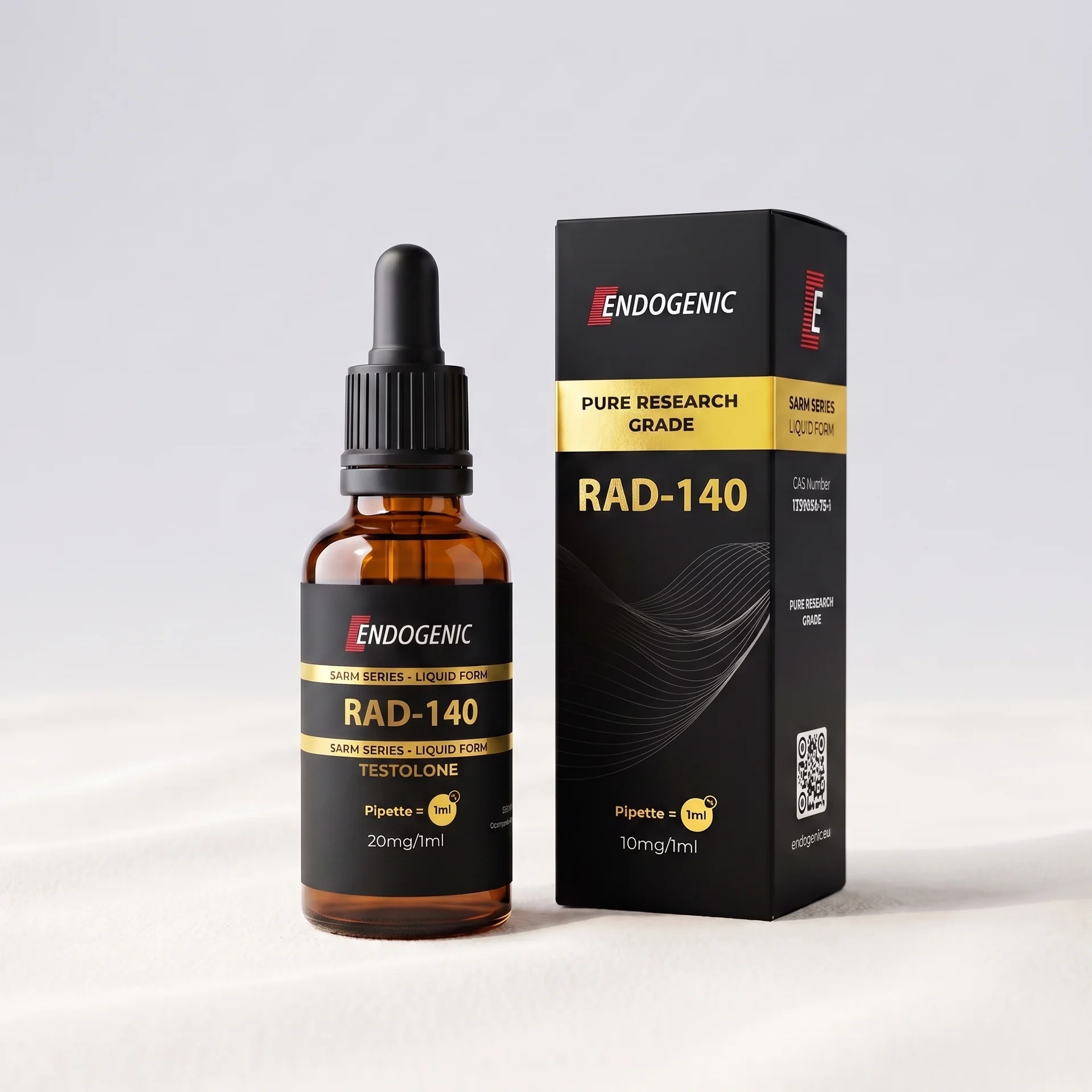
RAD-150 (also known as TLB-150 or Testolone Benzoate) is a benzoic ester of the classic non-steroidal SARM RAD-140 (Testolone) – a derivative described as a prodrug: by design assumption it should release the active RAD-140 molecule after hydrolysis with plasma esterases. No peer-reviewed paper has confirmed this. From a chemical point of view, RAD-150 is a “masked” form: the hydroxyl group of RAD-140 has been esterified with benzoic acid, which increases the lipophilicity of the molecule and – in design theory – extends its half-life relative to native RAD-140.
RAD-140 as the parent compound was developed by Radius Health in preclinical work on sarcopenia (muscle wasting) and hormone-dependent breast cancer (ER+/AR+) – the primary molecular characterization was published in Miller et al. 2011 (ACS Med Chem Lett). TLB-150 is the commercial and research name of a benzoate variant that appeared on the market for research chemicals a few years later as an attempt to obtain a more favorable pharmacokinetic profile of the oral form of SARM.
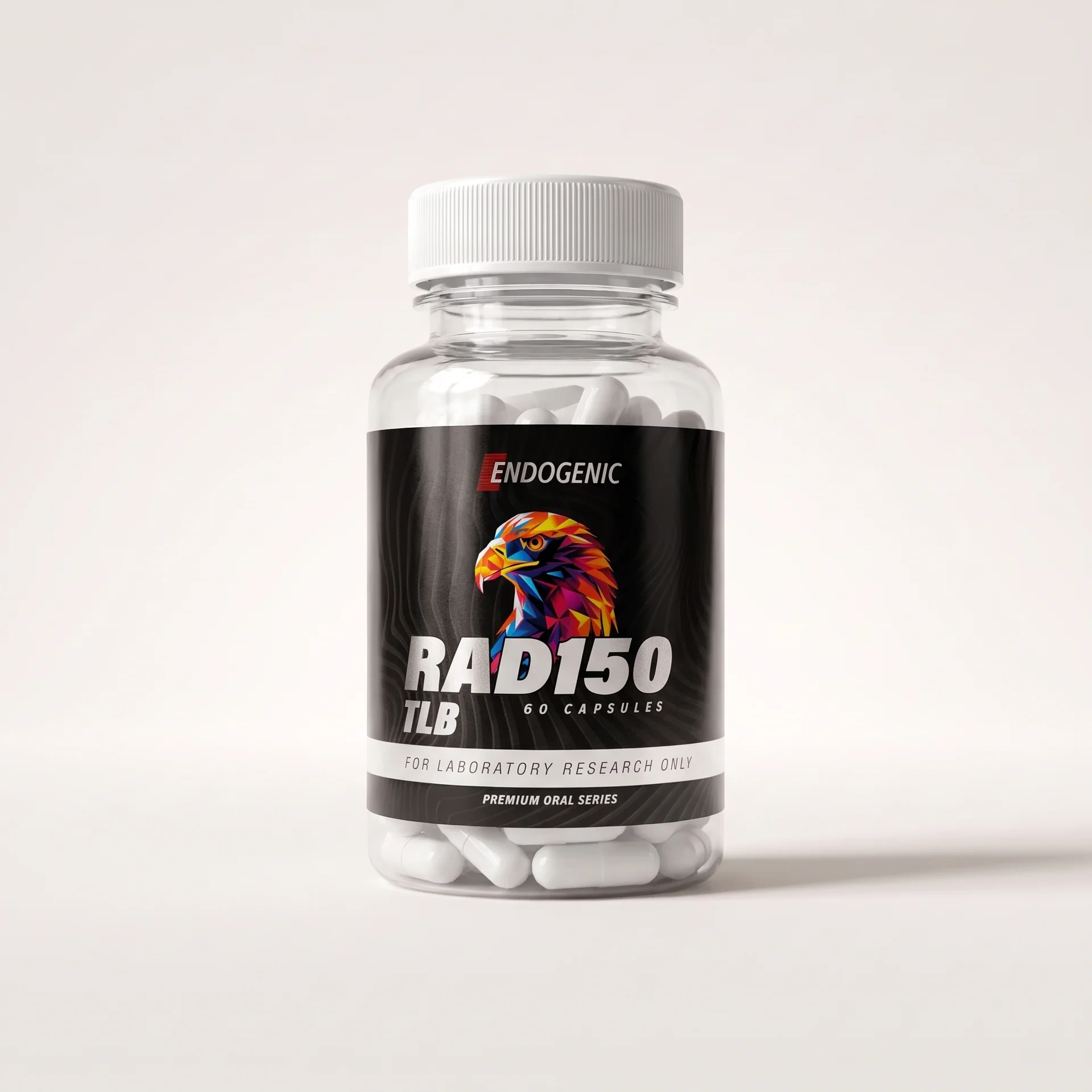
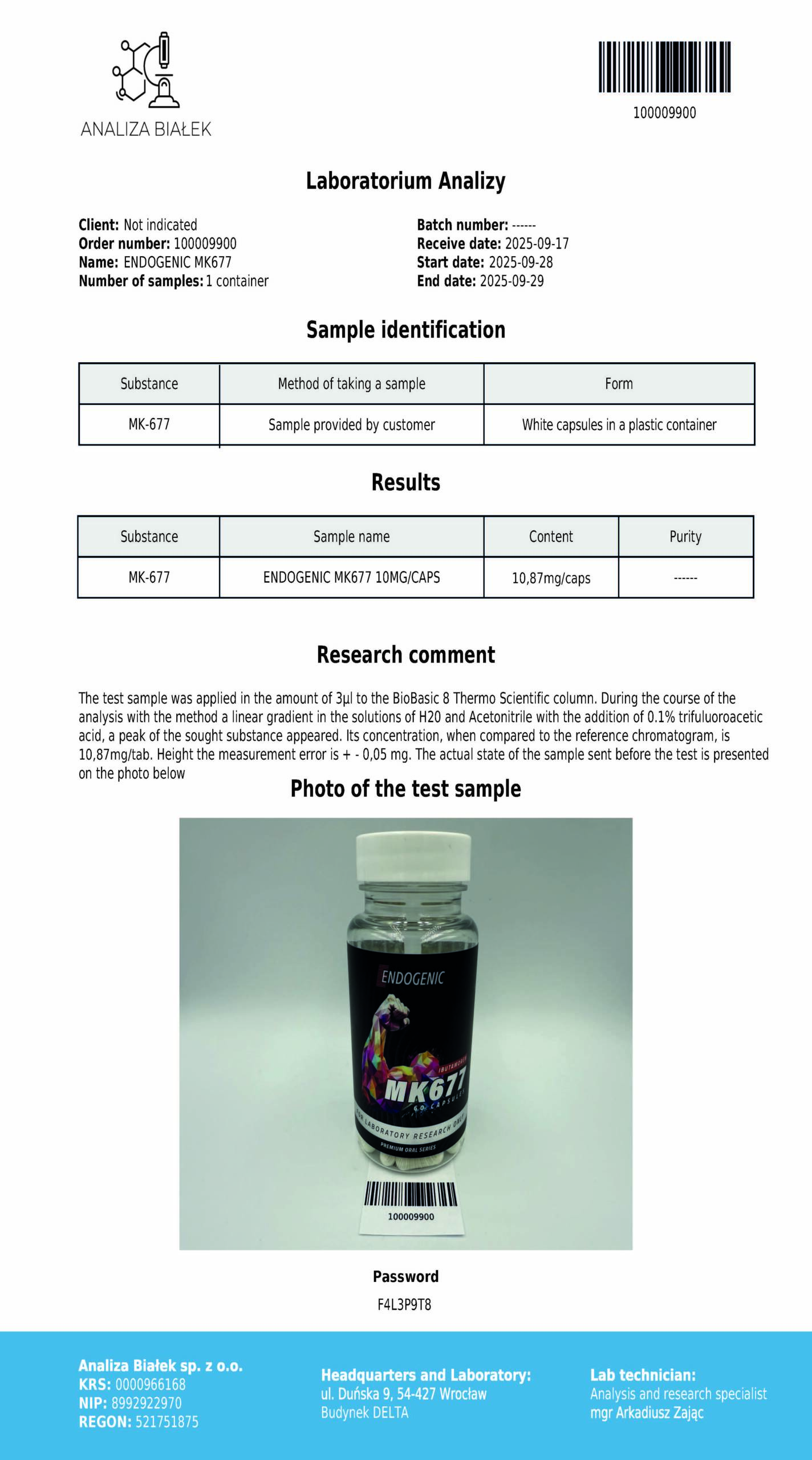
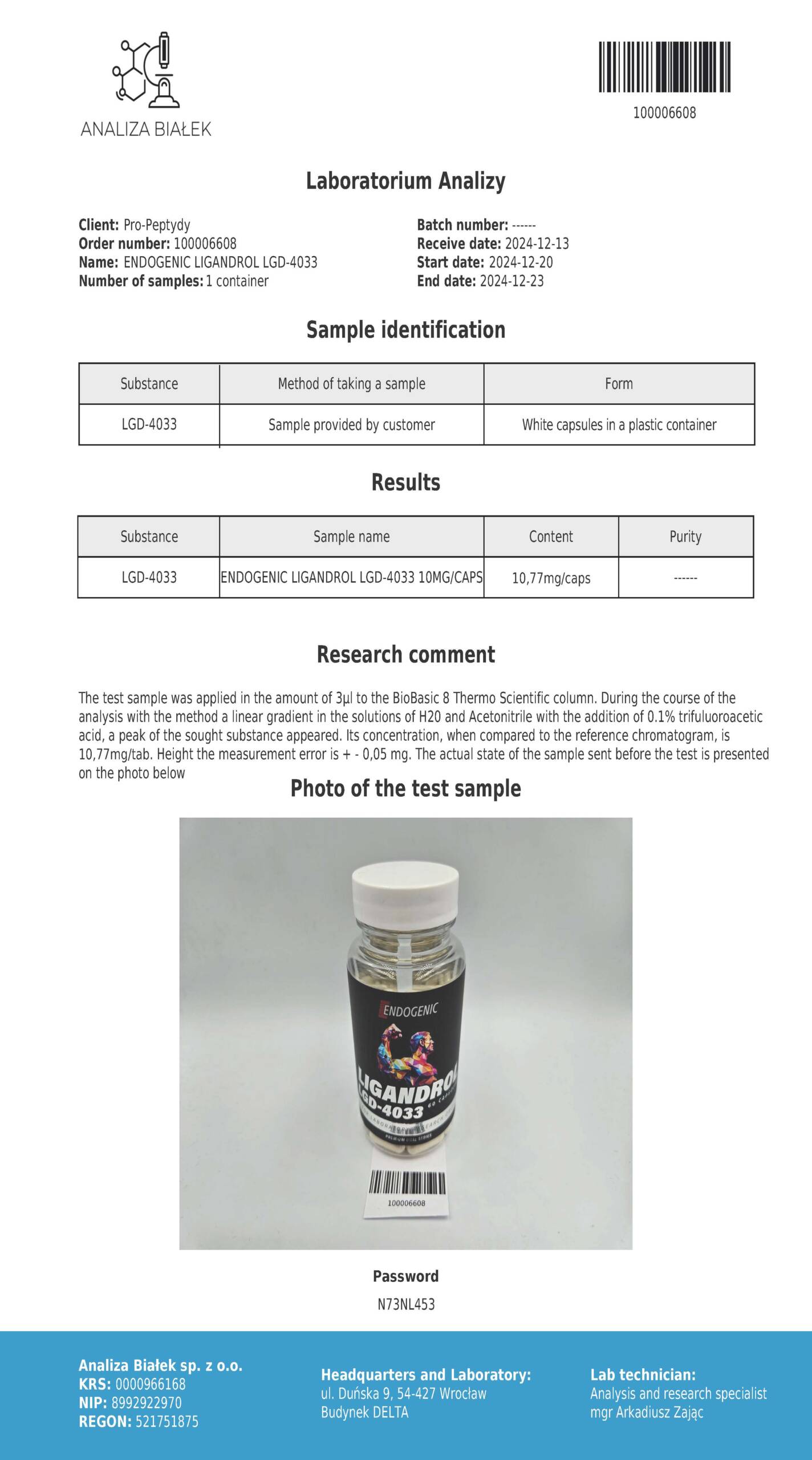
This reagent is supplied in a 60 capsules of 10 mg RAD-150 (TLB-150 Benzoate) — form adapted to studies of oral bioavailability, ester hydrolysis kinetics and exposure protocols in in vivo models. Purity verified by HPLC ≥98%, identity confirmed by mass spectrometry, COA available for each batch.
Regulatory status
RAD-150 (TLB-150) is a derivative of RAD-140, which has not completed any phase of clinical trials resulting in registration — RAD-140 stopped at the stage of early preclinical studies and limited early phase studies, without registration as a drug. RAD-150 itself as a separate ester has not been the subject of published human clinical trials.
No registration as a drug with the EMA, FDA or anywhere in the world. It is not authorised in the EU as an ingredient of dietary supplements. SARMs have been on the WADA prohibited list (category S1.2 – Other Anabolic Agents) since 2008. Communicating the product as an “oral anabolic”, “muscle gainer” or “safer alternative to steroids” is contrary to the Research Use Only framework.