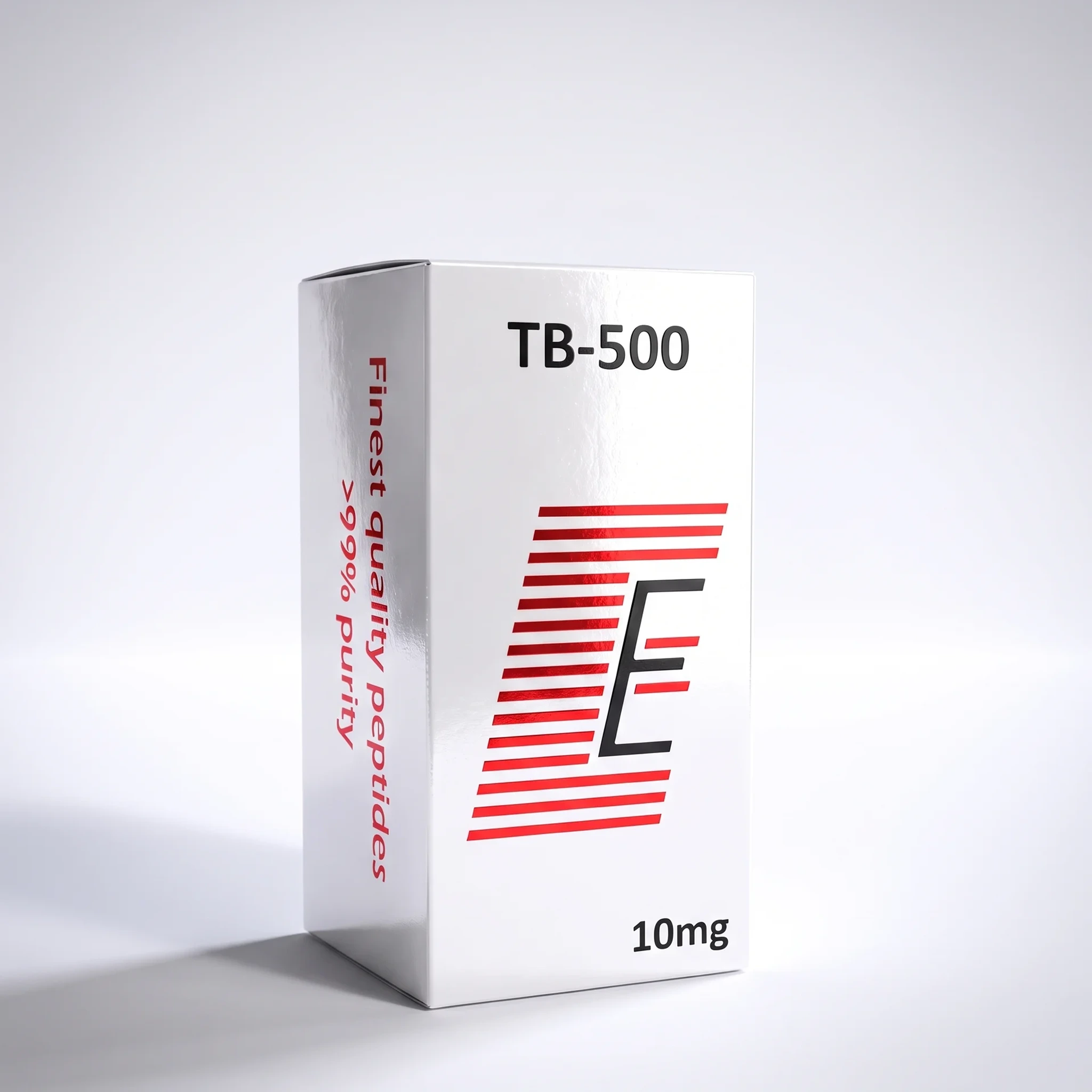
Unlike receptor peptides, which trigger a cascade by binding to a specific membrane receptor, Thymosin Beta-4 starts at the cytoskeleton. This is a difference worth emphasizing: the attachment point lies inside the cell, in the apparatus responsible for its shape and movement. The literature describes six to seven complementary axes of activity.
G-actin binding and modulation of cytoskeleton polymerization. This is the core of the mechanism. Tβ4 binds monomeric G-actin (dissociation constant Kd around 0.5 μM), acting as its sequestrant – it regulates the pool of available monomers for the construction of F-actin filaments. In cellular practice, this translates into the cell’s ability to reorganize the cytoskeleton, i.e migration.
Migrating cells are the foundation of every tissue reparation – without the movement of fibroblasts, keratinocytes or endothelial cells, the wound will not close.
Akt/PI3K/mTOR pathway and collagen synthesis. In vitro observations indicate the influence of Tβ4 on Akt/PI3K/mTOR signaling, associated with the synthesis of type I and III collagen in fibroblasts – structural proteins of the extracellular matrix from which tendons and scars are composed.
Angiogenesis (VEGF, FGF-2). Tβ4 has pro-angiogenic activity – models have described the effect on the secretion of vascular endothelial growth factors (VEGF) and fibroblasts (FGF-2). New vessels provide oxygen and substrates to the regenerating tissue.
Keratinocyte migration and reepithelialization. In wound healing models (Sosne et al.), accelerated keratinocyte migration and reepithelialization of the wound surface have been described – an important pathway, among others. for corneal healing research.
Anti-inflammatory effect (NF-κB, macrophage polarization). The literature indicates the modulation of the NF-κB pathway and the effect on switching the macrophage phenotype from pro-inflammatory M1 to reparative M2 – which links the inflammatory phase with the reparative phase.
Hair follicles (anagen phase). In animal models (Philp et al.), the effect of Tβ4 on the activation of hair follicles and the transition to the growth phase (anagen) has been described.
Cardiac repair after ischemia (epicardial cells). Works published in Nature (Bock-Marquette et al.; Smart et al.) described activation of epicardial cells and improved cardiomyocyte survival in murine models of infarction—one of the most frequently cited lines of research on full Tβ4.