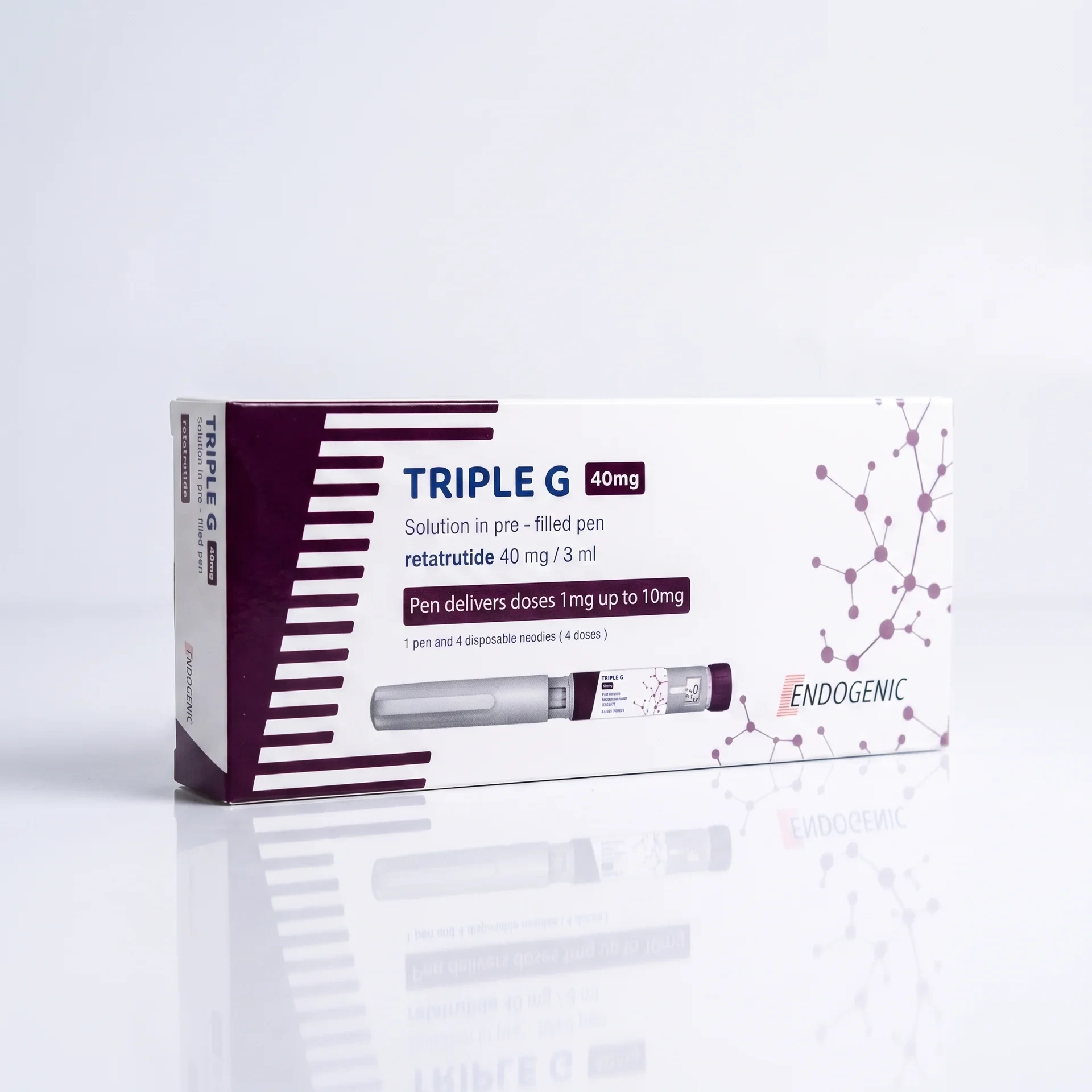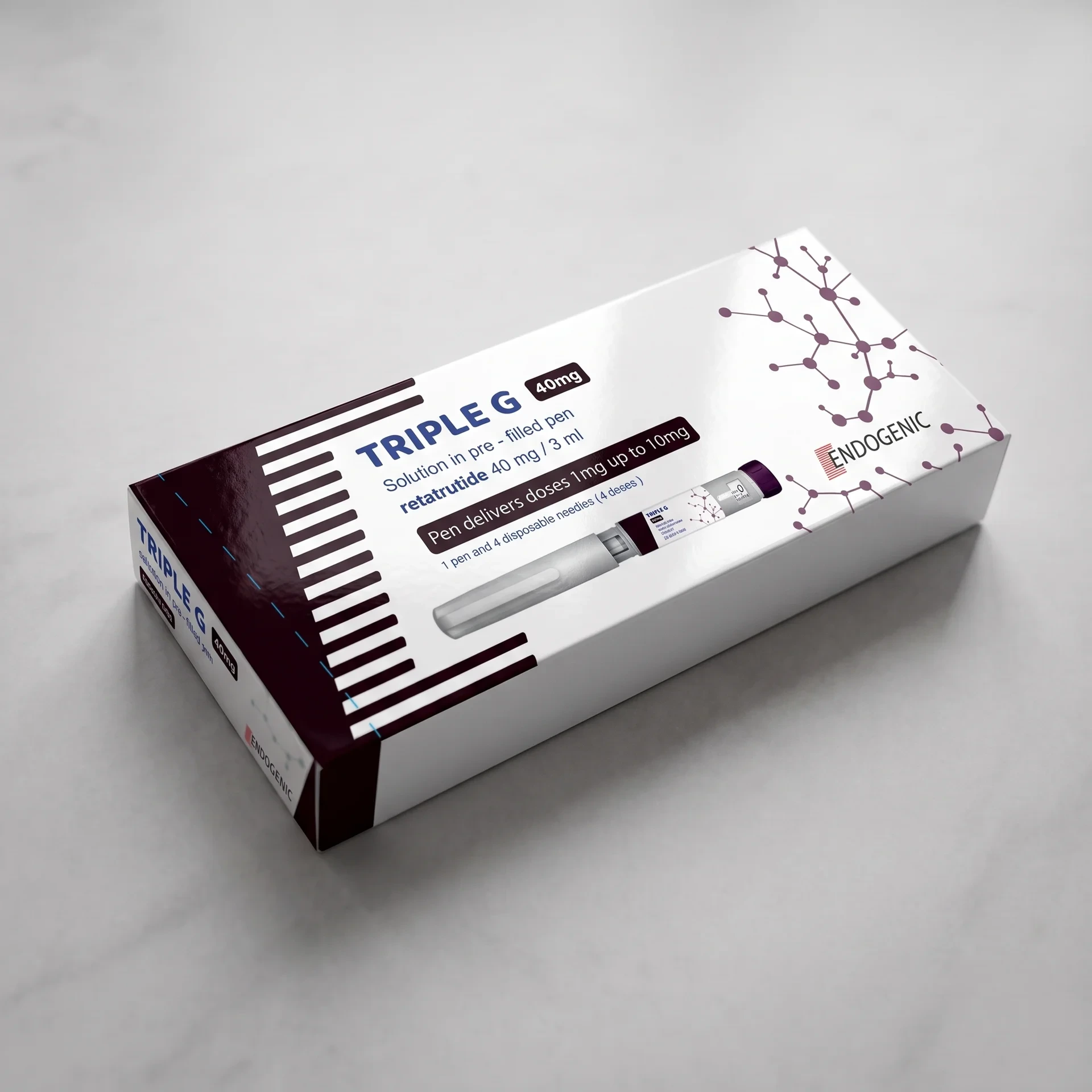
The vial contains the peptide in the form of lyophilisate — dry, sublimated powder that requires reconstitution (usually with bacteriostatic water) before work. The applicator with a factory solution contains the peptide already dissolved, ready for collection without preparation. Two specific advantages of the vial: the lyophilisate is much more stable in storage (the dry powder does not hydrolyze or aggregate in solution), and the researcher independently selects the concentration of the working mother solution at the dissolution stage – the same lyophilisate can be dissolved to any volume and molarity for a specific experimental system. The applicator, on the other hand, is immediately ready for download.
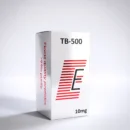
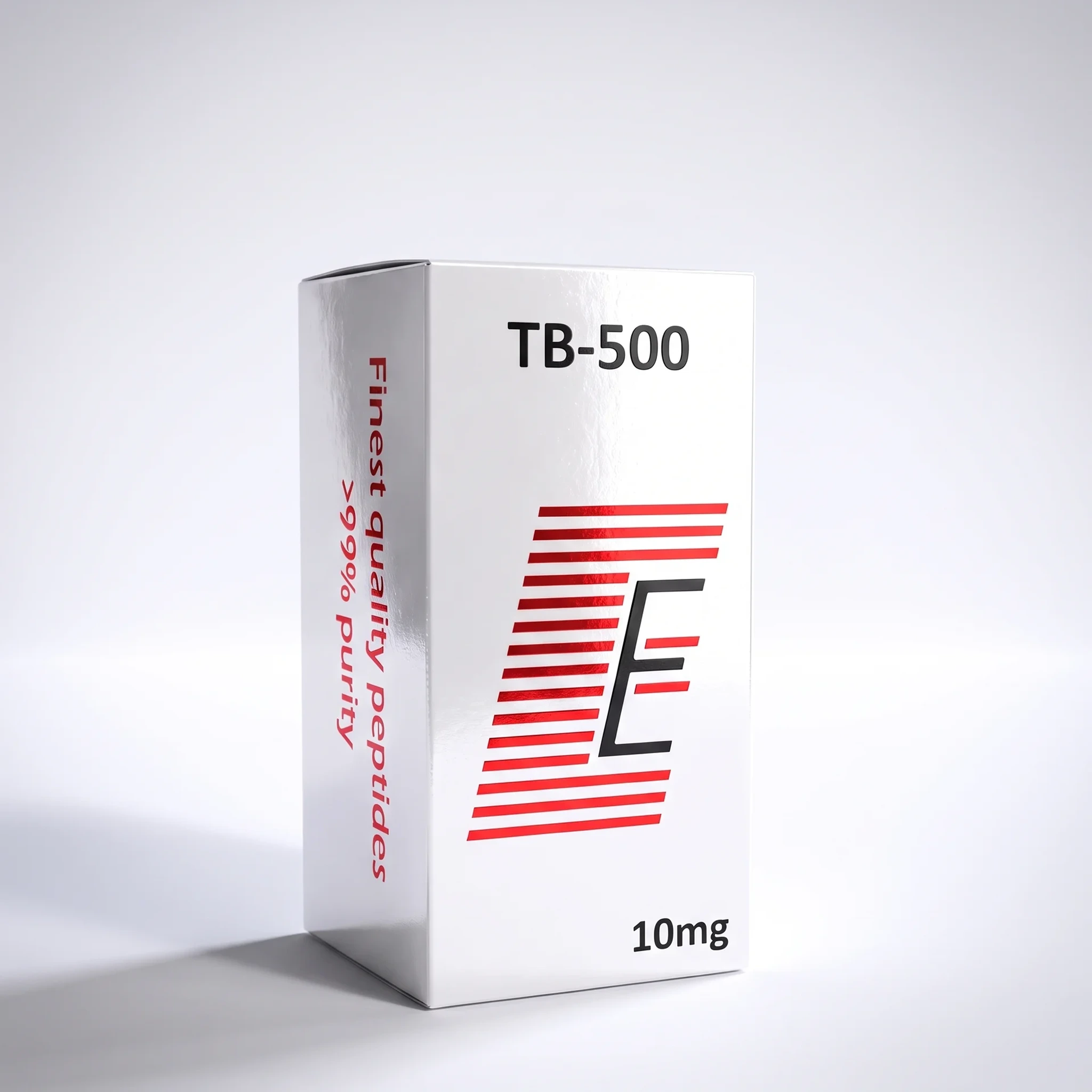
TB-500 10 mg
TB-500 10 mg — Thymosin Beta-4 (or active fragment LKKTETQ, details in COA) in a lyophilized vial for studies on tissue reparation, cell migration and angiogenesis. The mechanism comes from G-actin binding and cytoskeleton dynamics. The freeze-dried form ensures the highest shelf life and freedom to select the working concentration during reconstitution. RUO reagent.
42,99 €
With code BLACK: 34,39 €
Lowest price in the 30 days before the discount:
42,99 €
Fast shipping
Free delivery from 350 €
Returns policy
TB-500 10 mg - Thymosin Beta-4 (LKKTETQ fragment) in lyophilisate vial, RUO research reagent
- TB-500: Thymosin Beta-4 or the LKKTETQ fragment, according to the specific batch COA.
- Vial of lyophilisate with a nominal content of 10 mg, for reconstitution.
- Research Use Only reagent, not a medicinal product.
Chemical reagent intended exclusively for laboratory tests (Research Use Only). It is not a medicinal product, dietary supplement or food. It is not intended for use on humans or animals. Sales only to registered research units and laboratories.
Under the trade name “TB-500”, manufacturers of RUO reagents most often sell synthetic active fragment LKKTETQ (Ac-Leu-Lys-Lys-Thr-Glu-Thr-Gln) — a short peptide derived from a full-molecule protein Thymosin Beta-4 (Tβ4, 43 amino acids). It’s not always the same molecule. Some of the literature describes the full Tβ4, some only the fragment. The binding signal of batch identity is the sequence and mass confirmed by mass spectrometry at COA. We use the notation “TB-500 (Thymosin Beta-4 or LKKTETQ active fragment – see lot COA for details)” throughout the description and clearly separate full protein data from fragment data.
Introduction
Chronic Achilles tendon injuries or recurrent biceps tears are problems that have frustrated sports medicine for decades – physical therapy and rest help in most cases, but connective tissue repair can be slow and incomplete. Hence the interest of researchers peptides for injuries modulating cell migration and angiogenesis. TB-500 is one of the most frequently mentioned reagents in this context – it is derived from the Thymosin Beta-4 protein, naturally present in almost all nucleated cells, involved in the organization of the cytoskeleton and tissue repair. There is some confusion around the name itself, which is worth clearing up at the outset.
“TB-500” is a trade name, not the name of one defined molecule. Full-molecule Thymosin Beta-4 has 43 amino acids and a mass of approximately 4963 g/mol. The active fragment of LKKTETQ – a seven-amino acid stretch responsible for actin binding – weighs approximately 889 g/mol. This fragment is most often traded in RUO under the name “TB-500”, but the distinction depends on the specific batch and its analytical documentation.
In the studies with RegeneRx (phase I/II programs, partially abandoned), the subject was the whole-molecule version of Tβ4 – and this is what most of the literature cited below refers to. This reagent is supplied in a vials with lyophilisate, nominal content 10 mg of peptide. The lyophilized form – a dry, sublimated powder – is the classic format of the peptide reagent with the highest stability in stock: the peptide without water remains stable for many months, and the researcher independently determines the working concentration at the reconstitution stage.
This freedom in choosing the concentration is the basic advantage of the vial over the ready solution: the same lyophilisate can be dissolved to any volume and molarity for a specific experimental system.
General description
The TB-500 in the Pro-Body catalog is molecular tool intended for research on tissue reparation, cell migration and angiogenesis. We position it in the first pillar of the offer – peptides for regeneration — next to BPC-157, with which it is sometimes combined in experimental protocols. The mechanistic difference between these two peptides is fundamental: BPC-157 PEN it works primarily through the VEGF/FAK axis and local cytoprotection, while TB-500 (actually the parent Tβ4) operates at the cytoskeleton level – it binds monomeric G-actin and modulates the dynamics of its polymerization, which determines the ability of cells to migrate.
The format of the lyophilized vial is both technical and strategic. Dry powder is the most stable form of peptide storage – without water, there are no hydrolysis or aggregation reactions in the solution, so the material endures long periods of storage much better than a ready-made solution. The nominal content of 10 mg is a flexible variant: the researcher reconstitutes the entire vial to a volume adjusted to the planned molarity of the working concentration, without a pre-defined starting concentration.
This is what makes the vial different from the applicator with the factory solution TB-500 PEN — the applicator wins with its readiness for immediate collection, the vial wins with the durability of the lyophilisate and the freedom to set the working concentration. The same caveat returns in every section and is not a formality: data from the literature describe observations in cellular and animal models and in small clinical programs of full Tβ4. The RUO reagent is not a medicinal form and its role ends on the laboratory bench.
What is TB-500 - full Thymosin Beta-4 and LKKTETQ fragment
This is where the core distinction begins, which determines the correct interpretation of the results. Thymosin Beta-4 (Tβ4) is a naturally occurring, 43-amino acid protein from the beta-thymosin family, one of the most abundant actin-binding proteins in mammalian cells. Its full sequence is: Ac-SDKPDMA Within this sequence, an episode LKKTETQ (Ac-Leu-Lys-Lys-Thr-Glu-Thr-Gln) is the so-called “actin binding motif” – the fragment responsible for the interaction with monomeric G-actin.
It is this seven-amino acid peptide that is most often marked in the RUO trade as “TB-500”. Practical consistency is important. The complete Tβ4 and the isolated LKKTETQ fragment are
two different molecules with different masses, different pharmacokinetic profiles and – in part – different biological activity repertoire. The fragment retains the actin-binding motif, but the full protein carries additional domains involved in angiogenesis, modulation of inflammation, and tissue repair that the heptapeptide alone does not fully reproduce. Therefore, with each observation in the literature, one must ask the question: are we talking about full Tβ4 or a fragment?
Registration numbers reflect this duality. CAS 77591-33-4 refers to full-molecule Tβ4 (43 aa). The fragment LKKTETQ is sometimes assigned CAS 885340-08-9 — we treat this value as indicative and requiring verification in the documentation of a specific batch.
Physicochemical characteristics
| Parameter | Full Thymosin Beta-4 (Tβ4) | Active fragment “TB-500” (LKKTETQ) |
|---|---|---|
| Class | Actin-binding protein (beta-thymosin family) | Synthetic heptapeptide (actin-binding motif) |
| Number of amino acids | 43 | 7 |
| Sequence | Ac-SDKPDMAEIEKFDKSKLKKTETQEKNPLPSKETIEQEKQAGES | Ac-Leu-Lys-Lys-Thr-Glu-Thr-Gln |
| Molecular formula | C₂₁₂H₃₅₀N₅₆O₇₈S | — (depending on the form of salt) |
| Molecular mass | ~4963 g/mol | ~889 g/mol |
| CAS number | 77591-33-4 | 885340-08-9 (indicative) |
| Half-life (Tβ4) | ~2–4 h | form-dependent fragment data |
| SC bioavailability | 80–100% (Tβ4) | depending on form |
| Physical form | — | Lyophilisate (sublimated powder) in a vial |
| Nominal content | — | 10 mg peptide/vial |
| HPLC purity | ≥98% | ≥98% |
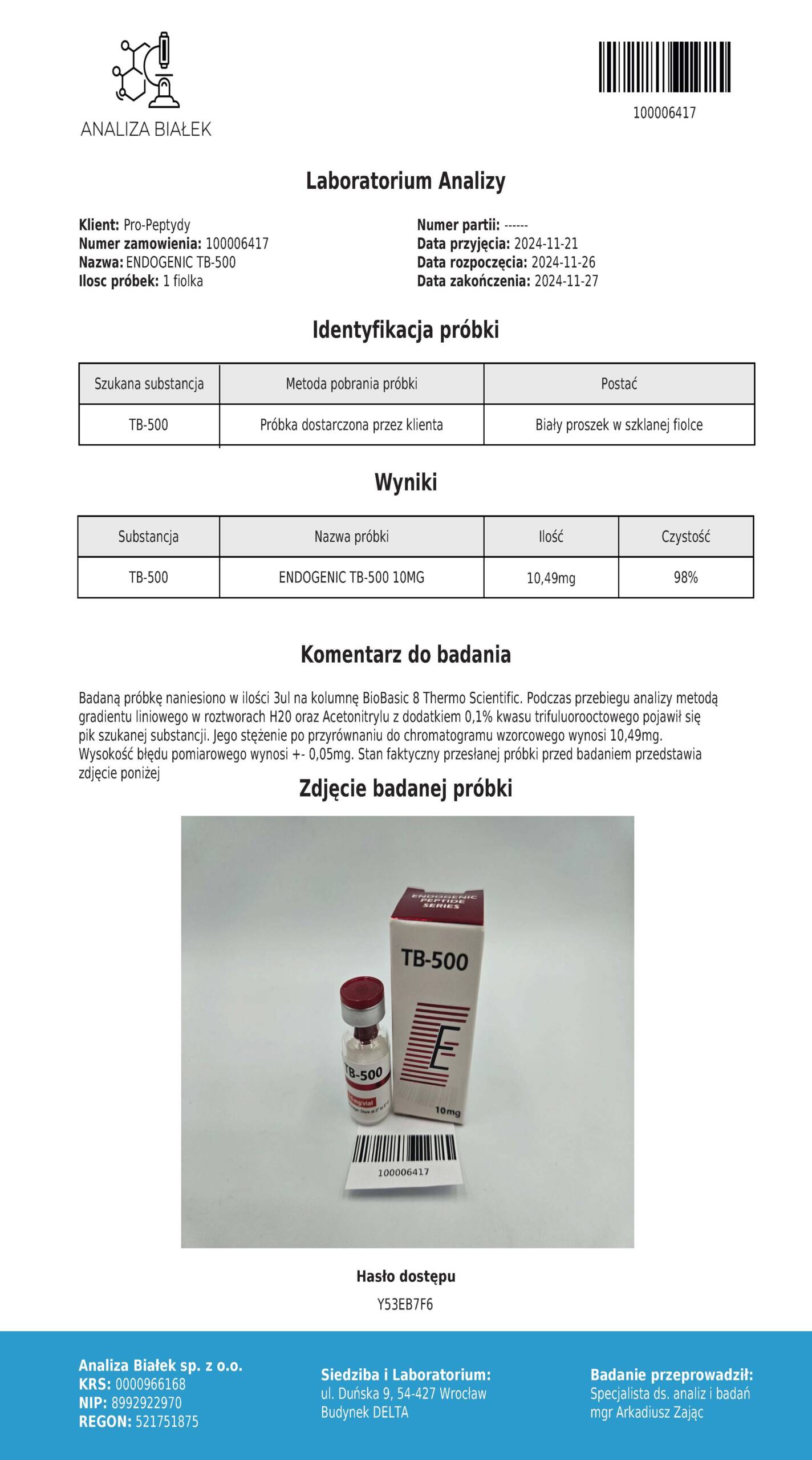
| Identity confirmation | Mass spectrometry (MS, Q-TOF) | Mass spectrometry (MS, Q-TOF) |
Mechanism of action at the molecular level - cytoskeleton as a starting point
Unlike receptor peptides, which trigger a cascade by binding to a specific membrane receptor, Thymosin Beta-4 starts at the cytoskeleton. This is a difference worth emphasizing: the attachment point lies inside the cell, in the apparatus responsible for its shape and movement. The literature describes six to seven complementary axes of activity.
- G-actin binding and modulation of cytoskeletal polymerization. This is the core of the mechanism. Tβ4 binds monomeric G-actin (dissociation constant Kd around 0.5 μM), acting as its sequestrant – it regulates the pool of available monomers for the construction of F-actin filaments. In cellular practice, this translates into the cell’s ability to reorganize the cytoskeleton, i.e migration. Migrating cells are the foundation of every tissue reparation – without the movement of fibroblasts, keratinocytes or endothelial cells, the wound will not close.
- Akt/PI3K/mTOR pathway and collagen synthesis. In vitro observations indicate the influence of Tβ4 on Akt/PI3K/mTOR signaling, associated with the synthesis of type I and III collagen in fibroblasts – structural proteins of the extracellular matrix from which tendons and scars are composed.
- Angiogenesis (VEGF, FGF-2). Tβ4 has pro-angiogenic activity – models have described the effect on the secretion of vascular endothelial growth factors (VEGF) and fibroblasts (FGF-2). New vessels provide oxygen and substrates to the regenerating tissue.
- Keratinocyte migration and reepithelialization. In wound healing models (Sosne et al.), accelerated keratinocyte migration and reepithelialization of the wound surface have been described – an important pathway, among others. for corneal healing research.
- Anti-inflammatory effect (NF-κB, macrophage polarization). The literature indicates the modulation of the NF-κB pathway and the effect on switching the macrophage phenotype from pro-inflammatory M1 to reparative M2 – which links the inflammatory phase with the reparative phase.
- Hair follicles (anagen phase). In animal models (Philp et al.), the effect of Tβ4 on the activation of hair follicles and the transition to the growth phase (anagen) has been described.
- Cardiac repair after ischemia (epicardial cells). Works published in Nature (Bock-Marquette et al.; Smart et al.) described activation of epicardial cells and improved cardiomyocyte survival in murine models of infarction—one of the most frequently cited lines of research on full Tβ4.
Applications in scientific research
TB-500 as an RUO reagent is used in several directions. The lyophilized vial format is particularly useful where the researcher needs to independently define the starting concentration of the mother solution – reconstitution to a selected volume allows you to adjust the molarity to a specific test without the compromises imposed by the ready solution.
- Cell migration biology and cytoskeletal dynamics. Migration tests (scratch assay, transwell), imaging of F-actin dynamics, measurements of the effect on G-actin sequestration in cultures of fibroblasts, keratinocytes and endothelial cells. The lyophilisate allows you to prepare a mother solution with a concentration selected for planned serial dilutions.
- Models of connective tissue reparation. Animal models of tendon, muscle and skin damage. Endpoints: wound closure rate, collagen I/III density, scar histology, biomechanical parameters of the repaired tissue. Tβ4 functions as a reference reagent in work on the migration of repair cells.
- Angiogenesis. Tube formation assays, matrigel vascularization models, VEGF and FGF-2 expression measurements – Tβ4 as a tool for modulating the pro-angiogenic response.
- Experimental cardiology. Mouse models of myocardial ischemia, studies on epicardial cell activation and cardiomyocyte survival – the direction set by work in Nature (Bock-Marquette et al. 2004; Smart et al. 2007).
- Experimental dermatology and ophthalmology. Models of cornea and skin healing, studies on reepithelialization and macrophage polarization (Sosne et al.).
- Comparative analyzes with BPC-157. Comparison of two different reparation mechanisms – cytoskeletal (Tβ4) and cytoprotective-angiogenic (BPC-157) – in parallel arms of the experiment.
Summary
TB-500 is a reagent with one of the most interesting mechanisms among regenerative peptides – the starting point is not in the membrane receptor, but in the cytoskeleton, at the level of G-actin binding and the dynamics of filament polymerization. It is from this mechanism that the entire cascade results: cell migration, collagen synthesis, angiogenesis, reepithelialization, modulation of inflammation, and in cardiac models – activation of epicardial cells.
A rich map of activity, described in the literature dating back to the publication of Nature. Working with this reagent, however, requires conceptual discipline that most peptides do not. “TB-500” is a trade name for two different molecules: full-molecule Thymosin Beta-4 (43 aa, ~4963 g/mol) and its active fragment LKKTETQ (7 aa, ~889 g/mol). The sequence and mass from the batch COA are the only binding identity signals.
The lyophilized vial format offers two specific advantages: the highest stability of the peptide in storage (the dry powder does not hydrolyze) and full freedom in selecting the working concentration at the reconstitution stage. Where the applicator with the factory solution wins in terms of immediate readiness, the vial wins in terms of durability and flexibility. All this under the Research Use Only framework, with clear WADA S2 status.
Bibliography
- Goldstein AL, Hannappel E, Sosne G, Kleinman HK (2012). Thymosin β4: a multi-functional regenerative peptide. Basic properties and clinical applications. PubMed
- Crockford D, Turjman N, Allan C, Angel J (2010). Thymosin beta4: structure, function, and biological properties supporting current and future clinical applications. PubMed
- Sosne G, Qiu P, Goldstein AL, Wheater M (2010). Biological activities of thymosin beta4 defined by active sites in short peptide sequences. PubMed
- Philp D, Nguyen M, Scheremeta B, St-Surin S, Villa AM, Orgel A, et al. (2004). Thymosin beta4 increases hair growth by activation of hair follicle stem cells. PubMed
- Bock-Marquette I, Saxena A, White MD, Dimaio JM, Srivastava D (2004). Thymosin beta4 activates integrin-linked kinase and promotes cardiac cell migration, survival and cardiac repair. PubMed
- Smart N, Risebro CA, Melville AAD, Moses K, Schwartz RJ, Chien KR, Riley PR (2007). Thymosin beta4 induces adult epicardial progenitor mobilization and neovascularization. PubMed
FAQ
Not always. Full-molecule Thymosin Beta-4 has 43 amino acids (~4963 g/mol). It is most often sold in the RUO market under the name “TB-500”. active fragment of LKKTETQ — a seven-amino acid section of this protein (~889 g/mol), responsible for binding actin. The fragment retains the G-actin binding motif but does not reproduce the full repertoire of activities of the entire protein. Which form a given reagent contains is determined by the sequence and mass confirmed by mass spectrometry in the batch COA.
In the literature and experimental practice, both peptides are sometimes studied in parallel because they act through various reparation mechanisms — TB-500 (Tβ4) operates at the level of the cytoskeleton and cell migration, BPC-157 primarily through the VEGF/FAK axis and local cytoprotection. This makes them the subject of comparative analyzes and parallel arms of the experiment.
We are talking only about laboratory tests – not about combining reagents for administration to humans. The mechanisms of this combination are discussed in more detail in the article on how BPC-157 and TB-500 for regeneration complement each other in research on tissue reparation.
Yes, unequivocally. TB-500 / Thymosin Beta-4 is on the WADA prohibited list class S2 (peptide hormones, growth factors and related substances) as a permanently prohibited substance – during and outside competition – since 2011. Registered Athletes (ADAMS) must check the current list before making any decision. The status of TB-500 is clearer here than in the case of some incretin peptides that are not on the list.
Thymosin Beta-4 binds monomeric G-actin (dissociation constant Kd around 0.5 μM) and acts as its sequestrant – it regulates the pool of free monomers available for the construction of F-actin filaments. The actin cytoskeleton is responsible for the shape of the cell and its ability to move, so the modulation of this pool translates into cell migration. This is the foundation in tissue reparation: without the movement of fibroblasts, keratinocytes and endothelial cells, the wound will not close. This is a different mechanism from receptor peptides, which start by binding to a membrane receptor.
In short: bring the vial to room temperature, adjust the volume of bacteriostatic water to the target concentration of the mother solution (e.g. 2 ml per 10 mg gives 5 mg/ml), direct the solvent stream at the wall of the vial (not at the precipitate), dissolve with gentle swirling without shaking, check the clarity of the solution, and then prepare working concentrations by serial dilutions.
After reconstitution, store the solution at 2–8°C or aliquot and freeze at −20°C. For a complete six-step description, please refer to the “Lyophilisate Reconstitution Protocol” section. This is a laboratory procedure, not instructions for administration to humans.
5.0
5 reviews
-
Andrzej
 Polski
Pełen profesjonalizm
Zamówienie na TB500 zrealizowane ekspresowo. Towar najwyższej jakości, solidnie zapakowany. Produkt pomógł mi rozwiązać problem, z którym zmagałem się od dawna. Dodatkowo dostępne badania, które wykazują rzetelność TB-500.
-
Janek
Polski
TB-500 jak zwykle niezawodny
Zamawiam TB-500 w fiolce regularnie z tej strony. Zawsze wysoka powtarzalność serii, idealnie trzymająca guma w fiolce i brak jakichkolwiek problemów przy rozpuszczaniu. Efekt końcowy zadowalający, produkt bardzo mi pomógł.
-
Kamil
Polski
Świetna cena za TB-500
Porównywałem opinie i ceny TB 500 na różnych portalach i cieszę się, że trafiłem na ten sklep. Płatność przeszła gładko, przesyłka neutralna i dyskretna. Produkt w fiolce zrealizował swoje zadanie bez dwóch zdań. 5/5!
-
Pawel G
Polski
Pewny TB 500 iniekcja
Dla mnie przy TB500 w fiolce kluczowa była sterylność i czystość chemiczna. Sklep udostępnia dokładną specyfikację, a sama przesyłka dotarła fabrycznie zamknięta. Wybór tego produktu naprawdę mi pomógł i spełnił oczekiwania w 100%. Błyskawiczna realizacja zamówienia.
-
Tomek
Polski
TB-500 w fiolce – doskonała jakość i szybka wysyłka
Szukałem oryginalnego TB-500 do połączenia w zestawie z BPC i decyzja o zakupie w tym sklepie była idealna. Fiolka TB 500 przychodzi perfekcyjnie zabezpieczona, z czytelnym oznaczeniem serii i długim terminem. Zastosowanie tego wariantu bardzo mi pomogło i domknęło temat, na którym mi zależało. Szczerze polecam każdemu, kto szuka sprawdzonego dostawcy.
-
Ola
Polski
Product review
Fajnie, że są dwie opcje mg. Można dostosować do swoich potrzeb. Ten produkt starcza mi na dłużej i bardzo mi to pasuje :) Polecam!
Customers also bought