Structurally, 9-MBC has a methyl group on the indole nitrogen atom (position 9), whereas harmine and harmaline are dimethoxy- or methylated at position 7 and additionally have a saturated piperidine ring. Pharmacologically, the difference is significant: harmine and harmaline are potent reversible inhibitors of MAO-A (RIMA, acting psychoactively through elevation of monoamines); 9-MBC has minimal MAO-inhibitory activity, and its neurotrophic effect is independent of MAO. This dissociation makes 9-MBC a model ligand for studying the neurotrophic mechanism of β-carbolines.
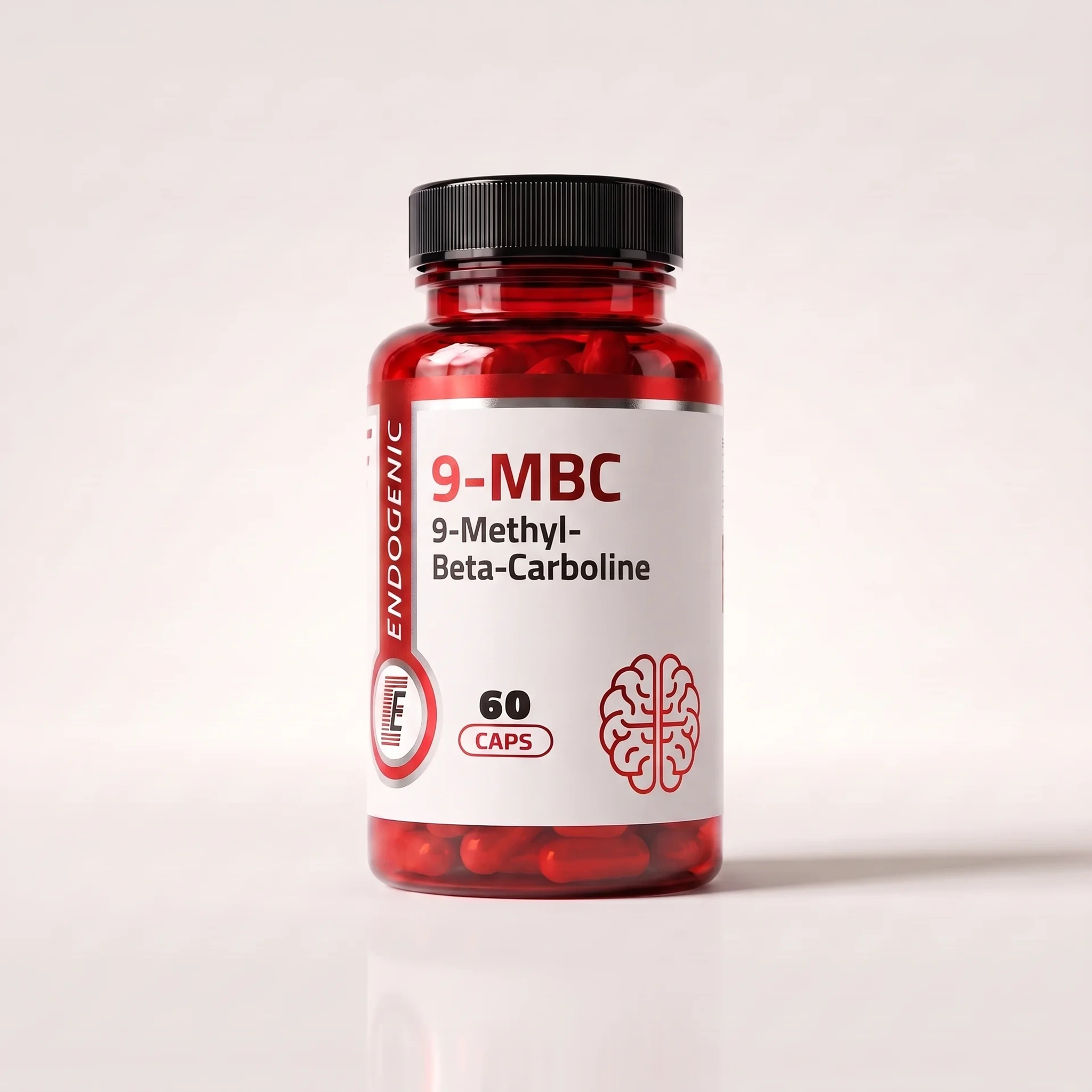
9-MBC (9-Methyl-β-carboline) 10mg 60 caps
9-MBC (9-methyl-β-carboline) is a chemical compound belonging to the carboline alkaloid group that is attracting increasing interest in the scientific community focused on neurochemistry and neurobiology. This description of the nootropic substance presents the characteristics of 9-MBC in terms of its physicochemical properties, molecular structure, and potential applications in laboratory research.
78,99 €
With code BLACK: 63,19 €
Lowest price in the 30 days before the discount:
78,99 €
Fast shipping
Free delivery from 350 €
Returns policy
9-MBC 10 mg 60 caps — 9-methyl-β-carboline, research reagent in oral capsules
- 9-MBC: 9-methyl-β-carboline.
- 10 mg, 60 capsules.
- Research Use Only reagent, not a medicinal product.
Product status information
Chemical reagent intended exclusively for laboratory research (Research Use Only). It is not a medicinal product, dietary supplement or food product. It is not intended for use in humans or animals. Sale only to registered research entities and laboratories.
9-MBC (9-methyl-β-carboline, 9-Me-BC) is a synthetic derivative of a β-carboline alkaloid, studied over the past decade in preclinical models of Parkinson’s disease by the team of Gerd Gille and Heinz Reichmann from the Dresden University of Technology and Hans Rommelspacher from Würzburg. Classic publication: Polanski et al. 2011 (Expert Rev Neurother) — a review paper describing 9-MBC as a “stimulator, protector, and regenerator of dopaminergic neurons” — signaling a new mechanism among potential compounds counteracting nigrostriatal neurodegeneration.
In a chemical context, 9-MBC belongs to the family of β-carbolines (norharman and its derivatives) — alkaloids present endogenously in mammals as tryptophan metabolites and in certain food sources (coffee, roasted meat, fermented sauces). The methyl modification at position 9 distinguishes 9-MBC from endogenous β-carbolines and from the strongly active MAO-inhibiting analogues (harmine, harmaline) — the modification reduces MAO-inhibitory activity while preserving the neurotrophic profile.
This reagent is supplied in a format of 60 oral capsules containing 10 mg of 9-MBC each — a form adapted to oral bioavailability studies and chronic exposure protocols in in vivo rodent models. The concentration of 10 mg per capsule allows standardization of microdoses in long-term research protocols. Purity verified by HPLC ≥98%, identity confirmed by mass spectrometry, COA available for each batch.
Regulatory status
9-MBC has not completed any phase of clinical trials in humans. The compound remains at the preclinical research stage (rodent models, cell cultures). No registration as a medicine in the EU, USA or anywhere in the world. No EFSA authorization as a dietary supplement ingredient. Communicating the product as a “nootropic for biohackers”, a “concentration preparation” or an “alternative to Parkinson’s medications” is contrary to the Research Use Only framework.
General overview — context of β-carbolines
β-carbolines are a family of tricyclic aromatic alkaloids occurring endogenously in mammals and in many plant and food sources. The best-characterized β-carbolines include norharman (the unsubstituted β-carboline), harman, harmine and harmaline (Peganum harmala — potent reversible inhibitors of MAO-A, RIMA), tetrahydro-β-carbolines (THβC) and their methylated derivatives. β-carbolines are synthesized endogenously from tryptophan through Pictet-Spengler reactions with aldehydes; they are also supplied in the diet from beverages (coffee, cocoa) and heat-processed dishes. The pharmacological profile of β-carbolines covers a broad spectrum of activity:
- Inhibition of monoamine oxidase (MAO) — mainly MAO-A; harmine and harmaline are classic RIMA
- Modulation of the benzodiazepine (BZ) receptor on GABA-A — some β-carbolines act as inverse agonists of the BZ-site (β-CCM, β-CCE), exhibiting an anxiogenic and proconvulsant effect
- Modulation of serotonergic and dopaminergic transmission — influence on mesolimbic circuits
- Neurotrophic and neuroprotective activity — in preclinical models some β-carbolines (including 9-MBC) exhibit a profile stimulating dopaminergic neurogenesis
- Antioxidant action — direct scavenging of free radicals; modulation of oxidative stress pathways in neurons
9-MBC occupies a special position in this family: the methyl modification at position 9 (N-9, the nitrogen atom of the indole ring) clearly reduces MAO-inhibitory activity compared to harmine and norharman, while simultaneously preserving a profile of stimulation of dopaminergic neurogenesis and expression of neurotrophic factors. This dissociation makes 9-MBC a model ligand for studying the neurotrophic mechanism of β-carbolines independent of MAO.
The pharmacology world watches 9-MBC for three reasons. First, as a research tool for preclinical models of Parkinson’s disease (PD) — particularly with MPTP, 6-OHDA, rotenone toxicity. Second, as a model compound for studies of substantia nigra neurogenesis in adult mammals — an area in which pharmacological tools are very limited. Third, as a representative of the class of “neurotrophic β-carbolines” — a pharmacological alternative to recombinant proteins (BDNF, GDNF), which do not cross the blood-brain barrier to a sufficient degree for clinical applications.
The compound belongs to a broader cluster of peptides and small-molecule modulators of cognitive function, although it is itself a chemical class distinct from peptide ligands.
What is 9-MBC?
Chemically, 9-MBC is an N-methylated derivative of β-carboline.
- Common name: 9-MBC, 9-Me-BC
- Chemical name (IUPAC): 9-methyl-9H-β-carboline (9-methyl-9H-β-carboline)
- Synonyms: 9-methyl-norharman, 9-methyl-β-carboline
- CAS number: 2521-07-5 (in case of uncertainty — “to be verified in the batch COA”)
- Molecular formula: C₁₂H₁₀N₂
- Molar mass: 182.22 g/mol
- Chemical class: tricyclic β-carboline alkaloid (pyridine + pyrrole + benzene fused); N-methylated derivative of norharman at position 9 (indole nitrogen atom)
- Supplied form: hard HPMC capsule (vegan), 10 mg of active substance per capsule, 60 capsules; pharmaceutical grade ≥98% HPLC
Origin: β-carbolines were first isolated from Peganum harmala (a plant native to the Middle East — harmine, harmaline) in the 19th century. Endogenous β-carbolines in mammals were characterized in the 1970s–1980s as metabolites of the Pictet-Spengler reaction of tryptophan with aldehydes (formaldehyde, acetaldehyde). 9-MBC as a model research compound was developed in the first decade of the 21st century by teams from Dresden (Gille, Reichmann) and Würzburg (Rommelspacher), with an emphasis on a neurotrophic profile independent of MAO inhibition.
SCIENTIFIC PERSPECTIVE
Most pharmacological data on 9-MBC come from preclinical models (C57BL/6J mouse, Wistar rat, primary rat mesencephalon cultures, SH-SY5Y and PC12 cell lines). All neuroprotective and neurogenic observations require confirmation in clinical trials in humans — no such studies have been conducted to date. Extrapolation of PK/PD profiles to humans requires caution.
Mechanism of action at the molecular level
9-MBC acts through several parallel neurotrophic and neuroprotective mechanisms. There is no unambiguously identified primary receptor — the effects result from modulation of multiple transcriptional and signaling pathways. Pharmacological profile observed in preclinical models:
- Stimulation of differentiation of dopaminergic neurons — in primary mesencephalic cultures (source: rat embryos) 9-MBC at concentrations of 10⁻⁶ – 10⁻⁵ M increased the number of dopaminergic neurons (immunoreactive for tyrosine hydroxylase, TH+) by 30–60% relative to control (Hamann et al. 2008). Mechanism: direct effect on neural progenitor cells of the substantia nigra
- Expression of neurotrophic factors BDNF, GDNF, NGF — in in vitro models 9-MBC induces the expression of BDNF (Brain-Derived Neurotrophic Factor), GDNF (Glial Cell-Derived Neurotrophic Factor) and NGF (Nerve Growth Factor) in mesencephalic cells — the molecular mechanisms have not been fully characterized, but include modulation of the transcription factors CREB and AP-1
- Neuroprotection in MPTP and 6-OHDA toxicity models — in the MPTP mouse model (a PD model) 9-MBC administered preventively and therapeutically protected dopaminergic neurons of the substantia nigra from degeneration, reduced the decline of dopamine levels in the striatum and improved locomotor behavioral parameters (Wernicke et al. 2010, Pharmacol Rep)
- Weak MAO-inhibitory activity — in contrast to harmine and harmaline (potent RIMA), 9-MBC exhibits minimal inhibition of MAO-A and MAO-B in vitro (IC₅₀ in the micromolar range, much higher than classic β-carbolines). This dissociation is pharmacologically significant — the neurotrophic effects of 9-MBC are not mediated by an elevation of monoamine levels
- Antioxidant action and mitochondrial protection — in SH-SY5Y cell cultures subjected to oxidative stress (H₂O₂, rotenone) 9-MBC reduced markers of oxidative damage and maintained the integrity of mitochondrial membranes; the mechanism is probably through modulation of the Nrf2/HO-1 pathway. A related class of tools for studying mitochondrial protection (an electron transport chain modulator) is represented by methylene blue used in complementary protocols
- Modulation of apoptosis — in in vitro models 9-MBC inhibited the caspase-3-dependent apoptotic cascade induced by Parkinson-like toxins; the mechanism is probably indirect via BDNF/TrkB
Pharmacokinetic profile (based on preclinical models):
- Oral bioavailability in mouse models: estimated at 40–70% (a lipophilic compound, well absorbed)
- Plasma T½ in mice: estimated at 2–4 h (partial data; the exact PK profile in humans is uncharacterized)
- Blood-brain barrier penetration: good (lipophilicity of the molecule, low molar mass)
- Metabolism: probably hepatic via CYP1A2 and CYP2D6 (typical for β-carbolines); elimination mainly renal
In C57BL/6J mouse models, chronic exposure to 9-MBC (usually 5–10 mg/kg s.c. or orally, once daily, 4–8 weeks) led to partial regeneration of dopaminergic neurons in early-phase PD models — a behavioral phenotype observed as improvement in locomotor tests (open field, rotarod) and normalization of dopamine levels in the striatum.
IMPORTANT DISTINCTION
“Neuroprotection and regeneration of dopaminergic neurons” in the context of this description refers exclusively to observations in preclinical models (rodents, cell cultures). This does not imply a guarantee of an effect in a human using the RUO reagent, nor a suggestion of using 9-MBC as a “Parkinson’s medicine” or a “memory-improving nootropic”. The compound remains a research tool — no clinical trials in humans have been published, and the long-term safety profile in humans is not characterized.
9-MBC within the β-carboline class — pharmacological position: Within the β-carboline family, 9-MBC occupies a pharmacologically distinct position from the other members of the group:
- Norharman, harman, harmine, harmaline — potent reversible inhibitors of MAO-A (RIMA); psychoactive profile through elevation of monoamines; harmaline historically used in ethnobotanical preparations (ayahuasca)
- β-CCM, β-CCE — inverse agonists of the BZ site on GABA-A; anxiogenic and proconvulsant profile
- Tetrahydro-β-carbolines (THβC) — endogenous metabolites, weaker pharmacological activity
- 9-MBC — minimal MAO inhibition, no significant BZ-site activity, a clear neurotrophic profile through expression of BDNF/GDNF and stimulation of dopaminergic neurogenesis
Applications in scientific research
9-MBC is used in research work in several areas. In in vivo models (C57BL/6J mouse, Wistar rat, A53T-α-synuclein transgenic mouse — a PD model) its effect on markers of dopaminergic neurogenesis, expression of neurotrophic factors, locomotor behavioral parameters and dopamine levels in the striatum is studied. In in vitro models (primary rat mesencephalic cultures, SH-SY5Y and PC12 cell lines) studies of receptor affinity, kinetics of BDNF/GDNF expression and the effect on the differentiation of neural progenitor cells are conducted. Specific research directions include:
- Parkinson’s disease models — MPTP toxicity (mouse), 6-OHDA (rat), rotenone (in vitro), transgenic models of α-synucleinopathy; assessment of nigrostriatal protection and regeneration
- Dopaminergic neurogenesis in adult mammals — modulation of the stem cell niche in the substantia nigra and the subventricular zone (SVZ); 9-MBC as a tool for studying endogenous regeneration mechanisms
- Expression of neurotrophic factors BDNF/GDNF/NGF — comparative transcriptional studies, modulation of the TrkB pathway; a classic in vivo tool for this class of mechanisms is also NSI-189 — a small-molecule compound stimulating hippocampal neurogenesis
- The “neurotrophic β-carbolines” profile — comparison of 9-MBC with other β-carboline derivatives (norharman, harmine, harmaline) in terms of dissociation of MAO and neurotrophic activity
- Models of oxidative stress and mitochondrial protection — studies of the Nrf2/HO-1 pathways and the integrity of the electron transport chain
REGULATORY STATUS
9-MBC falls under class S0 of the WADA Prohibited List (non-approved substances) as a compound with no marketing authorisation in any country, and is prohibited at all times, even though the List does not name it. The compound, as a β-carboline alkaloid, is endogenous in mammals (trace amounts as a tryptophan metabolite) and occurs in food (coffee, roasted meat) — this makes its analytical identification in anti-doping protocols non-trivial. Registered athletes (ADAMS) should verify the current list before any decision. No clinical phase in humans and no registration as a medicine in any jurisdiction.
Summary
9-MBC (9-methyl-β-carboline) is a synthetic derivative of a β-carboline alkaloid from preclinical studies by the Dresden (Gille, Reichmann) and Würzburg (Rommelspacher) teams, characterized in rodent Parkinson’s disease models as a compound stimulating dopaminergic neurogenesis, inducing the expression of neurotrophic factors BDNF/GDNF and protecting the neurons of the substantia nigra from MPTP and 6-OHDA toxicity. The methyl modification at position 9 dissociates the neurotrophic profile from MAO inhibition — which distinguishes 9-MBC from the strongly MAO-inhibiting analogues (harmine, harmaline).
Form of 60 capsules of 10 mg each, HPLC purity ≥98%, COA for each batch. Regulatory status — exclusively Research Use Only; no clinical phase in humans; WADA status: class S0 (non-approved substances), prohibited at all times. A broader context of the class of compounds modulating cognitive function and neurogenesis mechanisms is discussed in the review nootropic substances — what are they and when to use them.
References
- Polanski W, Reichmann H, Gille G (2011). Stimulation, protection and regeneration of dopaminergic neurons by 9-methyl-β-carboline: a new anti-Parkinson drug? PubMed
- Hamann J, Wernicke C, Lehmann J, Reichmann H, Rommelspacher H, Gille G (2008). 9-Methyl-beta-carboline up-regulates the appearance of differentiated dopaminergic neurones in primary mesencephalic culture. PubMed
- Wernicke C, Hellmann J, Zięba B, Kuter K, Ossowska K, Frenzel M, et al. (2010). 9-Methyl-beta-carboline has restorative effects in an animal model of Parkinson’s disease. PubMed
- Cao R, Peng W, Wang Z, Xu A (2007). β-Carboline alkaloids: biochemical and pharmacological functions. PubMed
- Pfau W, Skog K (2004). Exposure to beta-carbolines norharman and harman. PubMed
- Gille G, Hung ST, Reichmann H, Rausch WD (2004). Oxidative stress to dopaminergic neurons as models of Parkinson’s disease. PubMed
FAQ
In mouse models the plasma half-life is about 2–4 hours (partial data; detailed PK profiles Polanski et al.). The compound is lipophilic — it crosses the blood-brain barrier well, the tissue T½ in the CNS is longer than in plasma. Pharmacokinetic data in humans have not been published — there are no clinical trials.
In in vivo models: caution when combining with potent MAO inhibitors (harmine, phenelzine, classic MAOIs) — although 9-MBC has weak MAO-inhibitory activity, nonspecific interactions at the level of monoamine metabolism are possible. In cytochrome P450 research models: caution with CYP1A2 inhibitors (fluvoxamine, ciprofloxacin) and CYP2D6 inhibitors (paroxetine) — they may affect the metabolism of β-carbolines. In co-experiments with other BDNF/TrkB modulators (7,8-dihydroxyflavone, NSI-189) — accumulation of effects complicates interpretation.
No. The effect of stimulating neurogenesis and the expression of neurotrophic factors has also been observed in cholinergic, serotonergic and GABAergic neurons in in vitro models. The profile is relatively broad, although the largest effects have been documented in the dopaminergic neurons of the substantia nigra (PD context). Tissue selectivity is therefore relative, not absolute.
Yes. The List does not name 9-MBC, but as a compound with no marketing authorisation in any country it falls under class S0 (non-approved substances) and is prohibited at all times, in and out of competition. The compound is endogenous in mammals (trace amounts as a tryptophan metabolite) and present in food (coffee, roasted meat) — this makes analytical identification in anti-doping protocols non-trivial. Registered athletes (ADAMS) should verify the current list before any decision and be aware that the substance’s status may change in future WADA updates.
The compound has no medicinal form — 9-MBC has not undergone any phase of clinical trials in humans and is not registered as a medicine in any jurisdiction. All available data come from preclinical models (rodents, cell cultures). The Pro-Body RUO reagent is intended exclusively for further laboratory research — in the identical category in which it has functioned in scientific circulation since its first characterization by the Dresden and Würzburg teams.
0.0
0 reviews
This product has no reviews yet.
Customers also bought