Semaglutide works by selectively activating the GLP-1 receptor (GLP-1R), a G-protein-coupled receptor (GPCR) present in pancreatic beta cells, the gastrointestinal tract, and the central nervous system. The mechanism described in the literature covers five related areas.
Glucose-dependent insulin secretion. When bound to GLP-1R on pancreatic beta cells, semaglutide increases insulin secretion – but only in the presence of elevated glucose concentrations. Yeah glucose dependence this is an important feature of the mechanism: the receptor enhances the insulin response when glucose increases and silences it when glucose decreases. This has been described in models as the basis of the profile in which GLP-1R activation regulates glycemia.
Inhibiting glucagon secretion and slowing down gastric emptying. Activation of GLP-1R suppresses the glucose-dependent secretion of glucagon, a hormone that opposes insulin and increases glycemia. At the same time, semaglutide slows down gastric emptying, which in the literature has been associated with a slower influx of glucose from the gastrointestinal tract into the bloodstream and with a prolonged signal of postprandial satiety.
Central action on hypothalamic satiety centers. GLP-1R is found in the hypothalamus – in the centers that regulate appetite and satiety. Studies with semaglutide have reported effects on these centers as part of appetite regulation in a research context. This central arm of the mechanism distinguishes GLP-1 analogues from compounds acting only at the level of the pancreas.
Long half-life as a foundation of pharmacokinetics. Acylation (binding to albumin) and resistance to DPP-4 (Aib8) result in a half-life of seven days. This is a pharmacokinetic feature, not a component of the receptor signaling itself: it allows GLP-1R activation to be maintained consistently throughout the week after a single exposure – the basis of the once-weekly regimen in clinical drug development studies.
Research on metabolism, glycemia and body weight. The SUSTAIN program (glycemic and cardiovascular endpoints) and the STEP program (body weight endpoints) are extensive literature contexts describing the action of the active substance in the form of a drug – a broader class comparison is developed in the article Tirzepatide and Semaglutide. We cite them as the context of the literature, not as a recommendation or suggestion for use — the RUO reagent remains a laboratory tool.
IMPORTANT DISTINCTION – SEMA G 2 mg (lyophilized vial) vs SEMA G 2 mg PEN
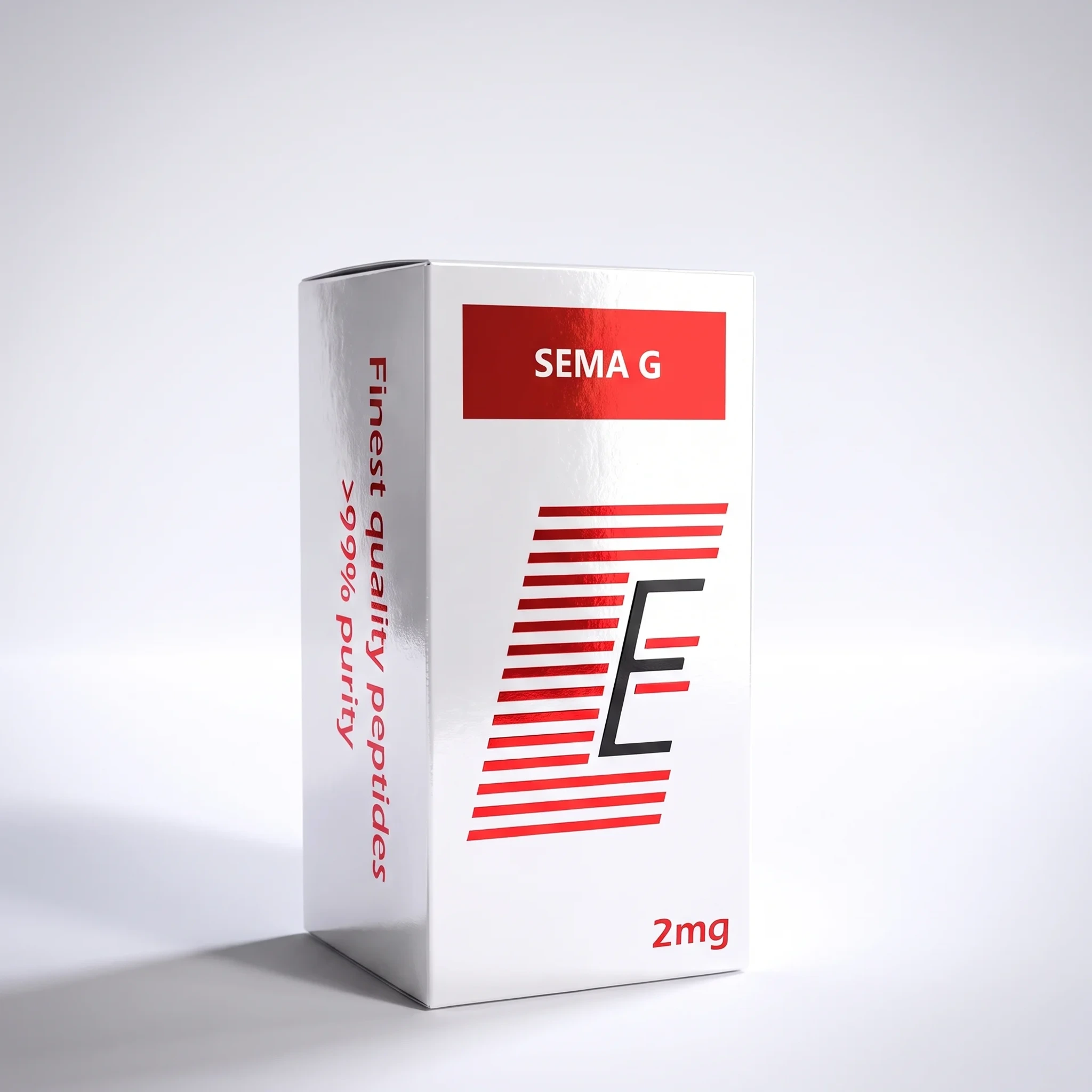
The same substance and the same peptide content – 2 mg – in two different forms. This product is vial with lyophilisate: freeze-dried powder, requiring reconstitution, in which the researcher selects the volume of the solvent, and therefore the working concentration; The lyophilisate remains stable in storage longer than the ready solution. The SEMA G 2 mg PEN variant is factory prepared solution: ready for collection without a reconstitution step, with repeatability of subsequent collections, at the expense of freedom in choosing the concentration.
Same compound, same 2 mg content, different form – the difference is only in the form of the reagent, not the molecule. The applicator line also includes variants with higher peptide content: SEMA G PEN 4mg and SEMA G PEN 8mg.
Second axis – SEMA G 2 mg (lyophilized vial) vs SEMA G 2 mg PEN. Both SKUs contain the same compound in the same amount (2 mg) – they only differ in form. The vial allows the freedom to choose the molar concentration and the highest stability in stock (lyophilisate), the applicator – ready for use without a reconstitution step and repeatability of withdrawals from the factory solution. The choice is a decision about the format of the lab work, not about any other relationship.
Third axis – RUO reagent vs registered drug (Ozempic/Wegovy/Rybelsus). This is the most important distinction. Semaglutide is the active substance of registered drugs: Ozempic® and Wegovy® (injection) and Rybelsus® (oral form). These drugs have undergone full clinical trials, have a summary of medicinal product characteristics, are produced under the GMP regime and are available only on prescription under medical supervision. SEMA G 2 mg reagent is not a substitute for any of these medicines — it does not have documentation, pharmaceutical quality or authorization for human administration. It does not replace a medical consultation.