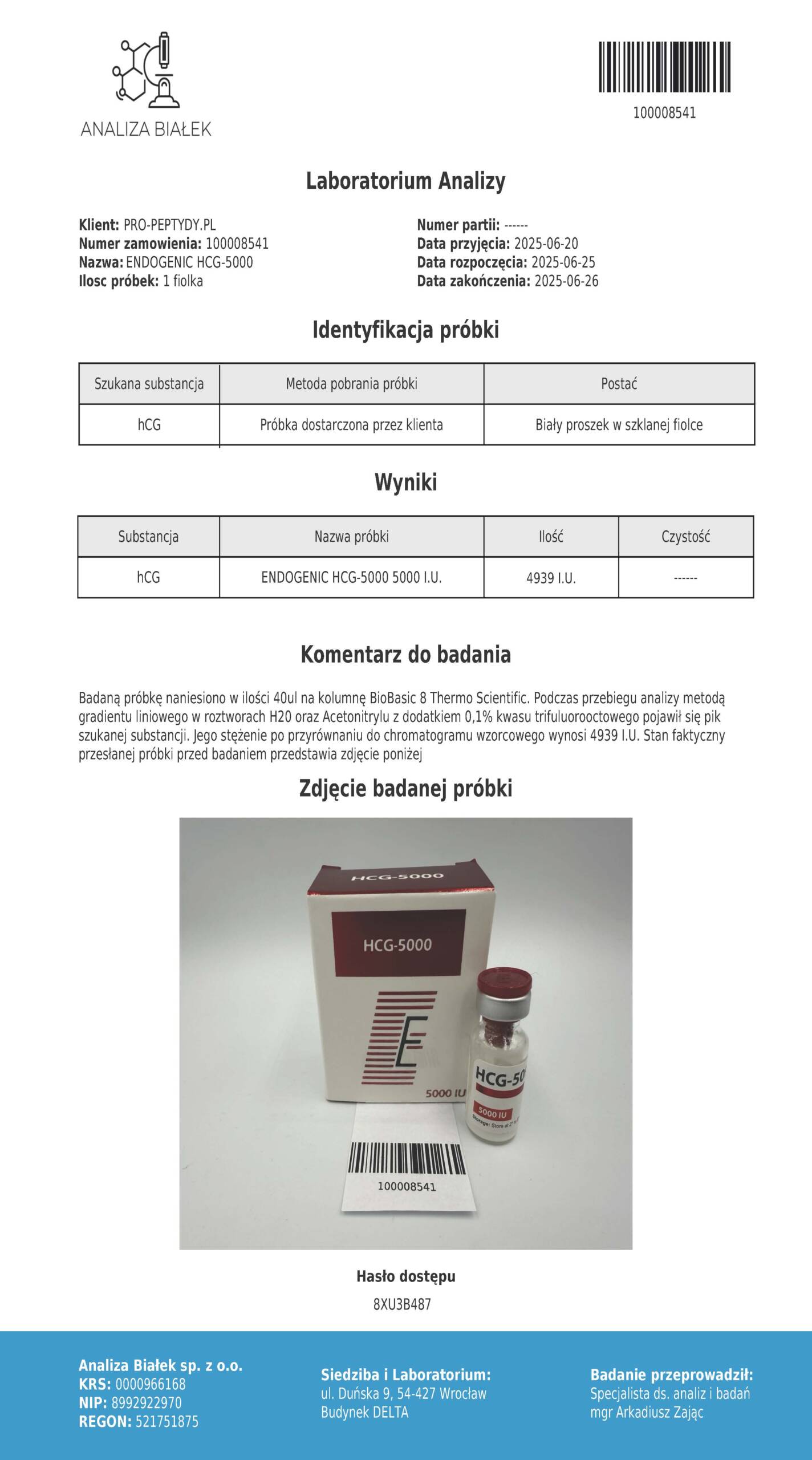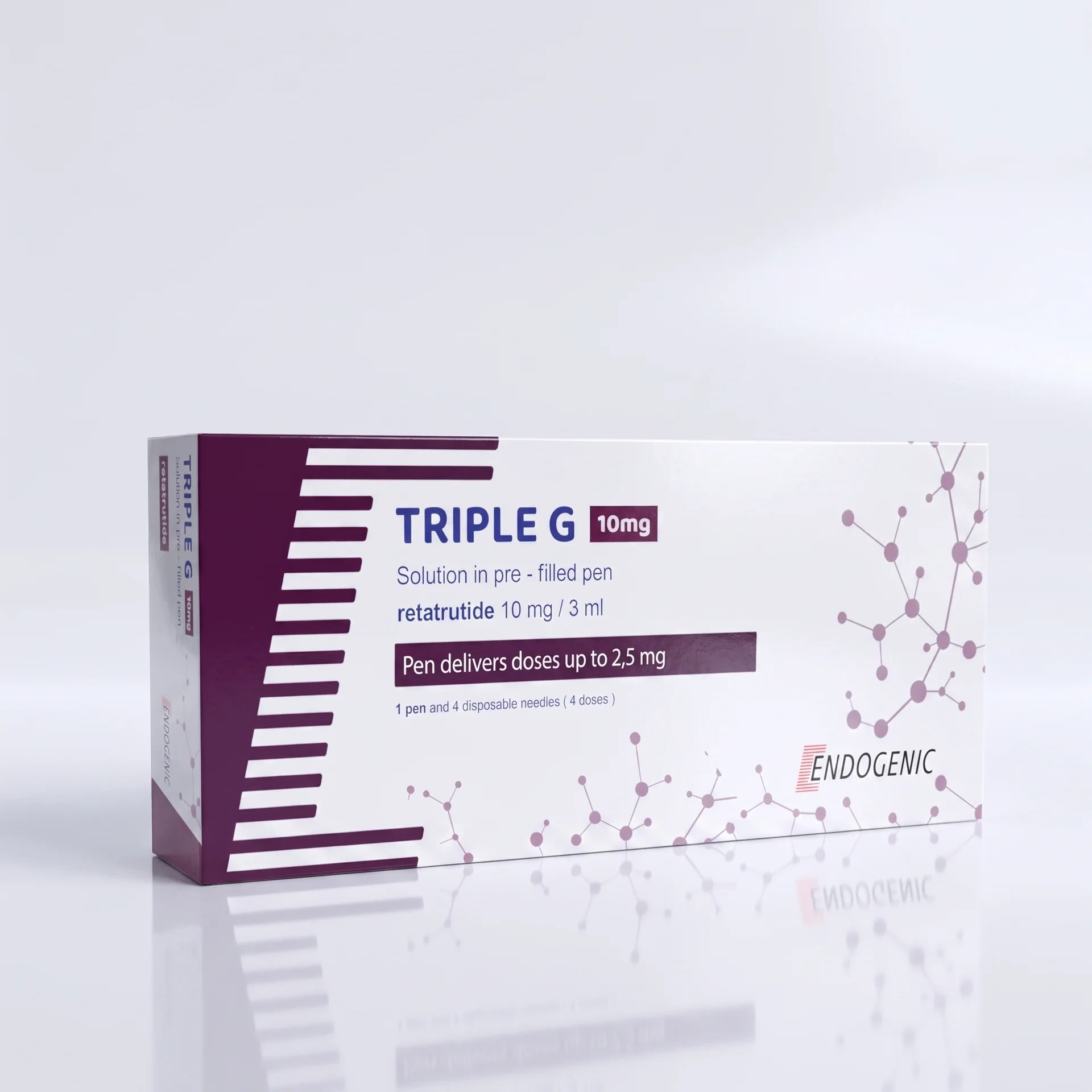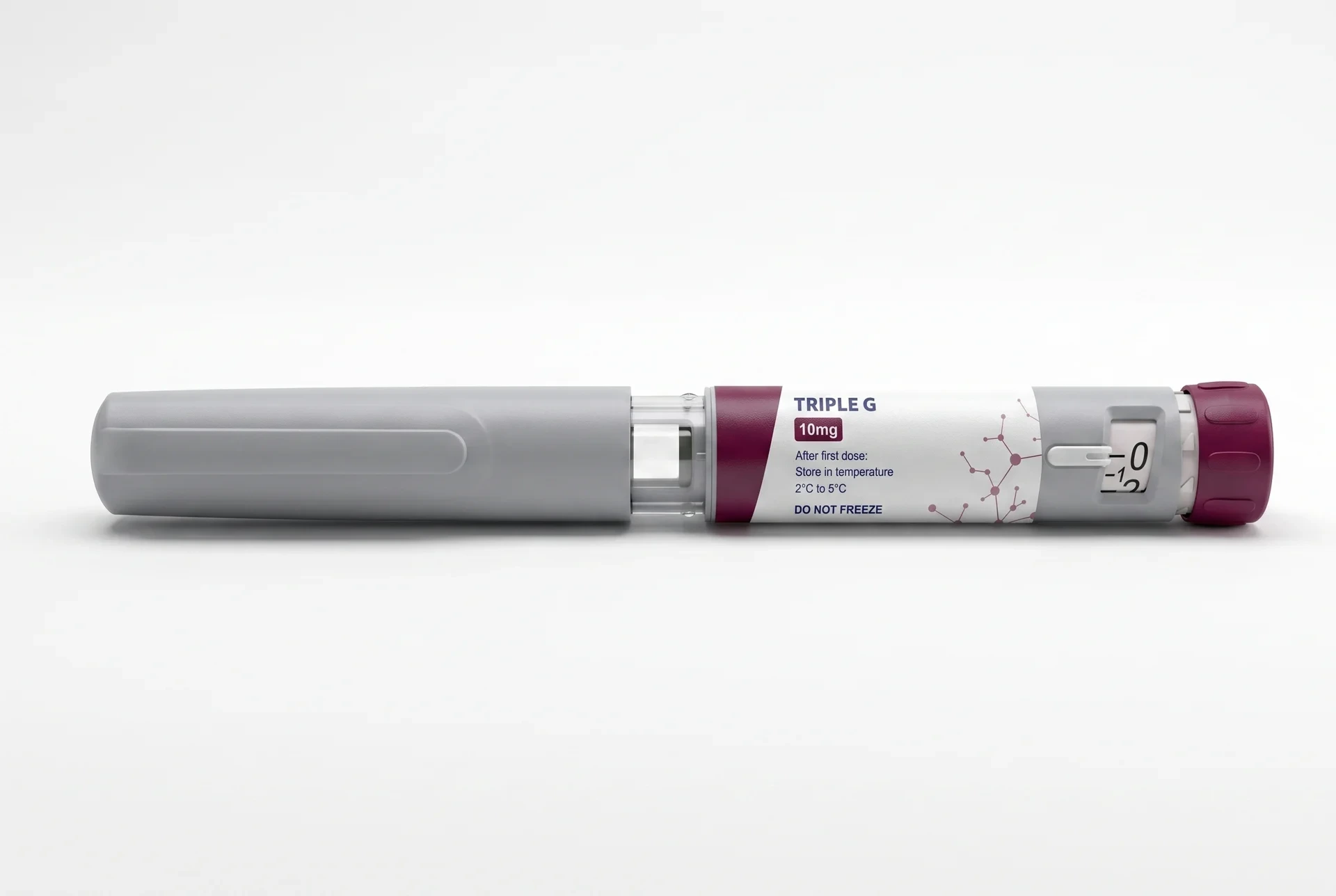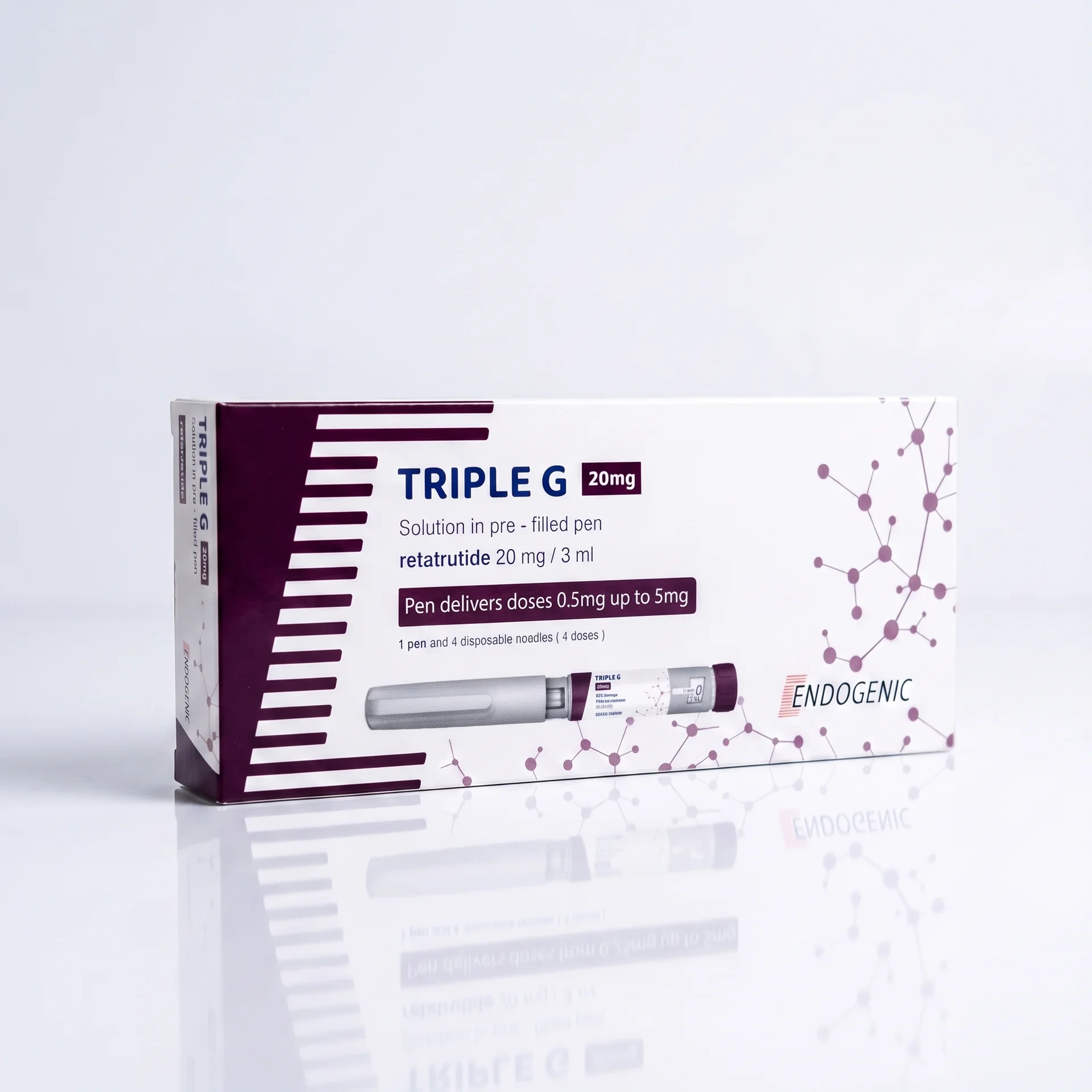
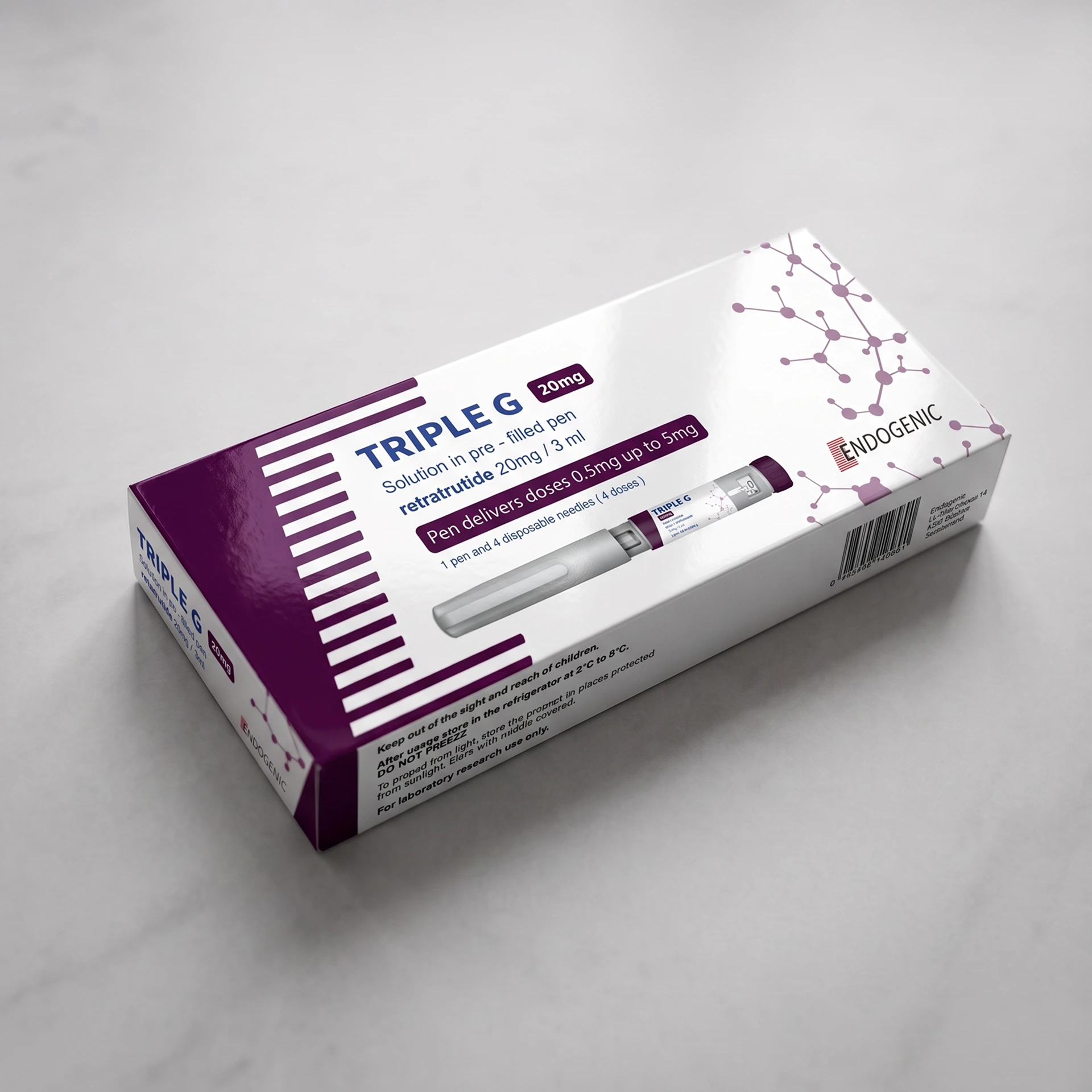


TRIPLE G 20mg PEN
TRIPLE G represents a significant advance in research on metabolism and body weight regulation. Its unique mechanism of action, targeting three different hormonal pathways, offers a comprehensive approach to understanding metabolic processes. Clinical trials show promising results in terms of: Significant weight reduction (over 20% in 48-week studies); Improving glycemic control; Increased feeling of satiety; Favorable changes in cardiometabolic parameters. TRIPLE G 20mg PEN offers scientists a convenient form of this innovative substance for use in laboratory research.
206,99 €
With code BLACK: 165,59 €
Lowest price in the 30 days before the discount:
206,99 €
Fast shipping
Free delivery from 350 €
Returns policy
TRIPLE G 20mg PEN - chemical reagent in the pen
- TRIPLE G: retatrutide, an agonist of GLP-1, GIP and glucagon receptors.
- 20 mg in PEN format.
- Research Use Only reagent, not a medicinal product.
TRIPLE G 20mg PEN is a synthetic peptide that is the subject of intensive scientific research in the area of metabolism physiology and regulation of energy homeostasis. In the context of molecular research, this substance represents a class of triple peptide receptor agonists, which makes it an important tool in research on cell signaling and mechanisms of metabolic regulation at the molecular level.
TRIPLE G 20mg PEN is an application form enabling precise dosing of substances in laboratory conditions. The PEN form (pen-type applicator) was designed to ensure repeatability and standardization in research procedures requiring precise introduction of specific amounts of a chemical reagent.
Check also reagent in a bottle.
What is Triple G 20mg PEN?
Retatrutide is a peptide with a complex molecular structure, designed as a ligand for three types of G-protein coupled receptors (GPCRs):
- GLP-1 receptor (glucagon-like peptide-1 receptor) – a receptor associated with insulinotropic signaling
- GIP receptor (glucose-dependent insulinotropic polypeptide receptor) – a receptor involved in the response to glucose
- Glucagon receptor – the receptor responsible for glucagon signaling
In the classification of chemical compounds, retatrutide belongs to the group of synthetic peptides with a modified structure, designed to study multidirectional activation of receptors. This substance is used in in vitro studies and in preclinical models as a tool for analyzing the molecular mechanisms of signal transduction.
The official chemical name of the substance and its CAS (Chemical Abstracts Service) number are available in the Safety Data Sheet (SDS), which is an integral part of the product documentation.
Structure and chemical properties
Molecular structure
Retatrutide is a peptide consisting of a sequence of amino acids linked by peptide bonds. The molecular structure includes modifications introduced to increase stability and selectivity towards three types of target receptors. Compared to natural peptide hormones, retatrutide has a modified amino acid sequence and possible post-translational modifications (e.g. acylation), which affect the pharmacokinetic properties in research models.
Physicochemical properties
The basic physicochemical properties of retatrutide include:
- Molecular weight: Value specified in the substance’s safety data sheet
- Solubility: The substance is soluble in aqueous solutions of appropriate pH
- Stability: At storage conditions of 2-8°C, the substance remains chemically stable for the period specified by the manufacturer
- Physical form: Solution for application in the PEN system
Purity and analysis
Quality control
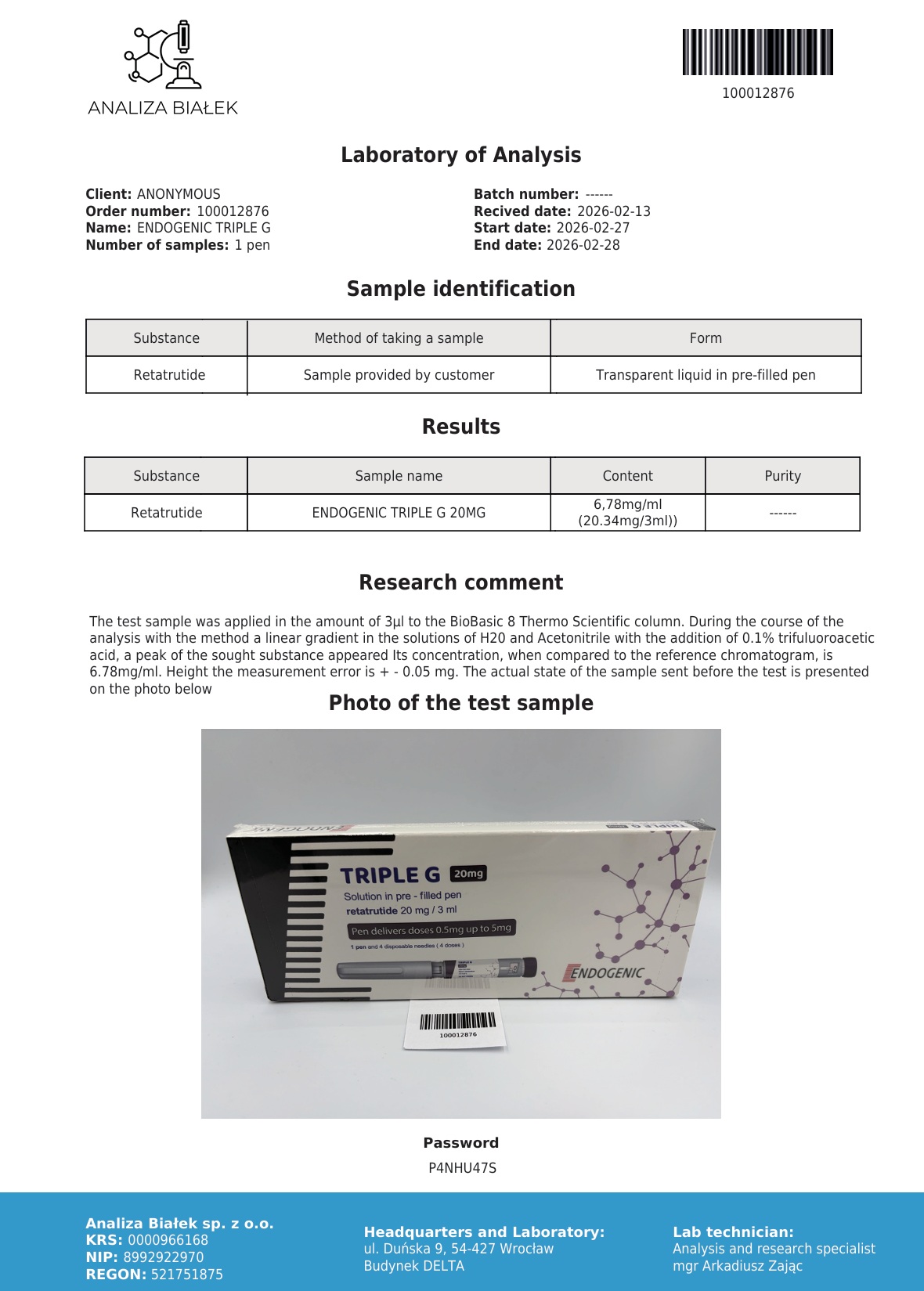
Each batch of TRIPLE G 20mg PEN is subject to rigorous quality control in accredited laboratories. The inspection process includes:
- Chemical purity analysis – determination of the active substance content and identification of potential contaminants
- Microbiological analysis – verification of the absence of microbiological contamination
- Stability test – assessment of the stability of a substance under storage conditions
- pH verification – checking the reaction of the solution
- Sterility test – confirmation of the sterility of the product
Storage and handling
Storage conditions
TRIPLE G 20mg PEN requires strict adherence to storage conditions:
- Temperature: 2-8°C (store in the refrigerator)
- Protection from light: Store in the original package protected from light
- Protection against freezing: Do not freeze – freezing may lead to loss of activity of the substance
- Humidity: Protect from excessive moisture
- Orientation: Store upright
Handling the substance in the laboratory
Persons working with retatrutide as a chemical reagent should follow standard laboratory safety procedures:
- Personal protective equipment: Use laboratory gloves, safety glasses and protective clothing
- Work in designated areas: Carry out manipulations in designated laboratory areas
- Avoiding contact: Avoid contact of the substance with the skin, mucous membranes and respiratory tract
- Documentation: Maintain records of substance use in accordance with laboratory procedures
- Disposal: Dispose of unused residues and used materials in accordance with regulations regarding chemical and biological waste
How does Triple G PEN work?
Interaction with GPCR receptors
In in vitro studies conducted on cell lines expressing target receptors, retatrutide has the ability to bind and activate three types of G protein-coupled receptors:
GLP-1 receptor activation
In experiments using cell lines transfected with the GLP-1 receptor, retatrutide induces activation of the Gs protein-related signaling cascade, leading to an increase in intracellular cAMP (cyclic adenosine monophosphate) levels. Radioligand binding assays and functional receptor activation assays confirm the substance’s affinity for the GLP-1 receptor.
GIP receptor activation
Similarly, in cell systems expressing the GIP receptor, retatrutide acts as an agonist leading to activation of the cAMP/PKA (protein kinase A) signaling pathway. Experiments using BRET (Bioluminescence Resonance Energy Transfer) or FRET (Fluorescence Resonance Energy Transfer) techniques document conformational changes of the receptor induced by ligand binding.
Glucagon receptor activation
With respect to the glucagon receptor, retatrutide exhibits agonist properties in vitro, activating signaling pathways related to the production of cAMP and the activation of cAMP-dependent kinases. Structural studies using X-ray crystallography or cryo-electron microscopy provide data on molecular interactions in the ligand-receptor complex.
Intracellular signaling
Activation of receptors by retatrutide initiates signaling cascades including:
- cAMP/PKA pathway: Increasing cAMP levels activates protein kinase A, which leads to phosphorylation of effector proteins
- MAPK pathway: Modulation of Mitogen-Activated Protein Kinases pathways
- PI3K/Akt pathway: Potential activation of the phosphatidylinositol-3-kinase pathway
- Calcium mobilization: Effect on the homeostasis of calcium ions in the cell
Kinetic characteristics and selectivity towards individual receptors are the subject of detailed pharmacological studies published in the scientific literature.
Binding and affinity studies
The binding parameters of retatrutide to receptors are determined by:
- IC50 value: The concentration of a substance that causes a 50% inhibition of the binding of the reference ligand
- EC50 value: Effective concentration resulting in 50% of the maximum response in a functional test
- Kd value: The dissociation constant that determines the binding affinity
These data are available in scientific publications and the technical documentation of the substance.
Applications of retatrutide
Research on peptide receptors
Retatrutide as a triple agonist is a tool for testing:
- Mechanisms of activation and desensitization of GPCR receptors
- Interactions between different signaling pathways
- The influence of simultaneous activation of many receptors on the cellular response
- Ligand selectivities towards various receptor subtypes
Studies of metabolism at the cellular level
In cellular models, retatrutide is used to analyze:
- Mechanisms of regulation of glucose metabolism at the molecular level
- The influence of peptide signaling on lipid metabolism
- Interactions between signaling pathways and metabolic processes
- Expression of genes related to energy metabolism
Pharmacological and pharmacokinetic studies
In preclinical studies conducted on animal models (in accordance with ethical procedures), the substance is used to:
- Assessment of bioavailability and half-life of modified peptides
- Analysis of the distribution of substances in the body
- Peptide metabolism and elimination studies
- Assessment of potential pharmacological interactions
Comparative studies of receptor agonists
Retatrutide is a reference point in comparative studies with other agonists such as:
- Single GLP-1 agonists (e.g. liraglutide, semaglutide)
- GLP-1/GIP dual agonists (e.g. tirzepatide)
- Other research peptides with a similar mechanism of action
Application in research technology
The substance is used in advanced research techniques:
- Protein crystallography: Studies on the structure of receptor-ligand complexes
- Electron cryomicroscopy: High-resolution imaging of molecular structures
- NMR Spectroscopy: Molecular Dynamics and Interaction Analysis
- Calorimetric techniques: Measurement of the binding energy of a ligand to a receptor
Legal Limitations and Disclaimers
Intended for research purposes only
TRIPLE G 20mg PEN is a chemical reagent intended only for in vitro scientific research and in preclinical models. The substance is not:
- A medicinal product authorized for marketing
- Dietary supplement
- A food product
- A cosmetic product
- A substance intended for use in humans or animals outside research procedures
Compliance with legal regulations
The product is placed on the market as a chemical reagent / reference material in accordance with the regulations governing the trade in chemical substances in the European Union. The substance does not have a marketing authorization as a medicinal product in the Republic of Poland in accordance with the requirements of the Act of September 6, 2001 – Pharmaceutical Law.
Availability restrictions
The product is only available for:
- Scientific and research institutions
- Analytical laboratories
- Universities conducting scientific research
- Natural persons conducting documented research activities
The purchaser is obliged to present documentation confirming the purpose of purchasing the substance (conducting scientific research).
Disclaimer
The manufacturer/distributor is not responsible for:
- Use of substances contrary to their intended use
- Effects of using a substance on humans or animals outside research procedures
- Violation of the law resulting from improper use of the product
Summary
TRIPLE G 20mg PEN containing retatrutide is an advanced chemical reagent intended for demanding applications in scientific research on peptide receptors and metabolism at the molecular level. Key product features:
- High purity confirmed by certificate of analysis (≥95% HPLC)
- Precise dosing thanks to the PEN applicator
- Technical documentation including SDS and CoA
- Quality control carried out by accredited laboratories
- Triple mechanism of activation of GLP-1, GIP and glucagon receptors
- Research applications in biochemistry, pharmacology and molecular physiology
- Compliance with regulations regarding trade in chemical reagents
- Availability only to institutions and people related to research activities
Scientific References
- Jastreboff AM, et al. (2023) – “Triple–Hormone-Receptor Agonist Retatrutide for Obesity – A Phase 2 Trial” – The New England Journal of Medicine
- Coskun T, et al. (2022) – “LY3437943, a novel triple glucagon, GIP, and GLP-1 receptor agonist for glycemic control and weight loss: From discovery to clinical proof of concept” – Cell Metabolism
- Nahra R, et al. (2021) – “Effects of Cotadutide on Metabolic and Hepatic Parameters in Adults With Overweight or Obesity and Type 2 Diabetes” – Diabetes Care, American Diabetes Association
5.0
4 reviews
-
Jacke
good quality
Very good quality, fast shipping, I recommend Pro-Body.
-
Anaa
Love it
I like this product :)
-
Greg
Product review
Very good product
-
paulina
 Polski
Szybka wysyłka
Bardzo sprawna wysyłka, dobry produkt. Polecam