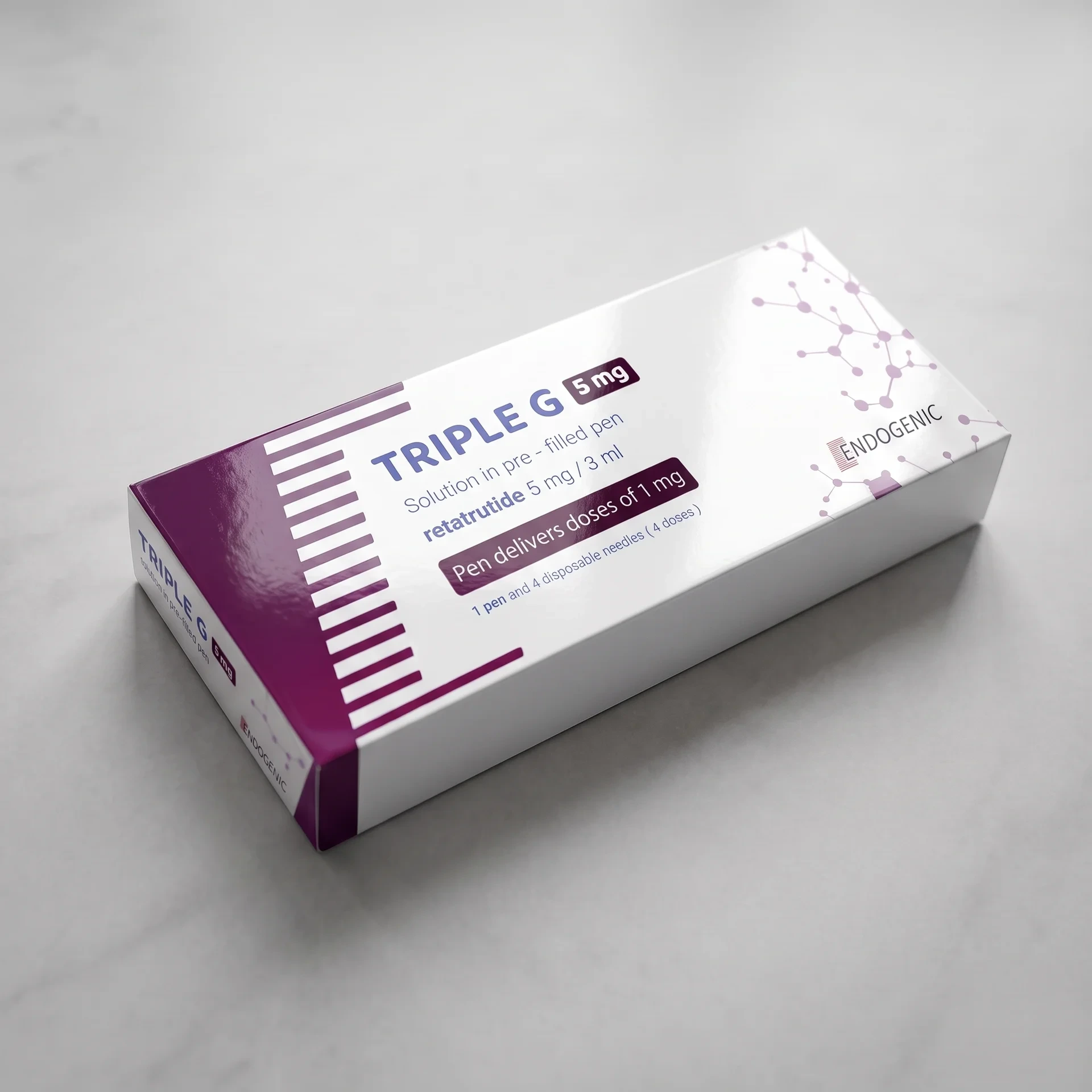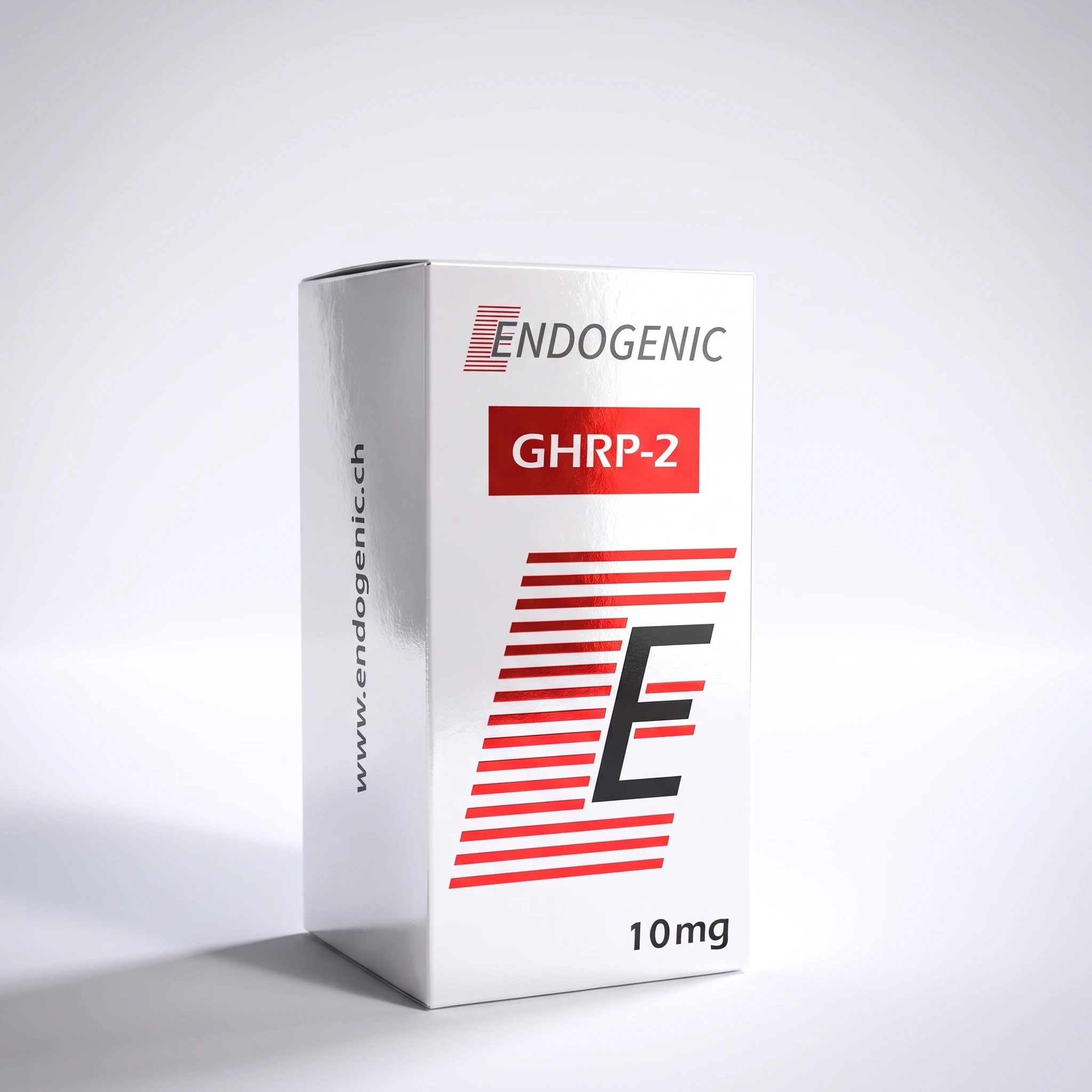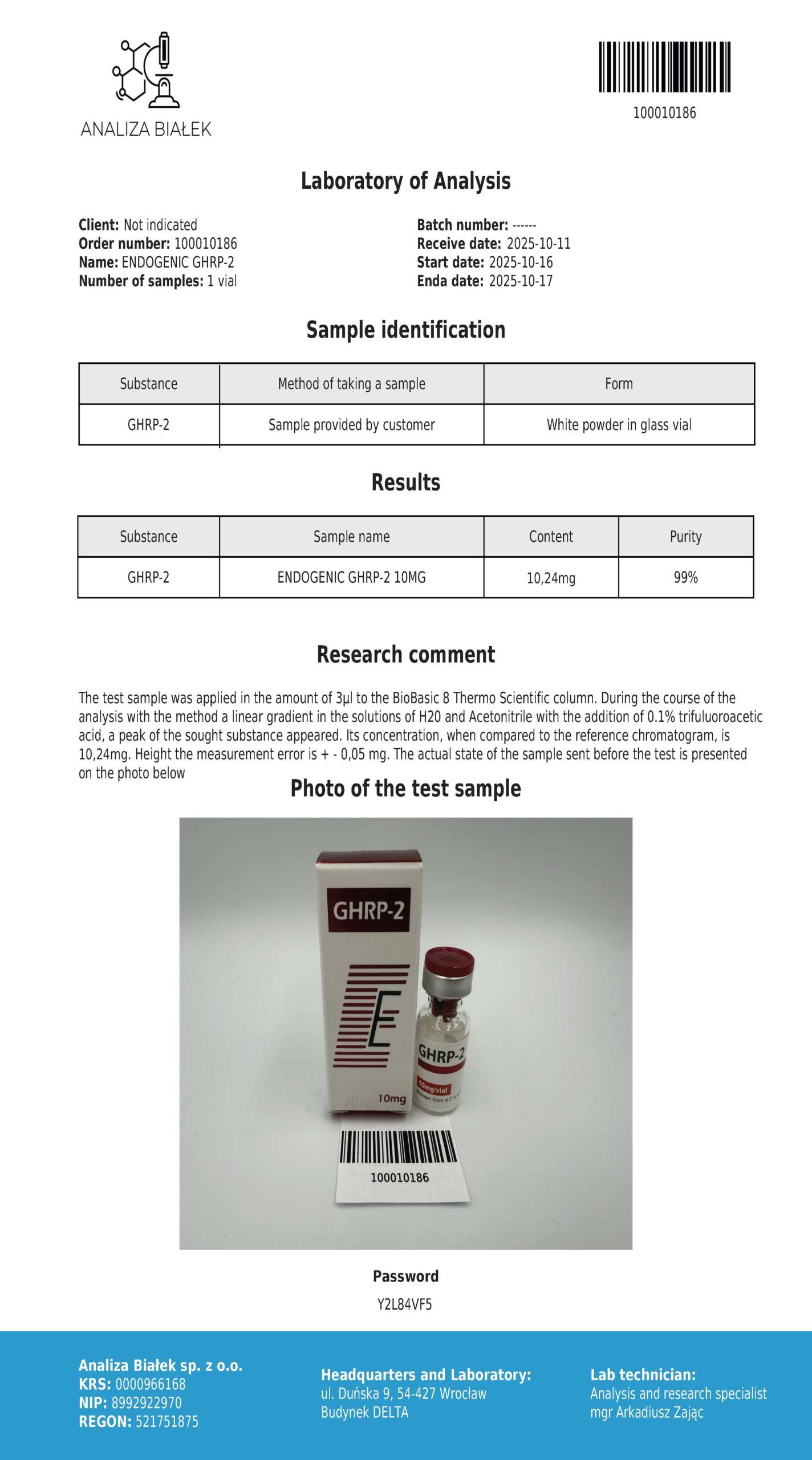


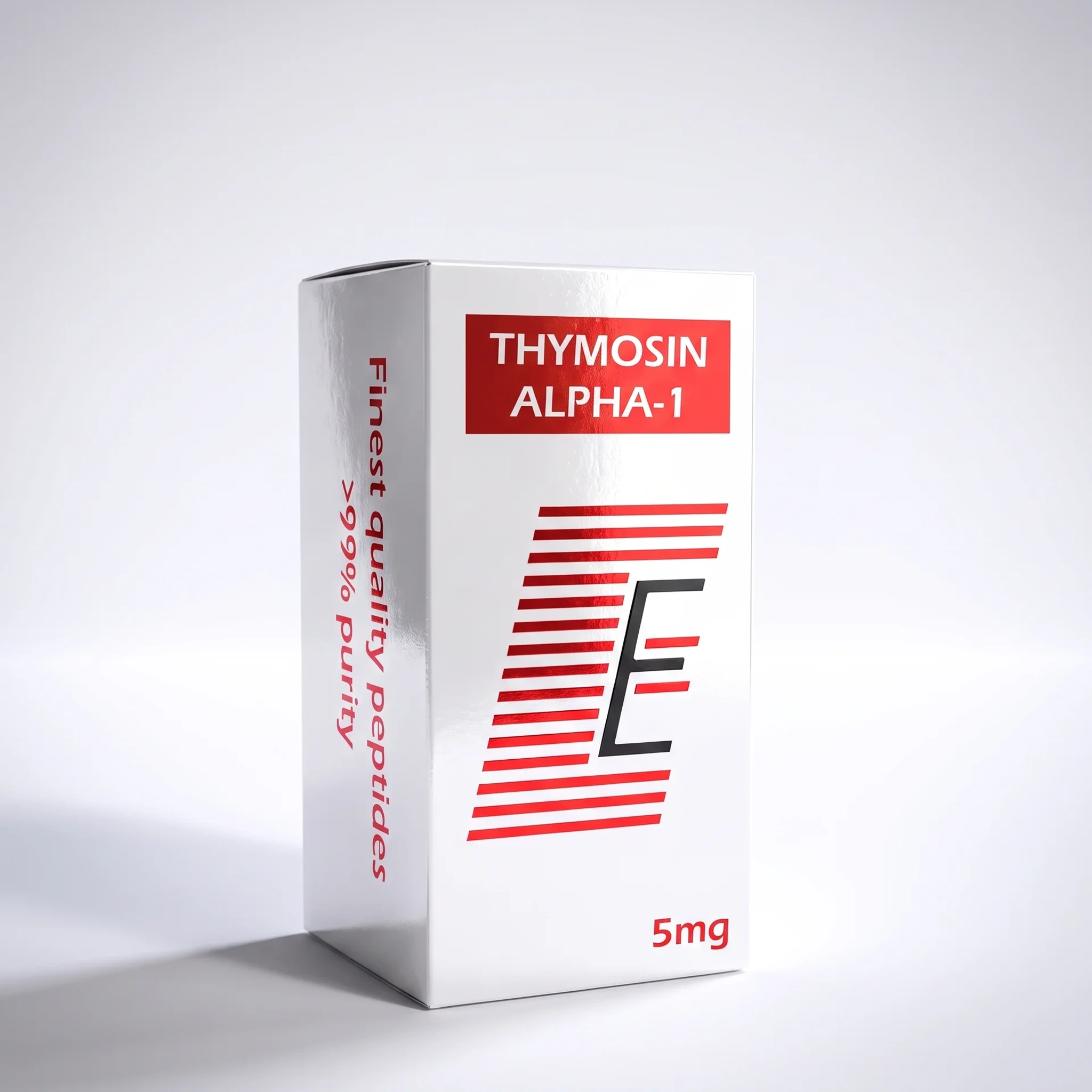
The active substance is the same – Thymosin Alpha-1 (international name Thymalfasin). But the RUO Pro-Body reagent and the Zadaxin® drug are two separate regulatory frameworks. Zadaxin®/Thymalfasin is a registered medicinal product approved for marketing in approximately 30 countries for indications such as chronic hepatitis B and C and oncological immunostimulation; is available with pharmaceutical authorization and under medical supervision. Thymosin Alpha-1 RUO reagent is intended only for laboratory tests – it is not authorized for administration to humans, is not a substitute for medicine and does not replace medical consultation. Sequence identity does not abolish this boundary.
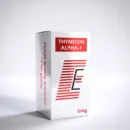
Thymosin Alpha-1 5mg
Thymosin Alpha-1 (Tα1, Thymalfasin) 5 mg is an immunomodulatory peptide from the Endogenic line – a fragment of prothymosin alpha, which in research models supports the maturation of T lymphocytes, activates the signaling of Toll-like receptors and shifts the immune response towards the Th1 profile. Research Use Only reagent
37,99 €
Fast shipping
Delivery options
Returns policy
Thymosin Alpha-1 5 mg - thymus immunomodulatory peptide, reagent
- Thymosin Alpha-1: 28-amino-acid thymic peptide.
- 5 mg lyophilisate in a vial.
- Research Use Only reagent, not a substitute for Zadaxin.
Product status information
Chemical reagent intended exclusively for laboratory tests (Research Use Only). It is not a medicinal product, dietary supplement or food. It is not intended for use on humans or animals. Sales only to registered research units and laboratories.
Regulatory status (critical) – active substance of a registered drug
Thymosin Alpha-1 (Tα1) as an active substance is also available in pharmaceuticals as registered medicine under trade names Zadaxin® and Thymalfasin (injectable form). This drug is authorized in approximately 30 countries for indications such as chronic hepatitis B and C, as an immunostimulant in oncology and as a vaccine adjuvant. These are two separate regulatory frameworks.
Thymosin Alpha-1 RUO reagent in the Pro-Body catalog is not Zadaxin®/Thymalfasin, is not a substitute, is not authorized for administration to humans and does not replace medical consultation. The identity of the amino acid sequence does not eliminate this boundary – the registered drug comes from the pharmaceutical authorization process, the RUO reagent is intended only for laboratory tests.
Introduction
The thymus (thymus) remained an enigma organ for much of the 20th century – it was known to decline with age and to be associated with immunity, but its molecular role remained elusive for a long time. The breakthrough came when Allan Goldstein’s team isolated a fraction of peptides regulating the maturation of T lymphocytes from the thymus extract.
Among them, there was one particularly active one – a 28-amino acid peptide called Thymosin Alpha-1. This fragment turned out to be one of the best characterized peptide immunomodulators in the literature. Thymosin Alpha-1 (Tα1) is an acetylated 28-amino acid peptide, a fragment of a larger prohormone – prothymosin alpha. In the body, it is produced in the thymus and is involved in the maturation, differentiation and activation of T lymphocytes.
For an immunology researcher, this means a model tool for studying how a single peptide can shift the balance of the immune response towards a Th1 profile and enhance the cell types responsible for the antiviral response. In the Pro-Body catalog, the Tα1 belongs to the group peptides for immunity — molecules tested for immune system modulation.
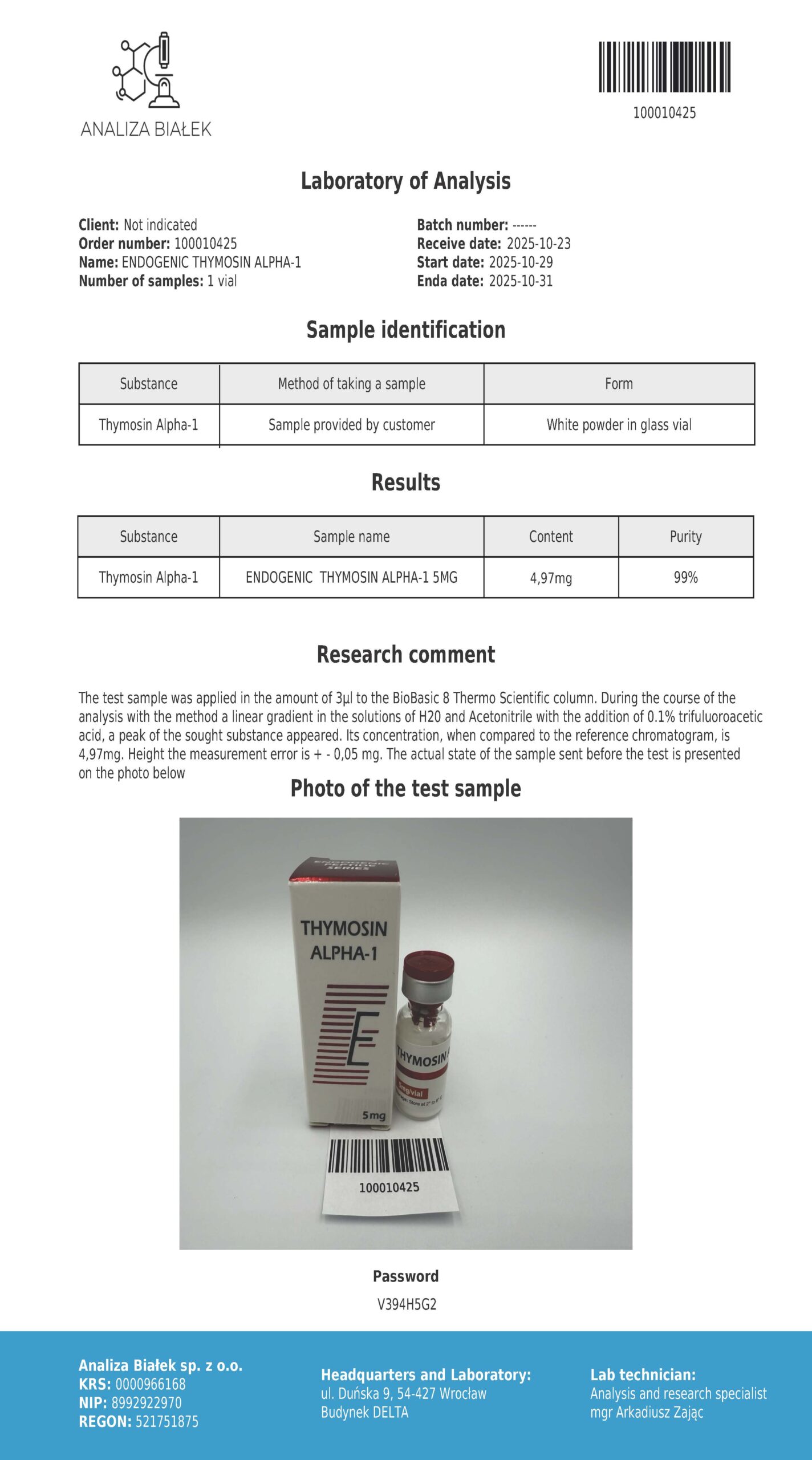
This reagent is supplied as lyophilisate in a vial, 5 mg Thymosin Alpha-1, for reconstitution with bacteriostatic water in laboratory conditions. Line Endogenic Pro-Body includes peptides that replicate molecules naturally present in the body – Tα1 is a model example of this. Purity verified by HPLC ≥98%, identity confirmed by mass spectrometry, COA available for each batch.
Thymus and T cell maturation
The thymus is an organ in which T lymphocytes undergo an “education” process – they learn to recognize foreign antigens and tolerate their own. Immature thymocytes migrate from the marrow to the thymus, where, under the influence of the epithelial microenvironment, they mature into functional T lymphocytes. This microenvironment produces a set of soluble peptide factors – thymosins – that coordinate subsequent stages of differentiation.
Thymosin Alpha-1 is one of the best described of these agents. Originally isolated from “Thymosin Fraction 5” – a crude extract of bovine thymus – it was then sequenced and chemically synthesized. It turned out that this peptide is not produced as an independent gene product, but as a fragment of a large nuclear protein – prothymosin alpha — released as a result of proteolysis.
This distinction is important for researchers: Tα1 is a natural product of protein processing present in almost every cell, and its signaling role is carried out mainly in the extracellular compartment, on the surface of immune cells. The Tα1 immunomodulatory profile covers a wide spectrum of observations in the literature:
- Stimulation of T lymphocyte maturation — influence on the differentiation of thymocytes and dendritic cells in in vitro models
- Shift of Th1/Th2 balance — strengthening the Th1 response (antiviral, anticancer)
- Activation of antigen-presenting cells — maturation of dendritic cells by Toll-like receptor signaling
- Modulation of cytokine production — influence on the profile of IFN-γ, IL-2 and other cellular response mediators
- Regulation of lymphocyte apoptosis — contextual anti-inflammatory effect and maintaining the homeostasis of the lymphocyte pool
Tα1 occupies the position of a model ligand in this group for studying how an endogenous peptide modulates the transition between the innate and adaptive immune response – without direct cytotoxicity, through receptor signaling. Thymic peptides studied in a similar context also include: Thymulin — a thymic peptide with a different structure, combined with Tα1 in work on the regeneration of immune function.
What is Thymosin Alpha-1?
Chemically, Thymosin Alpha-1 is an N-terminally acetylated, linear 28-amino acid peptide.
- Common name: Thymosin Alpha-1, Tα1, Thymosin α1
- Synonyms: Thymalfasin (international name INN), TA1, prothymosin alpha fragment
- Class: acetylated 28-amino acid immunomodulatory peptide; N-terminal fragment of the prohormone prothymosin alpha
- Sequence (28 aa): Ac-Ser-Asp-Ala-Ala-Val-Asp-Thr-Ser-Ser-Glu-Ile-Thr-Thr-Lys-Asp-Leu-Lys-Glu-Lys-Lys-Glu-Val-Val-Glu-Glu-Ala-Glu-Asn (acetylated N-terminus; sequence according to batch COA)
- CAS number: 62304-98-7 (in case of uncertainty – “to be verified in the batch COA”)
- Molecular formula: C₁₂₉H₂₁₅N₃₃O₅₅
- Molecular weight: ~3108 g/mol
- Chemical class: a linear oligopeptide with a strongly acidic character (predominance of Asp/Glu residues), with an N-terminal acetyl group
- Supplied form: lyophilisate in a vial, 5 mg of substance, for reconstitution with bacteriostatic water; pharmaceutical grade ≥98% HPLC
Origin: Thymosin Alpha-1 was isolated from the thymus in the 1970s – Allan Goldstein and colleagues identified it as the most active fraction of Thymosin Fraction 5 extract. Once the sequence was determined, the peptide was chemically synthesized, enabling independent mechanistic and clinical studies. Under the name Thymalfasin (Zadaxin®), the molecule entered clinical pharmacology as an immunomodulator.
The starting point was the observation that thymosins restore immune function in thymus-deficient models – which focused attention on Tα1 as an endogenous regulator of T cell maturation and antiviral response. Modern literature describes the molecule mainly in the context of Toll-like receptor signaling and Th1/Th2 balance.
Physicochemical characteristics
| Parameter | Value |
|---|---|
| Class | Acetylated 28-amino acid immunomodulatory peptide |
| Number of amino acids | 28 |
| N-terminal modification | Acetyl group (Ac-) |
| CAS number | 62304-98-7 (to be verified with the batch COA) |
| Molecular formula | C₁₂₉H₂₁₅N₃₃O₅₅ |
| Molecular weight | ~3108 g/mol |
| Biological origin | Prothymosin alpha N-terminal fragment; isolated from the thymus |
| Physical form | Lyophilisate in vial, 5 mg |
| HPLC purity | ≥98% |
| Identity confirmation | Mass spectrometry (MS Q-TOF) |
| Reconstitution | Bacteriostatic water |
Immunomodulatory mechanism at the molecular level
Thymosin Alpha-1 acts as a modulator of the immune response by acting on several complementary pathways observed in preclinical models. Unlike cytotoxic or directly antiviral molecules, Tα1 enhances the body’s own defense mechanisms through receptor signaling on immune cells. Immunomodulatory profile observed in research models:
- Stimulation of T lymphocyte maturation and differentiation — Tα1 influences the maturation of thymocytes and the differentiation of dendritic cells, promoting the generation of functional T helper cells. In vitro models have observed an enhancement of the Th1 response – the arm of cellular immunity responsible for fighting intracellular pathogens (Garaci et al. 2012).
- Activation of Toll-like receptors (TLR9, TLR2) — the peptide activates dendritic cells by signaling Toll-like receptors, mainly TLR9 and TLR2. This is the central mechanism linking Tα1 to the innate immune response: TLR activation triggers the MyD88 cascade and leads to the maturation of antigen-presenting cells (Romani et al. 2004)
- Increasing NK cell activity and antiviral response — in research models, Tα1 enhances the cytotoxic activity of natural killer (NK) cells and intensifies the antiviral and anticancer response. The mechanism involves enhanced recognition and elimination of infected or altered cells (King & Tuthill 2016)
- Modulation of cytokine profile (IFN-γ, IL-2) — activation of Tα1 pathways shifts the balance of cytokine production towards the Th1 profile (increase in IFN-γ, IL-2), strengthening cellular immunity at the expense of Th2 dominance. This is the molecular basis of the “reprogramming” of the immune response observed in infection models
- Anti-inflammatory effect and regulation of lymphocyte apoptosis — in specific contexts, Tα1 also has activity that silences excessive inflammatory response and regulates lymphocyte apoptosis, participating in maintaining the homeostasis of the immune cell pool (Costantini et al. 2019)
Applications in scientific research
Thymosin Alpha-1 is used in research on peptide immunomodulation, T cell maturation and Toll-like receptor signaling. In vitro models (cultures of dendritic cells, T lymphocytes, macrophages, NK cells) examine the effect of the peptide on maturation markers, cytokine profile and cytotoxic activity. Its role in the antiviral and anticancer response and in restoring immune function in states of immunosuppression is analyzed in animal models. Specific research directions include:
- Maturation of T lymphocytes and dendritic cells — models of immune cell differentiation, assessment of maturation and antigen presentation markers
- Toll-like receptor signaling (TLR9, TLR2) — characteristics of dendritic cell activation by the MyD88 pathway, agonist selectivity studies
- Th1/Th2 balance and cytokine profile — infection models with assessment of IFN-γ, IL-2 and cellular response shift
- NK cell activity and antiviral response — models for assessing cytotoxicity and clearance of infected cells
- Immunomodulation in states of immunosuppression — models of restoring immune function and adjuvant enhancement of the response to antigens
Tα1 is also combined in research protocols with other peptides with a regulatory profile – e.g. with an anti-inflammatory tripeptide, which is KPV peptide (modulation of the inflammatory response), or with Khavinson peptide bioregulators, such as Livagen — when the goal is to compare different axes of modulation of the immune-regenerative response. Any such combination remains within the framework of preclinical models.
Summary
Thymosin Alpha-1 (Tα1, Thymalfasin) is an acetylated 28-amino acid immunomodulatory peptide – the N-terminal fragment of the prohormone prothymosin alpha, originally isolated from the thymus. In research models, it affects the maturation of T lymphocytes and dendritic cells, activates the signaling of Toll-like receptors (TLR9, TLR2), enhances the activity of NK cells and shifts the cytokine balance towards the Th1 profile (IFN-γ, IL-2).
It is also an active substance a registered medicine (Zadaxin®/Thymalfasin) in approximately 30 countries – making the drug/reagent distinction a critical compliance element. Reagent Regulatory Status – Research Use Only; it is not a drug substitute or medicinal form; DISADVANTAGE: Not on the prohibited list. The broader context of peptide immunomodulation and an overview of molecules studied for supporting the immune system is discussed in the entry about peptides for immunity.
Bibliography
- Garaci E, Pica F, Serafino A, et al. (2012). Thymosin α1 and cancer: action on immune effector and tumor target cells. PubMed
- Romani L, Bistoni F, Gaziano R, et al. (2004). Thymosin alpha 1 activates dendritic cells for antifungal Th1 resistance through toll-like receptor signaling. PubMed
- King R, Tuthill C (2016). Immune Modulation with Thymosin Alpha 1 Treatment. PubMed
- Camerini R, Garaci E (2015). Historical review of thymosin α 1 in infectious diseases. PubMed
- Costantini C, Bellet MM, Pariano M, et al. (2019). A Reappraisal of Thymosin Alpha1 in Cancer Therapy. PubMed
- Goldstein AL, Goldstein AL (2009). From lab to bedside: emerging clinical applications of thymosin alpha 1. PubMed
FAQ
In research models, Tα1 supports the maturation and differentiation of T lymphocytes and dendritic cells, promoting the generation of functional Th1-type helper cells. A shift in the Th1/Th2 balance towards cellular immunity was observed, with an increase in the production of the cytokines IFN-γ and IL-2. Tα1 does not have cytotoxic or direct antiviral effects – it enhances the immune response’s own regulatory mechanisms through receptor signaling (Garaci et al. 2012). All these observations are from in vitro models, animal models and the literature on Thymalfasin and do not apply to the RUO reagent.
One of the best described mechanisms is the activation of dendritic cells by Toll-like receptors, mainly TLR9 and TLR2. Binding of the peptide triggers the MyD88 adapter pathway and leads to maturation of antigen-presenting cells—which links Tα1 to the innate arm of the immune response (Romani et al. 2004). This TLR signaling is a molecular bridge between the action of Tα1 on innate immunity and the enhancement of the adaptive response (T cells, Th1 profile).
Thymosin Alpha-1 is not on the current WADA Prohibited List as a separately listed substance. Nevertheless, the regulatory status in sports is sometimes interpreted contextually, and prohibited lists are updated annually. Registered Athletes (ADAMS) should independently verify the current WADA Prohibited List before any decision and do not assume that the status of the peptide remains unchanged. Details in the “Regulatory Status” section above.
The lyophilisate is dissolved with bacteriostatic water introduced along the side of the vial, without a violent jet onto the powder and without shaking – the detailed procedure is provided in the “Reconstitution Protocol” section above. The volume of solvent is selected to the target working concentration (e.g. 1 ml of water per 5 mg = 5 mg/ml). The solution should be clear and colorless; store it in the refrigerator, protected from light. Due to the numerous Asn/Gln residues, the peptide is susceptible to deamidation in solution – it is worth checking the stability by HPLC.
The medicinal form (Thymalfasin, Zadaxin®) is a registered pharmaceutical product intended for administration to humans under medical supervision, manufactured in a pharmaceutical regimen and approved for marketing in clinical indications. Thymosin Alpha-1 RUO Pro-Body reagent is intended for laboratory tests only on peptide immunomodulation – is not a medicinal product, is not authorized for use in humans and does not replace medical consultation. This distinction is at the heart of the regulatory framework for this reagent.
0.0
0 reviews
This product has no reviews yet.
Related products