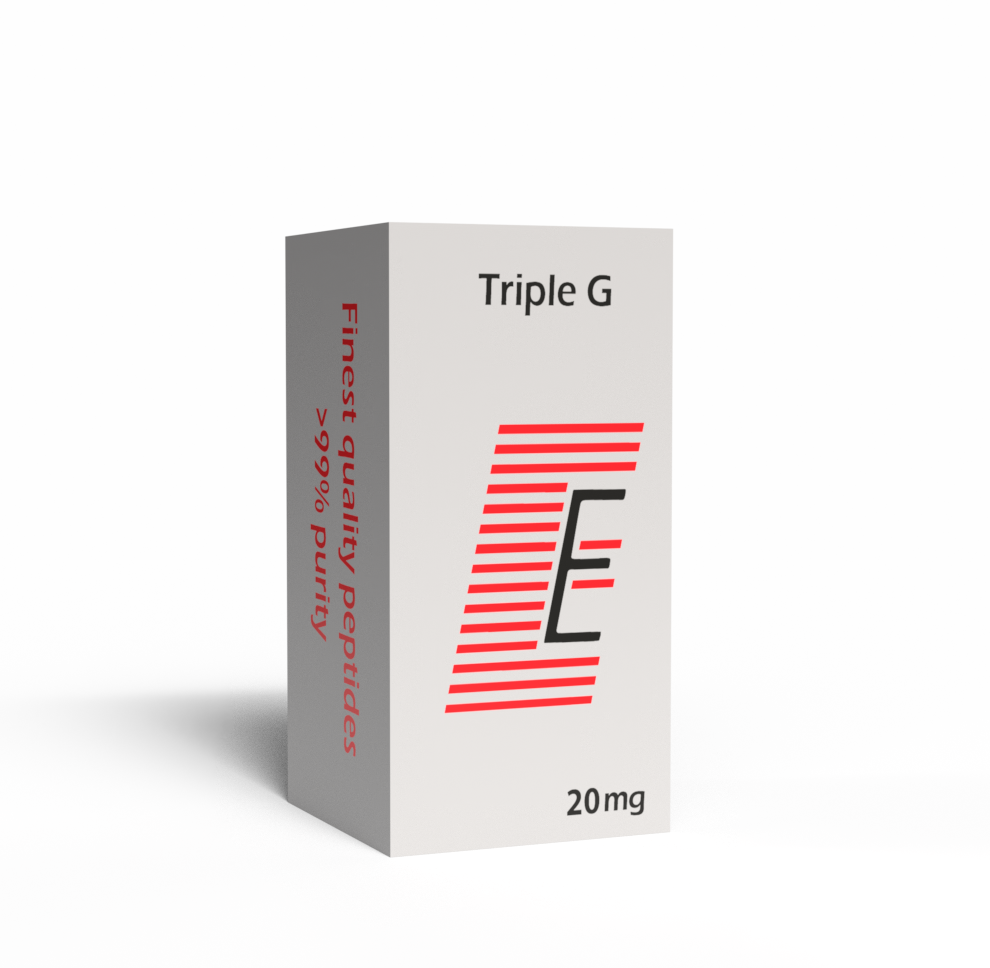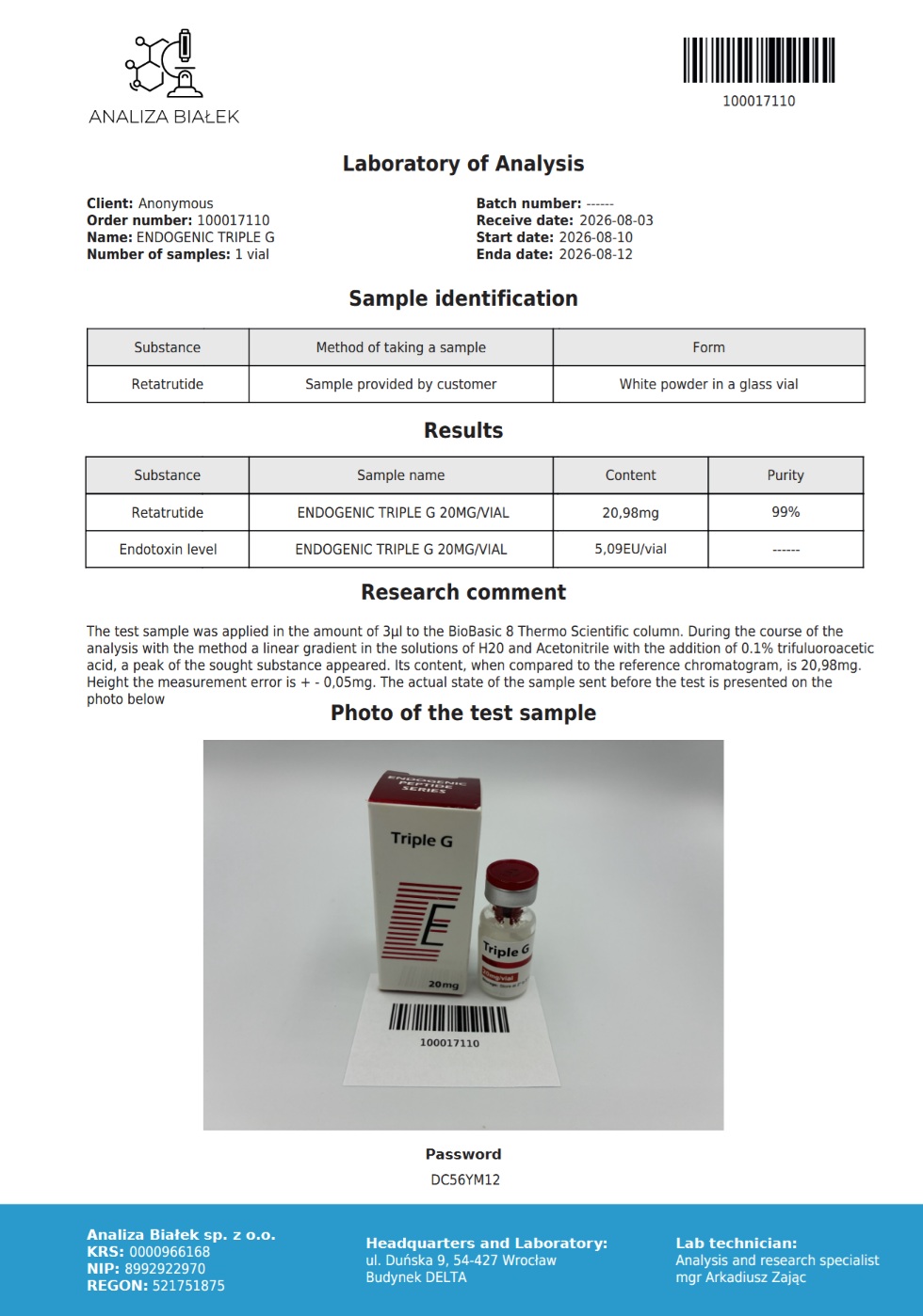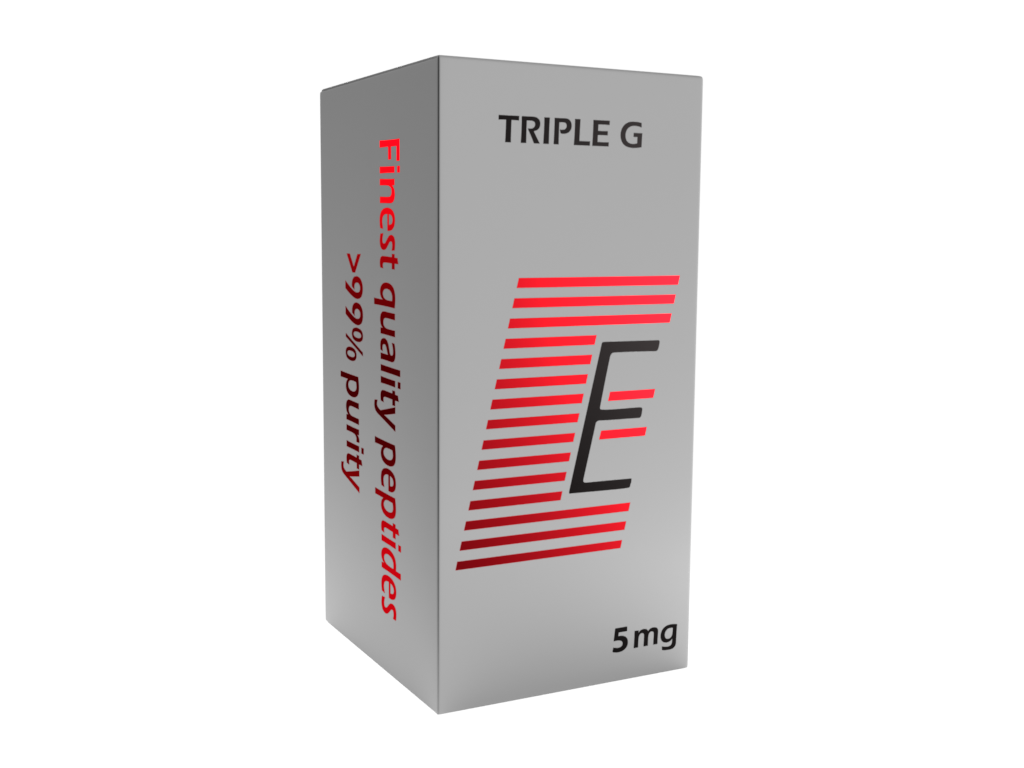
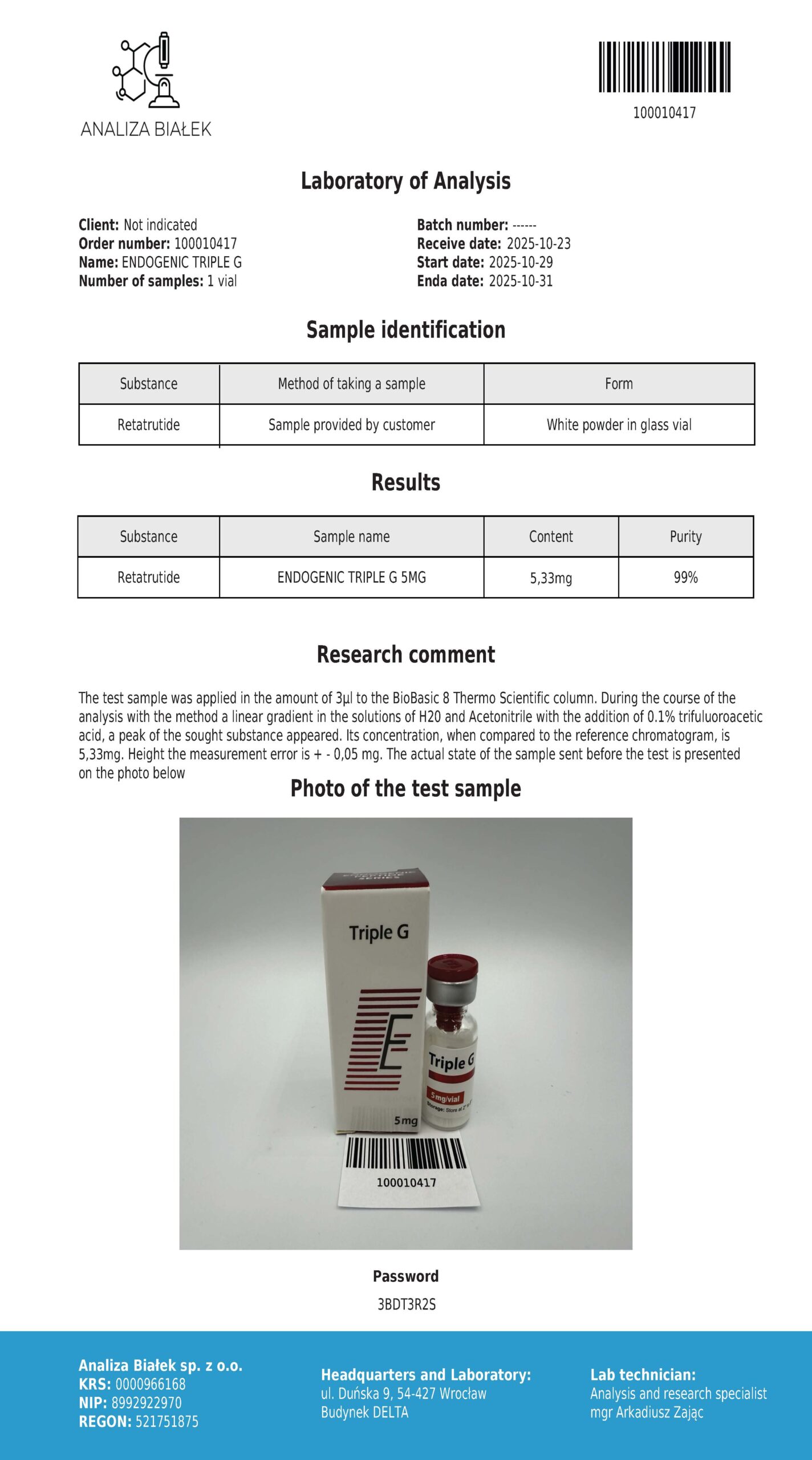
TRIPLE G 5 mg is a research reagent containing retatrutide (retatrutide, LY3437943) – synthetic peptide designed as triple agonist three metabolic receptors at the same time: GLP-1 receptor, GIP receptor and glucagon receptor. “Triple-agonist” means the activation of three receptors at once – as opposed to a mono-agonist (one receptor) and dual-agonist (two). Hence the trade name TRIPLE G. Structurally, the molecule is based on the GIP skeleton with amino acid modifications and C20 acylation. In the Pro-Body catalog it is a RUO reagent, for laboratory tests only – not a medicinal product.
Triple G 5mg
TRIPLE G 5 mg — research reagent with a synthetic triple agonist of GLP-1, GIP and glucagon receptors, in a vial with lyophilisate for laboratory tests. The mechanism combines triple receptor agonism with an added glucagon vector and a long half-life. The same compound is also available as TRIPLE G 5 mg PEN (applicator variant). RUO reagent.
78,99 €
With code BLACK: 63,19 €
Lowest price in the 30 days before the discount:
78,99 €
Fast shipping
Free delivery from 350 €
Returns policy
TRIPLE G 5 mg - triple agonist of GLP-1, GIP and glucagon receptors - research reagent
- TRIPLE G 5 mg — research reagent with a synthetic triple agonist of GLP-1, GIP and glucagon receptors, in a vial with lyophilisate for laboratory tests.
- The mechanism combines triple receptor agonism with an added glucagon vector and a long half-life.
- The same compound is also available as TRIPLE G 5 mg PEN (applicator variant).
Triple G (retatrutide, LY3437943) is the molecule of interest Eli Lilly’s advanced clinical program (phase III trials, including the TRIUMPH program). As of publication date it is not registered as a medicine in any jurisdiction — neither EMA, FDA nor EFSA has issued authorization. Reagent TRIPLE G 5 mg (retatrutide) in the Pro-Body catalog is not a medicinal product, is not a substitute for the Eli Lilly drug under investigation and does not replace a medical consultation.
It is a molecular tool for laboratory work, not an adjunct or therapeutic agent. Any communication suggesting human use is contrary to the Research Use Only framework.
TRIPLE G 5 mg is a research reagent – synthetic triple agonist of incretin and glucagon receptors, i.e. a molecule that simultaneously activates three metabolic receptors: GLP-1, GIP and the glucagon receptor. The trade name TRIPLE G refers directly to three target receptors, and in the literature the same substance is described under the laboratory designation LY3437943.
In the Pro-Body catalog, the Endogenic line groups peptides that represent endogenous molecules or their analogues – signals that the body produces on its own and which researchers recreate synthetically as molecular tools. Retatrutide belongs to this family by its GIP hormone-based skeleton with structural modifications and acylation. The molecule completes a certain logical sequence in the development of incretin pharmacology.
First, single GLP-1 agonists (mono) were tested, then double GLP-1 and GIP agonists (dual), and retatrutide adds a third vector – glucagon receptor agonism. This expansion from two to three receptors has been a focal point of interest in the metabolic literature in recent years: the Phase II and III clinical program in obesity, type 2 diabetes and fatty liver disease (MASH) is generating a large body of literature to which this reagent provides instrumental access in the laboratory setting.
TRIPLE G 5 mg is supplied in the format lyophilized vials with a nominal content of 5 mg retatrutide. The lyophilized form – a dry, sublimated powder – is the classic format of the peptide reagent with the highest stability in stock: the peptide without water remains stable for many months, and the researcher independently determines the working concentration at the reconstitution stage.
IMPORTANT DISTINCTION – TRIPLE G vial lyophilisate vs TRIPLE G PEN
The same compound (retatrutide, LY3437943) appears in the catalog in two formats. TRIPLE G 5 mg (this product) is vial with lyophilisate — dry powder for self-reconstitution, giving the researcher full freedom in selecting the concentration of the working mother solution. Variant TRIPLE G 5 mg PEN – applicator variant this in turn pre-dissolved factory solution in the applicator — ready for sampling, with repeatability of sampling resulting from the factory concentration.
This the same compound in two forms of administration, differing in the method of preparation of the reagent, not in chemical identity. The identity of a batch is always determined by the sequence and mass confirmed by mass spectrometry at COA.
Incretins, glucagon and mono → dual → triple evolution
To understand what retatrutide is, it is worth going back to physiology incretin system. Incretins are intestinal hormones released after a meal that signal the pancreas and central nervous system to receive nutrients. The two most important ones are GLP-1 (glucagon-like peptide-1) and GIP (gastric inhibitory peptide, glucose-dependent insulinotropic peptide). Both enhance glucose-dependent insulin secretion – that is, they stimulate the pancreas to release insulin only when glucose levels are elevated.
In addition, there is a third hormone with a seemingly opposite role: glucagon, classically associated with raising glucose, but in metabolic pharmacology also tested for increasing energy expenditure and hepatic lipolysis. Incretin pharmacology developed in stages. Mono stage — single GLP-1 receptor agonists (like semaglutide), activating one receptor. Dual stage — dual GLP-1 and GIP agonists (like tirzepatide), activating two receptors at once.
Triple stage — retatrutide, which adds a third vector: glucagon receptor agonism. Each subsequent stage expands the number of simultaneously modulated metabolic pathways – and each generates a distinct body of research on the body’s metabolic response. In the Pro-Body catalog TRIPLE G (retatrutide) belongs to the category GLP-1 peptides (RUO critical) — groups of reagents requiring additional communication discipline due to the proximity of registered metabolic drugs; in the store navigation the reagent is among peptides for burning fat tissue.
The format of the lyophilized vial is both technical and strategic. Dry powder is the most stable form of peptide storage – without water, there are no hydrolysis or aggregation reactions in the solution, so the material endures long periods of storage much better than a ready-made solution. Anyone who studies the earlier stages of incretin evolution reaches for GLP-1+GIP – dual-agonist or Semaglutide – GLP-1 mono-agonist.
What is TRIPLE G (retatrutide, LY3437943) - a triple GLP-1/GIP/glucagon agonist
TRIPLE G 5 mg is a research reagent containing retatrutide (LY3437943) — a synthetic peptide designed as a triple agonist three metabolic receptors simultaneously: GLP-1 receptor (GLP-1R), GIP receptor (GIPR) and glucagon receptor (GCGR). Structurally, the molecule is based on GIP backbone with a number of amino acid substitutions tuning the affinity for each of the three receptors and on acylation with a fatty acid chain (C20).
Acylation is a chemical process of adding a fatty chain that, upon administration, binds the molecule to plasma albumin – a mechanism that is responsible for the prolonged half-life in the literature and is the basis of the weekly research regimen in the clinical program. The molecular weight of retatrutide is approximately 4731 g/mol, and the number assigned in trade CAS is 2381089-83-2 (verification in the party’s COA).
Development leads Eli Lilly as part of the Phase II/III program. This distinguishes retatrutide from regenerative peptides in abandoned development – here we are dealing with an active, advanced clinical program of a large pharmaceutical company, the molecule of which However, it is still not a registered drug in any jurisdiction.
Physicochemical characteristics
| Parameter | Value |
|---|---|
| Trade name | TRIPLE G 5 mg |
| Active substance | Retatrutide (retatrutide) |
| Development code | LY3437943 |
| Line | Endogenous |
| Class | Synthetic triple agonist of GLP-1/GIP/glucagon receptors |
| Mechanism | GLP-1R + GIPR + glucagon receptor (GCGR) agonism |
| Structural framework | Based on the GIP sequence with amino acid modifications |
| Extension modification | Acylation with a fatty acid chain (C20), albumin binding |
| Molecular weight | ~4731 g/mol |
| CAS Number | 2381089-83-2 (verification in batch COA) |
| Half-life | Long (acylation + albumin binding – basis of weekly regimen in research) |
| Nominal content | 5 mg/vial |
| Physical form | Lyophilisate (sublimated powder) |
| HPLC purity | ≥98% |
| Identity confirmation | Q-TOF mass spectrometry |
| Clinical development | Eli Lilly, phase III (including TRIUMPH program) |
Mechanism of action - triple agonism at the molecular level
In the metabolic literature, retatrutide is described as a compound with five complementary mechanistic dimensions. Below each with the name of the pathway/receptor and the ratio observed in models and studies.
Triple receptor agonism – three vectors at once
A central feature of a molecule. Retatrutide activates three receptors with distinct metabolic roles. GLP-1 receptor (GLP-1R) — mediates glucose-dependent insulin secretion and the satiety signal in the central nervous system. GIP receptor (GIPR) — has an insulinotropic effect and is associated in the literature with the metabolism of adipose tissue. Glucagon receptor (GCGR) — tested for increasing energy expenditure and hepatic lipolysis.
Simultaneous activation of three receptors is the molecular essence of triple agonism – and the source of the trade name TRIPLE G. This is also the point that distinguishes retatrutide from molecules that activate one or two receptors.
Addition of glucagon agonism – a third energy vector
This extension distinguishes retatrutide from dual-agonists. Glucagon receptor agonism adds a component to the profile of the molecule increased energy expenditure — in the metabolic literature, glucagon is studied as a signal intensifying thermogenesis and hepatic lipolysis. Combined with the GLP-1 (satiety) and GIP (fat metabolism) components, this creates a profile different from GLP-1 agonism alone or the GLP-1 + GIP combination. This is the addition of a third vector, not its replacement – the glucagon receptor works in parallel with the other two.
Central effect on satiety
The GLP-1 component of retatrutide binds to receptors in the central nervous system involved in the regulation of appetite and satiety. This is the central axis of the molecule profile – a satiety signal generated at the brain level, described in the incretin literature as one of the main mechanisms of the influence of GLP-1 agonists on energy balance.
Peripheral metabolic action
Parallel to the central axis, retatrutide models metabolism peripherally: glucose-dependent insulin secretion (GLP-1R, GIPR), influence on adipose tissue metabolism (GIPR) and lipolysis and energy expenditure in the liver (GCGR). It is a set of peripheral activities that are analyzed in the metabolic literature as a complement to the central signal.
Long half-life – acylation and albumin binding
Acylation with the C20 chain causes the molecule to bind to plasma albumin after administration, which significantly extends the time of its presence in the bloodstream. This prolonged half-life is reported in the literature the basis of a weekly regimen in clinical trials. This is the same design strategy used in other long-acting incretin analogues – modifying the pharmacokinetics by binding plasma proteins, not by changing the receptor core.
The Phase II/III clinical program on obesity, type 2 diabetes and MASH provides a literature context for all of the above mechanisms – its review expands on the article Retatrutide for obesity. This is a reference context describing the profile of a molecule in research –
not a recommendation or suggestion of use. Reference data comes from, among others: from the works of Coskun et al. (preclinical pharmacology), Jastreboff et al. (phase II, body weight) and Rosenstock et al. (type 2 diabetes).
An important distinction - four axes that need to be separated
Working with retatrutide requires conceptual discipline along four separate dimensions. Confusing them leads to incorrect interpretation of the data – and in the case of this category, to a violation of the compliance framework.
- First axis – triple (GLP-1/GIP/glucagon) vs dual (GLP-1+GIP) vs mono (GLP-1). This distinction defines the entire class. Mono-agonist (like semaglutide) activates one receptor – GLP-1R. Dual-agonist (like tirzepatide) activates two – GLP-1R and GIPR. Triple-agonist (retatrutide) activates three – adding the glucagon receptor. Each level is a different receptor profile studied in separate lines of literature; a comparison of the two previous stages develops the article Tirzepatide and Semaglutide. Compare the reagents: GLP-1+GIP (dual-agonist) and Semaglutide (mono-agonist GLP-1).
- Second axis – retatrutide vs tirzepatide (role of glucagon agonism). The most frequently confused border. Tirzepatide 5mg it is a dual-agonist of GLP-1 + GIP. Retatrutide adds to this profile glucagon receptor agonism — and it is this third vector that distinguishes it from tirzepatide. The difference is not in “strength”, but in number and type of modulated receptors: the additional glucagon component adds a dimension of energy expenditure to the molecule profile that the dual-agonist does not have. This is a mechanistic distinction, not an evaluative one.
- Third axis – TRIPLE G vial lyophilisate vs TRIPLE G PEN. TRIPLE G 5 mg (this product) is vial with lyophilisate — dry powder for self-reconstitution, giving the freedom to select the working concentration for a specific experimental system. TRIPLE G 5 mg PEN is a pre-dissolved factory solution in the applicator, ready for collection, with repeatability of collections resulting from the factory concentration. The same compound (retatrutide, LY3437943) in two forms of administration – they differ in the way of preparing the reagent, not in chemical identity. The identity of the party is determined by the sequence and mass in the COA.
- Fourth axis – RUO reagent vs. Eli Lilly investigational drug. Critical axis for compliance. TRIPLE G (retatrutide RUO) in the Pro-Body catalog is chemical reagent for laboratory tests. Eli Lilly’s investigational drug (LY3437943 in Phase III program) is a molecule in active clinical development, still not registered in any jurisdiction. RUO reagent is not a replacement investigational drug, is not a medicinal product and does not replace medical consultation. These are two different roles of the same molecule: one as a laboratory tool, the other as the subject of registration studies.
Applications in scientific research
TRIPLE G (retatrutide) as an RUO reagent is used in research directions on incretin-glucagon pharmacology. The lyophilized vial format is particularly useful when the researcher needs to independently define the starting concentration of the mother solution – reconstitution to a selected volume allows the molarity to be adjusted to a specific receptor or metabolic test.
Pharmacology of triple receptor agonism. Cell models of lines expressing GLP-1R, GIPR and GCGR receptors – examination of the affinity, selectivity and activation strength of each of the three receptors separately and in a simultaneous system. Endpoints: cAMP activation, receptor internalization, signaling profile. This is the direction for which the triple agonist is a dedicated tool – it allows you to examine the distribution of activity on three receptors at once.
In vivo metabolic models. Animal models of obesity, insulin resistance and glucose metabolism disorders. Endpoints: body weight in the model, glycemia, lipid profile, energy expenditure, liver parameters. Glucagon agonism is a particularly interesting variable here – it allows the comparison of the triple profile with the dual and mono profiles in one experimental system.
Fatty liver disease (MASH). Models of liver steatosis and fibrosis – analysis of the influence of the glucagon component on hepatic lipolysis and markers of hepatocyte damage. This is a direction arising from the clinical program on MASH, for which retatrutide is the reference compound.
Pharmacokinetics of long-acting incretin analogues. Studies of the time profile of an acylated albumin-binding molecule – comparison of half-life, plasma protein binding dynamics and the basis of a weekly regimen versus molecules with a shorter profile.
Summary
TRIPLE G 5 mg from the Endogenic line is a research reagent containing retatrutide (LY3437943) – a synthetic triple agonist of three metabolic receptors: GLP-1, GIP and glucagon – delivered in a vial with a lyophilisate for laboratory tests. The molecule is based on a GIP skeleton with amino acid modifications and C20 acylation, has a mass of approximately 4731 g/mol, and its long half-life (albumin binding) forms the basis of the weekly regimen in the clinical program.
The mechanism involves five dimensions: triple receptor agonism, added glucagon vector (energy expenditure, hepatic lipolysis), central satiety axis, peripheral metabolic effects, and prolonged pharmacokinetics. Working with a reagent requires the separation of four axes: triple vs dual vs mono (number of modulated receptors), retatrutide vs tirzepatide (role of glucagon agonism), TRIPLE G vial lyophilisate vs TRIPLE G PEN (same compound, two forms of administration) and – critically – RUO reagent vs Eli Lilly drug under study.
Retatrutide is the subject of an advanced phase III program, however, still not registered as a drug in any jurisdiction.
Bibliography
- Jastreboff AM, Kaplan LM, Frías JP, Wu Q, Du Y, Gurbuz S, et al. (2023). Triple-Hormone-Receptor Agonist Retatrutide for Obesity – A Phase 2 Trial. PubMed
- Rosenstock J, Frias J, Jastreboff AM, Du Y, Lou J, Gurbuz S, et al. (2023). Retatrutide, a GIP, GLP-1 and glucagon receptor agonist, for people with type 2 diabetes: a randomized, double-blind, placebo and active-controlled, parallel-group, phase 2 trial conducted in the USA. PubMed
- Coskun T, Urva S, Roell WC, Qu H, Loghin C, Moyers JS, et al. (2022). LY3437943, a novel triple glucagon, GIP, and GLP-1 receptor agonist for glycemic control and weight loss: from discovery to clinical proof of concept. PubMed
- Sanyal AJ, Bedossa P, Fraessdorf M, Neff GW, Lawitz E, Bugianesi E, et al. (2024). A Phase 2 Randomized Trial of Survodutide in MASH and Fibrosis. PubMed
- Drucker D. J. (2018). Mechanisms of Action and Therapeutic Application of Glucagon-like Peptide-1. PubMed
Chemical reagent Research Use Only. TRIPLE G 5 mg (retatrutide) in a lyophilized vial (Endogenic line) in the Pro-Body catalog is not a medicinal product, dietary supplement or food. It is not intended for administration to humans or animals outside a controlled experimental environment. Retatrutide (LY3437943) is a molecule in Phase III of Eli Lilly’s clinical development (including the TRIUMPH program), not registered as a medicine in any jurisdiction — EMA, FDA and EFSA have not authorized it.
The RUO reagent is not a substitute for the drug under investigation and does not replace medical consultation. The information in the description is of an educational and scientific nature and refers to the results reported in the literature and in the clinical program – it does not constitute medical advice or administration instructions.
FAQ
Glucagon receptor agonism is the third vector molecule, added to the GLP-1 and GIP components. In the metabolic literature, glucagon is studied as a signal increasing energy expenditure and hepatic lipolysis (fat breakdown in the liver). This extends the profile of the molecule to a dimension that dual-agonists do not have: the satiety signal (GLP-1) and fat metabolism (GIP) are complemented by the energy and liver components of glucagon. This is the addition of a third mechanism acting in parallel, observed in studies of the molecule, not a declaration of effect in humans.
The number and type of modulated receptors. Mono-agonist (like semaglutide) activates one receptor – GLP-1. Dual-agonist (like tirzepatide) activates two – GLP-1 and GIP. Retatrutide activates three – GLP-1, GIP and additionally the glucagon receptor. These are three distinct receptor profiles studied in different lines of the metabolic literature. Compare the reagents: GLP-1+GIP (dual-agonist) and Semaglutide (mono-agonist GLP-1). The difference is mechanistic (which receptors), not evaluative.
A form of administration, not a molecule. TRIPLE G 5 mg (this product) is vial with lyophilisate — dry powder for self-reconstitution, giving the researcher full freedom in selecting the working concentration for a specific experimental system. TRIPLE G 5 mg PEN is a pre-dissolved factory solution, ready for collection, with repeatability of collections resulting from the factory-set concentration.
In both cases it is the same compound (retatrutide, LY3437943) – the difference is the method of preparation of the reagent, not the chemical identity. The identity of the batch is determined by sequence and mass confirmed by mass spectrometry at COA.
Retatrutide (LY3437943) is an item Eli Lilly’s advanced clinical program – Phase III (including the TRIUMPH program), including research on obesity, type 2 diabetes and fatty liver disease (MASH). So it has data from Phase II and ongoing Phase III trials in humans – this sets it apart from many investigational peptides. Still as of the date of publication, it is not a registered drug in any jurisdiction — EMA, FDA and EFSA have not issued authorization. The RUO reagent in the Pro-Body catalog is not a substitute for the investigational drug or finished pharmaceutical product.
In short: bring the vial to room temperature, adjust the volume of bacteriostatic water to the target concentration of the mother solution (e.g. 2 ml for a 5 mg vial gives 2.5 mg/ml), direct the solvent stream at the wall of the vial (not on the precipitate), dissolve with gentle swirling without shaking, check the clarity of the solution, and then prepare working concentrations by serial dilutions.
For molar conversions, take into account the molecular mass of ~4731 g/mol. After reconstitution, store the solution at 2–8°C or aliquot and freeze at −20°C. The full six-step description can be found in the “Lyophilisate Reconstitution Protocol” section. This is a laboratory procedure, not instructions for administration to humans.
5.0
3 reviews
-
Lukasz Smigielski
 Polski
Verified purchase
Triple G 5mg
Szybka dostawa. Produkt działa
To już kolejny z tej firmy który zamówiłem i jeszcze się nie zawiodłem i oby było tak dalej
POLECAM !!!! -
Lukasz Smigielski
Polski
Verified purchase
Triple 5mg
Szybka dostawa. Produkt działa
To już kolejny z tej firmy i jeszcze się nie zawiodłem i oby było tak dalej
POLECAM !!!! -
Kacper
Polski
Triple G 5 mg – konkretna wersja reni
W przypadku Triple G 5 mg najważniejsze były dla mnie dokładna nazwa związku i ilość substancji w opakowaniu. Przy tylu dostępnych wariantach łatwo pomylić poszczególne wersje, więc przejrzysta specyfikacja naprawdę się przydaje. Dodatkowo super, że dostępne jest badanie laboratoryjne Triple G. Pro-Body - jesteście naprawdę rzetelni :)
-
xx xx
Polski
Product review
Świetny produkt. Polecam.
-
Piotr
Polski
Product review
Używaliśmy razem z żoną i oboje mamy takie same odczucia. To już nasze kolejne opakowania i bardzo sobie chwalimy.