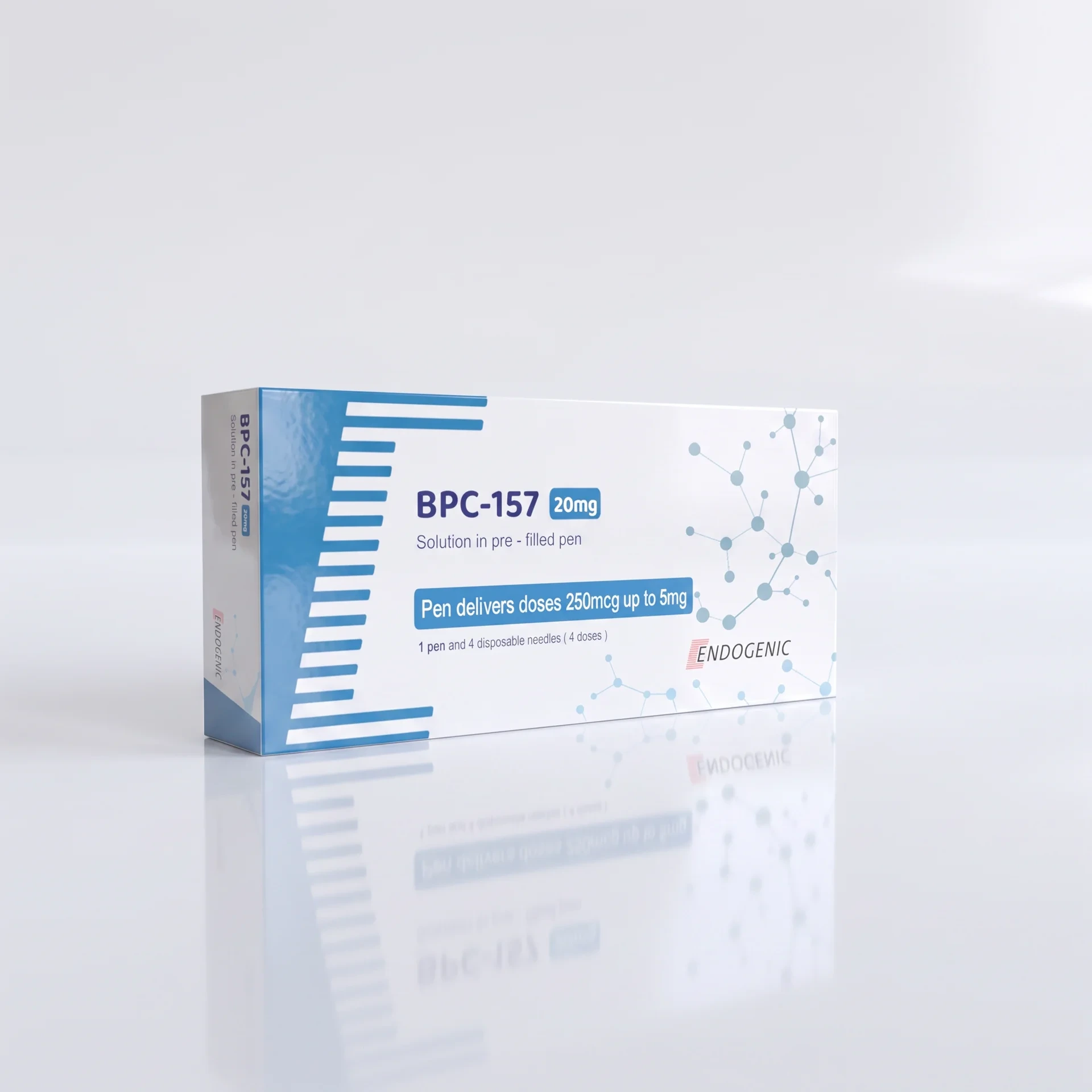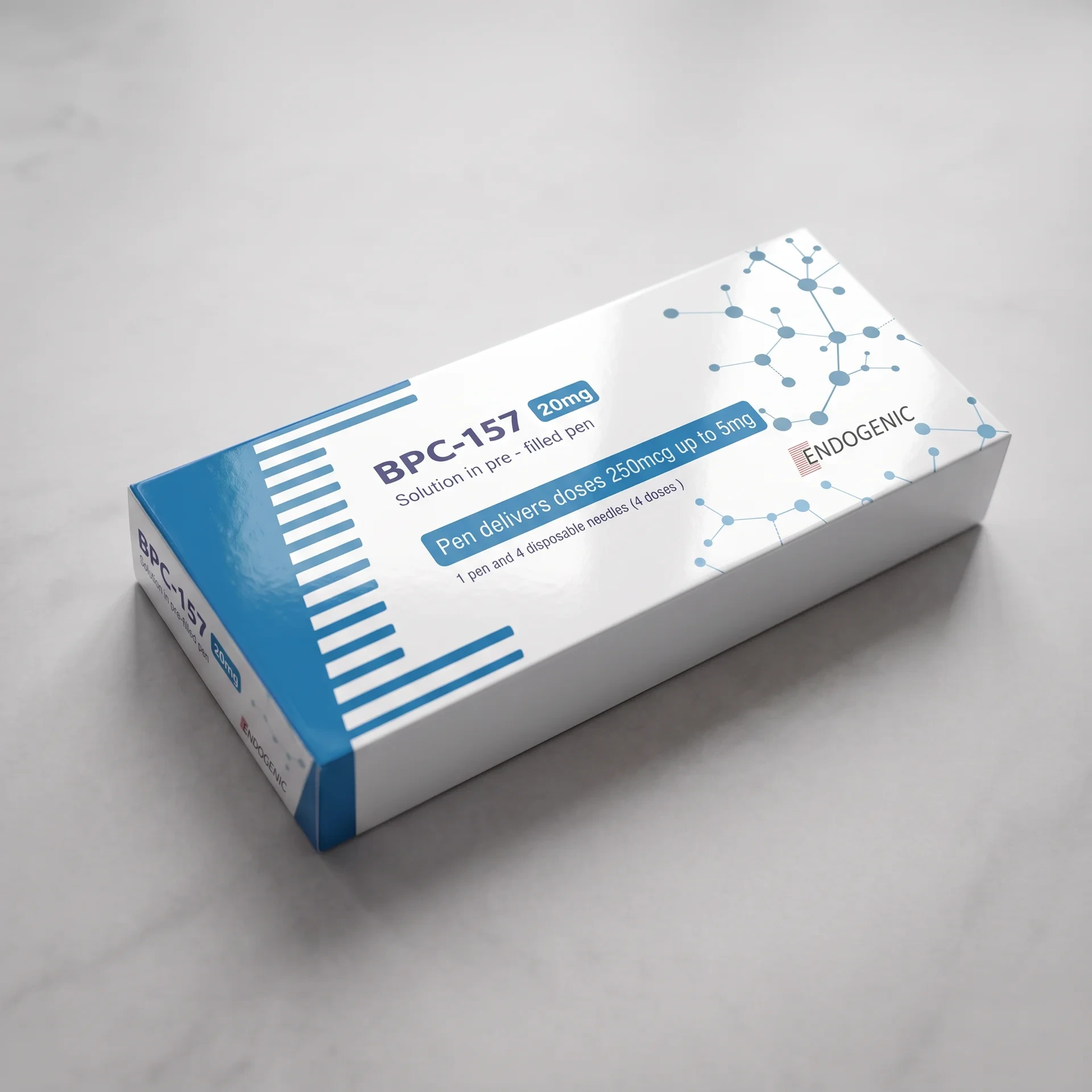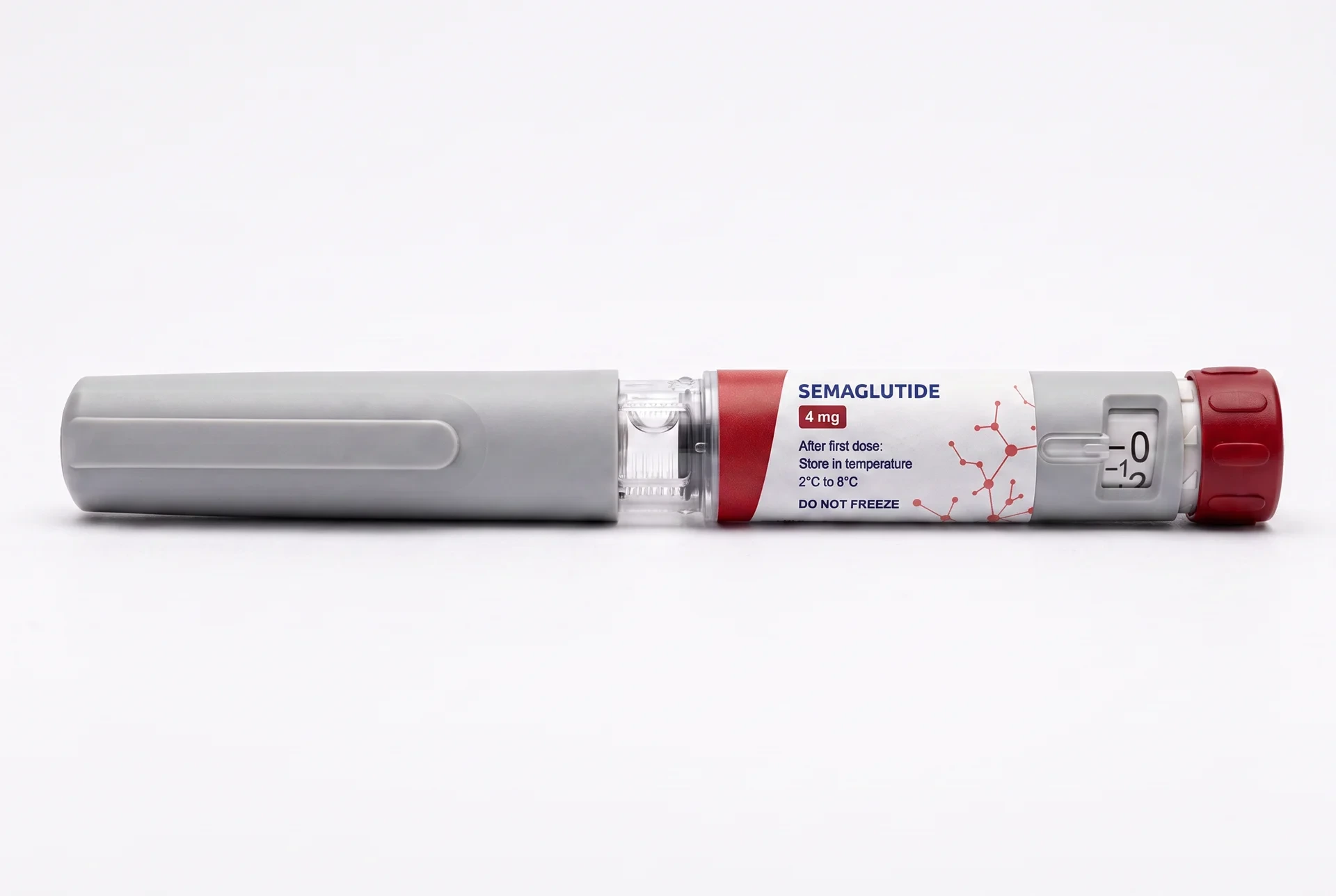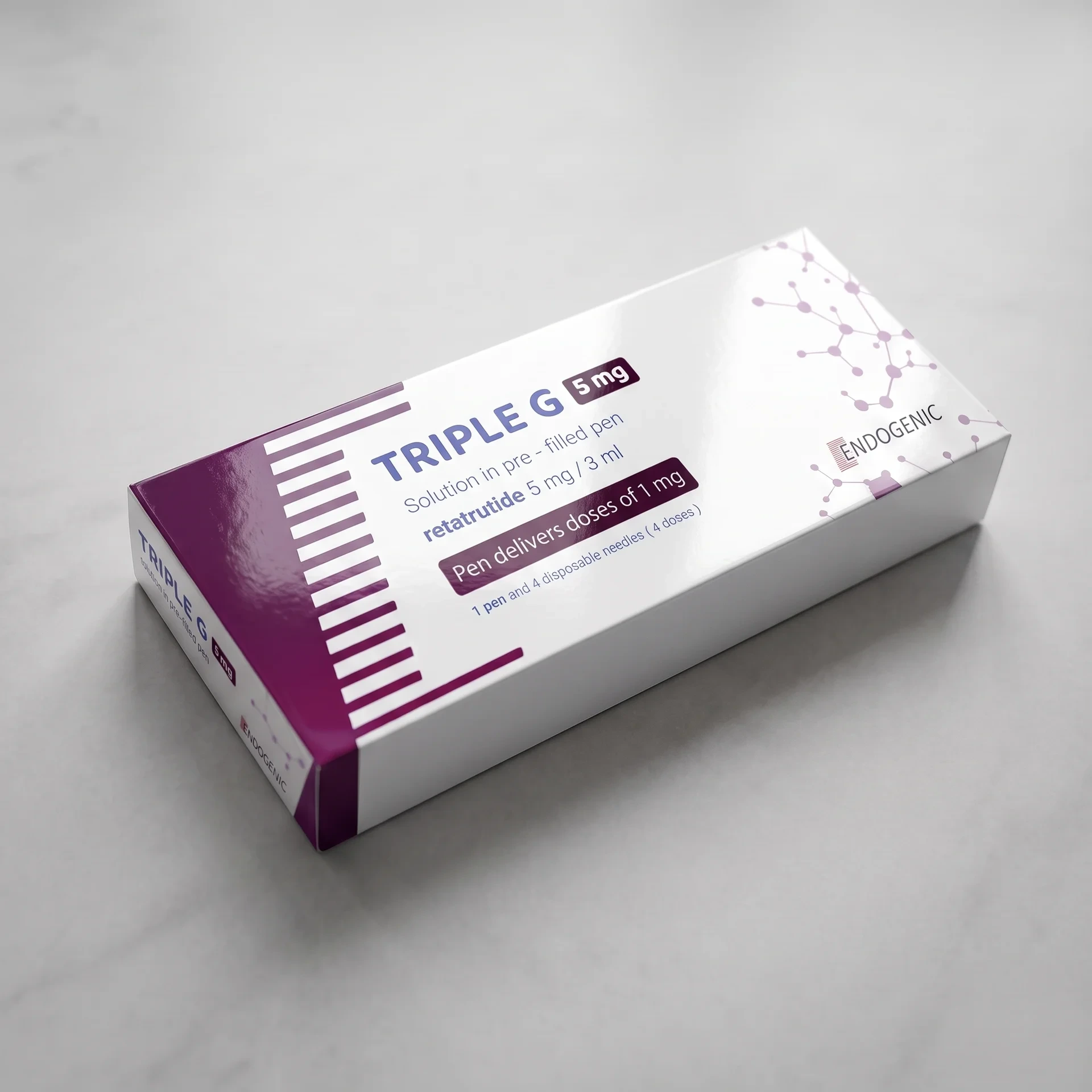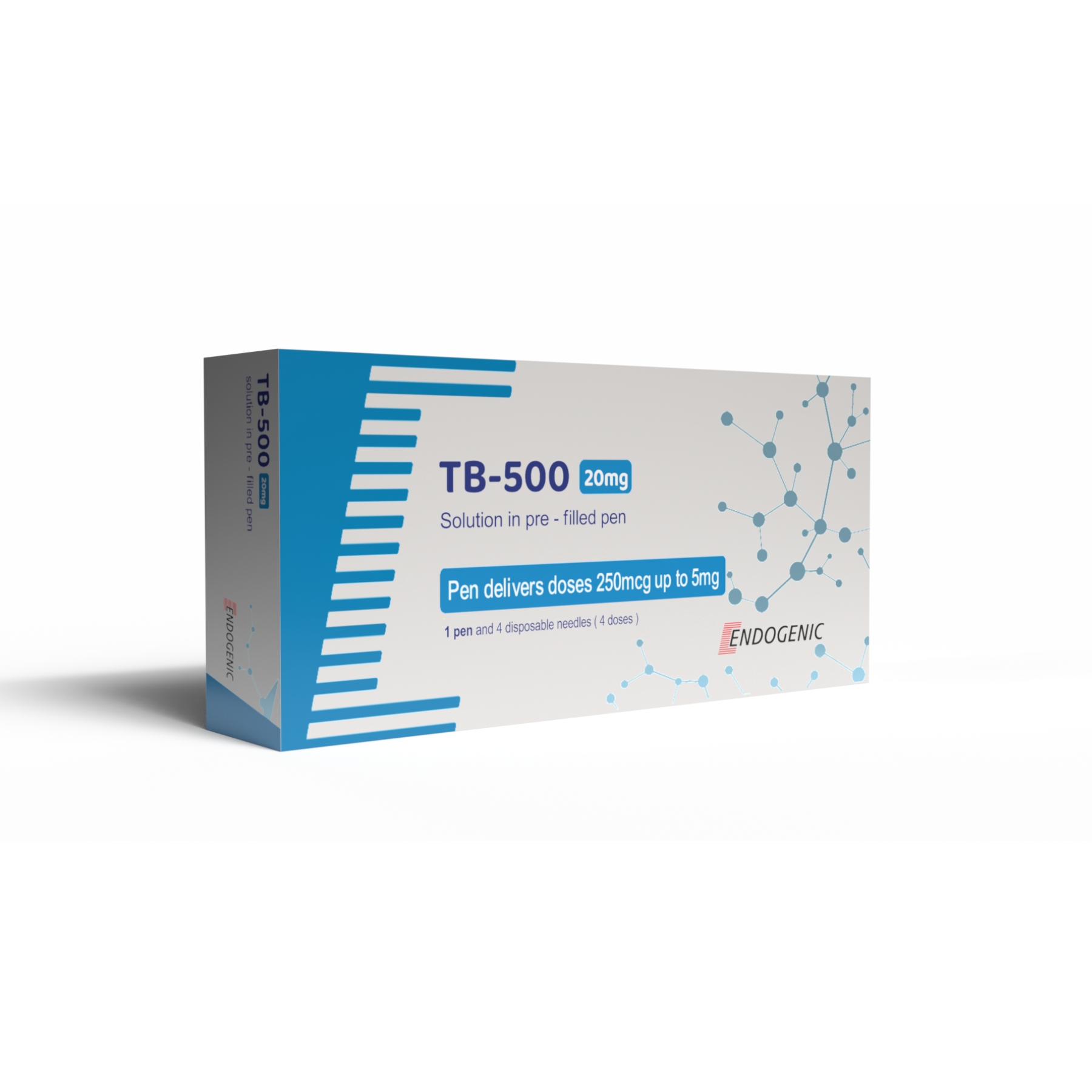
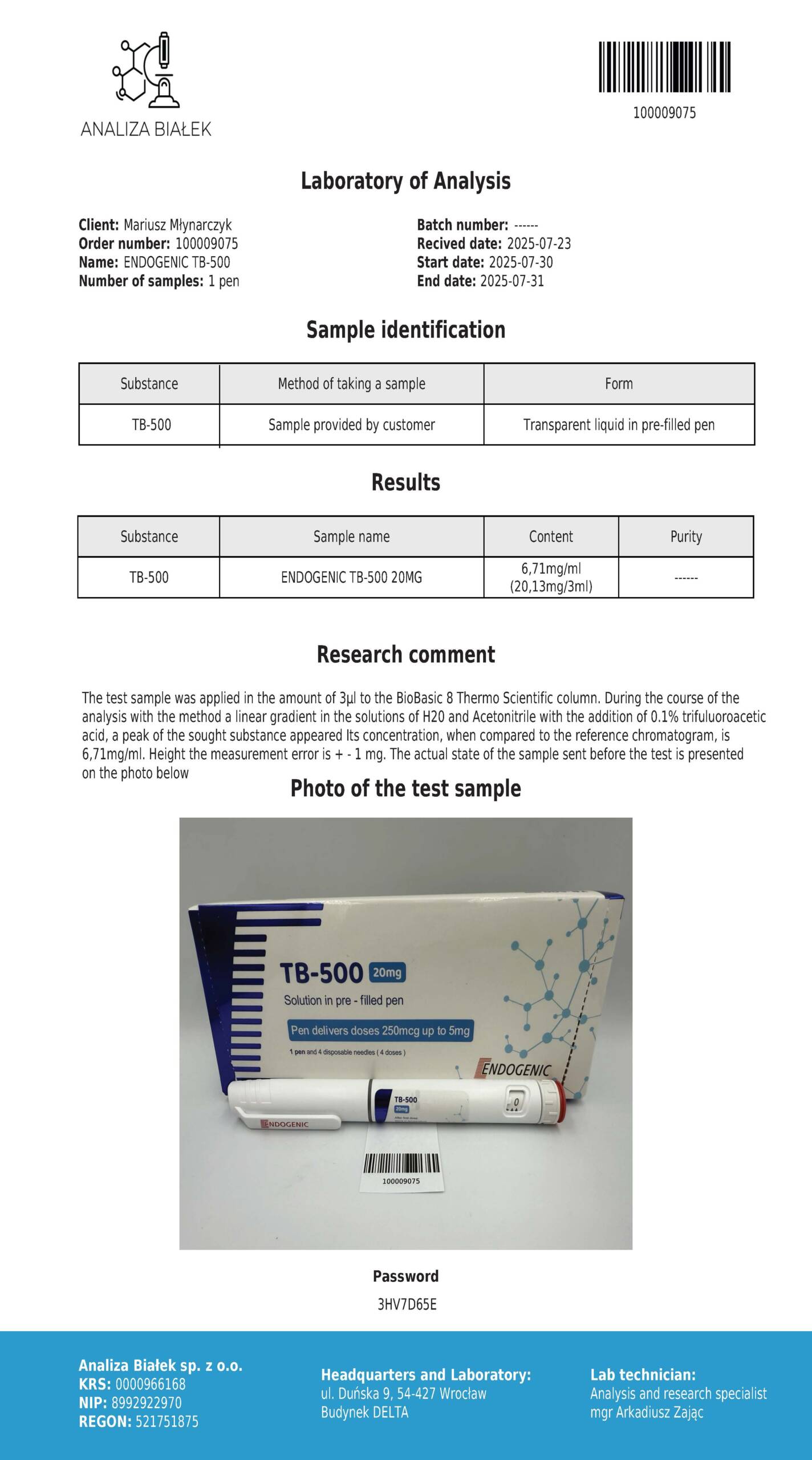
In the form of delivery. TB-500 PEN is a ready-to-use, pre-dissolved solution enclosed in an applicator — the researcher withdraws the solution without a reconstitution step. A TB-500 5mg vial, by contrast, contains a dry powder, which the researcher independently dissolves in bacteriostatic water to their own working concentration. The PEN gives reproducibility of withdrawals and eliminates reconstitution (with a factory-set concentration in mg/ml in the COA); the vial gives freedom in selecting the molar concentration. The PEN form does not change the chemical identity of the peptide or its RUO status.
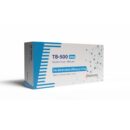
TB-500 PEN 20mg
TB-500 PEN 20 mg (pre-dissolved applicator, Endogenic line) — a thymosin β4-based regenerative peptide in the form of a ready-to-use solution, requiring no reconstitution, for laboratory research. It acts on G-actin: it regulates the cytoskeleton, cell migration and proliferation, angiogenesis, and soft tissue regeneration. The PEN applicator eliminates the need for reconstitution and ensures reproducibility of samples.
102,99 €
With code BLACK: 82,39 €
Lowest price in the 30 days before the discount:
102,99 €
Fast shipping
Free delivery from 350 €
Returns policy
TB-500 PEN 20 mg — a regenerative peptide based on thymosin β4, PEN applicator
- TB-500: a peptide based on thymosin β4.
- 20 mg in a PEN applicator, supplied as a solution.
- Peptide form and batch parameters require confirmation in the COA.
A chemical reagent intended exclusively for laboratory research (Research Use Only). It is not a medicinal product, dietary supplement or foodstuff. It is not intended for use in humans or animals. Sold exclusively to registered research units and laboratories.
TB-500 (a peptide based on thymosin β4) is on the WADA prohibited list in category S2 (peptide hormones, growth factors, related substances and mimetics) — a section covering, among others, growth factors affecting tissue regeneration and angiogenesis. TB-500 / thymosin β4 has appeared in this category continuously since 2011, and the ban applies at all times (in-competition and out-of-competition). In the Pro-Body catalogue, TB-500 PEN appears exclusively as a RUO research reagent, not as a performance-enhancing agent. Registered athletes (ADAMS) must check the current list of prohibited substances before making any decision.
TB-500 PEN, i.e. a pre-dissolved form in an applicator
TB-500 PEN 20 mg from the Endogenic line is a regenerative peptide based on thymosin β4 (Tβ4) in the form of a ready-to-use, pre-dissolved solution enclosed in a PEN applicator — with no need for reconstitution. It is a response to the most troublesome stage of working with a peptide reagent: the manual dissolution of lyophilisate.
The PEN applicator delivers a solution ready for withdrawal, at a known, factory-set concentration — which translates into the reproducibility of withdrawals in laboratory work. TB-500 is among the most frequently cited peptides for regeneration from the Endogenic line. TB-500 itself is one of the best-described regenerative peptides in the literature. Its point of attachment is G-actin — the monomeric form of actin, the building block of the cell’s cytoskeleton.
Thymosin β4 binds and regulates the pool of free G-actin, and through this it influences the dynamics of cytoskeletal remodelling, cell motility and the entire cascade of repair processes. This is the molecular source from which all the further observations attributed to TB-500 in research models derive. TB-500 / thymosin β4 is not registered as a medicine in any jurisdiction, and its clinical development has not been completed with phase III studies in humans.
This is a typical picture for the entire class of regenerative peptides: a strong signal from preclinical models (rodents, cell cultures), with no full clinical confirmation. That is why TB-500 PEN functions in trade as a Research Use Only reagent — a molecular tool for laboratory work, not a medicinal form. The PEN form concerns solely the manner of delivering the solution: it is a factory-ready form, it does not change the RUO status or the chemical identity of the peptide.
Purity verified by HPLC ≥98%, identity and molecular form (full Tβ4 vs active fragment) confirmed by Q-TOF mass spectrometry, COA available for each batch.
General description — thymosin β4 and actin regulation
TB-500 PEN is conceived around a single area of research: soft tissue repair and regeneration. The axis along which the peptide acts is well described in the literature and comes down to a single regulatory protein — thymosin β4. Thymosin β4 is a small, intracellular protein whose main molecular partner is G-actin — the free, unpolymerised actin monomer.
Actin is the basic building block of the cytoskeleton, the scaffolding that gives the cell its shape and enables its movement. To move — for example, a fibroblast migrating to a site of injury to rebuild the connective tissue matrix — a cell must constantly assemble and disassemble actin filaments. Tβ4 regulates this process, maintaining a pool of free monomers ready for polymerisation.
This is a simple picture of the mechanism: thymosin β4 is the store and regulator of the building material from which the cell constructs its motility apparatus. In the Pro-Body catalogue, TB-500 PEN belongs to Pillar I — regenerative peptides. The PEN applicator form is here a practical alternative to the classic lyophilisate vial: a researcher who works with a fixed, reproducible working concentration and values the elimination of the reconstitution step reaches for the PEN.
A researcher who needs the freedom to select their own molar concentration stays with the lyophilisate vial — in the smaller format TB-500 5mg or the larger TB-500 10mg. These are two forms of delivery of the same class of molecule, matched to the different needs of the experimental setup.
What is TB-500 — distinguishing full Tβ4 and the active fragment LKKTETQ
The designation “TB-500” is ambiguous in trade and requires a separate distinction, because two different molecules of different molecular mass are hidden under it.
Full Tβ4 (43 aa). Natural thymosin β4 is a 43-amino-acid protein (CAS 77591-33-4, molar mass ~4963 g/mol). It contains the full sequence, including the LKKTETQ motif responsible for binding G-actin, together with the remaining residues of the protein. This is the form reproducing the entire native molecule.
The active fragment LKKTETQ. Some manufacturers offer under the name “TB-500” a short fragment containing solely the LKKTETQ motif (or a closely related actin-binding stretch, CAS 885340-08-9 — value to be verified) — a considerably smaller molecule of lower molecular mass. This fragment reproduces the actin-binding domain, but not the full Tβ4 sequence. These two forms have different molecular masses and a different profile — yet both function in trade under the same trade name “TB-500”.
That is why the binding signal of batch identity is the sequence and molecular mass confirmed by mass spectrometry in the COA, not the name on the label. When interpreting research results, distinguishing the form is important, because full Tβ4 and the short LKKTETQ fragment are not identical either quantitatively or structurally. The batch COA determines which form is present in a given applicator.
It is worth separating two distinct issues. The first concerns the identity of the molecule (full Tβ4 vs LKKTETQ fragment) — this is chemistry settled by the sequence and the MS mass in the COA. The second concerns the form of delivery (PEN applicator with a ready solution vs lyophilisate vial for reconstitution) — this is the physical form of the reagent.
PEN is a form of delivery; it does not predetermine which form of the molecule it contains. Both pieces of information are found in the certificate of analysis.
Chemical characteristics
| Parameter | Value |
|---|---|
| Name | TB-500 PEN 20 mg (a regenerative peptide based on thymosin β4) |
| Line | Endogenic |
| Class | Regenerative peptide based on thymosin β4 (Tβ4) |
| Sequence | full Tβ4 (43 aa) or active fragment with the LKKTETQ motif — form determined in the COA |
| Number of amino acids | 43 (full Tβ4) or short fragment (LKKTETQ) — to be confirmed in the COA |
| Molar mass | ~4963 g/mol (full Tβ4); fragment mass dependent on form — to be verified in the COA |
| CAS number | 77591-33-4 (full Tβ4); 885340-08-9 (LKKTETQ fragment — to be verified) |
| Functional motif | LKKTETQ — G-actin binding |
| Main research axis | G-actin regulation / cytoskeleton / cell migration / angiogenesis / regeneration of soft tissues and the heart |
| Physical form | Pre-dissolved solution in a PEN applicator (ready-to-use, without reconstitution) |
| Peptide content | 20 mg in the applicator |
| Working concentration | mg/ml + units given in the batch COA |
| HPLC purity | ≥98% |
| Confirmation of identity and form | Q-TOF mass spectrometry (identification of the Tβ4 / fragment form) |
SCIENTIFIC PERSPECTIVE
The described studies of TB-500 / thymosin β4 were carried out for the most part on animal models (rats, mice) and in cell cultures. Full phase III clinical trials in humans have not been completed. Extrapolation of preclinical results to humans requires caution. The described mechanisms are of a reference character for the profile of the molecule in the scientific literature — they are not an expected effect in anyone outside a controlled experimental environment. The form of TB-500 (full Tβ4 vs LKKTETQ fragment) and the exact molecular mass require confirmation in the COA of the specific batch.
Mechanism of action of TB-500 — seven axes described in the literature
TB-500 / thymosin β4 is a pleiotropic peptide: from a single point of attachment — the binding of G-actin — grows an entire cascade of regenerative processes. Below are set out the seven axes described in the preclinical literature, with the name of the process and the practical translation observed in research models.
- Sequestration and regulation of G-actin. The central axis of thymosin β4. Tβ4 is the main intracellular protein binding actin monomers (G-actin) — it sequesters them and maintains a pool of free actin ready for polymerisation. The LKKTETQ motif is responsible for this binding. Through control of monomer availability, Tβ4 regulates the balance between free and polymerised actin (Goldstein et al. 2012). This is the molecular source of all the peptide’s further functions.
- Reorganisation of the cytoskeleton. Dynamic remodelling of the actin cytoskeleton is a precondition for every change of shape and movement of a cell. By regulating the G-actin pool, Tβ4 influences the rate and direction of this remodelling — it is the bridge between the chemistry of actin binding and cell physiology (Goldstein et al. 2012).
- Cell migration. A repair cell must reach the site of injury, and this movement depends on the continuous reorganisation of actin at the migration front. The literature has described the influence of Tβ4 on cell motility — the molecular background for linking the peptide with the mobilisation of repair cells (Philp et al. 2003).
- Proliferation of keratinocytes and fibroblasts. Tβ4 has been linked not only with movement, but also with the multiplication of cells important for healing: keratinocytes (closure of a skin wound) and fibroblasts (rebuilding of the connective tissue matrix). Sosne et al. (2010) described the peptide in the context of re-epithelialisation and corneal wound healing — a model in which the migration and proliferation of keratinocytes are well measurable.
- Angiogenesis. Tβ4 has been described as a pro-angiogenic factor — supporting the formation of new blood vessels in the region of regeneration. Better vascularisation of the regenerating tissue translated in models into more efficient repair (Philp et al. 2003).
- Re-epithelialisation and regeneration of soft tissues. The combination of the above mechanisms — migration, proliferation and angiogenesis — gives a picture of re-epithelialisation (reconstitution of the epithelium) and regeneration of soft tissues on a larger scale. This is a broad, systemic regenerative profile, distinguishing thymosin β4 from peptides with a narrowly local action (Sosne et al. 2010). This profile situates TB-500 among the peptides for injuries of soft tissues in research models.
- Repair of the cardiac muscle (Akt/PI3K pathway). In models of heart injury, thymosin β4 has been linked with the activation of the Akt/PI3K survival pathway in cardiomyocytes and with the mobilisation of cells to the area of ischaemia. Bock-Marquette et al. (2004) described this cardioprotective-regenerative profile — the most systemic dimension of the peptide’s action.
Distinctions — PEN vs vial, fragment vs full Tβ4, WADA S2
Three separate distinctions are important when interpreting TB-500 PEN. The first concerns the form of delivery, the second the identity of the molecule, the third the anti-doping status.
IMPORTANT DISTINCTION
“Supports tissue regeneration” or “supports healing” in the context of this description means: “in in vivo studies on animal models and in cell cultures, an influence of TB-500 / thymosin β4 was observed on the regulation of G-actin (the LKKTETQ motif), the reorganisation of the cytoskeleton, the migration and proliferation of repair cells, and angiogenesis”. It does not mean a guarantee of an effect in humans, nor a suggestion that TB-500 PEN may serve as an agent for injuries, tendons, wounds or post-exercise regeneration.
PEN vs lyophilisate vial. TB-500 PEN is a ready-to-use, pre-dissolved solution in an applicator — without a reconstitution step. This is a different form of delivery from a lyophilisate vial, in which the researcher independently dissolves the dry powder to their own working concentration. The PEN gives reproducibility of withdrawals and eliminates reconstitution; the vial gives freedom in selecting the molar concentration. The choice depends on the needs of the experimental setup. The PEN form does not change the chemical identity of the peptide or its RUO status.
TB-500 (LKKTETQ fragment) vs full Tβ4 (43 aa). Under the name “TB-500” there occurs in trade either full Tβ4 (43 aa, ~4963 g/mol) or a short active LKKTETQ fragment — different molecules of different mass. The identity and form are settled by the sequence and molecular mass in mass spectrometry recorded in the batch COA, not the trade name.
PEN is a form of delivery and does not predetermine which form of the molecule it contains. WADA S2. TB-500 / thymosin β4 belongs to category S2 (peptide hormones, growth factors, related substances and mimetics) and is a permanently prohibited substance from 2011. The PEN applicator form does not change the anti-doping status.
Applications in scientific research
TB-500 PEN as a RUO reagent finds application in research directions concentrated around tissue repair and regeneration. The applicator form with a ready solution proves itself where the researcher works with a fixed, reproducible working concentration and values the elimination of the reconstitution step — for series of withdrawals with comparable characteristics.
Models of wound healing and re-epithelialisation. Models of skin and corneal wounds, cultures of keratinocytes and fibroblasts. Endpoints: rate of wound closure, migration and proliferation of epithelial cells (re-epithelialisation), vessel density (angiogenesis), rebuilding of the connective tissue matrix. This is the area in which Sosne et al. (2010) described thymosin β4.
Models of soft tissue regeneration. Models of muscle and connective tissue injury in rodents, assessment of the migration and proliferation of repair cells and of the dynamics of the actin cytoskeleton (Goldstein et al. 2012; Philp et al. 2003). Endpoints: tissue histology, angiogenesis markers, rate of regeneration.
Studies on the actin cytoskeleton. Thymosin β4 as a tool for studying the regulation of the G-actin pool and its influence on cell motility. Endpoints: ratio of free to polymerised actin, dynamics of filopodia and lamellipodia, rate of migration in the scratch assay.
Models of angiogenesis and cardiac repair. Models of ischaemia and repair of the cardiac muscle involving thymosin β4 and the Akt/PI3K pathway (Bock-Marquette et al. 2004). Endpoints: capillary density, mobilisation of repair cells, cardiomyocyte survival markers, revascularisation.
REGULATORY STATUS
TB-500 / thymosin β4 is not registered as a medicine in the EU or the USA — EMA, FDA and EFSA have not issued any authorisation for this substance. It is on the WADA prohibited list in category S2 (peptide hormones, growth factors, related substances and mimetics) — a section covering growth factors affecting, among others, tissue regeneration and angiogenesis.
TB-500 / thymosin β4 has appeared in this category continuously since 2011; the ban applies at all times (in-competition and out-of-competition). The PEN applicator form does not change this status. Registered athletes (ADAMS) must check the current list of prohibited substances before making any decision.
Specification of the PEN applicator — ready solution, reproducibility, stability
The PEN form is what distinguishes this product from the classic lyophilisate vial. The applicator contains a factory-prepared peptide solution of known concentration — ready for withdrawal, without a dry-powder dissolution step.
Ready factory solution. The peptide solution is prepared at the production stage, to a fixed concentration recorded in the COA (mg/ml + units). This eliminates the most sensitive stage of working with a peptide reagent — manual reconstitution, in which an error in selecting the volume of solvent, aggressive shaking or foaming may affect the quality of the solution.
Reproducibility of withdrawals. The fixed, factory concentration and the mechanism of the applicator translate into the reproducibility of successive withdrawals within the same PEN. This is important in experimental series, where the comparability of conditions between measurements matters for the interpretation of results.
Concentration and units in the COA. The applicator contains 20 mg of peptide. The exact working concentration (mg/ml) and the conversion into units are given in the batch certificate of analysis — this is the binding document when planning laboratory work.
Summary
TB-500 PEN 20 mg in an applicator (Endogenic line) is a regenerative peptide based on thymosin β4 in the form of a ready-to-use, pre-dissolved solution — without reconstitution. The molecule’s point of attachment is G-actin: thymosin β4 binds and regulates the pool of free actin monomers (the LKKTETQ motif), and from this single axis grow seven processes described in the literature — sequestration of G-actin, reorganisation of the cytoskeleton, migration and proliferation of keratinocytes and fibroblasts, angiogenesis, re-epithelialisation and regeneration of soft tissues, and repair of the cardiac muscle through the Akt/PI3K pathway.
The PEN applicator form eliminates the most sensitive stage of working with a peptide reagent — manual reconstitution — and gives reproducibility of withdrawals at a factory-set concentration (mg/ml + units in the COA). The regulatory profile is unambiguous: the peptide is not registered as a medicine, and TB-500 / thymosin β4 is on the WADA list in category S2 (permanently prohibited from 2011).
In the Pro-Body catalogue, TB-500 PEN appears exclusively as a Research Use Only reagent — with HPLC purity ≥98%, MS Q-TOF confirmation (including identification of the Tβ4/fragment form) and a COA for each batch. The form of the molecule (full Tβ4 vs LKKTETQ fragment) remains to be determined in the batch COA.
References
- Goldstein AL, Hannappel E, Sosne G, Kleinman HK (2012). Thymosin β4: a multi-functional regenerative peptide. Basic properties and clinical applications. PubMed
- Crockford D, Turjman N, Allan C, Angel J (2010). Thymosin beta4: structure, function, and biological properties supporting current and future clinical applications. PubMed
- Sosne G, Qiu P, Goldstein AL, Wheater M (2010). Biological activities of thymosin beta4 defined by active sites in short peptide sequences. PubMed
- Philp D, Badamchian M, Scheremeta B, Nguyen M, Goldstein AL, Kleinman HK (2003). Thymosin beta 4 and a synthetic peptide containing its actin-binding domain promote dermal wound repair in db/db diabetic mice and in aged mice. PubMed
- Bock-Marquette I, Saxena A, White MD, Dimaio JM, Srivastava D (2004). Thymosin beta4 activates integrin-linked kinase and promotes cardiac cell migration, survival and cardiac repair. PubMed
DISCLAIMER — research reagent (Research Use Only). The product TB-500 PEN 20 mg (pre-dissolved applicator, Endogenic line) is sold exclusively as a chemical reagent for in vitro laboratory research and research on animal models. It is not a medicine, it is not a dietary supplement and it is not a product intended for human consumption.
It does not serve to diagnose, treat, alleviate or prevent any diseases — including injuries, tendon damage or wounds. The entire literature concerns animal models and cell cultures — full phase III clinical trials in humans have not been completed. The PEN applicator form with a pre-dissolved solution does not constitute a suggestion of injectable administration in humans.
TB-500 / thymosin β4 is not registered as a medicine (no EMA, FDA, EFSA authorisation) and is on the WADA prohibited list in category S2 (peptide hormones, growth factors, related substances and mimetics), permanently prohibited from 2011. Athletes covered by anti-doping programmes must verify the current WADA guidelines on their own. The information in the description is of an educational and scientific character and refers to results reported in the preclinical literature — it does not constitute medical advice or instructions for administration.
FAQ
Not necessarily. Under the name “TB-500” two different molecules occur in trade. The first is full Tβ4 — a 43-amino-acid protein (CAS 77591-33-4, molar mass ~4963 g/mol), containing the full sequence together with the LKKTETQ motif. The second is a short active LKKTETQ fragment — a considerably smaller molecule, reproducing solely the G-actin-binding domain. Both function under the same trade name, but have different molecular masses and a different profile.
The binding document of batch identity is the sequence and molecular mass confirmed by mass spectrometry in the COA, not the name on the label. The COA determines which form is present in a given applicator.
In the literature on tissue repair, the pairing of TB-500 with BPC-157 functions as a classic research model of two complementary pathways: BPC-157 contributes a cytoprotective and locally pro-angiogenic component (VEGFR2/eNOS/NO), TB-500 — cell mobility through the regulation of G-actin and regeneration on a larger scale. In the Pro-Body catalogue, available separately are BPC-157 PEN and a ready blend of BPC-157 + TB-500 in a single vial.
These are two different, complementary mechanisms of repair. The broader comparative context of both pathways is discussed in the review BPC-157 and TB-500 for regeneration. The choice between separate applicators and a ready blend depends on the designed experimental setup. All observations come from preclinical models, not from studies in humans.
Category S2 covers peptide hormones, growth factors, related substances and mimetics — the section to which are classified growth factors affecting, among others, tissue regeneration and angiogenesis. TB-500 / thymosin β4 meets this criterion on account of the pro-angiogenic and regenerative profile described in the literature. The substance has appeared in this category continuously since 2011, and the ban applies at all times (in-competition and out-of-competition). The PEN applicator form does not change the anti-doping status. Registered athletes (ADAMS) must check the current list before making any decision.
A pre-dissolved peptide solution is by nature less stable than a dry lyophilisate. The exact stability window after opening should be verified in the COA of the specific batch and in the internal procedures of the research unit. This is the trade-off of the ready form: the PEN eliminates reconstitution and gives reproducibility of withdrawals, but requires more careful management of stability than a lyophilisate stored in dry form.
G-actin is the free, unpolymerised form of actin — the building block of the cytoskeleton, the scaffolding giving the cell its shape and capacity for movement. To move to the site of injury, a repair cell must constantly assemble and disassemble actin filaments. Thymosin β4 binds free G-actin monomers (the LKKTETQ motif) and regulates their availability for polymerisation — it serves as the store and regulator of the cytoskeletal building material.
From this single regulation arise the further observations attributed to the peptide: reorganisation of the cytoskeleton, cell motility, migration of keratinocytes and fibroblasts. This is the molecular source of the entire regenerative profile — all observations come from preclinical models.
5.0
2 reviews
-
Michał J
 Polski
Verified purchase
Product review
Zdecydowanie polecam. Produkt jakościowy.
-
Tomasz
Polski
Product review
Szybka wysyłka, porządnie zapakowane. Kontakt bezproblemowy, wszystko jasne i profesjonalnie. Polecam.
Customers also bought