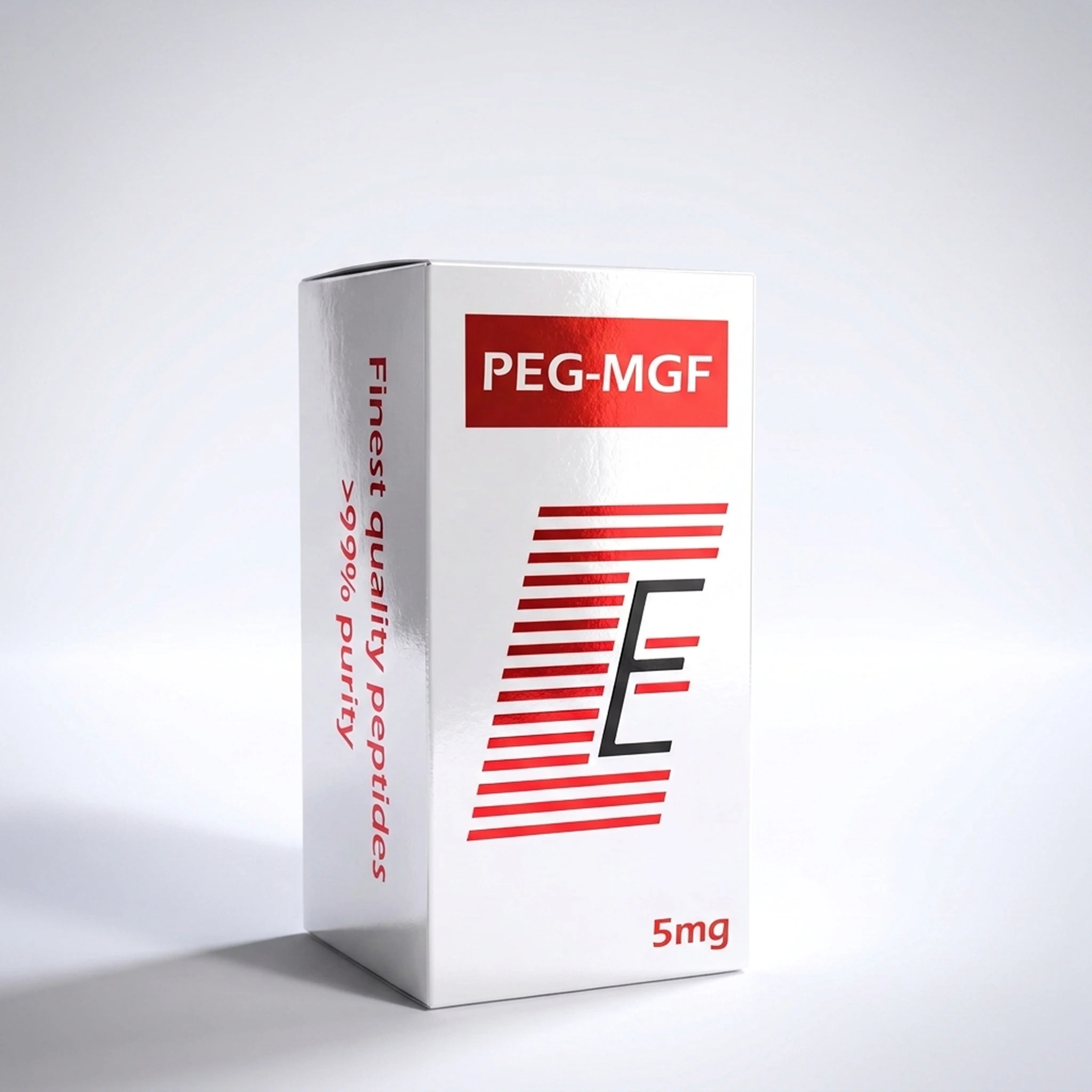
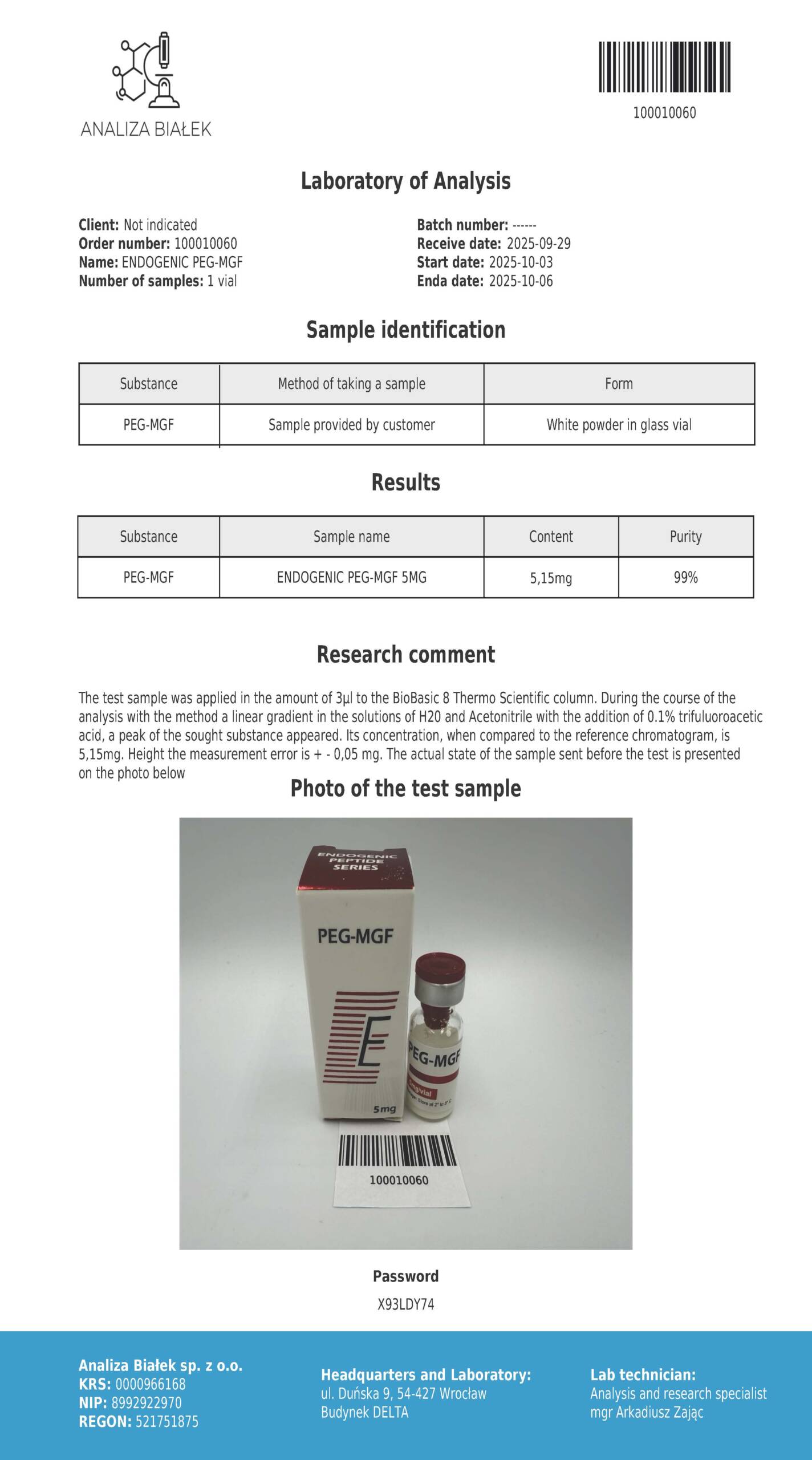
PEG-MGF 5mg
PEG-MGF 5mg
35,99 €
Free delivery on orders over €350. Fast delivery.



Black Week
20% off everything with code BLACK
Click and the code is added to your cart.
Until Monday 30 Nov, 23:59 (Polish time).
Black Friday
20% off everything with code BLACK
Click and the code is added to your cart.
Until Monday 30 Nov, 23:59 (Polish time).
Last day
20% off everything with code BLACK
The code works until 23:59 today (Polish time).
Other categories
23 products
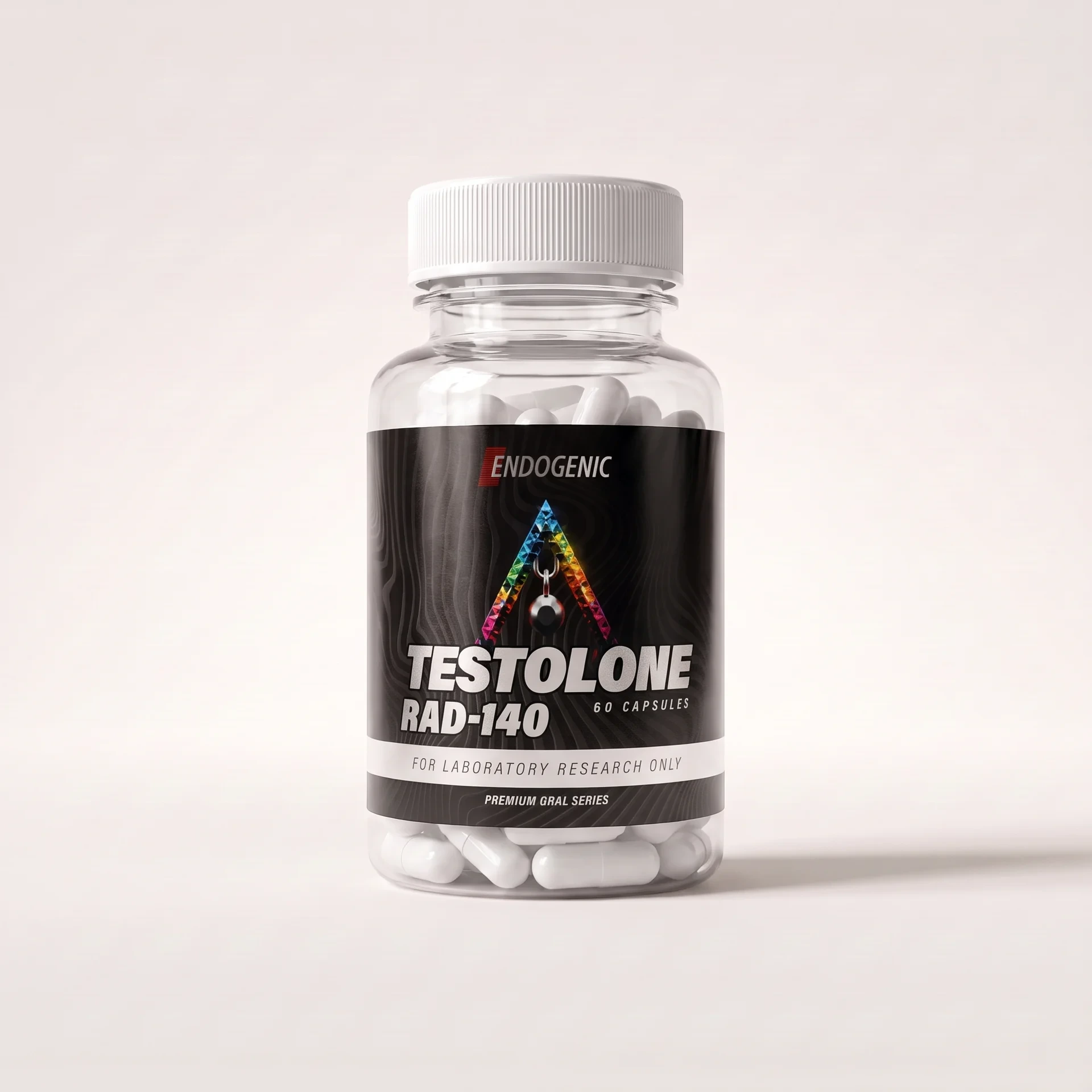
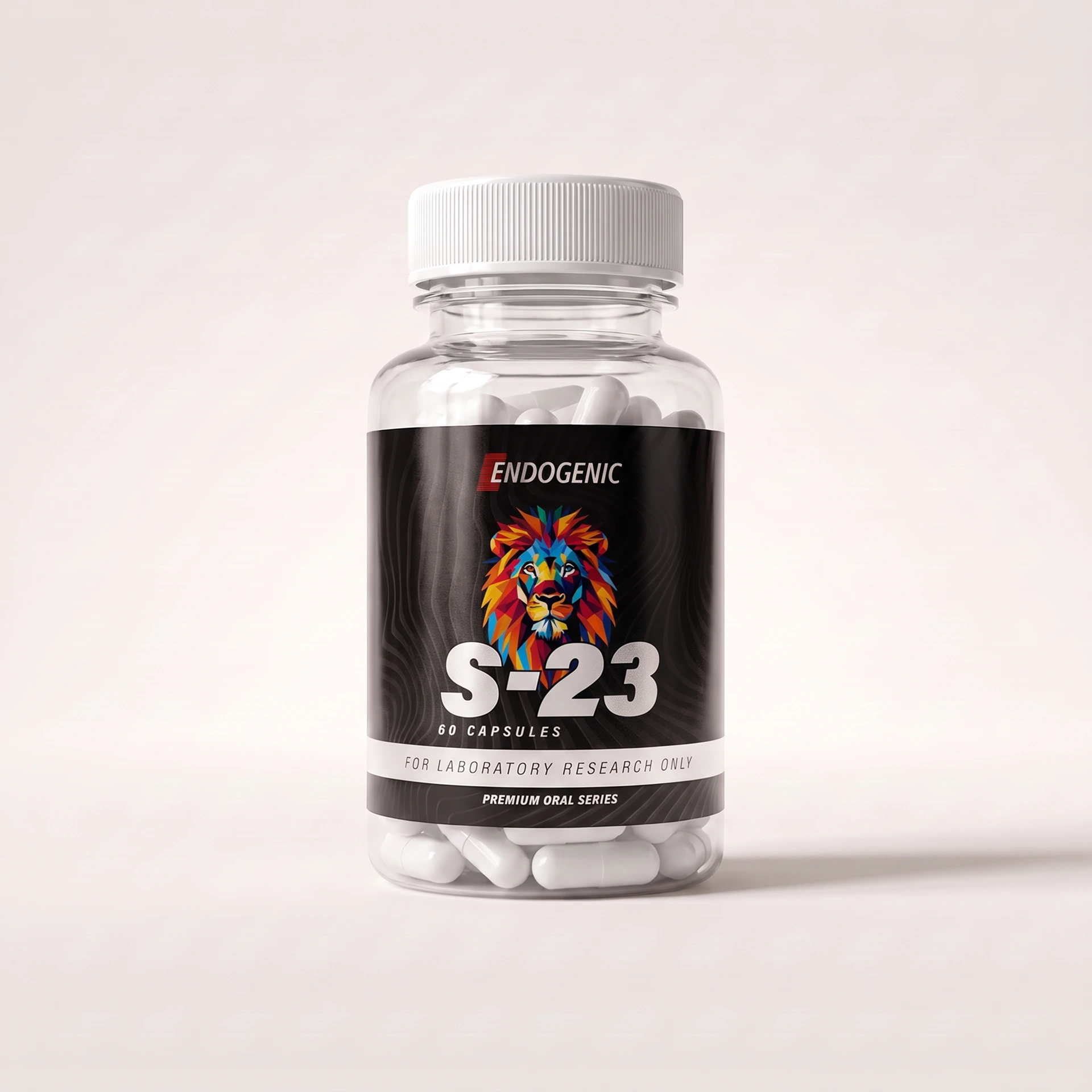
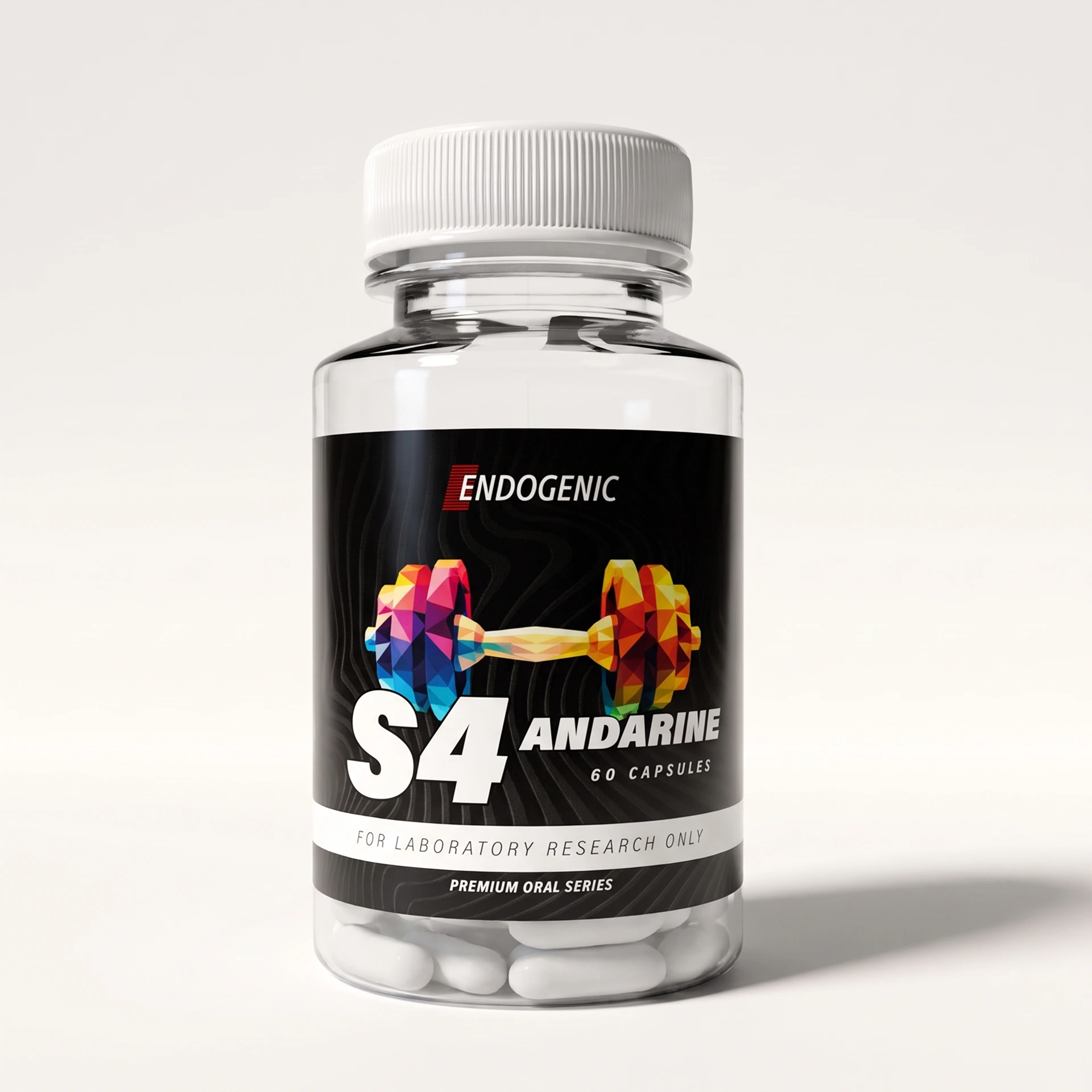
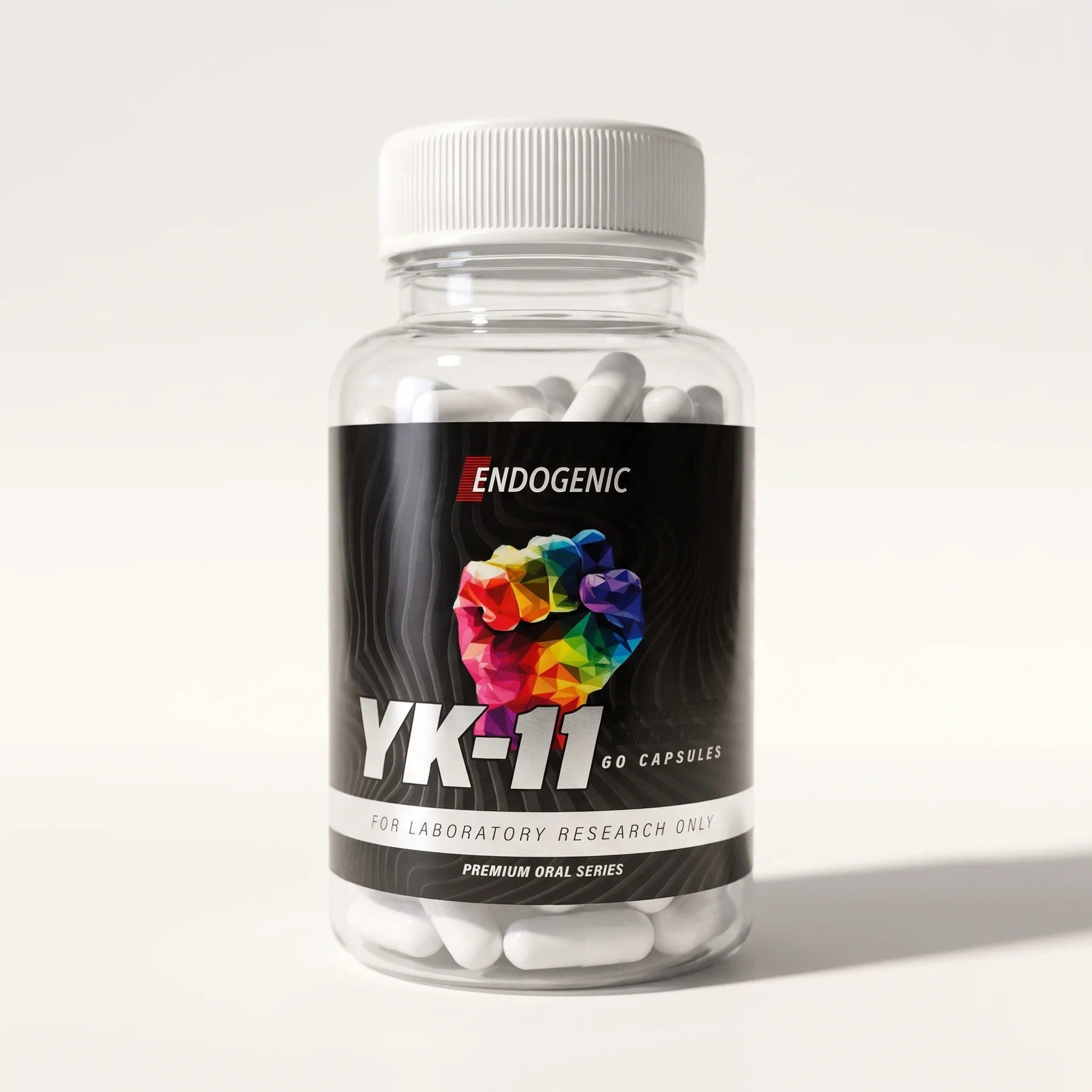
The Endogenic line peptides collected here do not supply growth hormone (GH) from outside. In the preclinical literature they have been studied in models of GH secretion: stimulating the pituitary’s endogenous release of the hormone via GHRH receptors and the ghrelin receptor. They are reagents for studying the regulation of the somatotropic axis, and the category name describes the research direction. In line with Research Use Only principles, the text describes what a molecule does in a cellular or animal model, not what it “will do” in a human.
The stimulation follows two different routes: via the GHRH receptor and via the ghrelin receptor GHS-R. The two axes amplify each other’s action, so studies often pair a GHRH analogue with a ghrelin peptide. They also share a regulatory status: peptide GH-releasing factors and secretagogues fall under section S2 of the WADA list.
The category covers two mechanistic families studied in models of somatotropic axis stimulation.
These molecules mimic endogenous GHRH and stimulate the GHRH receptor on the pituitary somatotroph cells. Typical representatives are CJC-1295 with DAC, with an extended half-life, and CJC-1295 without DAC (Mod-GRF 1-29), with a short duration of action. The family also includes the research analogues Sermorelin and Tesamorelin. Tesamorelin has a counterpart authorised as a medicine (Egrifta®).
These molecules mimic ghrelin and stimulate the GHS-R1a receptor. Typical representatives are Ipamorelin (a selective ghrelin mimetic), GHRP-2 (pralmorelin) and GHRP-6, and the family also includes the research compound Hexarelin. In models, a GHRH analogue is combined with a ghrelin peptide so that the two routes of somatotropic axis stimulation reinforce each other. This mechanism appears, among other areas, in research on muscle anabolism and tissue regeneration.
Regulatory status
Peptide growth hormone-releasing factors (GHRH analogues) and ghrelin secretagogues (GHRPs) fall under section S2 of the WADA list, subsection S2.2: peptide hormones and their releasing factors. Tesamorelin is authorised as the medicine Egrifta® for reducing excess visceral fat in HIV-associated lipodystrophy. The medicine and the reagent are separate regulatory entities. A research reagent with this sequence is not a substitute for the medicine, is not for treatment and does not replace medical consultation. The duty to check the current list of prohibited substances before any decision rests with athletes registered in the ADAMS system.
Reagents from this category are used in work on the regulation of the somatotropic axis. The category gives no doses or schedules, because working concentrations and the route of administration are chosen by the researcher according to the protocol methodology. The main research directions:
Scientific perspective
The observations attributed to these peptides come from cellular and animal models. “Stimulation of GH secretion” means a result in a research model here, not a guaranteed effect in a person using the reagent. Endogenous GH secretion is subject to complex feedback regulation (somatostatin, IGF-1), so data from isolated models do not translate directly to human physiology.
Important distinction
No reagent in this category is a product for recovery, rejuvenation or “raising GH” in humans. Advertising slogans such as “a recovery peptide”, “a growth hormone jab” or “GH rejuvenation” cannot be reconciled with RUO principles.
Secretagogue peptides come in this category in forms that differ in how much preparation they need before work:
Because the GH/IGF-1 axis links growth hormone secretion with metabolism and regeneration, the category sits thematically next to reagents for muscle anabolism models.
This category makes no such claim. In preclinical models these peptides stimulate GH secretion via the GHRH receptor and the ghrelin receptor, but the description concerns results in models, not an effect in humans. RUO material is neither a medicine nor a recovery product.
In regulatory status and intended purpose. Tesamorelin is authorised as the medicine Egrifta® for a specific clinical indication and requires medical supervision. A research reagent with this sequence is a Research Use Only material and not a substitute for the medicine.
Mainly the time profile of action in models. The DAC (Drug Affinity Complex) variant binds to albumin and has a much longer half-life, while the variant without DAC (Mod-GRF 1-29) acts briefly and in pulses. Only the batch COA settles which variant it is, because the name alone does not determine the structure.
Only through the sequence and mass in the batch certificate of analysis (COA), confirmed by mass spectrometry and HPLC. The legality of reagents and the rules for trading in them are covered on the Law and Safety page.