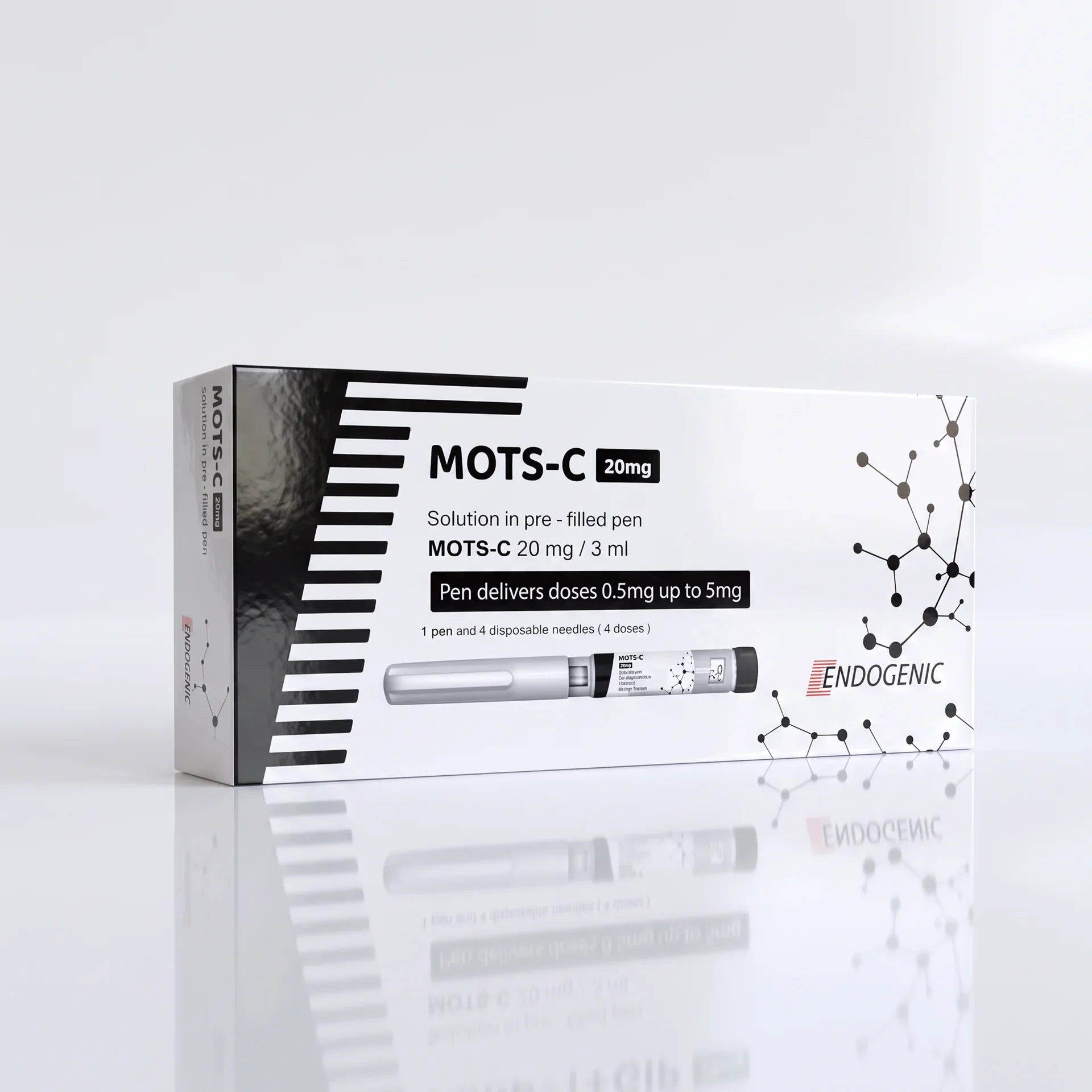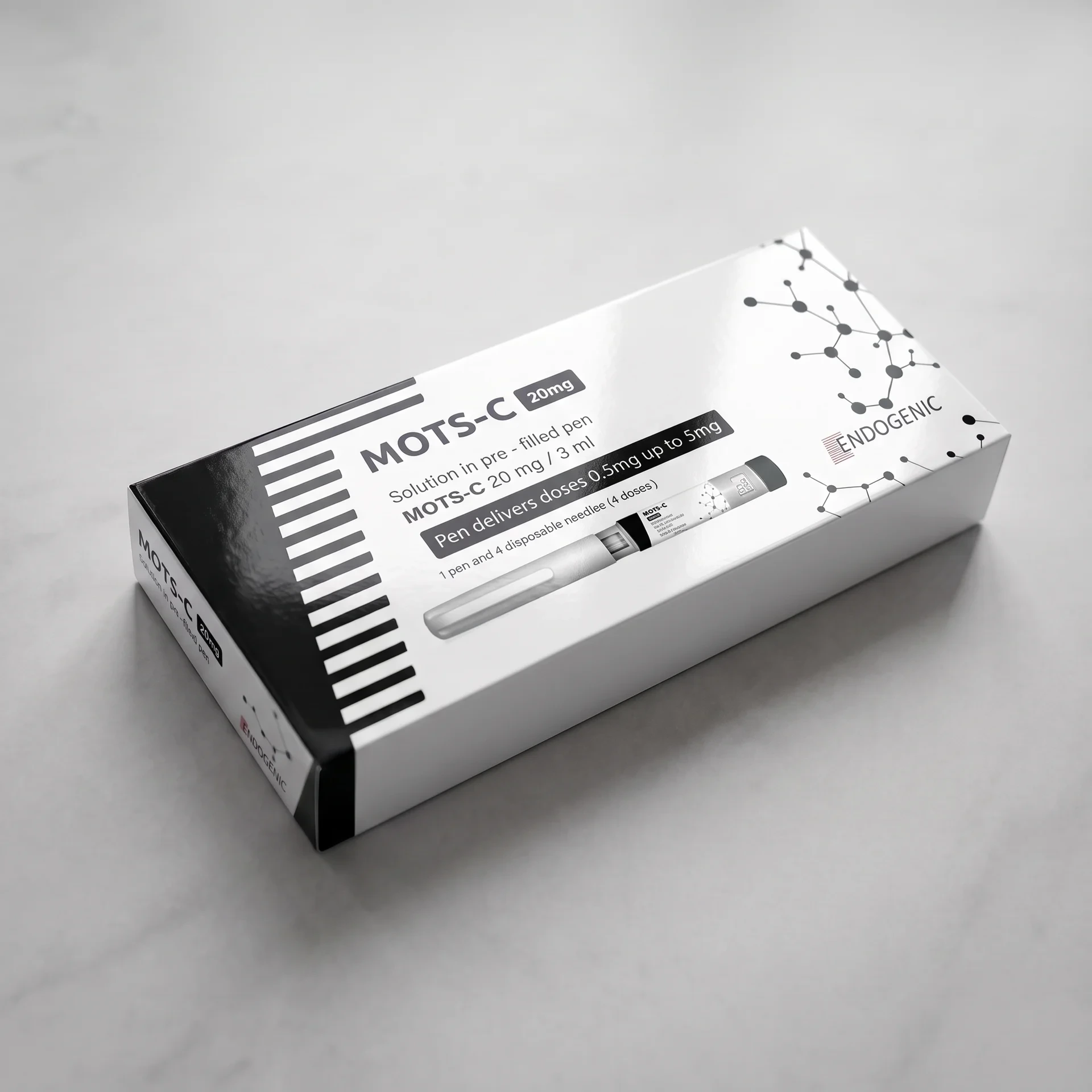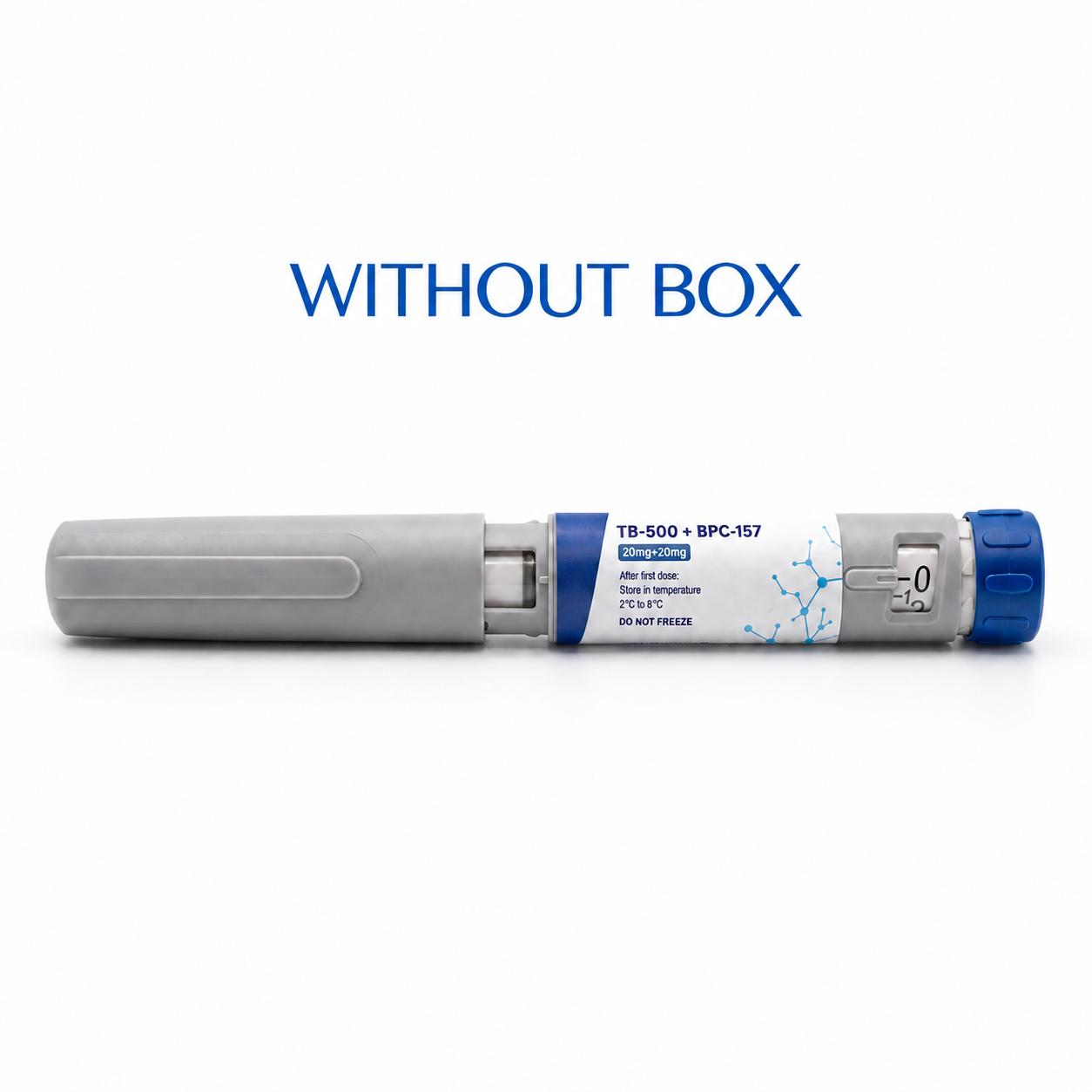
It contains twice as much of each peptide and is sold without a box. The qualitative composition is the same: BPC-157 and TB-500 in one solution. The concentrations of both versions are given on their labels and COAs.
BPC-157 + TB-500 20mg+20mg PEN (no box)
BPC-157 + TB-500 20mg+20mg PEN (no box) contains two peptides: BPC-157 and the acetylated fragment of thymosin β4 (TB-500)—at 20 mg each in a ready-to-use solution within a pen applicator. A reagent for laboratory research on tissue healing.
142,99 €
With code BLACK: 114,39 €
Lowest price in the 30 days before the discount:
142,99 €
Fast shipping
Free delivery from 350 €
Returns policy
BPC-157 + TB-500 20mg+20mg PEN (no box) – two peptides in a ready-made solution, RUO research reagent
- BPC-157 and TB-500 (Ac-LKKTETQ), 20 mg each, in one solution, no reconstitution needed.
- No-box version: store in an opaque container; identity of both peptides in the batch COA.
- RUO reagent; WADA List 2026: BPC-157 S0, TB-500 S2.3.
Product status notice
A chemical reagent intended solely for laboratory research (Research Use Only). It is not a medicinal product, dietary supplement or foodstuff. It is not intended for use in humans or animals. Neither of the two peptides is authorised as a medicine. The 2026 WADA List names both: BPC-157 in class S0 and TB-500 in section S2.3; both are prohibited at all times. Sales are aimed at research institutions and laboratories.
Introduction
In a study published in 2026, rats whose Achilles tendon had been cut and sutured received BPC-157, TB-500 or both peptides together. After four weeks, the combination gave no greater benefit than either peptide alone. Only the TB-500 group showed a significant advantage in the test of the force needed to rupture the tendon (Biçer et al., 2026).
BPC-157 + TB-500 20mg+20mg PEN contains 20 mg of each peptide in a pen applicator, as a ready-to-use solution with no reconstitution step. The “no box” version is supplied without a cardboard box. The solution volume and the concentration of each peptide are given on the label and in the batch certificate of analysis (COA), which should confirm the identity of the two components separately.
What BPC-157 + TB-500 20mg+20mg PEN is
The pen holds two independent peptides in one solution. They differ in origin, chain length, research focus and class on the WADA List.
| Parameter | BPC-157 | TB-500 |
|---|---|---|
| Origin | fragment of the BPC protein from human gastric juice | N-terminally acetylated fragment 17–23 of thymosin β4 |
| Sequence | GEPPPGKPADDAGLV (15 amino acids) | Ac-LKKTETQ (7 amino acids) |
| Molecular mass | 1419 Da | approx. 889 Da (calculated from the sequence) |
| Nominal content in the pen | 20 mg | 20 mg |
| WADA List 2026 | S0 – named explicitly | S2.3 – named explicitly as a thymosin β4 derivative |
Form: ready-made solution in a pen applicator, no-box version. Status: RUO research reagent.
BPC-157 in tendon models
BPC-157 is a 15-amino-acid fragment of the BPC protein isolated from human gastric juice. In rat Achilles tendon explants, it accelerated fibroblast outgrowth, increased fibroblast survival under oxidative stress and, in a concentration-dependent manner, enhanced their migration. It did not affect cell proliferation itself. The authors linked this effect to activation of the FAK–paxillin pathway (Chang et al., 2011).
A 2025 systematic review collected 36 papers on BPC-157 in orthopaedics and sports medicine: 35 preclinical and one clinical. The clinical one was a retrospective analysis in which 7 of 12 people with chronic knee pain reported relief lasting more than six months. The peptide’s half-life did not exceed 30 minutes, and the authors found no clinical safety data (Vasireddi et al., 2025).
TB-500 – an acetylated fragment of thymosin β4
TB-500 is a seven-amino-acid fragment of thymosin β4 covering residues 17–23, with an acetyl group at the N-terminus: Ac-LKKTETQ. This molecule was identified in a preparation sold as TB-500 using liquid chromatography with high-resolution mass spectrometry. The same paper proposed a method for detecting it in plasma and urine (Esposito et al., 2012).
Full-length thymosin β4 binds monomeric actin (G-actin) inside cells, and its mechanisms of action outside the cell are still poorly understood (Hannappel, 2007). The LKKTETQ fragment corresponds to the actin-binding domain. In a 2003 paper, a synthetic peptide with this sequence accelerated skin wound healing in aged mice comparably to the full-length protein (Philp et al., 2003). The peptide in that paper was recorded without any indication of acetylation, so it need not be identical to TB-500.
Checking the identity of both peptides in the COA
Two peptides in one solution mean two results to check. The batch HPLC chromatogram should show two main peaks, and the MS spectrum two masses: approx. 1419 Da for BPC-157 (Sikiric et al., 2012) and approx. 889 Da for TB-500, calculated from the Ac-LKKTETQ sequence. A mass of approx. 4963 Da would correspond to full-length, acetylated thymosin β4, a 43-amino-acid protein (UniProt, P62328), not to the TB-500 fragment.
Purity given as a single percentage for the whole solution does not tell you how much of each peptide there is. Check that the batch COA gives the content of both components separately.
BPC-157 and TB-500 together – a comparative study
The study by Biçer et al. included 32 rats divided into four groups of eight: control, BPC-157, TB-500 and both peptides together. After four weeks, TB-500 significantly increased the force needed to rupture the tendon and lowered the degenerative change scores on the Bonar and Movin scales. The group given both peptides had a lower Movin score than the controls. BPC-157 improved the results numerically, without statistical significance. The combination brought no benefit over either peptide alone; the authors suggest that both act through shared pathways, which needs confirmation (Biçer et al., 2026).
This paper described TB-500 as synthetic thymosin β4, so it is not clear whether the Ac-LKKTETQ fragment or the full-length protein was studied. The conclusion for laboratory work is simple: a solution containing two peptides does not allow their contributions to be separated. If an experiment is meant to show which component is responsible for a result, it also needs groups with each peptide on its own, e.g. with BPC-157 in a 20mg pen and TB-500 20mg peptide.
BPC-157 + TB-500 20mg+20mg PEN without a box – storage and working with the pen
The lack of a box does not change the reagent’s composition or status. It does change two things in laboratory work: protection from light and how the batch data are kept.
- Protection from light. Keep the unboxed pen in a closed, opaque container under the conditions on the label or, if none are given, at 2–8°C.
- Batch data. Copy the batch number and expiry date from the pen label and the COA into the experiment documentation as soon as the pen arrives.
- No freezing. Do not freeze the pen – ice can damage the solution cartridge.
- Visual check. Before first use, the solution should be clear, with no sediment or discolouration. A cloudy solution or sediment disqualifies the pen.
- Date of first use. Write it on the container in which you store the pen.
Keep out of the reach of children.
BPC-157 + TB-500 20mg+20mg PEN – regulatory and anti-doping status
Neither peptide is authorised as a medicine. The 2026 WADA Prohibited List names BPC-157 in class S0 (non-approved substances) and TB-500 in section S2.3, as a thymosin β4 derivative. Both are prohibited at all times, in and out of competition (WADA, 2026). A 2026 review draws attention to unauthorised peptides from the so-called grey zone. They show favourable results in animal models, but reliable human safety data are scarce (Mendias and Awan, 2026). How to read the List’s classes is described in the article “The WADA and POLADA Prohibited List and research compounds”.
Summary – what BPC-157 + TB-500 20mg+20mg PEN contains
The pen contains 20 mg each of two peptides in a ready-to-use solution: BPC-157, a fragment of a protein from gastric juice, and TB-500, an acetylated fragment of thymosin β4. In animal models both were associated with better tendon healing parameters, and their combination gave no greater effect than either alone. The no-box version needs protection from light and recording of the batch data on receipt. Compare it with the 10mg + 10mg TB-500+BPC-157 PEN. An overview of the data on both peptides is given in the post on the BPC-157 TB-500 stack.
References
- Biçer O, Adanir O, Güleryüz Y, Balci EC, Dinçel YM, Yenigün MY, et al. Effects of BPC-157 and TB-500 on Achilles tendon healing in rats: A histopathological and biomechanical study. Jt Dis Relat Surg. 2026;37(3):822-837. doi:10.52312/jdrs.2026.2951. PMID: 42542926. PubMed
- Sikiric P, Seiwerth S, Rucman R, Turkovic B, Rokotov DS, Brcic L, et al. Focus on ulcerative colitis: stable gastric pentadecapeptide BPC 157. Curr Med Chem. 2012;19(1):126-132. doi:10.2174/092986712803414015. PMID: 22300085. PubMed
- Chang CH, Tsai WC, Lin MS, Hsu YH, Pang JH. The promoting effect of pentadecapeptide BPC 157 on tendon healing involves tendon outgrowth, cell survival, and cell migration. J Appl Physiol (1985). 2011;110(3):774-780. doi:10.1152/japplphysiol.00945.2010. PMID: 21030672. PubMed
- Vasireddi N, Hahamyan H, Salata MJ, Karns M, Calcei JG, Voos JE, et al. Emerging Use of BPC-157 in Orthopaedic Sports Medicine: A Systematic Review. HSS J. 2025;21(4):485-495. doi:10.1177/15563316251355551. PMID: 40756949. PubMed
- Esposito S, Deventer K, Goeman J, Van der Eycken J, Van Eenoo P. Synthesis and characterization of the N-terminal acetylated 17-23 fragment of thymosin beta 4 identified in TB-500, a product suspected to possess doping potential. Drug Test Anal. 2012;4(9):733-738. doi:10.1002/dta.1402. PMID: 22962027. PubMed
- Hannappel E. beta-Thymosins. Ann N Y Acad Sci. 2007;1112:21-37. doi:10.1196/annals.1415.018. PMID: 17468232. PubMed
- Philp D, Badamchian M, Scheremeta B, Nguyen M, Goldstein AL, Kleinman HK. Thymosin beta 4 and a synthetic peptide containing its actin-binding domain promote dermal wound repair in db/db diabetic mice and in aged mice. Wound Repair Regen. 2003;11(1):19-24. doi:10.1046/j.1524-475x.2003.11105.x. PMID: 12581423. PubMed
- Mendias CL, Awan TM. Safety and Efficacy of Approved and Unapproved Peptide Therapies for Musculoskeletal Injuries and Athletic Performance. Sports Med. 2026;56(8):1921-1935. doi:10.1007/s40279-026-02437-0. PMID: 41966639. PubMed
- UniProt Consortium. UniProtKB P62328 — Thymosin beta-4 (TMSB4X), Homo sapiens: mature chain (residues 2–44), N-acetylserine. uniprot.org (accessed 08.10.2026).
- World Anti-Doping Agency. Prohibited List 2026 (Polish translation: Polish Anti-Doping Agency). antydoping.pl (accessed 08.10.2026).
FAQ
Not in the 2026 rat study. The combination improved the histological tendon score relative to the controls but brought no benefit over BPC-157 alone or TB-500 alone. TB-500 gave the strongest biomechanical effect.
Not in the full sense. TB-500 is the acetylated 17–23 fragment of thymosin β4 (Ac-LKKTETQ), the segment corresponding to the actin-binding domain. Findings on the whole protein therefore cannot be applied to TB-500 without reservations.
The pen is sold without an outer cardboard box. The reagent’s composition and status do not change, but storage requires protection from light, and the batch data should be noted as soon as the pen arrives.
Yes, both by name: BPC-157 in class S0 and TB-500 in section S2.3. The ban applies at all times, and a method for detecting Ac-LKKTETQ in plasma and urine has been described.
5.0
1 review
-
Grzesiek
 Polski
Wygodna forma pena i świetna jakość surowców
Wybór wariantu „No Box” to świetna opcja dla osób, które nie potrzebują fabrycznego kartonika, a zależy im na pełnowartościowym produkcie w niższej cenie. Sam pen (BPC-157 / TB-500 20mg/20mg) wykonany bardzo solidnie, mechanizm działa płynnie, a dawkowanie mechaniczne jest niezwykle precyzyjne. Przesyłka z pro-body dotarła błyskawicznie, idealnie zabezpieczona. Polecam ten sklep.
Customers also bought