

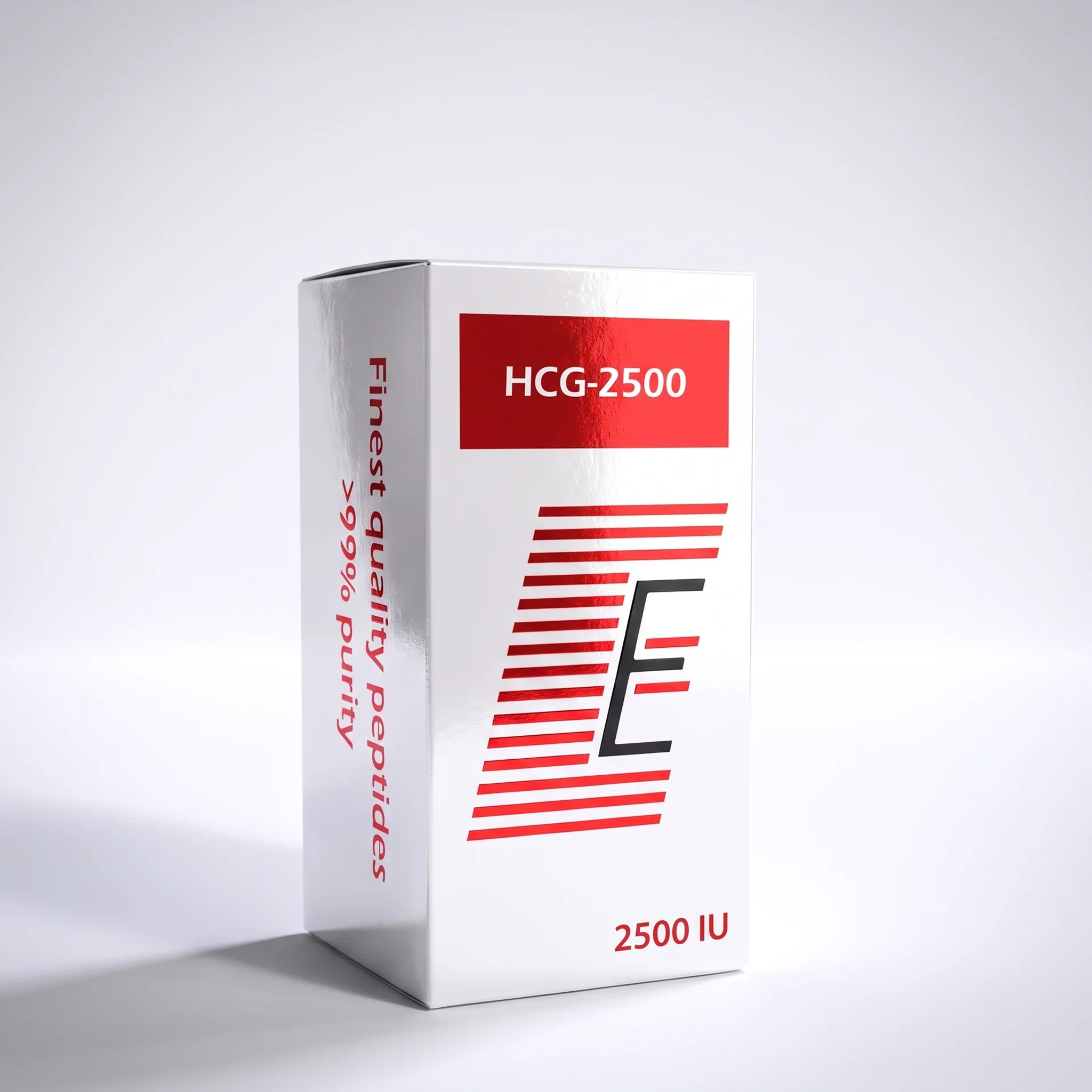
hCG (human chorionic gonadotropin) is a dimeric glycoprotein composed of a common alpha subunit and a specific beta subunit, naturally produced by the placental chorionic tissue in early pregnancy. It is called a luteinizing hormone (LH) analogue because it functionally mimics LH – it binds the same receptor (LHCGR) and triggers the same signaling cascade. Thanks to its long half-life (strong glycosylation, sialic acid), hCG acts as a permanent, prolonged “LH mimic”. In research, it serves as a model agonist of the gonadal axis. In this description it remains a Research Use Only reagent.
HCG 2500 IU
hCG 2500 IU is human chorionic gonadotropin – a dimeric glycoprotein from the Endogenic line, supplied as a lyophilisate in a vial with water for reconstitution. Functionally, an LH analog: binds the LHCGR receptor, in research models it stimulates Leydig cells and corpus luteum support; context – HPG axis and gonadal function. Research Use Only reagent.
16,99 €
With code BLACK: 13,59 €
Lowest price in the 30 days before the discount:
16,99 €
Fast shipping
Free delivery from 350 €
Returns policy
hCG 2500 IU - chorionic gonadotropin, RUO research reagent
- hCG 2500 IU is human chorionic gonadotropin - a dimeric glycoprotein from the Endogenic line, supplied as a lyophilisate in a vial with water for reconstitution.
- Functionally, an LH analog: binds the LHCGR receptor, in research models it stimulates Leydig cells and corpus luteum support; context - HPG axis and gonadal function.
- Research Use Only reagent.
Product status information
Chemical reagent intended exclusively for laboratory tests (Research Use Only). It is not a medicinal product, dietary supplement or food. It is not intended for use on humans or animals. Sales only to registered research units and laboratories.
Regulatory status
hCG (human chorionic gonadotropin) is the active substance registered medicinal products – including Pregnyl®, Ovitrelle® (choriogonadotropin alfa) and Choragon® — approved for the treatment of infertility, ovulation induction and cryptorchidism, available only on prescription and under medical supervision. The hCG 2500 IU reagent in the reagent market is a Research Use Only material and is not a substitute for the medicinal product nor does it replace medical consultation.
In addition hCG is on the WADA prohibited list in category S2 (peptide hormones, growth factors, related substances and mimetics) – and is PROHIBITED in men, because it stimulates intratesticular production of testosterone (an important anti-doping factor). Registered athletes (ADAMS) must absolutely check the current list of prohibited substances before making any decision. Communicating a product as a “fertility”, “testosterone”, “PCT” or “endocrine axis support” in humans is contrary to the Research Use Only framework.
Introduction
hCG, i.e. human chorionic gonadotropin, is one of the best characterized human endocrine glycoproteins – a hormone with a special place in the physiology of reproduction and in research on the hypothalamic-pituitary-gonadal axis (HPG axis). In line Endogenous Pro-Body hCG reagent maps a molecule of endogenous origin: a hormone naturally produced by placental chorionic tissue in early pregnancy, provided for research on gonadotropin signaling, gonadal function and regulation of the HPG axis.
What makes hCG such an interesting tool for endocrinology researchers is its receptor affinity. Functionally, hCG is there luteinizing hormone (LH) analogue — binds to the same receptor (LHCGR) and triggers the same intracellular signaling cascade. Thanks to this, in research models it serves as a stable, easily accessible “LH mimic”, which, with a very long half-life compared to native LH, makes it a convenient reagent for testing the reactivity of target cells of the gonadal axis.
This reagent delivers hCG in the format vials with lyophilized powder 2500 IU with water for reconstitution. The format allows the researcher to independently select the volume of the solvent and set the working concentration according to the parameters of the planned experiment, and the lyophilisate ensures a longer shelf life of the material before dissolution than ready-made solutions.
The smaller 2500 IU vial is a variant that organizes work with a smaller dose of international units – variant HCG 5000 IU delivers more content in one vial. Purity and identity analytically verified, COA available for each batch.
General description - gonadotropins and the HPG axis
Gonadotropins are a family of glycoprotein hormones that control gonadal function. In human physiology, the hypothalamic-pituitary-gonadal (HPG) axis operates in a cascade: the hypothalamus secretes GnRH (gonadoliberin), which stimulates the pituitary gland to release two gonadotropins – LH (luteinizing hormone) and FSH (follicle-stimulating hormone). LH and FSH reach the gonads in the blood and regulate their hormonal and reproductive functions. hCG is the third placental glycoprotein from the same structural family – and functionally close to LH.
They have a common structure: all pituitary and placental gonadotropins (LH, FSH, TSH, hCG) are heterodimers composed of two subunits – a common alpha subunit and a specific beta subunit, which gives each hormone its unique identity and receptor affinity. The beta subunit of hCG is closest to the beta subunit of LH, which explains why both hormones bind to the same LHCGR receptor.
This common architecture makes gonadotropins a model system for studying how small differences in one subunit determine the specificity of a hormonal signal. In the Pro-Body catalog, the hCG 2500 IU reagent belongs to the line Endogenous — materials mapping molecules of endogenous origin, provided for research on HPG axis signaling. As an LH analogue with a luteinizing effect, hCG is a tool for examining the reactivity of gonadal cells to the gonadotropin signal – Leydig cells of the testis in the context of androgen production, and the corpus luteum and ovarian follicle in the context of reproduction.
HPG axis signaling is also a research context for related gonadotropin tools, such as the GnRH analogue Alarelin and peptide Kisspeptin-10 acting on the LH-FSH axis.
What is hCG - dimeric glycoprotein
hCG is dimeric glycoprotein with a complex structure. The entire molecule has a total of approximately 237 amino acid residues divided into two non-covalently linked subunits and is heavily glycosylated – sugar chains constitute a significant part of its mass and determine its stability in the bloodstream.
- Alpha subunit — common for LH, FSH, TSH and hCG; it does not in itself confer receptor specificity
- Beta subunit (β-hCG) — specific for hCG, closest to beta-LH; gives the molecule identity and affinity for the LHCGR receptor; bears a characteristic C-terminal extension (CTP) rich in sialic acid residues
Strong glycosylation and especially high content sialic acid in sugar chains, is a molecular explanation for one of the most important features of hCG: its long half-life in the bloodstream compared to native LH. Sialic acid residues slow down the removal of the hormone from the circulation, so the luteinizing signal persists much longer than after a single LH pulse. It is this durability that makes hCG a convenient research tool where a prolonged, controlled signal at the LHCGR receptor is needed.
Chemical characteristics
| Parameter | Value |
|---|---|
| Name | hCG – human chorionic gonadotropin |
| Line | Endogenous |
| Class | Dimeric gonadotropin glycoprotein; LH analogue (luteinizing effect) |
| Construction | Heterodimer: alpha subunit (common) + beta subunit (specific, with CTP) |
| Number of amino acids (total) | ~237 aa (both subunits) |
| Glycosylation | Strong; high sialic acid content (extends half-life) |
| CAS number | 9002-61-3 |
| Molecular weight | ~36.7 kDa |
| Target receptor | LHCGR (LH/CG receptor) |
| Contents of the vial | 2500 IU of lyophilisate (international units) |
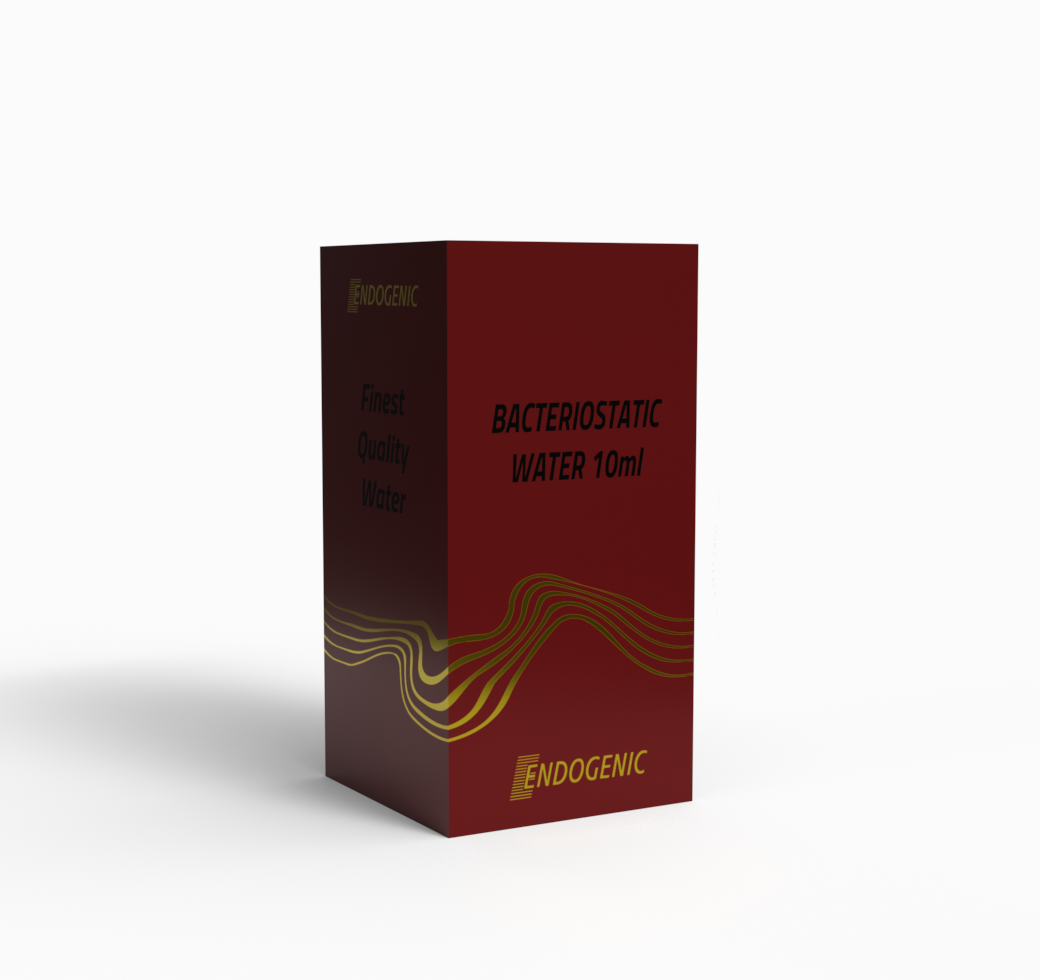
| Physical form | White/off-white freeze-dried powder; for reconstitution with bacteriostatic water |
| Solvent included | Water for reconstitution |
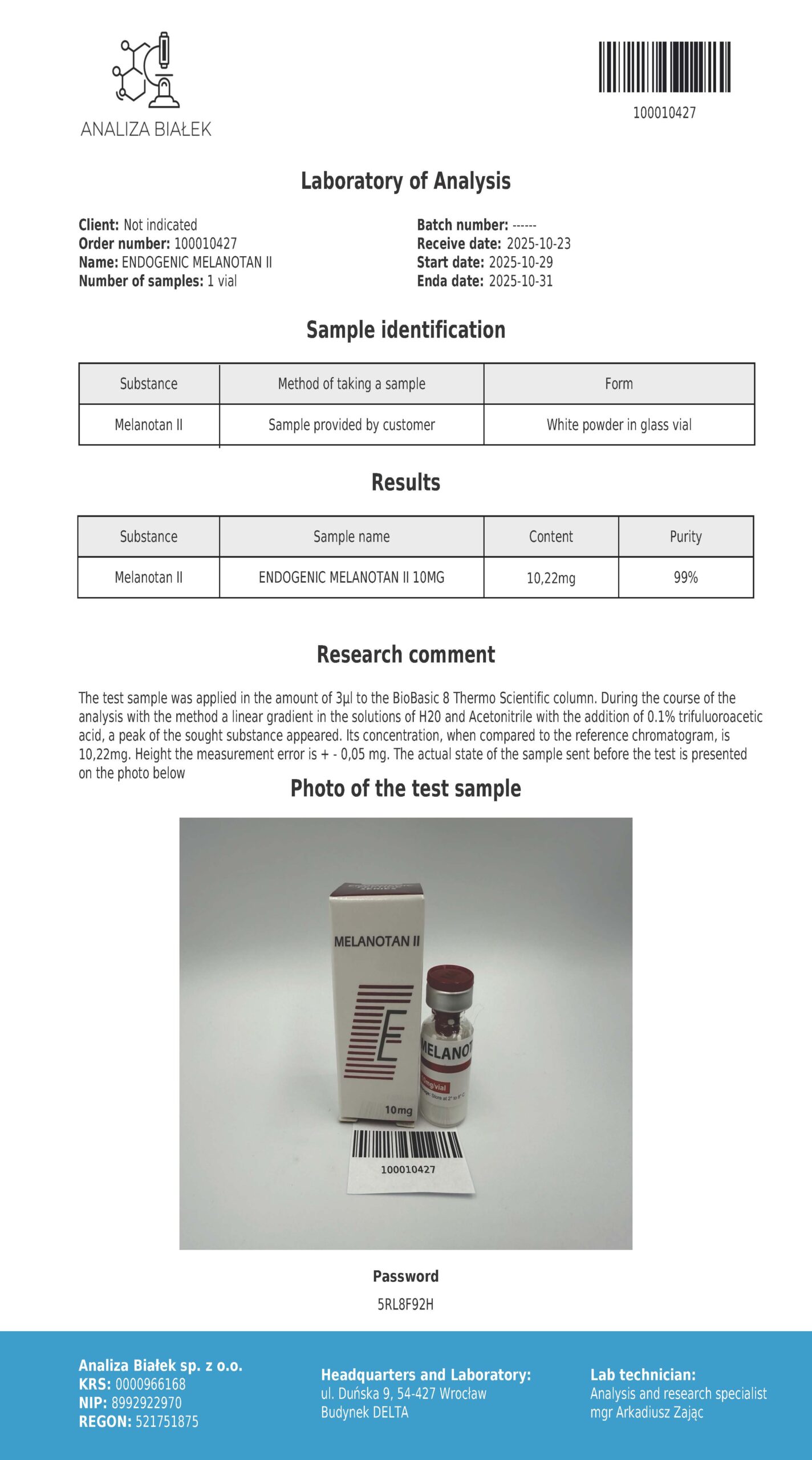
| Purity/identity | Analytically verified; COA per batch |
Mechanism of action at the molecular level
hCG is described in the endocrine literature as an agonist of one well-defined receptor, the stimulation of which triggers a cascade with different effects depending on the target tissue. Below are five complementary mechanistic threads with pathway name and research context – all relating to hormone biology and research models, not applicable to humans.
LHCGR receptor agonism – LH mimicry
Central mechanism. hCG binds to LH/CG receptor (LHCGR) — a G protein-coupled receptor, the same one that recognizes native luteinizing hormone. Stimulation of LHCGR activates the adenylate cyclase pathway and an increase in intracellular cAMP, which triggers the expression of steroidogenic enzymes. Because hCG and LH share the same receptor, hCG functions in research models as a persistent, prolonged “LH mimic” (Choi, Smitz 2014; Casarini et al. 2018). This is the basis for which the reagent is sometimes used to test the reactivity of target cells of the gonadal axis.
Stimulation of testicular Leydig cells – androgen production
In nuclear tissue, LHCGR receptors are located on Leydig cells. Stimulation of these cells with a luteinizing signal (LH or its analogue hCG) enhances steroidogenesis and intratesticular testosterone production (Liu, Handelsman 2003). In studies on the function of the male gonads and the HPG axis, hCG is sometimes used as a tool to assess the functional reserve of Leydig cells and their response to the gonadotropin signal.
It is this mechanism – stimulation of testosterone production – that makes hCG a prohibited substance for men on the WADA list (category S2).
Luteum support and ovulation induction – the context of reproduction
In ovarian tissue, LHCGR receptors are present on the cells of the corpus luteum and mature follicle. The luteinizing signal maintains function corpus luteum (progesterone production) and – at the right moment in the cycle – triggers ovulation. In this context, hCG replicates the physiological LH peak. This is the area closest to the natural origin of the hormone, whose placental role is to support the corpus luteum in early pregnancy (Cole 2010). In reproductive studies, hCG is a model agonist for the analysis of follicle maturation and luteinization.
Long half-life relative to LH – the role of glycosylation
Pharmacokinetic mechanism relevant to the molecule profile. Thanks to strong glycosylation and high content sialic acid, hCG is cleared from the bloodstream much slower than native LH. A single LH pulse is short-acting; hCG maintains the luteinizing signal for a longer period of time. In research practice, this means prolonged, more stable stimulation of the LHCGR receptor – a feature that distinguishes hCG from the pulsatile effect of endogenous LH.
Modulation of the hypothalamic-pituitary-gonadal axis and testicular function
System thread. In research models on the HPG axis, hCG is sometimes used as a functional probe of the gonads – stimulation of the LHCGR receptor in the periphery allows the study of the steroidogenic response of the gonads independently of the central GnRH/LH signal. It is a tool for examining the integrity and functional reserve of the gonadal axis and the function of Leydig cells under experimental conditions (Liu, Handelsman 2003; Casarini et al. 2018).
Reference data mainly comes from work on LH/CG receptor signaling (Choi, Smitz 2014; Casarini et al. 2018), the biology of the hCG molecule (Cole 2010; Stenman et al. 2006), and the function of the HPG axis in men (Liu, Handelsman 2003).
IMPORTANT DISTINCTION
hCG is sometimes confused with other gonadotropins and registered drugs. The four demarcations are critical here and must not be merged into one.
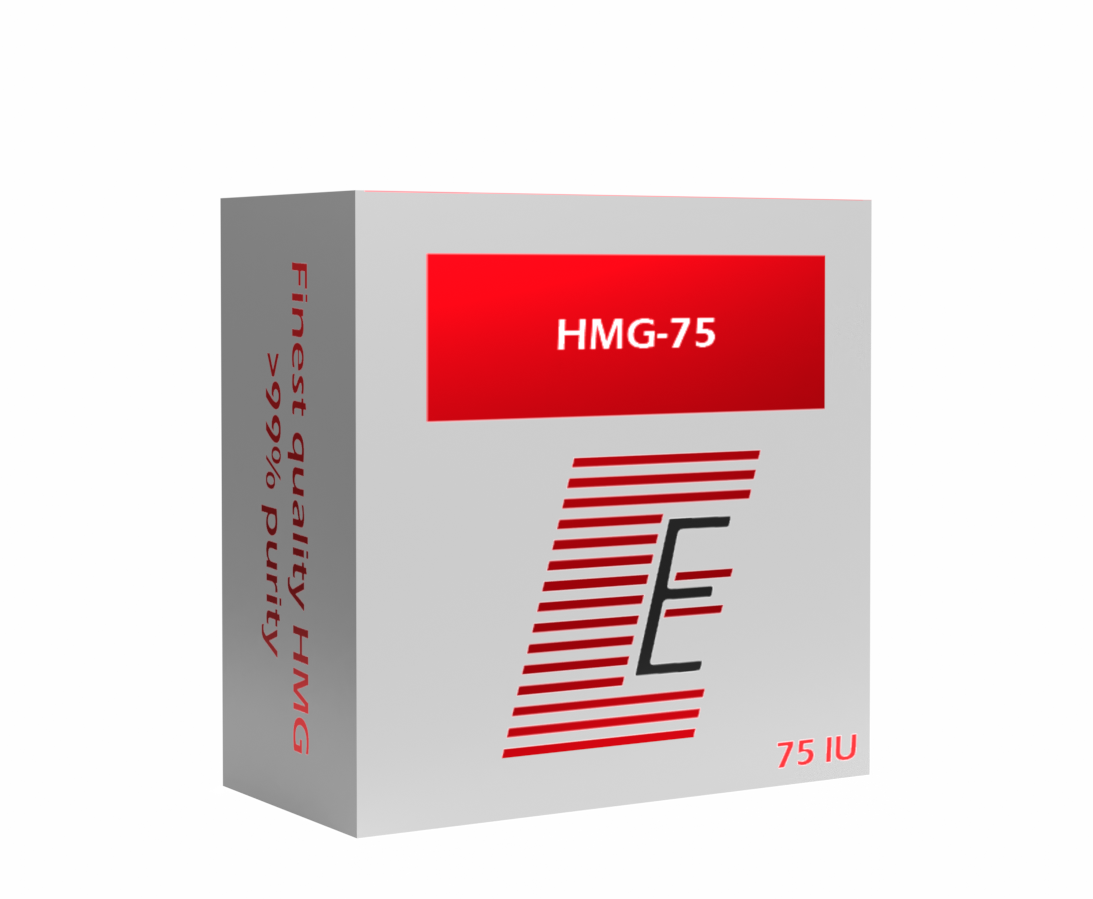
hCG (LH analogue) vs FSH vs HMG. hCG has an effect luteinizing — mimics LH and stimulates Leydig cells (testis) and corpus luteum (ovary). FSH (follicle-stimulating hormone) it is a separate gonadotropin with a different receptor and a different function – it stimulates follicle maturation and spermatogenesis, not androgenic steroidogenesis. HMG (menopausal gonadotropin, human menopausal gonadotropin) is a preparation containing both LH/hCG and FSH activity, historically obtained from the urine of postmenopausal women. These three materials are different signals on different receptors – not interchangeable. Compare separate preparation: HMG 75 IU.
2500 IU vs 5000 IU variant. The IU number indicates the amount of international units of activity in the vial, not the individual molecule. 2500 IU it’s a smaller vial; 5000 IU delivers higher unit content in one vial. hCG itself is the same glycoprotein – only the declared IU content per vial differs.
RUO reagent vs. registered drug. hCG as an active substance is found in registered drugs (Pregnyl®, Ovitrelle®, Choragon®) used in the treatment of infertility and cryptorchidism – only on prescription and under medical supervision. The hCG 2500 IU reagent in the reagent market is a Research Use Only material and is not a substitute for these medicinal products.
hCG is a glycoprotein – not a steroid, not a SARM. hCG is not a steroid molecule or a SARM. It is a dimeric gonadotropin glycoprotein that acts through the LHCGR membrane receptor. Its relationship with androgens is indirect – it stimulates the gonadal tissue to produce testosterone, without being testosterone itself.
Applications in scientific research
The hCG 2500 IU reagent in a lyophilized vial format is used as an agonist of the LHCGR receptor in work on gonadotropin signaling and the function of the HPG axis, provided in a form that allows you to independently determine the working concentration after reconstitution. The following research directions concern cellular and animal models and research on hormone biology.
- LH/CG receptor signaling — hCG as a model LHCGR agonist in cell cultures expressing the receptor; studies of the cAMP/PKA cascade, binding kinetics and signal specificity (Choi, Smitz 2014; Casarini et al. 2018)
- Leydig cell function and steroidogenesis — assessment of the steroidogenic response of Leydig cells to the luteinizing signal, the expression of steroidogenic enzymes and androgen production in nuclear tissue models
- HPG axis and gonadal function — hCG as a functional probe of the gonads in research models on the integrity and functional reserve of the hypothalamic-pituitary-gonadal axis (Liu, Handelsman 2003)
- Reproductive biology — studies of luteinization, corpus luteum function and follicle maturation as a context for the placental and ovarian role of the hormone (Cole 2010)
- Structural and functional studies of glycoproteins — hCG as a model gonadotropin for analyzing the role of alpha/beta subunits and glycosylation (sialic acid, CTP) in receptor stability and affinity (Stenman et al. 2006)
SCIENTIFIC PERSPECTIVE
The mentioned research directions concern: cellular and animal models and hormone biology. Endpoints (cAMP levels, expression of steroidogenic enzymes, intratesticular testosterone production, luteinization markers) are measured under experimental conditions. The fact that hCG is an active substance in registered medicines does not change the status of this reagent – RUO material is not a medicinal product and is not intended for use in humans or animals.
REGULATORY STATUS
hCG is on the prohibited list WADA category S2 (peptide hormones, growth factors, related substances and mimetics) and it is FORBIDDEN in men — because it stimulates intratesticular testosterone production, which is an important anti-doping factor. The ban applies to men regardless of the time (in-competition and out-of-competition). hCG as an active substance in drugs (Pregnyl®, Ovitrelle®, Choragon®) is registered in reproductive medicine, but the RUO reagent is not a medicinal product. Registered athletes (ADAMS) must absolutely check the current list of prohibited substances before making any decision.
Summary
hCG 2500 IU provides human chorionic gonadotropin (human chorionic gonadotropin, CAS 9002-61-3, ~36.7 kDa) – a dimeric glycoprotein composed of a common alpha subunit and a specific beta subunit (total ~237 aa, strongly glycosylated), in the form of a lyophilisate 2500 IU in a vial with water for reconstitution, from the Endogenic line. Functionally, hCG is an analogue of luteinizing hormone (LH): it binds the same LHCGR receptor and mimics the luteinizing signal.
Five mechanistic themes have been described in the endocrine literature – LHCGR receptor agonism, stimulation of testicular Leydig cells and intratesticular testosterone production, support of the corpus luteum and induction of ovulation in the context of reproduction, long LH half-life due to glycosylation (sialic acid), and the study of the HPG axis and gonadal function.
The regulatory profile here is particularly important and two-fold. First of all: hCG is the active substance of registered drugs (Pregnyl®, Ovitrelle®, Choragon®) – the RUO reagent is not a substitute for them. Secondly: hCG is listed in the WADA category S2 and is prohibited in men, because it stimulates testosterone production – a critical anti-doping factor.
It is also necessary to distinguish hCG (LH analogue) from FSH and HMG (menopausal gonadotropin) and the 2500 IU variant from 5000 IU.
Bibliography
- Choi J, Smitz J (2014). Luteinizing hormone and human chorionic gonadotropin: origins of difference. PubMed
- Cole L.A. (2010). Biological functions of hCG and hCG-related molecules. PubMed
- Casarini L, Santi D, Brigante G, Simoni M (2018). Two hormones for one receptor: evolution, biochemistry, actions, and pathophysiology of LH and hCG. PubMed
- Liu, P. Y., Handelsman, D. J. (2003). The present and future state of hormonal treatment for male infertility. PubMed
- Stenman UH, Tiitinen A, Alfthan H, Valmu L (2006). The classification, functions and clinical use of different isoforms of hCG. PubMed
Chemical reagent Research Use Only. hCG 2500 IU (Endogenic line) in the Pro-Body catalog is not a medicinal product, dietary supplement or food. It is not intended for administration to humans or animals outside a controlled experimental environment. hCG is the active substance of registered medicines (Pregnyl®, Ovitrelle®, Choragon®) available on prescription – RUO reagent it is not a replacement for them. hCG is on the WADA prohibited list in the category S2 and is prohibited in men (stimulates testosterone production).
Registered Athletes (ADAMS) must check the current list before making any decision. The information in the description is of an educational and scientific nature and refers to the biology of the hormone and the results reported in the literature – it does not constitute medical advice or administration instructions.
FAQ
hCG binds to the LH/CG receptor (LHCGR), a G protein-coupled receptor, activating the cAMP pathway and the expression of steroidogenic enzymes. In nuclear tissue, these receptors are located on Leydig cells; their stimulation with a luteinizing signal increases steroidogenesis and intratesticular testosterone production (Liu, Handelsman 2003). In tests, hCG is sometimes used as a probe to assess the response of Leydig cells to the gonadotropin signal.
It is this mechanism – stimulation of testosterone production – that is responsible for hCG’s status on the WADA list. These are observations from hormone biology and research models, not effects in humans with this reagent.
These are three different signals on different receptors. hCG has a luteinizing effect – it mimics LH and stimulates Leydig cells and the corpus luteum. FSH (follicle-stimulating hormone) it is a separate gonadotropin with a different receptor – it stimulates follicle maturation and spermatogenesis, not androgenic steroidogenesis. HMG (human menopausal gonadotropin) is a preparation combining LH/hCG and FSH activity, historically obtained from the urine of postmenopausal women. They are not interchangeable. Compare: HMG 75 IU.
hCG itself is the same glycoprotein – only the declared activity content in international units (IU) per vial differs. 2500 IU it’s a smaller vial; 5000 IU delivers a higher IU content in one vial. The IU number indicates the content of activity units, not the individual molecule. The choice of the variant depends on the scale of the planned laboratory work and the preferred unit weight. Compare: HCG 5000 IU.
hCG is on the WADA prohibited list in the category S2 (peptide hormones, growth factors, related substances and mimetics) and it is prohibited in men. The reason is mechanistic: hCG stimulates intratesticular testosterone production by stimulating Leydig cells, which makes it an important anti-doping agent in men. The ban applies permanently (in- and out-of-competition). Registered athletes (ADAMS) must absolutely check the current list before making any decision. The RUO reagent remains a test material – this does not change the WADA status of the substance itself.
hCG is a freeze-dried powder that requires dissolution before work; The set includes bacteriostatic water. In short: equalize the temperature of the vial and water to room temperature, disinfect the caps, use a sterile syringe to apply the calculated volume of water onto the wall of the vial – not directly onto the powder – and leave to dissolve spontaneously without shaking (gently turning instead of shaking so as not to damage the glycoprotein).
The working solution should be clear and colorless. Store it in a refrigerator at 2-8°C and use it within a reasonable time window – the glycoprotein in the aqueous phase loses its activity faster than the lyophilized product. The vial format allows you to select any working concentration in IU/ml.
5.0
2 reviews
-
yonsonpz
 Polski
Verified purchase
Polecam
Zdecydowanie polecam. Błyskawiczna wysyłka, miła obsługa, produkty wysokiej jakości
-
Łukasz Jabloński
Polski
Verified purchase
Najlepsze HCG na rynku!
Dostawa ekspresowa! Hcg robi robotę, nie ma co szukać innych. Zostaje z endogenic
-
Grzesiek
Polski
Product review
To moje kolejne zamówienie tego produktu, ani razu się nie zawiodłem na jakosci. Polecam!
Customers also bought