To understand why you need to combine two peptides acting on growth hormone, you need to see that the pituitary gland receives the “secret GH” signal through more than one channel. The somatotropic cell of the anterior pituitary has at least two separate receptors on its surface that stimulate the release of growth hormone: GHRH receptor and growth hormone secretion receptor type 1a (GHS-R1a), i.e. ghrelin receptor.
These are two different proteins, two different intracellular cascades and two different physiological signals – which converge on the same end result, the release of GH from secretory granules. GHRH receptor is a receptor coupled to the Gs protein. Its stimulation increases intracellular cAMP, activates the PKA kinase-dependent pathway and leads to the release of growth hormone.
Physiologically, GHRH is primarily responsible for amplitude GH pulse – for how high a single hormone release is. This is the channel on which CJC-1295 is based. Ghrelin receptor (GHS-R1a) is a Gq protein-coupled receptor. Its stimulation activates phospholipase C, increases intracellular calcium and also leads to the release of GH – but in a way separate from GHRH.
Importantly, the ghrelin arm additionally suppresses somatostatin (inhibiting hormone) and enhances its own GHRH action. Physiologically, secretagogues acting on this receptor influence frequency and pulsatility GH release. This is the channel on which Ipamorelin is based. The pulsatile nature of GH secretion is the main physiological detail here – and that is why the GHRH + GHRP pair is an interesting research model.
Unlike exogenous, recombinant growth hormone, which floods the circulation with a flat, nonphysiological concentration, secretagogues stimulate own pituitary to release GH in a way that preserves the pulsatile signal architecture – involving the somatostatin feedback loop. This “endogenous, pulsatile” release pattern is the subject of research on the physiology of the GH/IGF-1 axis, the regulation of slow-wave sleep (in which the strongest nocturnal GH pulse occurs), and the differences between secretagogue stimulation and the administration of recombinant GH. The pharmacology of growth hormone secretagogues includes two large classes of tools:
- GHRH analogues — mimic the endogenous GH-releasing hormone, stimulate the GHRH receptor, increase the pulse amplitude (CJC-1295, sermorelin, tesamorelin)
- GH-releasing peptides (GHRP) and ghrelin mimetics — stimulate the GHS-R1a ghrelin receptor, increase the pulse rate and suppress somatostatin (Ipamorelin, GHRP-2, GHRP-6, hexarelin)
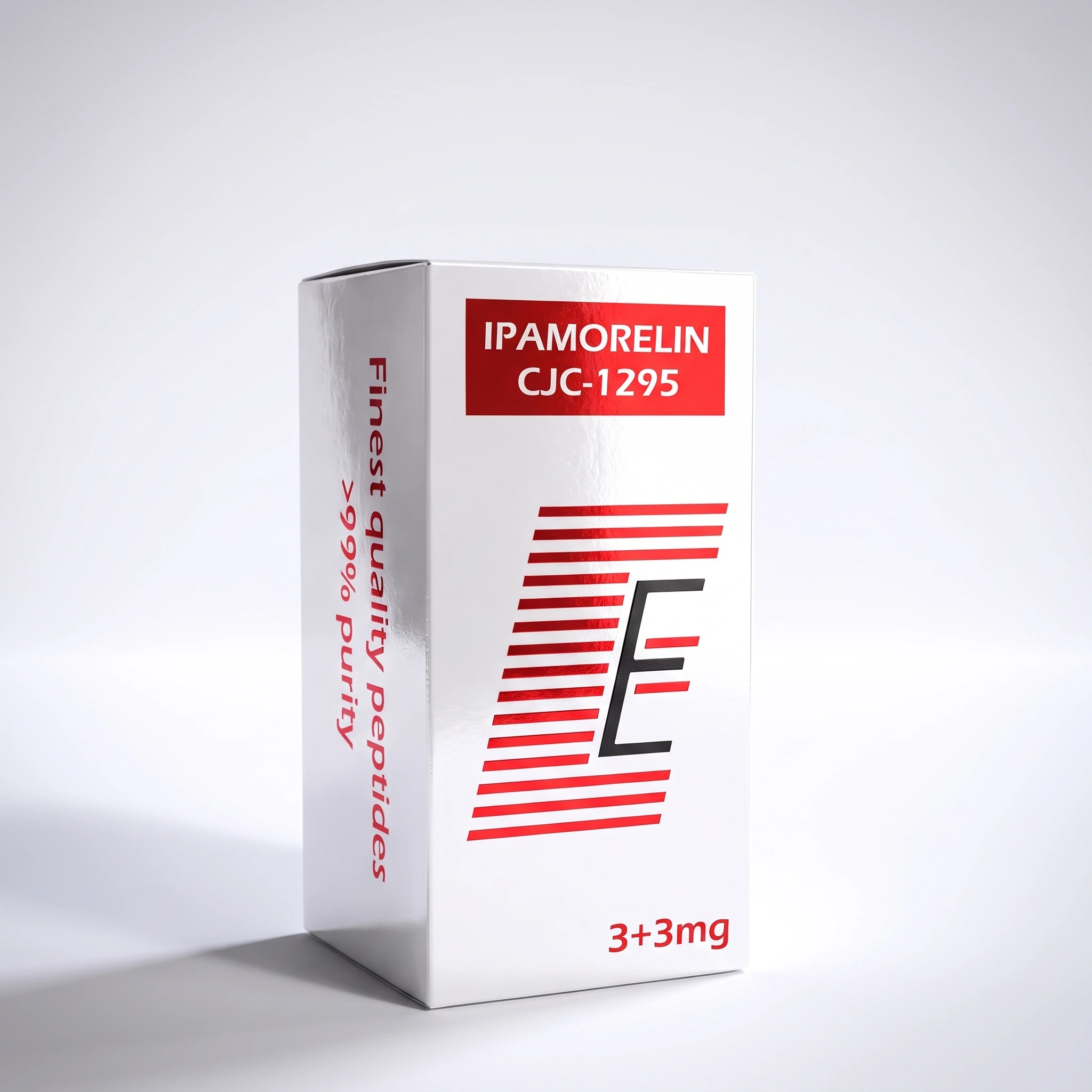
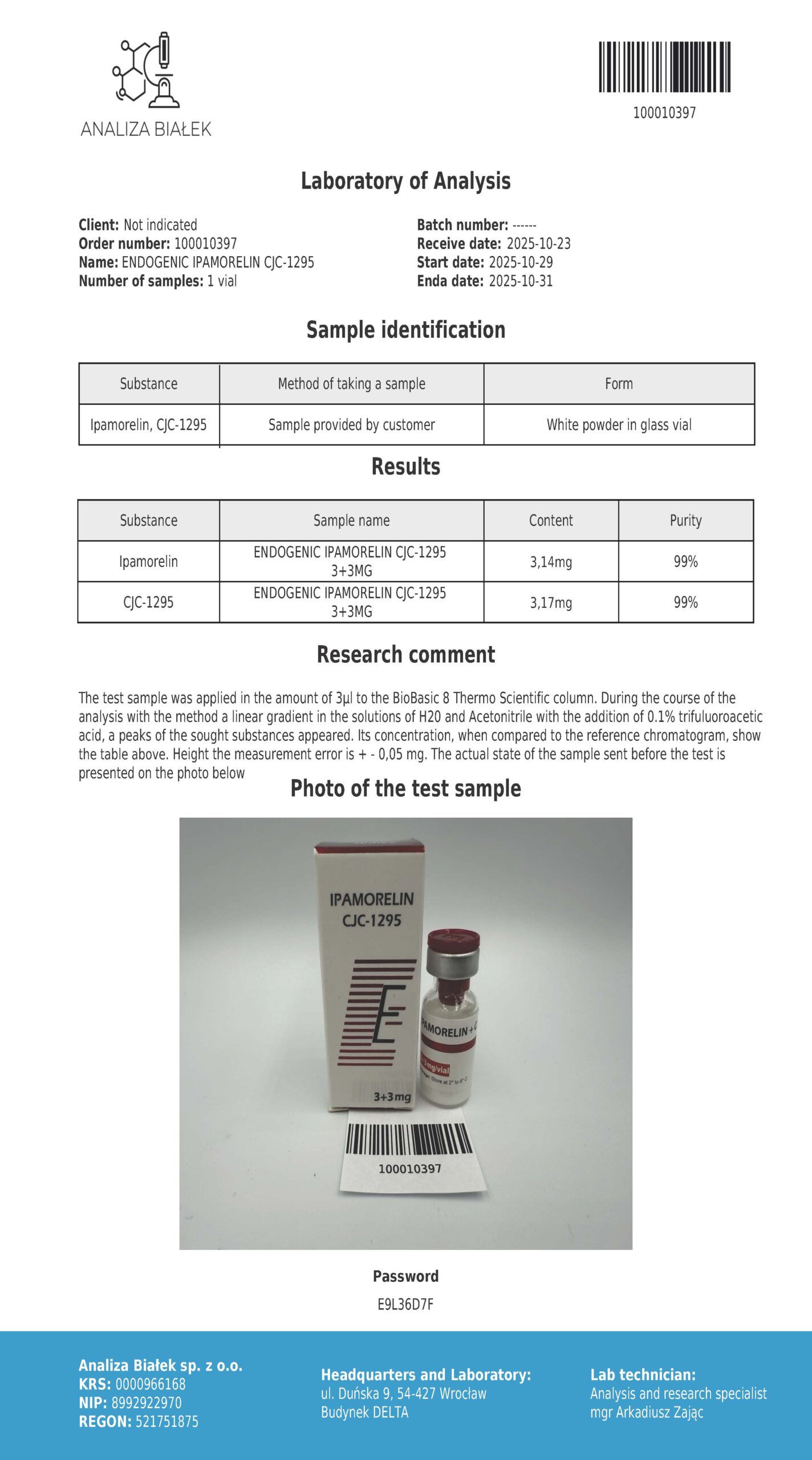
Blend Ipamorelin + CJC-1295 combines one representative of each class – one GHRH analogue and one ghrelin mimetic – making it a model tool for testing interaction of both arms regulation of growth hormone release in one, controlled experimental system. The full range of molecules from this family is collected in the category growth hormone-increasing peptides.