Skip to content

Free delivery on orders over €350. Fast delivery.

Search

What are you looking for?

Type at least 2 characters to see suggestions.

Set 3x L-Carnitine 400 mg/ml + 1 gratis

Set 3x L-Carnitine 400 mg/ml + 1 gratis

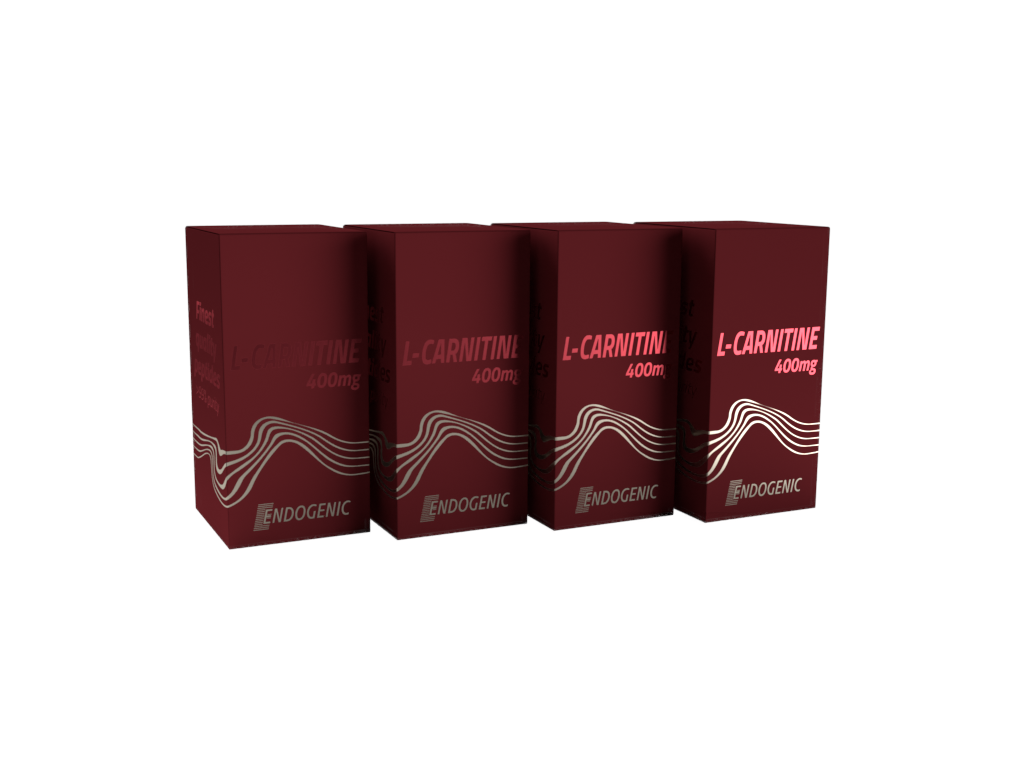
Set of 3x L-Carnitine 400 mg/ml + 1 free — L-carnitine in solution for intramuscular injection, standard variant. Four vials of 10 ml (3 paid + 1 free) = 40 ml = 16000 mg. Fatty acid transport cofactor (CPT1/CPT2) with ~100% bioavailability when administered intramuscularly.

142,99 €
Fast shipping
Delivery options Free delivery from 350 €
Returns policy
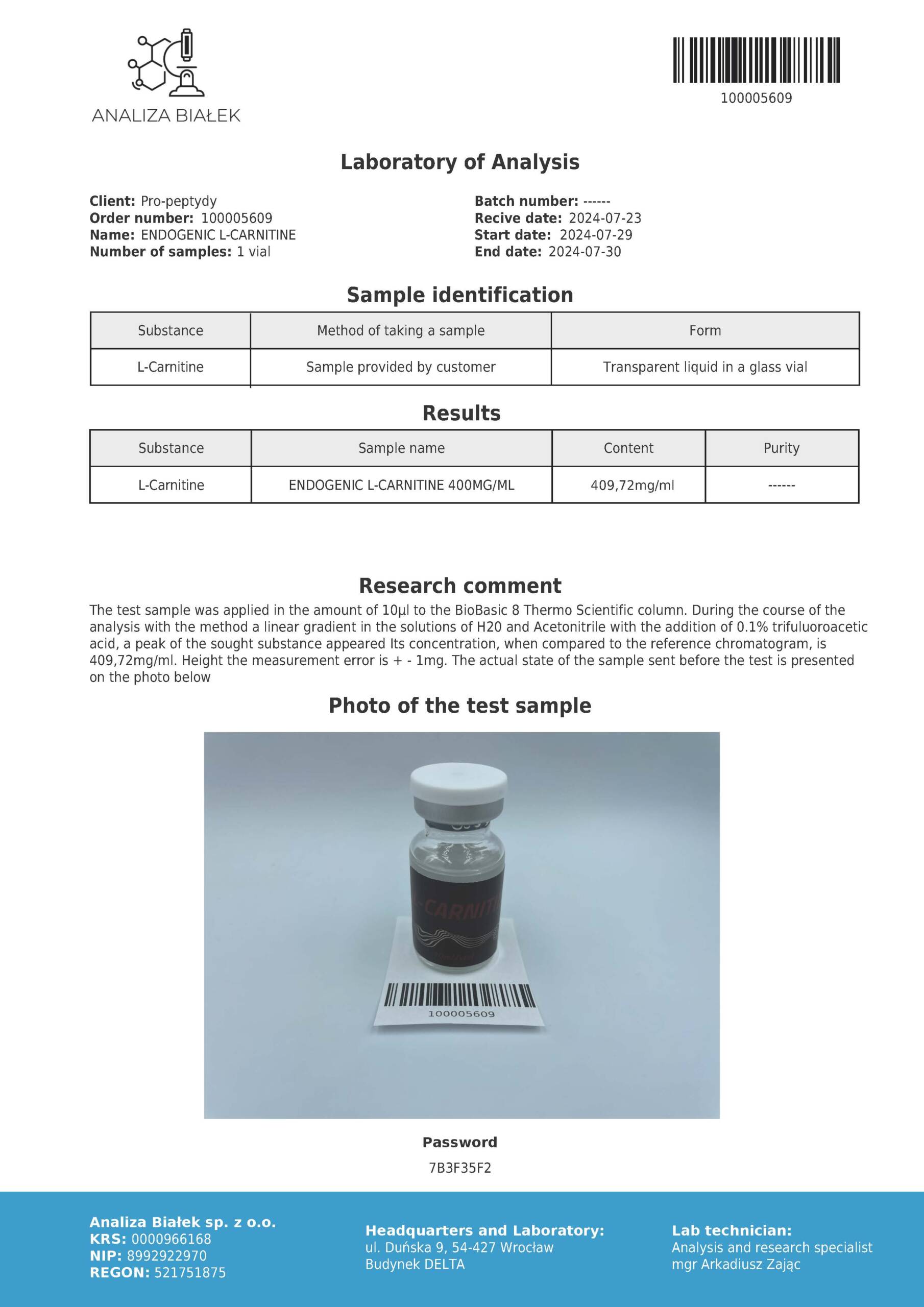
View the laboratory analysis report

Set 3x L-Carnitine 400 mg/ml + 1 free - L-carnitine solution for injection

  • L-carnitine: concentration of 400 mg/ml.
  • Buy 3, get 1 free: four 10 ml vials, totalling 40 ml and 16,000 mg.
  • Product characteristics, contraindications and legal status are described below.

A specialized sports preparation intended only for adults (21+) for self-assessment of risk. L-carnitine in oral form is a permitted food ingredient, however solution for intramuscular injection is not a dietary supplement in the Polish and EU legal sense nor a medicinal product. Before making any decision, please read the “Legal Status” section, the WADA box and the absolute contraindications at the end of the description.

L-carnitine has a reputation in sports that is difficult to reconcile with its actual biochemistry. As a molecule, it is responsible for the transport of long-chain fatty acids across the mitochondrial membrane – without it, fat will not burn in the mitochondrion. This sounds like a ready-made “burner” argument, but decades of research on the oral form have yielded disappointing results: in healthy adults, skeletal muscles are saturated with carnitine at around 100%, and a single oral dose increases its concentration in the muscle to a negligible extent.

Stephens et al. (2007) showed why – the absorption of carnitine into the muscle requires the cooperation of insulin and the OCTN2 transporter, and oral supplementation alone is not enough to exceed this threshold. And this is where the logic of the injection form begins.

Intramuscular administration bypasses the barrier of intestinal absorption and first passage through the liver – bioavailability approaches 100%, and plasma concentration increases immediately and predictably. This is not a “better absorption of the supplement” argument. This is a different pharmacokinetic category where you control the dose delivered to the circulation with a precision not possible with a capsule.

Coach Marek would say directly: if you use the injectable form, it is not to “support your diet” – but to work with a specific, measurable concentration in the plasma. Against the background of others supplements with L-carnitine the injectable variant plays in a distinct pharmacokinetic league. This set is 400 mg/ml solution in the standard variant — four vials of 10 ml (3 paid + 1 free), total 40 ml of solution = 16,000 mg of L-carnitine.

The 400 mg/ml concentration is in the middle of the Pro-Body catalog: thicker than the 200 mg/ml starter variant, but more forgiving in precision than the concentrated 600 mg/ml. Pharmaceutical quality, purity ≥98% HPLC, identity confirmed by mass spectrometry, COA available for each batch.

Mechanism of action at the molecular level

L-carnitine does not act through the receptor. Its function is purely transport and metabolic – it is a shuttle molecule without which one specific stage of fat metabolism cannot take place. That’s why we call it a “cofactor” and not a “stimulant.”

Transport of fatty acids – CPT1/CPT2 system and the carnitine shuttle

Long-chain fatty acids (those that make up most of our energy stores) do not pass through the inner mitochondrial membrane on their own. They have to be “transferred”. Enzyme CPT1 (carnitine palmitoyltransferase 1) on the outer mitochondrial membrane, it attaches a fatty acid to carnitine, forming acylcarnitine. This goes through the membrane and on the other side CPT2 it detaches carnitine and transfers the fatty acid to the mitochondrial matrix, where it waits to be burned.

Carnitine returns for another charge. In practice: without carnitine, fat reaches the door of the mitochondrion, but has no way to get inside – this is the “carnitine shuttle” (Karlic and Lohninger 2004).

β-oxidation – proper fat burning

Once in the mitochondrial matrix, the fatty acid enters the cycle β-oxidation — a sequence of reactions that “cut” two carbon atoms from it, producing acetyl-CoA for the Krebs cycle and ultimately ATP. Carnitine does not participate in β-oxidation itself, but it is its gatekeeper: the rate at which fatty acids enter this cycle depends on the availability of carnitine and the activity of CPT1. In the context of endurance, this means potentially more effective use of fat as fuel (Pekala et al. 2011).

CoA pool buffering – an underrated feature

This is a mechanism that is less often talked about, but it is sometimes more important than “fat burning” itself. During intense exercise, acetyl-CoA accumulates in the muscle – and if there is a lack of free coenzyme A (CoA), the main energy enzymes (including pyruvate dehydrogenase) slow down. Carnitine accepts excess acetyl groups, forming acetylcarnitine and releasing free CoA. In practice: it acts as a buffer that keeps energy metabolism running smoothly at high intensity (Stephens et al. 2007). This is one of the reasons why the interest in carnitine in sports is not limited to fat reduction.

Post-exercise recovery markers

In a study on humans, Volek et al. (2002) showed that L-carnitine influenced markers of muscle damage and regeneration after resistance exercise – lower concentrations of markers of tissue damage (including myoglobin) and lower intensity of muscle pain were observed. The proposed mechanism is to improve blood flow and reduce oxidative stress in working muscles, and not a direct “fat burning” effect. In practice: it is a regenerative argument, independent of body composition.

Impact on endurance and oxygen economy

Wall et al. (2011) conducted one of the few long-term studies on humans (24 weeks), in which the combination of carnitine with carbohydrates (to stimulate insulin and OCTN2 transport) actually increased the carnitine content in the muscle – and translated into more efficient glycogen management at moderate intensity and better work parameters at high intensity. This study is important because it shows that the muscle effects of carnitine are achievable, but require either a long insulin protocol or a route of administration that bypasses the absorption barrier – which provides a physiological rationale for interest in the intramuscular form.

Concentration positioning 400 mg/ml - standard variant

The Pro-Body catalog offers injectable L-carnitine in three concentrations with identical molecular composition – the difference only concerns the density of the solution, i.e. the number of milligrams in one milliliter. 400 mg/ml is the standard, middle variant — and for most advanced athletes, it’s the default choice. The logic is as follows. The higher the concentration, the smaller the volume you inject for the same dose – which is convenient, but reduces precision (at 600 mg/ml, each tenth of a milliliter is 60 mg).

The lower the concentration, the more precisely you measure small doses – but the injection volume increases, and when administered intramuscularly, volume matters (comfort, absorption). The 400 mg/ml variant is a compromise between these extremes:

  • 1 ml = 400 mg — convenient reference dose, “round” and easy to calculate
  • 2 ml = 800 mg — standard pre-workout portion for an adapted person
  • 5 ml = 2000 mg — the upper limit of a single injection in this variant

For comparison with the rest of the line: set 3x L-Carnitine 200mg in the starting variant, it requires twice as much volume for the same dose, but allows for the most accurate titration of first trials and low doses. On the other hand set 3x L-Carnitine 600mg in the advanced variant, it minimizes the injection volume for people using higher doses, at the expense of measurement precision.

The 400 mg/ml variant sits in the middle: thick enough to fit 800 mg into 2 ml, and “diluted” enough to measure 400 mg without acrobatics with a syringe. If you’re vacillating between precision and comfort and have no particular reason to choose the extreme – standard 400 mg/ml is the correct default choice. A single variant is also available: L-Carnitine 400mg in a single vial for people who want to test the form without committing to the full set of four vials.

Pharmacokinetics of intramuscular administration

  • Bioavailability: ~100% – intramuscular administration completely bypasses the intestinal absorption barrier and the first-pass effect through the liver. This is the main pharmacokinetic advantage over the oral form, where the bioavailability of carnitine decreases with the dose and can be single-digit at higher doses.
  • Half-life (T½): ~1-1.5 hours in plasma for the exogenously administered fraction – which explains the logic of pre-workout administration when you want high concentrations during the session
  • Tissue pool: regardless of rapid plasma elimination, long-term saturation of the muscle with carnitine is a slow process (weeks), dependent on the OCTN2 transporter – hence multi-week protocols, not single injections “for effect”
  • Elimination: mainly renal; excess carnitine is filtered and excreted in the urine, making the kidneys a safety-critical organ (see contraindications)

Technical data

  • Common name: L-carnitine, levocarnitine (L-carnitine, levocarnitine)
  • Chemical name: (R)-3-hydroxy-4-(trimethylazaniumyl)butanoic acid
  • CAS number: 541-15-1
  • Molecular formula: C₇H₁₅NO₃
  • Molar mass: 161.20 g/mol
  • Supplied form: solution for intramuscular injection 400 mg/ml, vial 10 ml
  • Set contents: 4 vials (3 paid + 1 free) × 10 ml = 40 ml = 16000 mg L-carnitine
  • Concentration: 400 mg/ml (standard/mid variant)
  • Quality: pharmaceutical grade, purity ≥98% HPLC, identity confirmed by MS
  • Solubility: well soluble in water (clear, colorless solution)
  • Storage: at room temperature, protect from light; After puncturing the vial, follow aseptic rules

Origin and form: L-carnitine is a natural compound synthesized in the body from the amino acids lysine and methionine, present in the largest amounts in skeletal and cardiac muscles. The “L” form (left-handed, levocarnitine) is the only biologically active isomer – the “D” form is inactive and potentially harmful, therefore the quality of the raw material and confirmation of identity by mass spectrometry are important. The injection solution contains only the L isomer with a purity of ≥98% HPLC.

Advanced protocol (21+)

The following protocol describes how injectable L-carnitine is used peri-training by adults assessing their own risk. This is not a medical recommendation. In the case of the intramuscular form, the strict principle of asepsis and rotation of administration sites applies.

  • Starting dose (tolerance assessment): 1 ml = 400 mg. The first injection is always in the lower range – the goal is to check the individual local reaction (pain, redness) and general tolerance, not the training effect.
  • Standard dose: 1.5-2 ml = 600-800 mg, administered before training (typically 30-60 minutes before) when you want high plasma carnitine concentrations during the session. This is the working range for most adapted athletes.
  • Maximum dose of a single injection: 5 ml = 2000 mg. An upper limit that should not be exceeded in a single administration – larger volume increases local discomfort.
  • Frequency: 3-5 times a week, most often on training days. Daily administration is not necessary – saturation of the muscle pool is a long-term process, not dependent on a single dose.
  • Rotation of injection sites: vary the site of administration (alternating quadriceps femoris, gluteal, deltoid) to reduce tissue irritation and the risk of fibrosis. Never administer to the same place twice in quick succession.
  • Cycle length: Typically 4-8 weeks of cyclic use, then a break. The cycle allows you to assess the effect and gives the tissue a rest from repeated injections.

SCIENTIFIC PERSPECTIVE

Most positive data about carnitine in sports comes from studies on the oral form combined with carbohydrates (Wall et al. 2011) or from studies on regeneration markers (Volek et al. 2002). The intramuscular injection form solves the problem of absorption, but there are no large, multicenter clinical trials confirming the advantage of this route of administration over the oral protocol with insulin in healthy athletes. It is worth balancing pharmacokinetic optimism (bioavailability ~100%) with realism regarding the strength of evidence for a real training effect.

Safety rules

The injectable form carries a set of risks not present with the oral form – related to the injection itself, not just the molecule.

Risks associated with injection

  • Pain and local reaction: intramuscular administration may cause pain, redness and hardening of the tissue at the injection site. The standard 400 mg/ml variant is in this respect milder than the concentrated 600 mg/ml (lower density = less irritation per milliliter), but does not eliminate the reaction completely.
  • Asepsis: each injection is a potential gateway to infection. A sterile syringe and disposable needle, skin disinfection, no repeated puncturing of the vial without maintaining cleanliness – these are non-negotiable conditions.
  • Seat rotation: repeated administration to the same place may result in fibrosis and chronic irritation.

TMA and the gut-cardiac axis

With oral carnitine, a pathway has been described in which intestinal bacteria metabolize it to TMA (trimethylamine), and the liver oxidizes TMA to TMAO (trimethylamine N-oxide) — a metabolite associated with cardiovascular risk in observational studies. Intramuscular injection form bypasses the digestive tract, which theoretically limits TMA production from a parenteral dose. However, this is not an “injection is healthier for the heart” argument – the body’s pool of carnitine is common, and data on TMAO when administered parenterally are limited. This remains an area where caution is warranted, especially with long cycles.

Other rules and interactions

  • Kidney diseases: carnitine is excreted renally – renal failure impairs its elimination and is a contraindication
  • Thyroid: there are indications that carnitine may weaken the peripheral action of thyroid hormones – people with hypothyroidism or on levothyroxine should be especially careful
  • Coumarin (vitamin K antagonists, e.g. acenocoumarol, warfarin): intensification of the antithrombotic effect of coumarins by carnitine has been reported – the combination requires close supervision of coagulation parameters (INR)
  • Cyclical, not continuous use
  • Do not exceed the maximum volume of a single injection (5 ml)

Absolute contraindications

  • Pregnancy and breastfeeding
  • Age under 21
  • Kidney failure
  • Active use of coumarins (vitamin K antagonists) without INR supervision
  • Allergy to L-carnitine or solution ingredients

Legal status

The status of L-carnitine depends entirely on the route of administration – and this distinction is at the heart of the classification of this product.

  • Oral form – allowed ingredient: Oral L-carnitine (capsules, liquids, powders) is a commonly permitted ingredient of food and dietary supplements. EFSA assessed L-carnitine and did not question its oral use at reasonable doses.
  • Injection form – outside the framework of a dietary supplement: solution for intramuscular injection is not a dietary supplement in the Polish and EU legal sense — a dietary supplement is, by definition, a food in a form intended for oral consumption. A product administered by injection does not meet this definition. We classify this preparation as: specialist sports preparation for adults (21+), for your own risk assessment.
  • GIS/EFSA: the L-carnitine molecule itself is not a prohibited substance – it is the form of administration that takes the product beyond the category of dietary supplement supervised by the GIS. The Chief Sanitary Inspectorate (GIS) classifies supplements as foodstuffs in oral form; injection solution is not subject to this framework.
  • WADA – Category M2.2: L-carnitine as a substance not listed on the WADA prohibited list. However, the method of administration is regulated: intravenous injections and infusions above 100 ml in 12 hours are prohibited (category M2.2 – Physical and chemical manipulations), except for justified hospital treatment. This means that the volume and route of administration may constitute a violation of anti-doping rules even for a formally permitted substance. Registered Athletes (ADAMS) must verify the current WADA list before making any decision.

The preparation is intended only for adults (21+) to independently assess the risk. Communication of the product as a medicine, as a dietary supplement or as a means of “guaranteeing” fat tissue reduction is unacceptable.

Summary

L-carnitine (CAS 541-15-1, C₇H₁₅NO₃, 161.20 g/mol) is a cofactor for the transport of long-chain fatty acids across the mitochondrial membrane – without it, fat β-oxidation cannot begin (CPT1/CPT2 system, carnitine shuttle; Karlic and Lohninger 2004). Its second, underestimated function is to buffer the pool of free CoA at high exercise intensity (Stephens et al. 2007).

The problem with the oral form is absorption – the muscle is saturated with carnitine only with the participation of insulin and a long protocol (Wall et al. 2011). The injection form bypasses this barrier: bioavailability ~100%, predictable plasma concentration. This set is standard variant 400 mg/ml — middle point of the catalog, compromise between measurement precision (200 mg/ml) and density (600 mg/ml): 1 ml = 400 mg, 2 ml = 800 mg of a standard pre-workout portion, 5 ml = 2000 mg ceiling.

Four vials (3+1 free) = 40 ml = 16000 mg, purity ≥98% HPLC, MS confirmation, COA per batch. Critical Limitation: WADA Category M2.2 regulates the volume and route of administration regardless of the status of the substance itself. The broader context of selecting lipolytic agents is discussed in the guide effective fat burners, and the place of carnitine in the reduction plan – protocol for reducing body fat.

Bibliography

  1. Stephens FB, Constantin-Teodosiu D, Greenhaff PL (2007). New insights concerning the role of carnitine in the regulation of fuel metabolism in skeletal muscle. PubMed
  2. Wall BT, Stephens FB, Constantin-Teodosiu D, Marimuthu K, Macdonald IA, Greenhaff PL (2011). Chronic oral ingestion of L-carnitine and carbohydrate increases muscle carnitine content and alters muscle fuel metabolism during exercise in humans. PubMed
  3. Volek JS, Kraemer WJ, Rubin MR, Gómez AL, Ratamess NA, Gaynor P (2002). L-Carnitine L-tartrate supplementation favorably affects markers of recovery from exercise stress. PubMed
  4. Karlic H, Lohninger A (2004). Supplementation of L-carnitine in athletes: does it make sense?. PubMed
  5. Pekala J, Patkowska-Sokoła B, Bodkowski R, Jamroz D, Nowakowski P, Lochyński S, et al. (2011). L-carnitine — metabolic functions and meaning in human life. PubMed