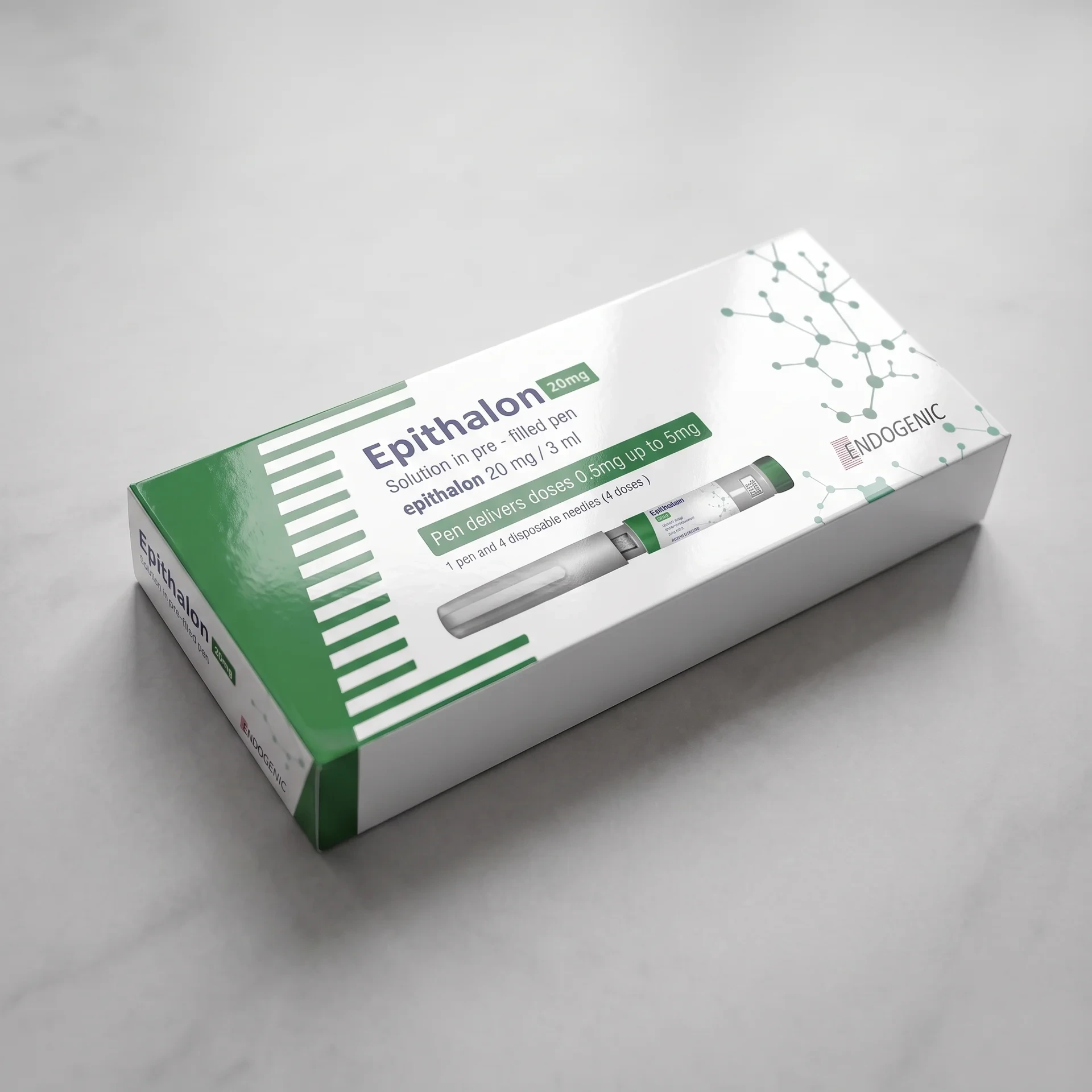
In the number of molecular targets and the direction of the third target’s effect. A dual agonist activates two incretin receptors, GLP-1R and GIPR, which are associated with reduced energy intake. A triple agonist adds the glucagon receptor, contributing an effect associated with increased energy expenditure.
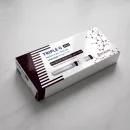
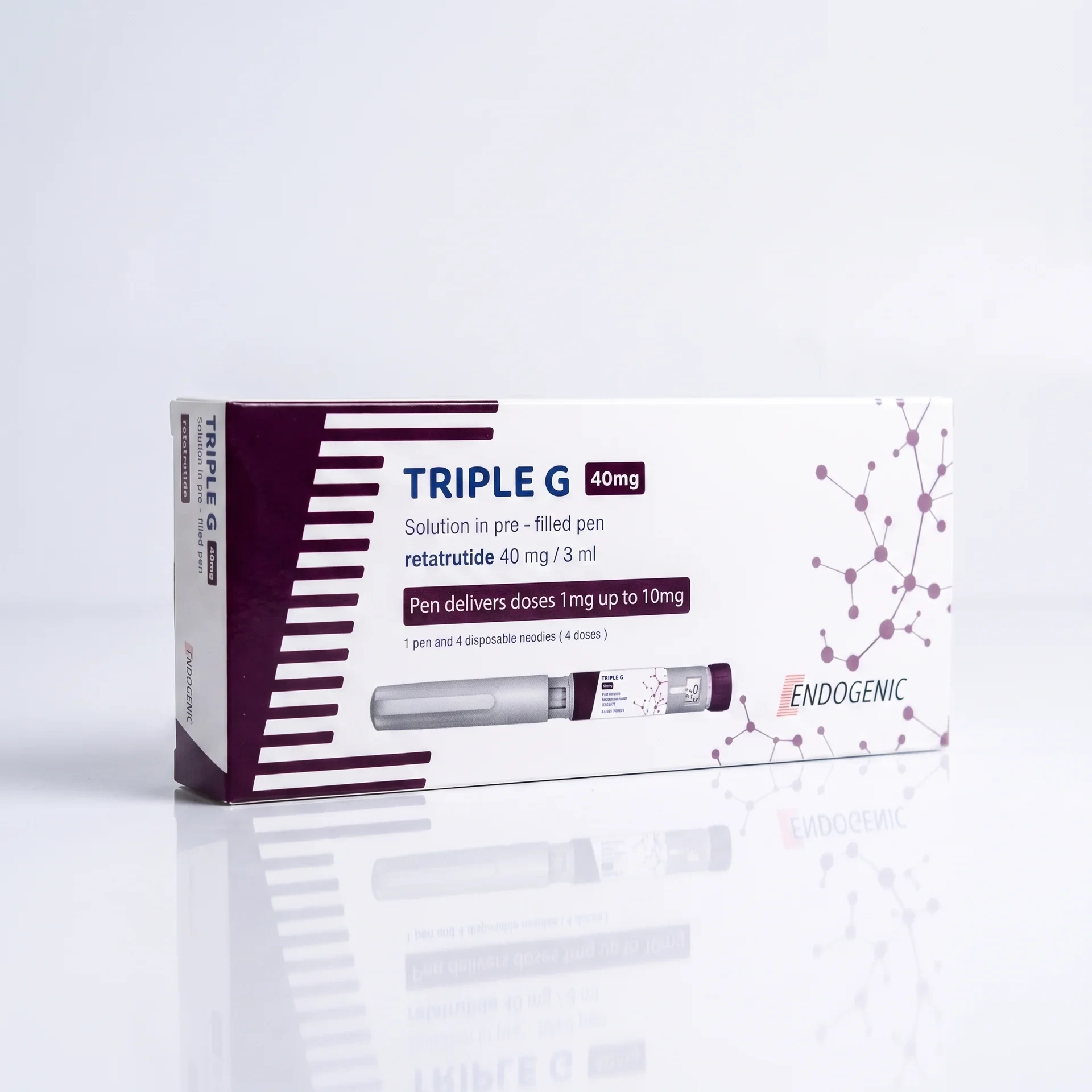
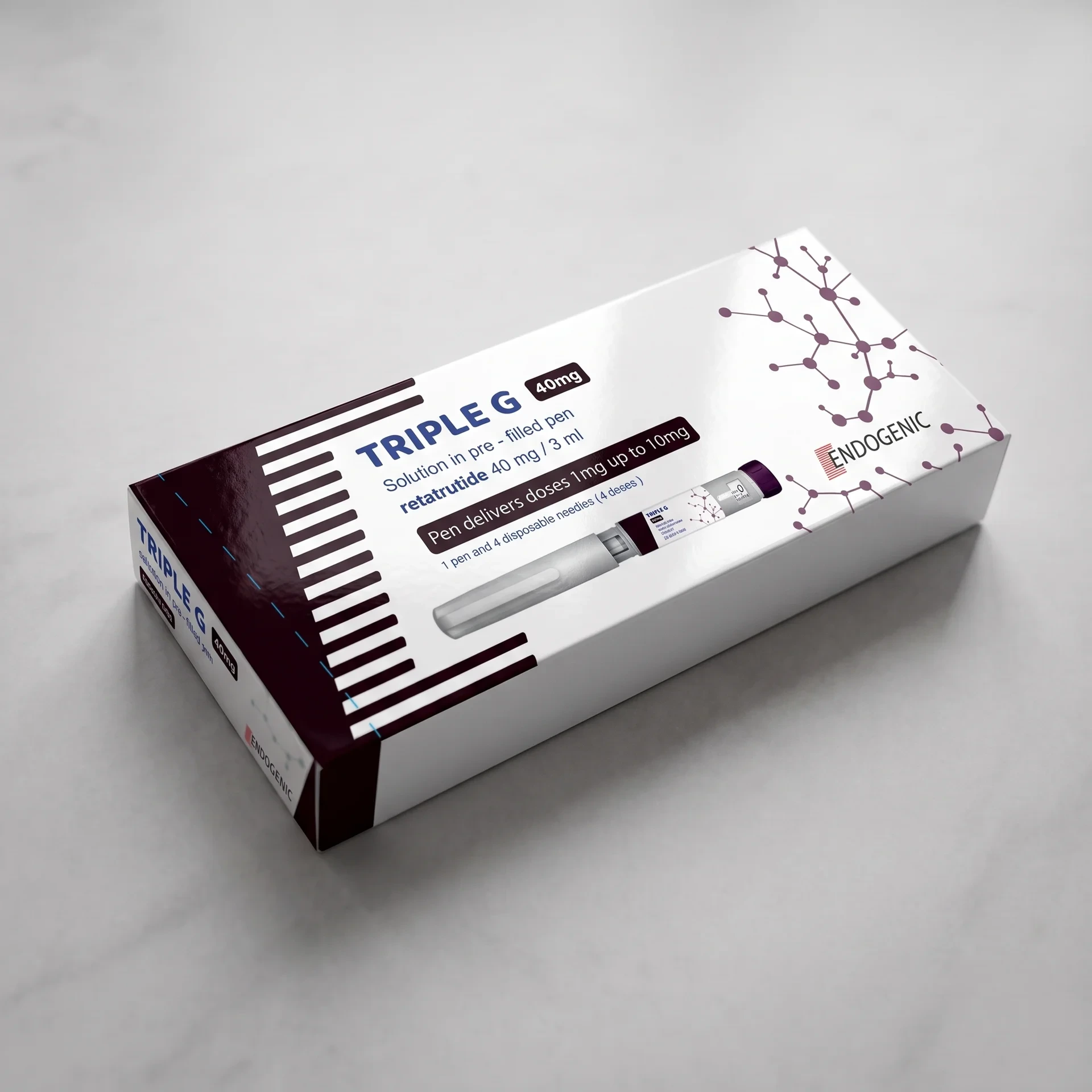
TRIPLE G 40mg PEN
TRIPLE G 40 mg PEN is a Research Use Only reagent in the class of triple agonists of GLP-1R, GIPR and the glucagon receptor, intended for research into receptor signalling and energy metabolism.
333,99 €
With code BLACK: 267,19 €
Lowest price in the 30 days before the discount:
333,99 €
Fast shipping
Free delivery from 350 €
Returns policy
TRIPLE G 40 mg PEN - a triple agonist of GLP-1R, GIPR and the glucagon receptor, an RUO chemical reagent
- Triple agonist of GLP-1R, GIPR and GCGR.
- Nominal content: 40 mg per PEN unit.
- Intended purpose: Research Use Only laboratory research.
Triple G – Material status information
Chemical reagent intended exclusively for laboratory research (Research Use Only). It is not a medicinal product or food. It is not intended for use in humans or animals. The material may only be used by qualified personnel in a controlled research environment.
Reagent characteristics
TRIPLE G 40 mg PEN is the designation of a research material in the triple receptor agonist class: agonists of the GLP-1 receptor (GLP-1R), the glucose-dependent insulinotropic polypeptide receptor (GIPR) and the glucagon receptor (GCGR). The reference molecule for this class is retatrutide, described in the literature under the code LY3437943.
The molecule’s code requires attention because it is sometimes confused with another. LY3437943 is retatrutide, a triple agonist. LY3298176 is tirzepatide, a GLP-1R/GIPR dual agonist. Some publications from the two programmes share authors, so when selecting references, the code, not the author’s name, is decisive.
The designation “40 mg” describes the nominal content of the material in a PEN unit. It does not establish the solution volume, working concentration, vehicle composition or purity. The trade name alone describes the intended receptor profile and does not replace chemical identification. For quality control purposes, the material’s identity should be confirmed for the specific batch through the sequence, molecular mass, an HPLC chromatogram and LC-MS analysis or a comparable mass spectrometry method.
The PEN format describes a factory-prepared liquid form. Within Research Use Only, it does not constitute a declaration of suitability for administration or equivalence to a pharmaceutical dosage form. Vehicle parameters, sterility, pH, osmolarity, the presence of preservatives, working volume and stability conditions must be obtained exclusively from the documentation for the specific batch: the COA, SDS and technical specification.
| Parameter | Information |
|---|---|
| Name | TRIPLE G 40 mg PEN |
| Research class | Triple agonist of GLP-1R, GIPR and GCGR |
| Reference molecule | Retatrutide (LY3437943) |
| Mechanism analysed in models | Parallel activation of three class B receptors |
| Form | Factory-prepared solution in a vehicle designated PEN |
| Nominal content | 40 mg per unit |
| Identity, purity and impurity profile | To be confirmed in the batch COA by HPLC and LC-MS |
| Vehicle composition and volume | To be confirmed in the batch technical specification |
| Storage | Exclusively according to the manufacturer’s label, COA and SDS |
| Intended purpose | RUO laboratory research |
Three receptors, two opposing metabolic directions
This is the most interesting and most frequently overlooked distinction in this class.
Adding a third receptor is not simply an extension of the incretin system with another element of the same type. Glucagon is a hormone that counteracts insulin, historically described as a factor that increases glucose levels. Combining glucagon agonism with incretin agonism in a single molecule is therefore seemingly contradictory and requires explanation.
The publication describing the discovery and early development of LY3437943 showed how these effects complement one another: the GIPR and GLP-1R components are associated with reduced energy intake, while the GCGR component contributes increased energy expenditure. In animal models of obesity, weight loss was observed to be enhanced by this additional energy-expenditure component, on top of the reduction in calorie intake associated with the other two receptors (Coskun et al., 2022, PMID 35985340).
The receptor profile is not balanced
The term “triple agonist” suggests three equivalent activities. Data from the same publication provide a more detailed picture: in vitro activity at GCGR and GLP-1R is balanced, whereas activity at GIPR is markedly higher (PMID 35985340).
This has direct experimental implications. Profiling such a molecule requires separate concentration-response curves for each of the three receptors, rather than a single combined readout. The relative activities are a parameter characterising the material, not an assumption derived from its name.
Molecular mechanism studied in vitro
All three receptors belong to class B of the G protein-coupled receptors and use similar signalling machinery: coupling to the Gs protein, an increase in cAMP concentration, and activation of PKA and EPAC-dependent pathways. They differ, however, in tissue distribution and metabolic consequences.
GLP-1R activation
In GLP-1R-expressing cells, activation leads to an increase in the cAMP signal, measured using luminescent, fluorescent or immunological methods. In addition to the maximum signal intensity, its kinetics are of interest: the rate of increase, duration, and the processes of receptor desensitisation and internalisation.
GIPR activation
GIPR has its own tissue distribution and response dynamics. For a molecule with increased activity at this receptor, separate models using GIPR-expressing cells are essential to describe the actual relative activities within the profile.
GCGR activation
The glucagon receptor is present primarily in the liver and in adipose tissue. Its activation is associated with effects on energy metabolism and energy expenditure. Research models assess, among other parameters, the cAMP signal in GCGR-expressing cell lines and markers associated with hepatic metabolism.
Pathway selectivity and receptor kinetics
Following activation of class B receptors, signalling does not end with cAMP. Beta-arrestin recruitment affects receptor uncoupling from the G protein, internalisation and subsequent intracellular signalling. Three molecular targets increase the number of possible response combinations, so rigorous profiling relies on a comparison of several functional assays rather than a single readout.
Lipid modification and albumin binding
In long-acting peptide analogues, acylation limits rapid clearance of the molecule by increasing albumin binding. This is a separate experimental topic: assessments cover peptide stability in the presence of albumin, the extent of protein binding and the behaviour of the material in a medium appropriate to the model. Data obtained for the reference molecule must not be applied to a reagent without analytical confirmation of its identity.
Important distinction: RUO material and a medicinal product
Retatrutide is not authorised as a medicinal product in any jurisdiction. It remains an investigational molecule in clinical development. This distinguishes it from semaglutide and tirzepatide, which are active substances in authorised prescription medicines. TRIPLE G 40 mg PEN described on this page is an RUO reagent: it is not a pharmaceutical dosage form, does not have the corresponding quality documentation and does not replace a medicinal product. Clinical trial data do not describe outcomes following exposure to this reagent.
Research on the reference molecule
The publications below concern clinical trials using clinical material in populations with a diagnosed condition and under medical supervision. They are cited as context for the compound class, not as a description of this reagent’s effects. Programme names are sometimes confused, so they are presented with their respective phases and areas of investigation.
Pharmacology and early development. The molecule’s discovery, its in vitro receptor profile, results in animal models and the first phase of human trials were described together (Coskun et al., 2022, PMID 35985340).
Phase 2, obesity. In a trial published in the New England Journal of Medicine, after 48 weeks the mean change in body weight was -24.2% in the group receiving 12 mg, compared with -2.1% in the placebo arm; intermediate values were -8.7%, -17.1% and -22.8% in the lower-dose groups (Jastreboff et al., 2023, PMID 37366315). These figures cannot be interpreted without specifying the group and comparator arm, so they are always cited together. The clinical context of this molecule is discussed in greater detail in our article on retatrutide in the context of obesity.
Phase 2, type 2 diabetes. A separate phase 2 trial was conducted in people with type 2 diabetes (Rosenstock et al., 2023, PMID 37385280). Body composition was analysed in a separately published substudy (Coskun et al., 2025, PMID 40609566).
Phase 2a, steatotic liver disease. The effect on liver fat content in MASLD was assessed in a randomised phase 2a trial (Sanyal et al., 2024, PMID 38858523).
Phase 3: two separate programmes. This is where confusion most often arises:
- TRIUMPH is the phase 3 registration trial programme addressing obesity, obstructive sleep apnoea and knee osteoarthritis. The peer-reviewed paper presents the rationale and study design (Giblin et al., 2026, PMID 41090431). The manufacturer has reported topline results from four trials in the programme, TRIUMPH-1 to TRIUMPH-4, in press releases (Eli Lilly: 11 December 2025, 21 May 2026, 23 July 2026). As of September 2026, full results have not been published in a peer-reviewed journal.
- TRANSCEND-T2D-1 is a separate phase 3 trial in type 2 diabetes, whose results were published in 2026. It was a 40-week, randomised, blinded, placebo-controlled trial involving 537 participants at 48 sites in the United States, Mexico and India, with change in glycated haemoglobin as the primary endpoint (Bajaj et al., 2026, PMID 42250575).
- TRANSCEND-CKD is a phase 2b trial in chronic kidney disease; the published paper presents the rationale, design and participants’ baseline characteristics (Heerspink et al., 2026, PMID 41160422).
An important clarification follows: publication of trials from a given phase is not equivalent to regulatory approval, and a programme’s name alone indicates neither the phase nor the therapeutic area. Retatrutide remains an investigational molecule.
Applications in laboratory research
Profiling three receptors. A reagent in the triple-agonist class can serve as a comparator in cellular studies that measure GLP-1R-, GIPR- and GCGR-dependent signalling separately. Measurable parameters include EC50, Emax, cAMP dynamics, beta-arrestin recruitment and receptor internalisation.
Comparing mono-, dual- and triple agonism. Research models can compare a three-receptor profile with GLP-1R/GIPR dual agonism and with GLP-1R mono-agonism, for which semaglutide may serve as a reference material. Such comparisons concern the number and type of activated receptors and their relative activities; they do not rank materials for human applications.
Separating energy-intake effects from energy-expenditure effects. A system in which two receptors are associated with reduced energy intake and a third with energy expenditure allows experiments to be designed to distinguish these mechanisms, for example by using antagonists of a selected receptor or cell lines lacking one of the targets.
Stability studies and analytical quality control. The liquid format is particularly dependent on stability documentation. Before use in a project, peptide integrity should be confirmed chromatographically and its mass verified. For materials with an acylated structure, analysis should also check that the lipid modification matches the declaration in the COA.
Regulatory and anti-doping status
TRIPLE G 40 mg PEN is described exclusively as a Research Use Only chemical reagent. It is not a medicinal product or food. It is not intended for use in humans or animals.
Retatrutide is not authorised as a medicinal product in any jurisdiction and remains in clinical development. This differs from semaglutide and tirzepatide, which are active substances in authorised medicinal products.
Under anti-doping regulations, semaglutide and tirzepatide markers are included in the World Anti-Doping Agency’s Monitoring Program. The Monitoring Program is separate from the Prohibited List: it covers substances that are not prohibited but are monitored for patterns of use in sport, and detection of a monitored substance does not constitute a rule violation. Retatrutide is not named explicitly in either document, but as a compound with no marketing authorisation in any country it falls under class S0 of the Prohibited List (non-approved substances) and is prohibited at all times, in and out of competition. People subject to anti-doping rules must check the current WADA documents and their organisation’s regulations on each occasion.
For comparison of receptor profiles, the catalogue also includes TRIPLE G 20 mg PEN, TRIPLE G 10 mg PEN, TRIPLE G 5 mg PEN and retatrutide in lyophilised form.
Summary
TRIPLE G 40 mg PEN is an RUO reagent in the triple receptor agonist class, for which the reference molecule is retatrutide (LY3437943). The third receptor is not another element of the incretin system: glucagon agonism contributes an effect in the opposite direction to the other two. The GIPR and GLP-1R components are associated with reduced energy intake, while the GCGR component is associated with energy expenditure. The receptor profile is not balanced: in vitro activity at GCGR and GLP-1R is comparable, whereas activity at GIPR is markedly higher.
The nominal content of 40 mg and the PEN format do not independently confirm chemical identity, purity, solution composition or material stability. These parameters require a batch-specific COA and SDS. Retatrutide is not authorised as a medicinal product in any jurisdiction, and the reagent does not replace pharmaceutical dosage forms or medical consultation.
References
- Coskun T, Urva S, Roell WC, Qu H, Loghin C, Moyers JS, et al. LY3437943, a novel triple glucagon, GIP, and GLP-1 receptor agonist for glycemic control and weight loss: from discovery to clinical proof of concept. Cell Metabolism. 2022;34(9):1234-1247.e9. doi:10.1016/j.cmet.2022.07.013. PMID: 35985340
- Jastreboff AM, Kaplan LM, Frías JP, Wu Q, Du Y, Gurbuz S, et al. Triple-hormone-receptor agonist retatrutide for obesity — a phase 2 trial. New England Journal of Medicine. 2023;389(6):514-526. doi:10.1056/NEJMoa2301972. PMID: 37366315
- Rosenstock J, Frías J, Jastreboff AM, Du Y, Lou J, Gurbuz S, et al. Retatrutide, a GIP, GLP-1 and glucagon receptor agonist, for people with type 2 diabetes: a randomised, double-blind, placebo and active-controlled, parallel-group, phase 2 trial conducted in the USA. Lancet. 2023;402(10401):529-544. doi:10.1016/S0140-6736(23)01053-X. PMID: 37385280
- Coskun T, Wu Q, Schloot NC, Haupt A, Milicevic Z, Khouli C, et al. Effects of retatrutide on body composition in people with type 2 diabetes: a substudy of a phase 2, double-blind, parallel-group, placebo-controlled, randomised trial. Lancet Diabetes & Endocrinology. 2025;13(8):674-684. doi:10.1016/S2213-8587(25)00092-0. PMID: 40609566
- Sanyal AJ, Kaplan LM, Frías JP, Brouwers B, Wu Q, Thomas MK, et al. Triple hormone receptor agonist retatrutide for metabolic dysfunction-associated steatotic liver disease: a randomized phase 2a trial. Nature Medicine. 2024;30(7):2037-2048. doi:10.1038/s41591-024-03018-2. PMID: 38858523
- Bajaj HS, Welch M, Shah P, Luna E, Jaouimaa FZ, Liu B, et al. Efficacy and safety of retatrutide, a GIP, GLP-1, and glucagon receptor agonist, in people with type 2 diabetes and inadequate glycaemic control with diet and exercise (TRANSCEND-T2D-1): a double-blind, randomised, phase 3 trial. Lancet. 2026;407(10546):2402-2413. doi:10.1016/S0140-6736(26)00967-0. PMID: 42250575
- Giblin K, Kaplan LM, Somers VK, Le Roux CW, Hunter DJ, Wu Q, et al. Retatrutide for the treatment of obesity, obstructive sleep apnea and knee osteoarthritis: rationale and design of the TRIUMPH registrational clinical trials. Diabetes, Obesity and Metabolism. 2026;28(1):83-93. doi:10.1111/dom.70209. PMID: 41090431
- Heerspink HJL, van Raalte DH, Bjornstad P, Bunck MC, Wu P, Tunali I, et al. Rationale, design and baseline characteristics of the TRANSCEND-CKD trial of retatrutide in patients with chronic kidney disease. Nephrology Dialysis Transplantation. 2026;41(6):1058-1068. doi:10.1093/ndt/gfaf230. PMID: 41160422
- World Anti-Doping Agency. Monitoring Program. Current version.
- Eli Lilly and Company. Lilly’s triple agonist, retatrutide, delivered weight loss of up to an average of 71.2 lbs along with substantial relief from osteoarthritis pain in first successful Phase 3 trial. Press release, 11 December 2025. PR Newswire
- Eli Lilly and Company. Lilly’s triple agonist, retatrutide, delivered powerful weight loss in pivotal Phase 3 obesity trial. Press release, 21 May 2026. PR Newswire
- Eli Lilly and Company. Lilly’s triple agonist, retatrutide, successful in two additional Phase 3 obesity trials, delivering significant improvements in weight and A1C. Press release, 23 July 2026. PR Newswire
FAQ
No. The publication describing the reference molecule showed balanced in vitro activity at GCGR and GLP-1R, whereas activity at GIPR was markedly higher (PMID 35985340). These relative activities are a parameter of the material, not an assumption derived from the class name.
This cannot be established from the trade name. Retatrutide is a well-characterised reference molecule for this class. The identity of a specific batch requires confirmation of its sequence, molecular mass and the HPLC and LC-MS results provided in the COA.
No. It remains an investigational molecule in clinical development and has no marketing authorisation in any jurisdiction, despite published phase 3 results in type 2 diabetes. Publication of clinical trial results and the granting of marketing authorisation are two separate events.
They are separate research programmes. TRIUMPH covers phase 3 registration trials in obesity, sleep apnoea and knee osteoarthritis; the manufacturer has reported topline results from four of them in press releases, while the only peer-reviewed publication to date describes the programme’s rationale and design. TRANSCEND-T2D-1 is a phase 3 trial in type 2 diabetes with published results, while TRANSCEND-CKD is a phase 2b trial in chronic kidney disease.
No. In this description, PEN designates the catalogue format of the research material. It does not specify a route of administration, dosage, pharmaceutical sterility or intended use in humans or animals.
According to the label, COA and SDS for the specific batch. Temperatures, stability periods and procedures for lyophilised peptides or pharmaceutical products should not be applied to this material without the manufacturer’s documentation.
5.0
2 reviews
-
Andrzej
Okej
Wszystko bez problemów. Mogę polecić
-
Ola
 Polski
Super
Cieszę się, że jest wersja 40mg.
Super obsługa. Szybka dostawa.
Customers also bought