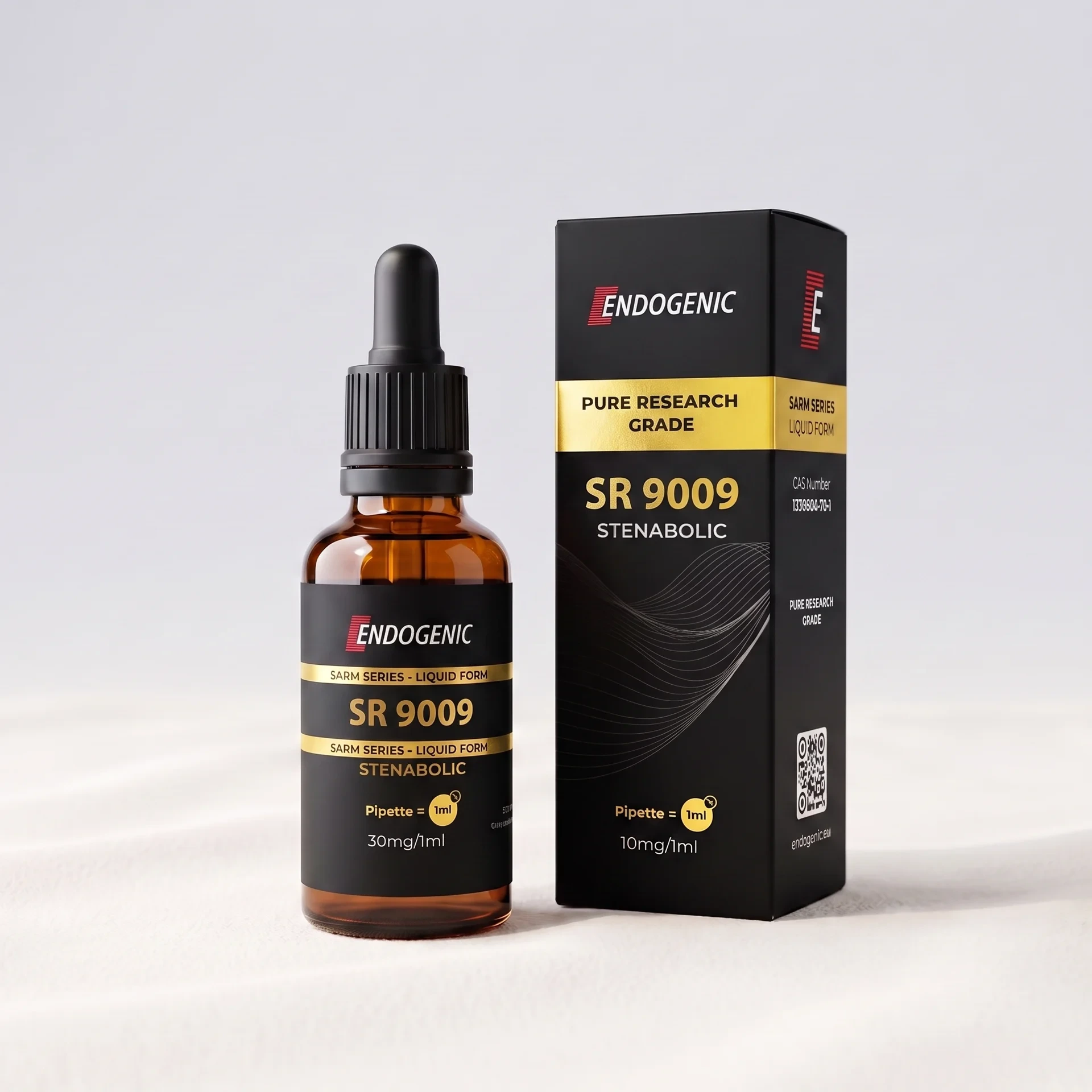
SR-9009 binds to the ligand-binding domain of REV-ERBα and REV-ERBβ receptors, mimicking the agonist effect of the natural heme ligand. Binding of the molecule stabilizes the repressor conformation of the receptor, increasing the recruitment of the corepressor NCoR and the deacetylase HDAC3, which leads to enhanced repression of REV-ERB target genes. Pharmacological profile observed in preclinical models – six axes of action:
- REV-ERB agonism and molecular clock repression — as a heme-binding nuclear receptor, REV-ERB, when activated by SR-9009, increases the repression of transcription of target genes, including BMAL1 and other core genes of the circadian clock. This is a direct interference in the feedback loop of the molecular oscillator
- Mitochondrial biogenesis and β-oxidation in skeletal muscle — activation of REV-ERBα in muscle increases the number and oxidative capacity of mitochondria and intensifies the oxidation of fatty acids; improvement in running endurance was reported in mouse models, which is the basis for the term “exercise mimetic”
- Regulation of lipid and glucose metabolism — repression of hepatic lipogenesis genes, reduction of fatty acid synthesis and influence on the lipid profile; participation in the rhythmic control of glucose metabolism
- Circadian rhythm modulation — REV-ERB as an integral component of the molecular clock; pharmacological retuning of the amplitude and phase of circadian oscillations observed in animal models
- Reduction of fat mass in a diet-induced obesity (DIO) model — in mice on a high-fat diet, a decrease in adipose tissue mass was reported without caloric restriction, in connection with increased energy expenditure
- Effect on sleep and locomotor activity — modulation of the circadian pattern of activity and sleep parameters in rodent models, resulting from the coupling of REV-ERB with the molecular clock
Pharmacokinetic profile (based on preclinical models):
- Oral bioavailability: weak — in the studies, the compound was administered intraperitoneally (i.p.), not orally; oral exposure in humans remains uncharacterized
- Human PK profile: uncharacterized – no phase I studies
- Molecular target: ligand-binding domain of REV-ERBα/β receptors, enhancement of transcriptional repression by the NCoR/HDAC3 axis
The REV-ERB mechanism activates one axis from many components of the body’s response to physical exercise and the circadian rhythm. Endurance training simultaneously affects the cardiovascular system, skeletal system, central nervous system, hormonal balance and inflammatory profile. Pharmacological activation of REV-ERB receptors replicates part of the skeletal muscle metabolic program and retunes the molecular clock – but nothing else.
SR-9009 vs SR-9011, REV-ERB vs PPARδ vs pan-ERR and the issue of oral bioavailability
There are several common misconceptions surrounding SR-9009: confusion with its sister SR-9011, lumping all “exercise mimetics” into one category, and overlooking the issue of oral bioavailability. Each requires distinction.
SR-9009 and SR-9011. Both compounds are REV-ERB agonists from the same Burris laboratory, described in the same publication by Solt et al. 2012. They differ in chemical structure and minor pharmacokinetic properties, but the primary molecular target – REV-ERBα/β receptors – is common.
SR-9009 gained greater market recognition under the trade name “Stenabolic” and is sometimes the prototype for an entire class; SR-9011 functions as its structural analogue and often serves as a reference compound in SAR (structure-activity) analyses. From a laboratory point of view, both are sometimes used interchangeably as tools for studying REV-ERB pharmacology. The sister compound is available as SR-9011 in the form of capsules.
REV-ERB vs PPARδ vs pan-ERR – three different families of “exercise mimetics”. The term “exercise mimetic” covers molecules with completely different molecular targets – they share only partial replication of the biochemical exercise phenotype, not a common mechanism.
| Class |
Example |
Molecular target |
Mechanism |
Status |
| REV-ERB agonist |
SR-9009 (Stenabolic), SR-9011 |
REV-ERBα/β (NR1D1/NR1D2) |
Repression of the molecular clock (BMAL1), mitochondrial biogenesis, lipid metabolism |
RUO research chemicals (Nature 2012) |
| ERR pan-agonist |
SLU-PP-332 |
ERRα/β/γ |
Induction of mitochondrial biogenesis through the ERR–PGC-1α axis |
RUO research chemicals (Nature Metabolism 2024) |
| PPARδ agonist |
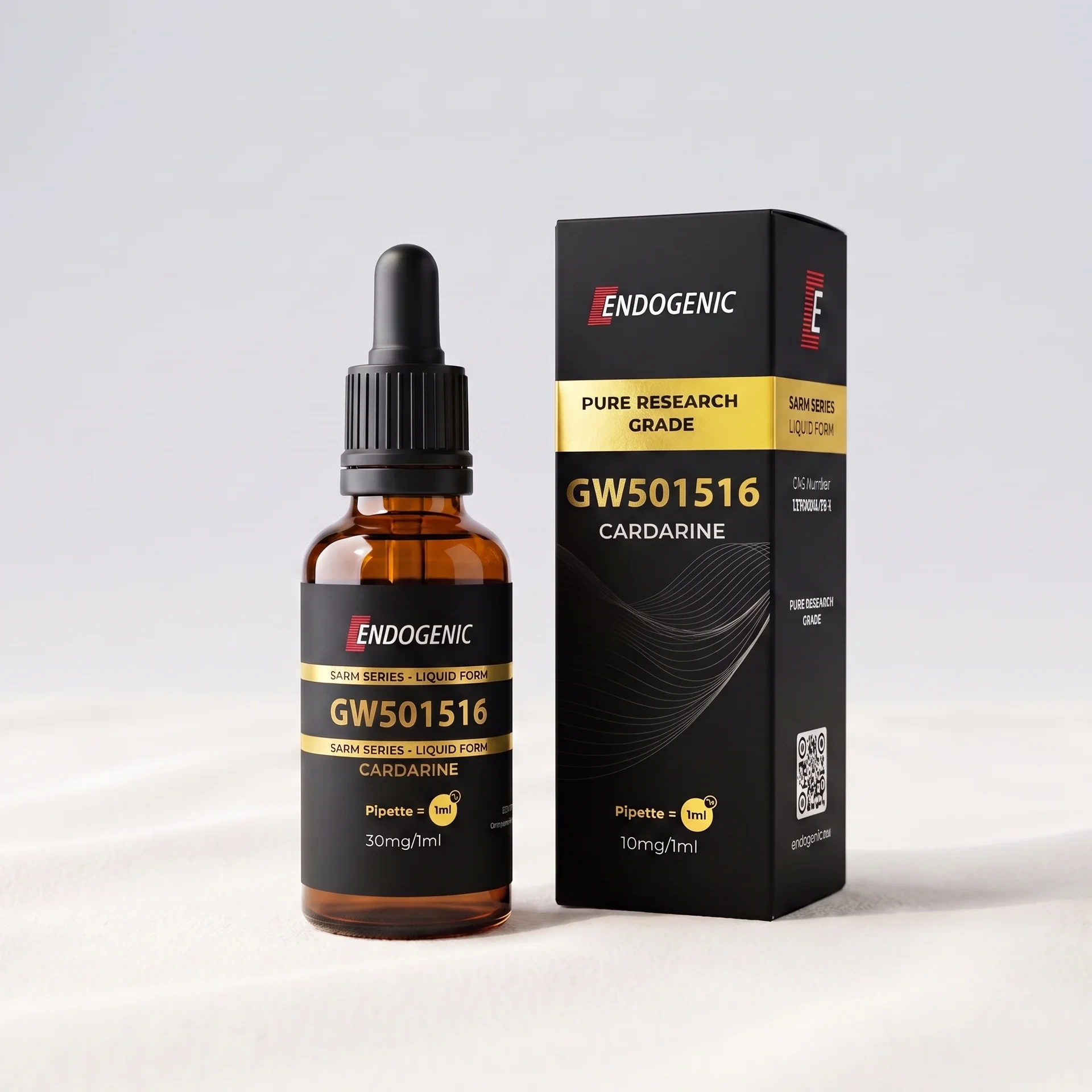
GW-501516 (Cardarine), GW-0742 |
PPARδ |
β-oxidation of fatty acids |
RUO research chemical (carcinogenesis signal in long-term studies in rodents) |
The SR-9009 has the distinction of being – along with the SR-9011 – the only one of the three classes to operate by the molecular circadian clock: its target (REV-ERB) is a core component of the circadian oscillator and not solely a metabolic regulator. The related pan-agonist SLU-PP-332 targets the ERR–PGC-1α network (mitochondrial biogenesis without direct interference with the clock), and the agonist GW-501516 (Cardarine) in liquid form modifies lipid oxidation by a neighboring node of the metabolic network.
Three distinct receptors, three mechanisms, one common phenotypic denominator – which makes them the subject of comparative analyzes in studies on exercise metabolism.
Oral bioavailability – translational barrier. The third misunderstanding concerns form. Although SR-9009 is delivered as an oral solution in a dropper bottle (laboratory-convenient formulation), the oral bioavailability of the molecule itself is poor – in experimental work it was administered to rodents via the intraperitoneal (i.p.) route. Limited metabolic stability and an unfavorable PK profile after administration through the gastrointestinal tract are one of the main reasons why the compound has not entered the clinical phase and remains a research tool.
The form of the solution concerns the handling of the reagent in the laboratory and does not indicate the route of administration to humans.