Skip to content
Black Week: 20% off everything, code BLACK

Search

What are you looking for?

Type at least 2 characters to see suggestions.

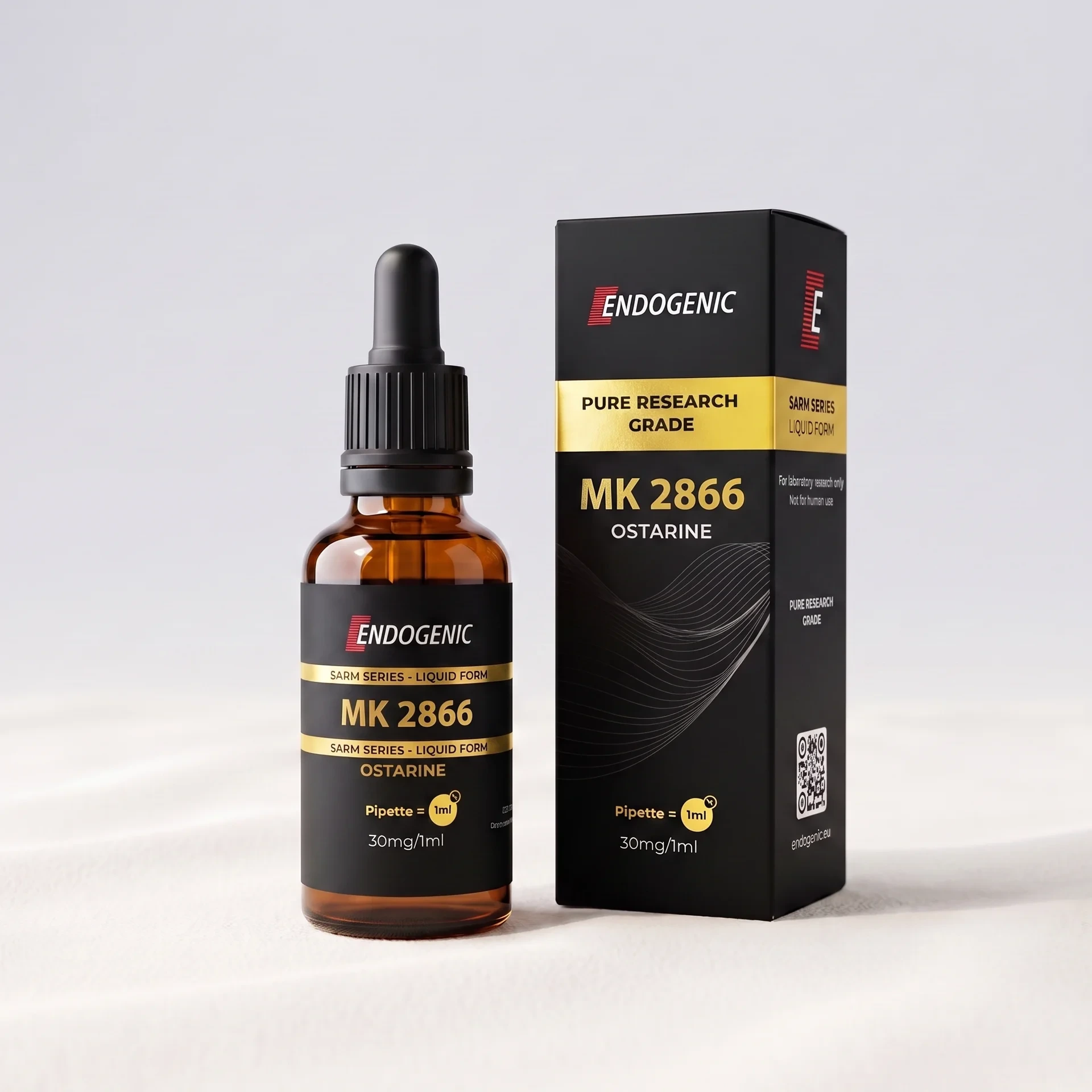
MK 2866 30mg/1ml LIQUID

MK 2866 30mg/1ml LIQUID

MK-2866 (Ostarine, Enobosarm, GTx-024) – an oral solution in a 30 ml dropper bottle (Endogenic line) – is a non-steroidal SARM of the arylpropionamide class from the GTx laboratory and the most clinically studied compound in the entire class. Research Use Only

40,99 €
With code BLACK: 32,79 € Lowest price in the 30 days before the discount: 40,99 €
Fast shipping
Free delivery from 350 €
Returns policy

MK-2866 (Ostarine) 30 ml solution – SARM, research reagent

  • MK-2866 (Ostarine): a non-steroidal selective androgen receptor modulator.
  • Solution in a 30 ml dropper bottle; concentration according to the batch COA.
  • Research Use Only reagent, not a medicinal product.

Product status notice

A chemical reagent intended solely for laboratory research (Research Use Only). It is not a medicinal product, dietary supplement or foodstuff. It is not intended for use in humans or animals. Sales are limited to registered research institutions and laboratories.

MK-2866 (Ostarine, Enobosarm, GTx-024, S-22) is a non-steroidal selective androgen receptor modulator (SARM) of the arylpropionamide class – a sister compound of S4 (Andarine), derived from the same research line that began with modifications of the antiandrogen bicalutamide. The compound was developed and characterised at GTx Inc. by the team of James Dalton and Duane Miller (Memphis) and then taken through the most extensive clinical programme of any SARM – phases I, II and III in age-related sarcopenia and cancer cachexia.

This makes Ostarine the most clinically studied compound in the entire SARM class and a natural reference reagent in comparative studies of androgen receptor (AR) tissue selectivity.

In the Pro-Body catalogue, Ostarine belongs to the SARMs category of the Endogenic line. This reagent is supplied in the Endogenic line as an oral solution in a 30 ml dropper bottle (mg/ml concentration declared in the batch COA). The dropper solution format suits laboratory research protocols using working concentrations in vitro on AR-expressing cell lines and in vivo in rodent models – the dropper makes it easy to measure repeatable volumes of a solution of known mg/ml concentration without weighing powder for each test.

Chemically, MK-2866 differs from steroidal androgens in lacking the cyclic steroid core – it is a non-steroidal AR ligand with a partial agonist profile.

The central axis of the mechanism is tissue selectivity: the compound binds the androgen receptor with high affinity (Ki ~3.8 nM) and induces receptor conformations leading to an anabolic transcriptional response in skeletal muscle and bone that is much stronger than in glandular tissues (prostate, seminal vesicles). Of the entire SARM family, Ostarine shows the highest tissue selectivity relative to the prostate, together with the lowest suppression of the HPG (hypothalamic-pituitary-gonadal) axis – which historically made it GTx’s leading clinical candidate. Purity verified by HPLC ≥98%, identity confirmed by mass spectrometry, COA available for each batch.

Regulatory status

MK-2866 (Ostarine) is the most extensively clinically studied SARM – the GTx programme covered phases I–III in sarcopenia and cancer cachexia. Nevertheless, the compound has not been authorised as a medicine in any jurisdiction: the phase III trials (POWER trials) in cancer cachexia did not meet the required primary endpoint to the satisfaction of the regulatory authorities.

It has no EMA, FDA or EFSA authorisation as a dietary supplement ingredient. MK-2866 has been on the WADA Prohibited List (category S1.2 – other anabolic agents, SARMs) since 2008 and is prohibited at all times. The FDA has issued Warning Letters about products containing SARMs. Presenting the product as a “SARM for body recomposition”, a “lean mass agent” or “muscle protection for athletes” is contrary to the Research Use Only framework.

Selective androgen receptor modulators in context

Selective androgen receptor modulators (SARMs) are a class of compounds that bind the androgen receptor (AR) and induce a tissue-selective transcriptional response – anabolic in skeletal muscle and bone, with a reduced impact on glandular tissues (prostate, seminal vesicles) and with the pathways typical of androgenic steroids (aromatisation to oestrogens, 5α-reduction to more potent androgens) absent or greatly limited.

The SARM concept comes from the analogy with selective oestrogen receptor modulators (SERMs, e.g. tamoxifen, raloxifene), where the same receptor induces different tissue responses depending on the conformation induced by the ligand and the recruited set of coregulators. SARMs are divided into several chemical classes, the best characterised of which are:

  • Arylpropionamides – the first generation, derived from the antiandrogens bicalutamide and hydroxyflutamide; this class includes enobosarm (Ostarine, MK-2866, GTx-024) and S4 (Andarine)
  • Quinolinone derivatives – e.g. LGD-4033 (Ligandrol), LGD-2226
  • Compounds with distinct scaffolds – e.g. RAD-140 (Testolone), S-23

The mechanism of action of SARMs is based on conformational selectivity: the ligand stabilises a specific conformation of the androgen receptor’s ligand-binding domain (LBD), which determines the recruitment of coactivators or corepressors in a given tissue type. In skeletal muscle and bone tissue, coactivator recruitment and anabolic response dominate; in the prostate, the coregulator profile and local enzymatic conversion lead to weaker stimulation.

This tissue dissociation is the pharmacological foundation of the entire class. Within the SARMs for muscle mass category, Ostarine serves as a reference compound because of its clinical database. Pharmacology watches Ostarine for three reasons.

First, as the best clinically documented SARM – a compound taken through phases I, II and III that generated the only multicentre human RCT data in the class, a reference point for the entire family. Second, as the compound with the highest tissue selectivity relative to the prostate and the lowest suppression of the HPG axis – a model AR ligand in studies of anabolic-androgenic dissociation.

Third, as a historical turning point: the failure of GTx’s phase III programme in cachexia (despite a formally demonstrated increase in lean body mass) became the subject of analyses of endpoint selection in studies of anabolic compounds.

What is MK-2866 (Ostarine)?

Chemically, MK-2866 is a non-steroidal androgen receptor ligand from the arylpropionamide class.

  • Common name: MK-2866, Ostarine
  • Synonyms/development codes: Enobosarm, GTx-024, S-22, MK-2866
  • Chemical name (descriptive): arylpropionamide derivative with a structure related to bicalutamide, with trifluoromethyl, cyano- and hydroxyl substituents on the propionamide core
  • CAS number: 841205-47-8
  • Molecular formula: C₁₉H₁₄F₃N₃O₃
  • Molar mass: 389.33 g/mol
  • Chemical class: non-steroidal SARM, arylpropionamide; a sister compound of S4 (Andarine) and a structural analogue of the antiandrogen bicalutamide
  • AR affinity: Ki ~3.8 nM; partial androgen receptor agonist with high tissue selectivity
  • Form supplied: oral solution in a 30 ml dropper bottle; mg/ml concentration declared in the batch COA; pharmaceutical grade ≥98% HPLC

Table of physicochemical characteristics

Parameter Value
Name MK-2866 (Ostarine, Enobosarm)
Pharmacological class Non-steroidal SARM, arylpropionamide; partial AR agonist
CAS number 841205-47-8
Molecular formula C₁₉H₁₄F₃N₃O₃
Molecular weight 389.33 g/mol
Affinity (Ki) ~3.8 nM (androgen receptor)
Molecular type Small organic molecule (non-steroidal AR ligand)
Purity ≥98% (HPLC)
Form Oral solution, 30 ml dropper bottle; mg/ml concentration – see COA
Identity confirmation Mass spectrometry (MS Q-TOF)
Storage conditions Room temperature (15–25°C), protect from light
Shelf life 24 months (batch details – COA)

Mechanism of action at the molecular level

MK-2866 acts as a partial androgen receptor agonist with marked tissue selectivity. It binds the ligand-binding domain of the AR with high affinity (Ki ~3.8 nM) and induces a conformation that leads to an anabolic transcriptional response in muscle and bone, with a reduced effect on glandular tissues. Pharmacological profile observed in preclinical and clinical studies – six axes of action:

  1. Selective androgen receptor modulator, tissue-selective – Ostarine binds the AR with a Ki of ~3.8 nM and acts as a partial agonist. It induces a receptor conformation that determines coregulator recruitment in a tissue-dependent manner – an anabolic response in muscle and bone with weaker stimulation of the prostate
  2. Full agonist in muscle and bone, minimal activity in the prostate – among SARMs, Ostarine shows the highest tissue selectivity towards glandular tissues; the anabolic-androgenic index in the orchidectomy model is significantly more favourable than for testosterone, which makes it a model compound of tissue dissociation
  3. Anabolic effect in skeletal muscle – in phase II (Dalton et al. 2011), an increase in lean body mass of about +1.3 kg was reported in healthy elderly volunteers, with improved physical function (stair-climbing test); at the molecular level, an effect on the expression of anabolic genes and on muscle protein synthesis
  4. Anti-resorptive effect in bone – in rodent models, Ostarine maintained bone mass and trabecular microarchitecture parameters after castration, which formed the basis for studies of arylpropionamides in osteoporosis and sarcopenia models
  5. Low HPG axis suppression – compared with other SARMs and androgenic steroids, Ostarine causes weaker suppression of the hypothalamic-pituitary-gonadal axis (a smaller decrease in LH/FSH and endogenous testosterone in studies), which was historically cited as its distinguishing feature
  6. No conversion to oestrogen – as a non-steroidal AR ligand, MK-2866 is not subject to aromatisation to oestradiol or 5α-reduction; the transcriptional profile remains within the androgen axis without oestrogen metabolites

Pharmacokinetic profile (based on preclinical and early clinical GTx data):

  • Oral bioavailability: good – unlike some research compounds, Ostarine was also given orally in human studies
  • Exposure schedule: in clinical studies on cachexia and sarcopenia, the compound was used in once-daily regimens – this is purely a literature context, not an indication for the reagent
  • Molecular target: androgen receptor ligand-binding domain; conformational selectivity of coregulator recruitment

The AR mechanism activates one axis of a complex systemic response that regulates skeletal muscle mass and performance. Muscle anabolism in vivo depends in parallel on the IGF-1 axis, nutritional status, mechanical load and hormonal profile. Pharmacological activation of the androgen receptor replicates part of the anabolic programme of muscle and bone tissue – and nothing more. Ostarine in the SARM class – pharmacological position: In the family of selective androgen receptor modulators, MK-2866 is the best clinically documented arylpropionamide, distinct from newer ligands with other scaffolds:

  • Enobosarm (Ostarine, MK-2866), arylpropionamide – partial AR agonist (Ki ~3.8 nM), the highest tissue selectivity towards the prostate, the lowest HPG suppression, the only SARM with phases I–III; a weak effect on colour vision
  • S4 (Andarine), arylpropionamide – a sister compound of the same GTx class; shorter half-life, a distinct signature of yellow-tinted vision (interaction with retinal opsins). A liquid variant is available as S4 liquid
  • LGD-4033 (Ligandrol), quinolinone derivative – higher affinity for the AR, longer half-life, more pronounced suppression of endogenous testosterone; in the catalogue as LGD-4033
  • RAD-140 (Testolone), distinct scaffold – high anabolic potency and tissue selectivity in models, sparser clinical documentation in humans; in the catalogue as RAD-140
  • S-23, distinct scaffold – one of the most potent full AR agonists in the class, studied in, among other things, male contraception models

Applications in scientific research

MK-2866 is used in research in several areas. In vivo models (orchidectomised Sprague-Dawley rat, mouse) examine its effect on skeletal muscle mass and strength, bone parameters (mineral density, trabecular microarchitecture), body composition and the anabolic-androgenic selectivity index. In vitro models (cell lines expressing the androgen receptor, AR transcription reporter assays) examine receptor affinity, the agonist-antagonist profile and coregulator recruitment. As the only SARM with extensive human data, Ostarine serves as a reference compound in translational analyses. Specific lines of research include:

  • Models of sarcopenia and muscle atrophy – assessment of the anabolic potential of arylpropionamides in catabolic-degenerative states of skeletal muscle (orchidectomy, immobilisation, cachexia model); Ostarine as a reference compound with documented clinical effect (+1.3 kg lean mass, phase II)
  • Models of cancer cachexia – literature context of the POWER programme (phase III), endpoint analysis (lean body mass vs. physical fitness) in research on anabolic compounds
  • Models of osteoporosis and bone metabolism – study of the effect on bone mass, mineral density and trabecular microarchitecture after castration
  • Tissue selectivity of the androgen receptor – MK-2866 as a reference reagent in comparative analyses of muscle/bone vs. prostate selectivity; mapping of AR conformations and coregulator recruitment; model compound with the highest tissue dissociation
  • Analytical and anti-doping methods – enobosarm as a reference analyte in the development of SARM detection methods (LC-MS/MS); identification of urinary metabolites; Ostarine is one of the SARMs most frequently reported in adverse analytical findings

Regulatory status

MK-2866 (Ostarine, Enobosarm) has been on the WADA Prohibited List in category S1.2 (other anabolic agents – SARMs) since 2008 and is prohibited at all times (in and out of competition). SARMs as a class are named explicitly on the WADA Prohibited List, regardless of their lack of authorisation as medicines. Enobosarm is one of the SARMs most frequently detected in LC-MS/MS urine analyses and a frequent cause of adverse analytical findings.

Despite the broadest clinical programme in the class, the compound has not been authorised as a medicine in any jurisdiction. The FDA has issued warning letters about products containing SARMs, and cases of drug-induced liver injury associated with non-laboratory use have been described in the literature (case-based data, outside the RUO framework). Athletes registered in ADAMS must check the current Prohibited List before making any decision.

Summary

MK-2866 (Ostarine, Enobosarm, GTx-024, S-22, 30 ml oral solution, Endogenic line) is a non-steroidal SARM of the arylpropionamide class from the GTx Inc. laboratory (Dalton, Miller) – the most clinically studied compound in the entire SARM class, taken through phases I, II and III in sarcopenia and cancer cachexia. Phase II (Dalton et al. 2011) showed an increase in lean body mass of about +1.3 kg in healthy elderly volunteers, with improved physical function, and the multicentre POWER studies (Dobs et al. 2013) evaluated the compound in cancer cachexia.

Ostarine stands out for the highest tissue selectivity relative to the prostate and the lowest HPG axis suppression among SARMs, without conversion to oestrogens – which distinguishes it from RAD-140 (higher potency, sparser documentation in humans) and LGD-4033 (higher affinity, more pronounced testosterone suppression). Despite the broadest clinical programme, the compound has not been authorised as a medicine. Solution in a 30 ml dropper bottle, mg/ml concentration in the COA, HPLC purity ≥98%, MS Q-TOF confirmation. Regulatory status: strictly Research Use Only; WADA S1.2 (SARMs) – prohibited at all times since 2008.

References

  1. Dalton JT, Barnette KG, Bohl CE, Hancock ML, Rodriguez D, et al. (2011). The selective androgen receptor modulator GTx-024 (enobosarm) improves lean body mass and physical function in healthy elderly men and postmenopausal women: results of a double-blind, placebo-controlled phase II trial. PubMed
  2. Dobs AS, Boccia RV, Croot CC, Gabrail NY, Dalton JT, et al. (2013). Effects of enobosarm on muscle wasting and physical function in patients with cancer: a double-blind, randomized controlled phase 2 trial. PubMed
  3. Solomon ZJ, Mirabal JR, Mazur DJ, Kohn TP, Lipshultz LI, Pastuszak AW (2019). Selective Androgen Receptor Modulators: Current Knowledge and Clinical Applications. PubMed
  4. Narayanan R, Mohler ML, Bohl CE, Miller DD, Dalton JT (2008). Selective androgen receptor modulators in preclinical and clinical development. PubMed
  5. Chen J, Kim J, Dalton JT (2005). Discovery and therapeutic promise of selective androgen receptor modulators. PubMed