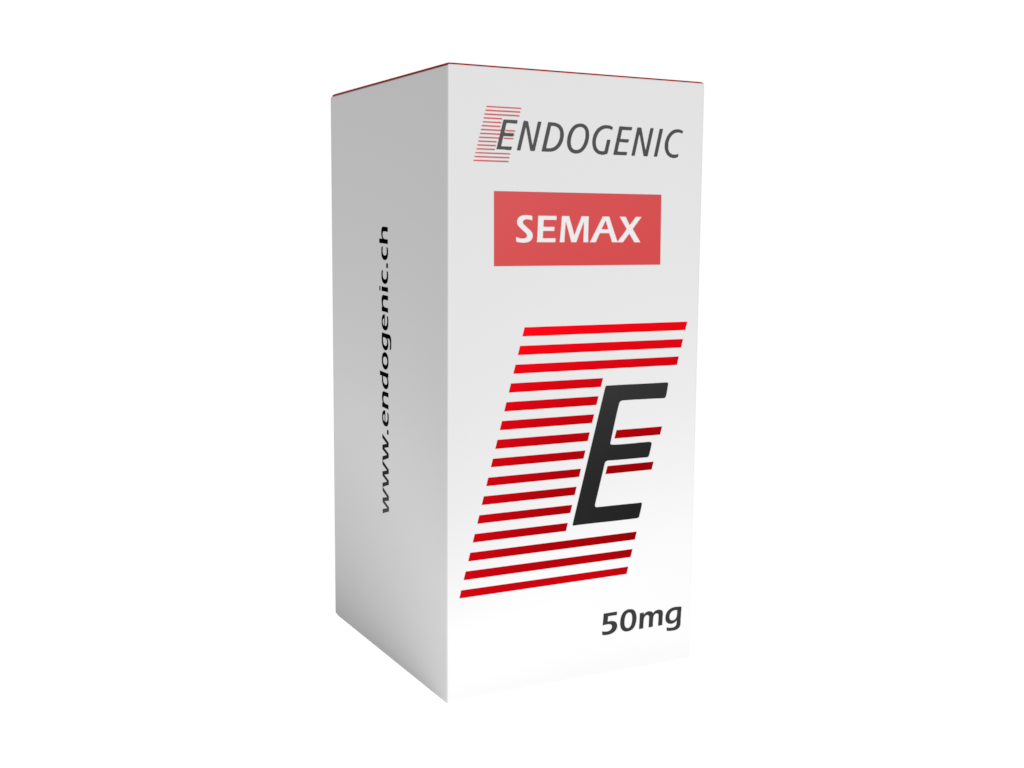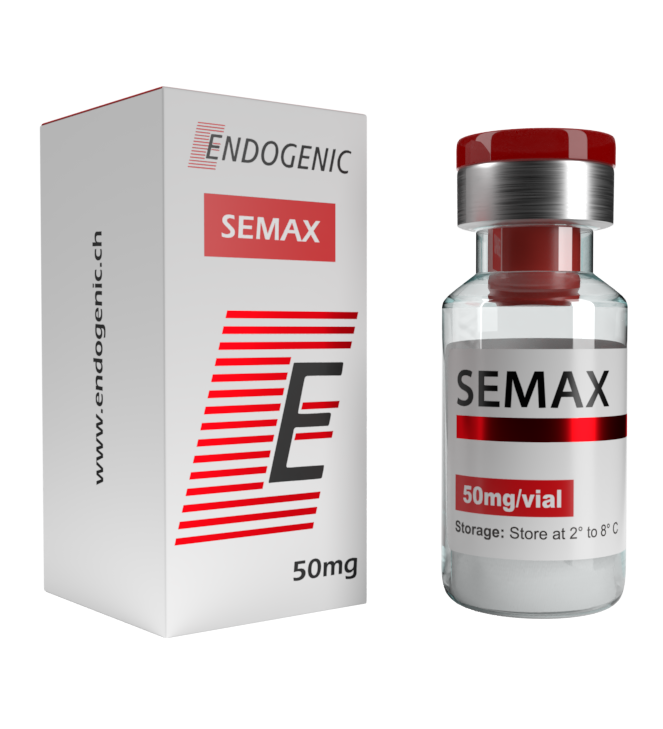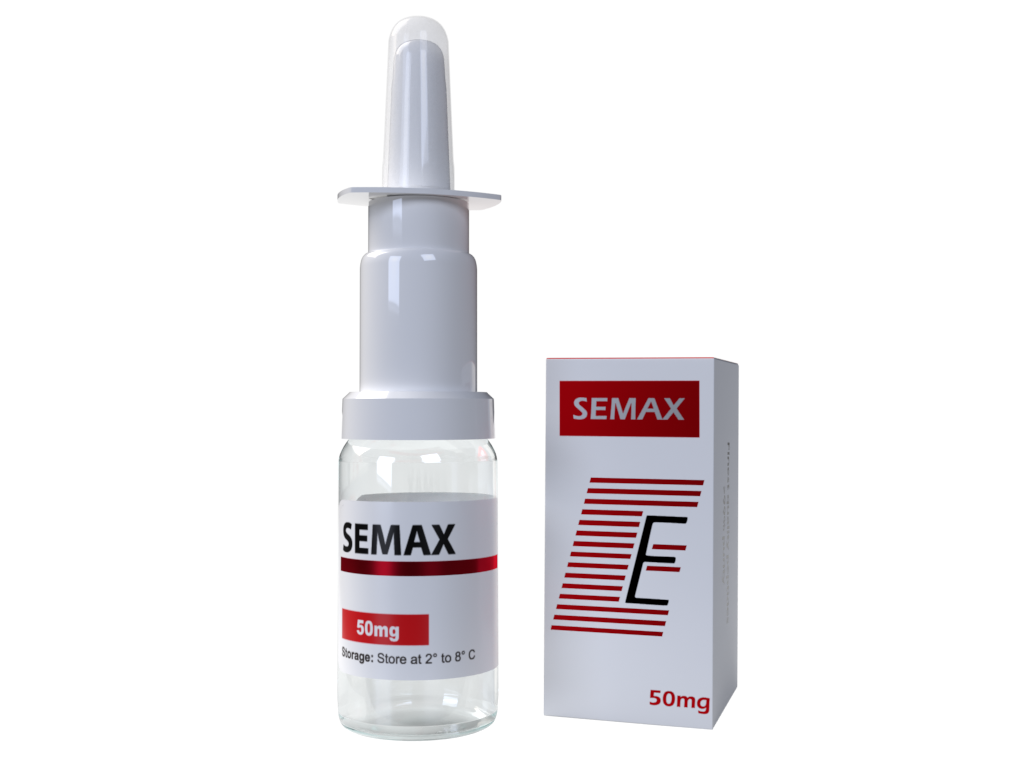
NO. This is a self-preparation kit. It consists of three elements: a vial with native Semax lyophilisate (powder), bacteriostatic water for reconstitution and an empty glass atomizer with a dosing pump. The researcher first reconstitutes the lyophilisate with the included water, then transfers the solution to the atomizer. The concentration of the solution is not factory set – it results from the peptide content in the vial (given in the COA) and the volume of water used for reconstitution. The kit is a reagent for laboratory research; the Russian registration concerns the medicine, not this kit.
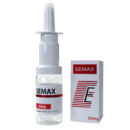
Semax spray
Semax for the nose is a native neuroprotective heptapeptide – a synthetic analogue of the ACTH(4-7) fragment, supplied as a reagent kit: a vial with lyophilisate, water for reconstitution and a glass atomizer. Research Use Only reagent
52,99 €
With code BLACK: 42,39 €
Lowest price in the 30 days before the discount:
52,99 €
Product unavailable
Notify me when it is back
Leave your e-mail and we will send you one message when the product is available again.
Semax nasal – research reagent
- Semax: native MEHFPGP heptapeptide, ACTH(4-7) fragment analogue.
- Reagent kit: lyophilisate, water and glass atomizer; not a ready-to-use solution.
- Research Use Only reagent, not a medicinal product.
Product status information
Chemical reagent intended exclusively for laboratory tests (Research Use Only). It is not a medicinal product, dietary supplement or food. It is not intended for use on humans or animals. Sales only to registered research units and laboratories.
Introduction
In the family of neuroprotective peptides derived from the ACTH fragment native Semax is the starting molecule, a heptapeptide with the sequence Met-Glu-His-Phe-Pro-Gly-Pro (MEHFPGP), on which most of the mechanistic work attributed to the entire group has been performed. Semax belongs to the line Endogenic — reagents mapping molecules of endogenous origin or directly derived from them, provided for research on the neuropharmacology of regulatory peptides.
In the Pro-Body catalog it is adjacent to others peptides on brain function used as reference compounds in research on cognitive functions. This reagent provides native Semax as a kit of three elements: a vial with lyophilized native Semax, bacteriostatic water for reconstitution and a glass atomizer with a dosing pump.
This is not a ready-to-use solution: the lyophilisate requires reconstitution with the included water before use in a research protocol. Native Semax is registered in the Russian Federation as a nootropic and neuroprotectant in the form of nasal drops and spray – a fact about that medicine, not a description of how the reagent is used. In preclinical protocols, intranasal administration of neuroprotective peptides is a standard set-up for examining nose-to-brain transport.
In the catalog, the kit belongs to the group peptides spray – reagents supplied with water for reconstitution and an atomizer. The Russian medicine containing Semax was registered in a nasally administered form. The native Semax has a related format in the Pro-Body catalog – only a vial of lyophilisate without water and an atomizer (Semax 50 mg – lyophilized vial) — and the acetylated variant, which should not be confused with it (N-Acetyl Semax Spray – acetylated form).
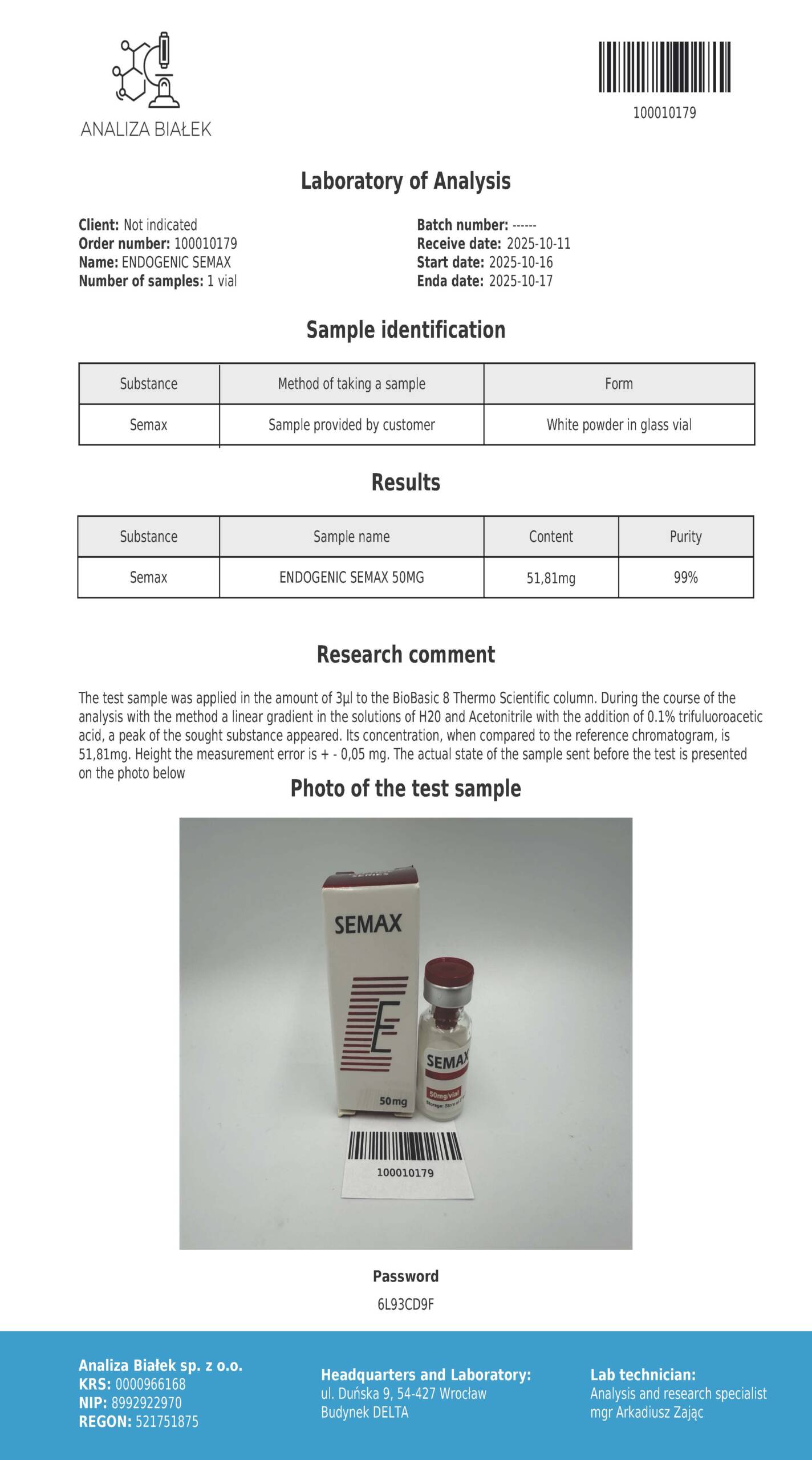
Unlike the acetylated form, native Semax has a free N-end, which is why it has the shortest half-life – on the order of minutes. The pharmacological profile includes induction of BDNF and NGF in the hippocampus and cortex, central melanocortin profile without corticotropic activity, modulation of dopaminergic and serotonergic transmission, inhibition of enkephalinases and neuroprotection in cerebral ischemia models. Purity verified by HPLC ≥98%, identity confirmed by mass spectrometry, COA available for each batch.
REGULATORY STATUS
Native Semax is registered as a medicinal product in the Russian Federation — as a nootropic and neuroprotectant in the form of drops and nasal spray, in indications including ischemic stroke, encephalopathy and optic neuropathy. It is not registered as a medicine in the EU and USA. The Pro-Body kit is a research reagent, not a registered drug – the communication of the product as an “over-the-counter nootropic”, “memory spray” or “neuroprotector for biohackers” is contrary to the Research Use Only framework.
Semax, ACTH fragment and the Russian school of neuroprotective peptides
To understand Semax, you need to go back to the adrenocorticotropic hormone. ACTH is a 39-amino-acid pituitary peptide that stimulates the adrenal cortex to secrete cortisol – its classic hormonal function in the periphery. Already in the 1960s and 1970s, research showed that short fragments of the ACTH molecule, deprived of the part responsible for corticotropic activity, retain a clear effect on the central nervous system – on learning, memory and resistance to stress.
This opened up a separate direction: designing synthetic ACTH fragments as neuropeptides acting in the brain without an adrenal effect. In the 1980s, Ivan Ashmarin’s team at the Institute of Molecular Genetics of the Russian Academy of Sciences (RAN) in Moscow took a fragment of ACTH(4-7) — the Met-Glu-His-Phe sequence — and added the C-terminal tripeptide Pro-Gly-Pro to it.
The heptapeptide Met-Glu-His-Phe-Pro-Gly-Pro was created, called Semax. The addition of proline tripeptide solved a specific problem: it protected the core from immediate degradation and at the same time enhanced the nootropic and neuroprotective profile in behavioral models. Semax was used in research on acute cerebral ischemia and cognitive disorders, and in the Russian Federation it was registered as a nasally administered drug – first in a lower concentration as a nootropic, then in a higher concentration as a neuroprotector in ischemic stroke.
Semax is a textbook example of the Russian school of regulatory peptides: a short sequence designed to separate neurotrophic activity from the hormonal action of the parent molecule. This is the native form of the core to which all subsequent analog work refers. Stabilized derivatives—such as N-Acetyl Semax Spray, in which the N-terminal α-amino group has been blocked with acetyl—modify the pharmacokinetics but inherit the mechanistic core of native Semax.
For this reason, native Semax remains the reference reagent for profile characterization of the entire family and, in the case of this format, the delivered reagent by administration on which its Russian registration is based.
What is Semax?
Semax is a synthetic heptapeptide – an analogue of the ACTH(4-7) fragment (Met-Glu-His-Phe) extended with the C-terminal tripeptide Pro-Gly-Pro. Unlike the acetylated form, it has free chain ends, which is responsible for its short half-life. In this kit, it is supplied as a lyophilized product in a vial along with bacteriostatic water for reconstitution and a glass atomizer.
- Common name: Semax, native Semax
- Sequence: Met-Glu-His-Phe-Pro-Gly-Pro (single letter: MEHFPGP); a free α-amino group at the N-terminus (methionine) and a free α-carboxyl group at the C-terminus (proline)
- Structural origin: an analogue of the ACTH(4-7) fragment (Met-Glu-His-Phe) extended with the C-terminal tripeptide Pro-Gly-Pro; native, unmodified form
- Chemical class: neuroprotective/nootropic heptapeptide; melanocortin fragment of ACTH without corticotropic activity
- Supplied form: set – vial with native Semax lyophilisate + bacteriostatic water for reconstitution + glass atomizer; pharmaceutical grade ≥98% HPLC
Table of physicochemical characteristics
| Parameter | Value | Notes |
|---|---|---|
| Sequence | MEHFPGP (both ends free) | heptapeptide, native form |
| CAS number | 80714-61-0 | native Semax |
| Molecular formula | C₃₇H₅₁N₉O₁₀S | single methionine residue (sulfur) |
| Molar mass | 813.92 g/mol | monoisotopic mass verified by MS per batch |
| Isoelectric point | moderately acidic | the presence of glutamate and histidine residues; free α-amino group of the N-terminus |
| Supplied form | set: lyophilisate vial + water + glass atomizer | for reconstitution of the lyophilisate by the investigator |
| Purity | ≥98% HPLC | UV detection, per batch verification |
| Half-life (model) | of the order of minutes (the shortest in the family) | free N-terminus susceptible to aminopeptidases |
Mechanism of action at the molecular level
Native Semax works through several parallel neurobiological pathways. The following mechanisms have been documented for native Semax in preclinical models – these are the reference data referenced in the descriptions of the stabilized derivatives. Pharmacological profile described for Semax in research models:
- Induction of BDNF and NGF expression in the hippocampus and cortex — the best described mechanism. Semax changes the expression of brain-derived neurotrophic factor (BDNF) and its receptor TrkB in the rat hippocampus: a single administration raised BDNF protein at most 1.4-fold and BDNF mRNA (exon III transcript) about threefold; the compound also affects nerve growth factor (NGF) (Dolotov et al. 2006). This is likely the core of its nootropic and neuroprotective profile – increased availability of neurotrophins promotes synaptic plasticity and neuronal survival under conditions of metabolic stress. Importantly, some of the work on neurotrophin induction was performed in animal models of intranasal administration
- ACTH(4-7) analogue without corticotropic activity — Semax is derived from a fragment of ACTH, but does not contain the part of the molecule responsible for stimulating the adrenal cortex. In models, it does not stimulate cortisol secretion (no corticotropic effect), maintaining the central melanocortin profile. This distinction is important: neurotrophic and neuroprotective activity is separated from the adrenal hormonal action of parent ACTH
- Modulation of dopaminergic and serotonergic transmission — some studies indicate the effect of Semax on the dopamine and serotonin systems in brain structures, which in rodent models correlates with the nootropic and neuroprotective profile (Eremin et al. 2005). The mechanism probably involves modulation of monoamine release and an effect on the expression of genes related to dopamine metabolism
- Inhibition of enkephalinases — Semax inhibits the activity of enkephalin-degrading enzymes in serum and tissue, which increases the concentration of endogenous Met- and Leu-enkephalins and prolongs enkephalinergic signaling. This component is a likely contributor to the analgesic and anxiolytic profile observed in the models
- Neuroprotection in models of cerebral ischemia — in models of acute ischemia (cerebral artery occlusion in rodents), Semax modulated apoptosis, oxidative stress and the expression of neuroinflammatory and neurotrophic response genes (Medvedeva et al. 2013). This direction was the basis for the registration of Semax as a neuroprotector in ischemic stroke in the Russian Federation
Nose-to-brain mechanism - peptide transport by intranasal administration
Intranasal administration is the dominant route in the preclinical literature on Semax, and the Russian medicine containing Semax was also registered in a nasal form – these are facts about the literature and the drug, not about the intended use of this kit. The molecular logic of transport is well described in peptide neuropharmacology. Most regulatory peptides cross the blood-brain barrier (BBB) poorly when administered peripherally – they are too large and too polar, and the oral bioavailability of the peptide is virtually zero because the gastrointestinal tract degrades the molecule before it can be absorbed.
Intranasal administration offers an alternative delivery route to the central nervous system (CNS), partially bypassing the BBB. Two parallel nose-to-brain transport pathways have been described in research models:
- Olfactory pathway (olfactory) — a peptide applied to the olfactory epithelium in the upper part of the nasal cavity can be transported along the olfactory nerves directly to the olfactory bulb and further to the structures of the forebrain, bypassing the systemic circulation
- Trigeminal nerve pathway — the endings of the trigeminal nerve innervating the nasal mucosa constitute a second route of transport to the brain stem and further structures of the CNS
For native Semax, the nasal route is particularly important for two reasons. Firstly, the shortest half-life in the family (of the order of minutes) means that peripheral administration provides a very narrow window of exposure; the intranasal route, partially bypassing first-pass metabolism and the blood-brain barrier, allows the peptide to be delivered closer to central targets before aminopeptidases can cut off the free N-terminus. Secondly, the registration of native Semax in the Russian Federation concerns a nasally administered medicine; that is a fact about the drug, not about the intended use of this reagent.
Important distinction - native Semax vs N-Acetyl Semax spray (and RUO reagent vs Russian drug)
The atomizer kit exists in the Pro-Body catalog in two chemical variants that must not be confused. Both are supplied in the same kit format, but they differ in the modification of the N-terminus of the peptide, and therefore in the proteolytic stability and kinetics of the molecule.
| Parameter | Native Semax (this kit) | N-Acetyl Semax Spray |
|---|---|---|
| Sequence | MEHFPGP (both ends free) | Ac-MEHFPGP (N-acetylation) |
| Approximate weight | 813.92 Da | ~855–856 Da |
| Half-life (model) | of the order of minutes (shortest) | longer (blocked N-end) |
| Registration as a medicine | yes — native Semax registered in Russia as nasal drops/spray | no — a derivative without registration as a medicine |
| Status of mechanistic data | reference molecule, direct data | inherited from Semax, require separate validation |
IMPORTANT DISTINCTION
Two distinctions are critical here. First – chemical: native Semax (MEHFPGP) is a different molecule than N-Acetyl Semax Spray (Ac-MEHFPGP). Acetylation of the N-terminus in the acetylated variant increases the half-life, but also changes lipophilicity, charge and nasal transport kinetics. Native Semax has the shortest half-life in the family (in the order of minutes), but the clinical data of the registered medicine and all mechanistic data concern this molecule directly, without extrapolation.
Second – regulatory: the registered Russian nasal product and the Semax RUO Pro-Body reagent are not the same. The first is a medicinal product registered in Russia; the second is Research Use Only research material. The identity of the ordered reagent is confirmed only by the sequence and MS mass in the COA of the batch – native Semax is distinguished from the acetylated form by a mass difference of −42 Da (no acetyl group).
Applications in scientific research
The native Semax in this kit is the reference molecule for the entire MEHFPGP family, prepared for the route of administration on which most of the most important work and the Russian registration are based. It is used in research areas:
- Models of neuroprotection in cerebral ischemia — middle cerebral artery occlusion (MCAO) in rodents; assessment of the effect on infarct size, neuronal apoptosis, oxidative stress and neurotrophic gene expression under acute ischemia
- Nose-to-brain transport studies — comparative pharmacokinetics of intranasal versus systemic administration for the native form; characterization of the transport kinetics of a peptide with a free N-terminus through the olfactory epithelium and central exposure windows
- BDNF, NGF and TrkB expression — transcription and protein studies in the cortex and hippocampus after intranasal administration; characterization of the kinetics and strength of neurotrophin induction by native Semax and comparison with stabilized forms
- Cognitive models — memory and learning tests (Morris water maze, passive avoidance, new object recognition), especially in conditions of cognitive impairment due to stress or hypoxia
- Melanocortin pharmacology of ACTH fragments — examination of the central activity of the ACTH(4-7) fragment separately from corticotropic activity; profile characterization without adrenal effect
- Neuroinflammatory models and responses to oxidative stress — assessment of the effect on the cytokine profile and oxidative stress markers in nervous tissue after intranasal administration
- Monomaminergic and enkephalinergic models — influence on dopaminergic and serotonergic transmission, expression of monoamine metabolism genes and inhibition of enkephalinases in serum and tissue
In studies on central peptides, native Semax is sometimes compared with other regulatory peptides – the reference point for an anxiolytic peptide is, for example, Selank spray (tuftsin analogue, GABA and BDNF axis), also studied in nose-to-brain transport models.
Summary
Semax nasal is a native heptapeptide with the sequence MEHFPGP (both ends free) – a synthetic analogue of the ACTH(4-7) fragment extended with the C-terminal tripeptide Pro-Gly-Pro, developed in the 1980s at the Institute of Molecular Genetics of the RAN in Moscow and supplied as a reagent kit: a vial with lyophilisate, bacteriostatic water for reconstitution and a glass atomizer.
This is the reference molecule of the entire family: most of the mechanistic work referred to in the descriptions of stabilized derivatives – N-Acetyl Semax Spray and Adamax (stabilized Semax analogue). Native Semax has the shortest half-life in the family (in the order of minutes) because the free N-terminus (methionine) is quickly cleaved by aminopeptidases.
The pharmacological profile includes induction of BDNF and NGF in the hippocampus and cortex (in the rat hippocampus, BDNF protein rose at most 1.4-fold), central melanocortin profile without corticotropic activity (does not stimulate the adrenal cortex), modulation of dopaminergic and serotonergic transmission, inhibition of enkephalinases and neuroprotection in models of cerebral ischemia – documented in rodent models, in vitro and in trials carried out in the Russian Federation.
Native Semax is registered as a medicine in Russia in the form of nasal drops/spray; that is a fact about the Russian medicinal product, not about the reagent. HPLC purity ≥98%, MS confirmation (Q-TOF), COA for each batch. Not registered as a medicine in the EU or the USA; the reagent has Research Use Only status.
The broader context of the classification and uses of cognitive-enhancing compounds is discussed in the guide to what they are nootropic substances and when they are the subject of research.
Bibliography
- Dolotov OV, Karpenko EA, Inozemtseva LS, Seredenina TS, Levitskaya NG, et al. (2006). Semax, an analogue of ACTH(4-10) with cognitive effects, regulates BDNF and trkB expression in the rat hippocampus. PubMed
- Medvedeva EV, Dmitrieva VG, Povarova OV, Limborska SA, Skvortsova VI, et al. (2013). Effect of semax and its C-terminal fragment Pro-Gly-Pro on the expression of VEGF family genes and their receptors in experimental focal ischemia of the rat brain. PubMed
- Eremin KO, Kudrin VS, Saransaari P, et al. (2005). Semax, an ACTH(4-10) analogue with nootropic properties, activates dopaminergic and serotoninergic brain systems in rodents. PubMed
- Ashmarin IP, Bakaeva ZV, Vas’kovskiy BV, et al. (2003). Highly stable regulatory oligopeptides: experience and applications. PubMed
FAQ
The core sequence is common (MEHFPGP), but they are different molecules and different formats. This set is native Semax with a free N-terminus (MEHFPGP, 813.92 Da) supplied as a lyophilisate – the shortest half-life in the family (about minutes), but the clinical data of the registered medicine and the mechanistic data concern this molecule directly.
N-Acetyl Semax Spray is the acetylated form (Ac-MEHFPGP, ~855–856 Da) – N-terminal acetylation blocks aminopeptidases and extends proteolytic stability, but changes lipophilicity and nasal transport kinetics, and most of the data for it is inherited from native Semax. Semax 50 mg – lyophilized vial is the same native molecule, but only a vial without water and atomizer – full freedom to select concentrations and solvent for the research protocol.
The identity is determined by the sequence and MS mass in the COA of the batch – native Semax is distinguished by a mass difference of −42 Da (no acetyl group).
The intranasal route is the dominant route of administration in the literature for Semax and at the same time the route on which its Russian medicinal registration was based. In research models, intranasal administration of neuroprotective peptides demonstrates nose-to-brain transport: the peptide is transported to the CNS along the olfactory nerve and trigeminal nerve, partially bypassing the blood-brain barrier.
For native Semax, this has a double justification – the shortest half-life limits the exposure window after peripheral administration, and the Russian registration itself concerns the form administered through the nose. The kit is material for laboratory research; the lyophilisate requires reconstitution before use.
Yes — as a registered medicine in Russia. Native Semax is registered in the Russian Federation as a medicinal product in the form of nasal drops and spray, and clinical trials on this form were conducted for neurological indications – ischemic stroke, encephalopathy, optic neuropathy. This is a rare situation in the neuroprotective peptide family: a route of administration corresponding to the format of this reagent has a documented clinical pathway for the same molecule.
However, the caveat remains – the registration and clinical trials concern a Russian medicine, and the Pro-Body form is a Research Use Only reagent, not a registered drug and not a substitute.
BDNF (brain neurotrophic factor) is a protein that supports neuron survival, synaptic plasticity and the formation of new connections. In rat models, Semax changes the expression of BDNF and its receptor TrkB, but moderately and depending on time: BDNF protein in the hippocampus rose at most 1.4-fold (Dolotov et al. 2006), while 20 minutes after administration BDNF gene expression fell in the hippocampus and rose in the frontal cortex (Shadrina et al. 2010).
This is the likely core of its nootropic and neuroprotective profile in preclinical models. However, it should be emphasized: these observations concern animal and in vitro models, they do not guarantee the effect in humans, and Semax as an RUO reagent is not intended for use in humans or animals.
NO. Semax is derived from a fragment of ACTH(4-7) – the part of the ACTH molecule responsible for the neurotropic profile, but not for corticotropic activity. In Semax models, it does not stimulate the adrenal cortex and does not raise cortisol – it maintains the central melanocortin profile without the hormonal effect of the parent ACTH. This deliberate separation: designing short fragments of ACTH as brain-acting neuropeptides without the adrenal effects of the full molecule was the starting point for this entire family of peptides.
Semax is registered as a drug in the Russian Federation, in the form of nasal drops and spray (nootropic, later neuroprotector in ischemic stroke, encephalopathy and optic neuropathy). In the EU and USA, it is not registered as a drug (no authorization from EMA or FDA) and remains a Research Use Only reagent. The Russian registration takes Semax out of class S0, and the 2026 List does not name it. Its modified derivatives without registration (N-acetyl Semax, Adamax) are different: they fall under class S0 and are prohibited at all times. Even so, the status of Semax itself is not settled: a review by authors linked to the scientific team of the Polish Anti-Doping Agency (Pokrywka et al., 2025) lists it among substances presumed to meet the criteria of the List by analogy to tetracosactide (class S2). Registered Athletes (ADAMS) must check the current list before making any decision.
5.0
2 reviews
-
Zwykły badacz
 Polski
Verified purchase
Product review
Polecam do badań.
-
Krzysztof
Polski
Product review
Bardzo dobry produkt. Do tego miła obsługa, która szybko i bez żadnego problemu odpowiedziała na moje pytania :)