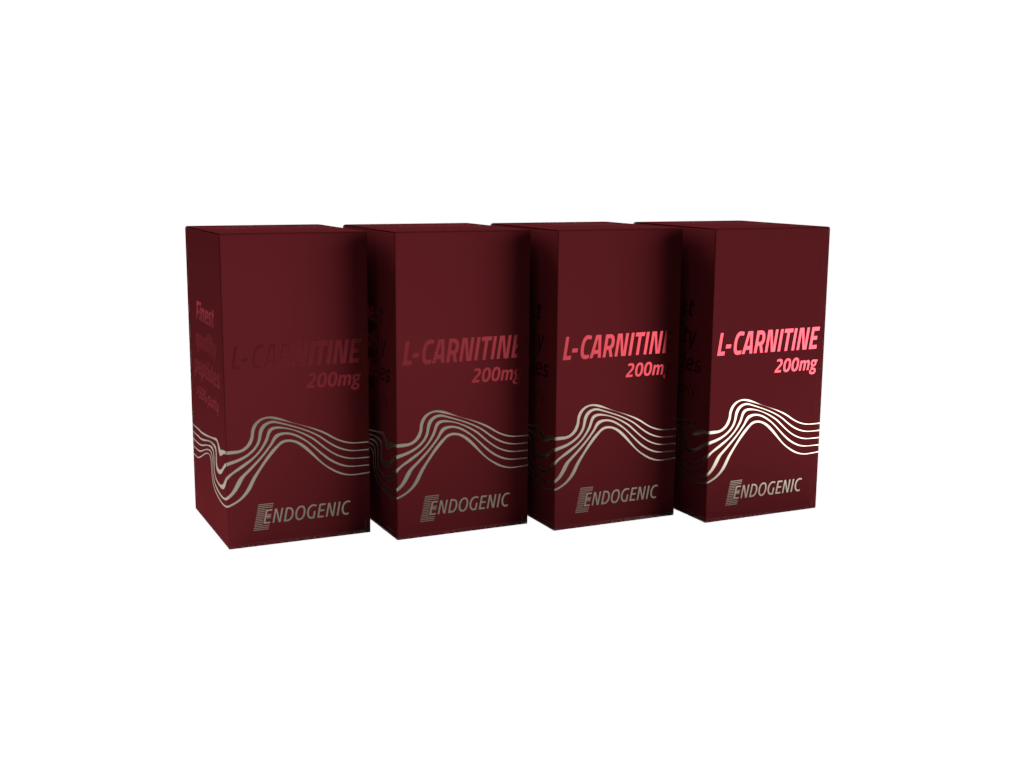


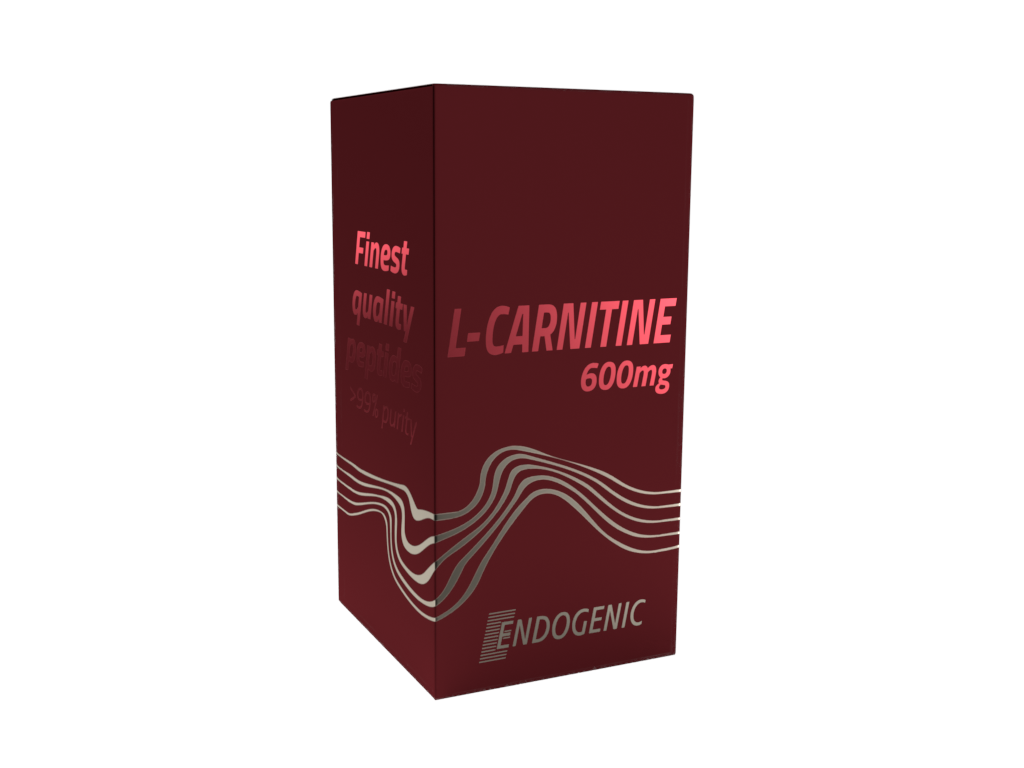
A single 600 mg/ml vial contains 10 ml of solution, or 6,000 mg of L-carnitine – enough for a shorter cycle or a trial of the highest concentration variant. If you use injectable carnitine for a longer period of time, in a full cycle of 4-8 weeks or chronically, the 3+1 free set is more profitable – four vials for the price of three. The single vial is a good choice for a first attempt at 600 mg/ml after previous experience with 200/400; the set is an option for someone who already knows that this variant suits them.
L-Carnitine 600 mg/1 ml – 10 ml
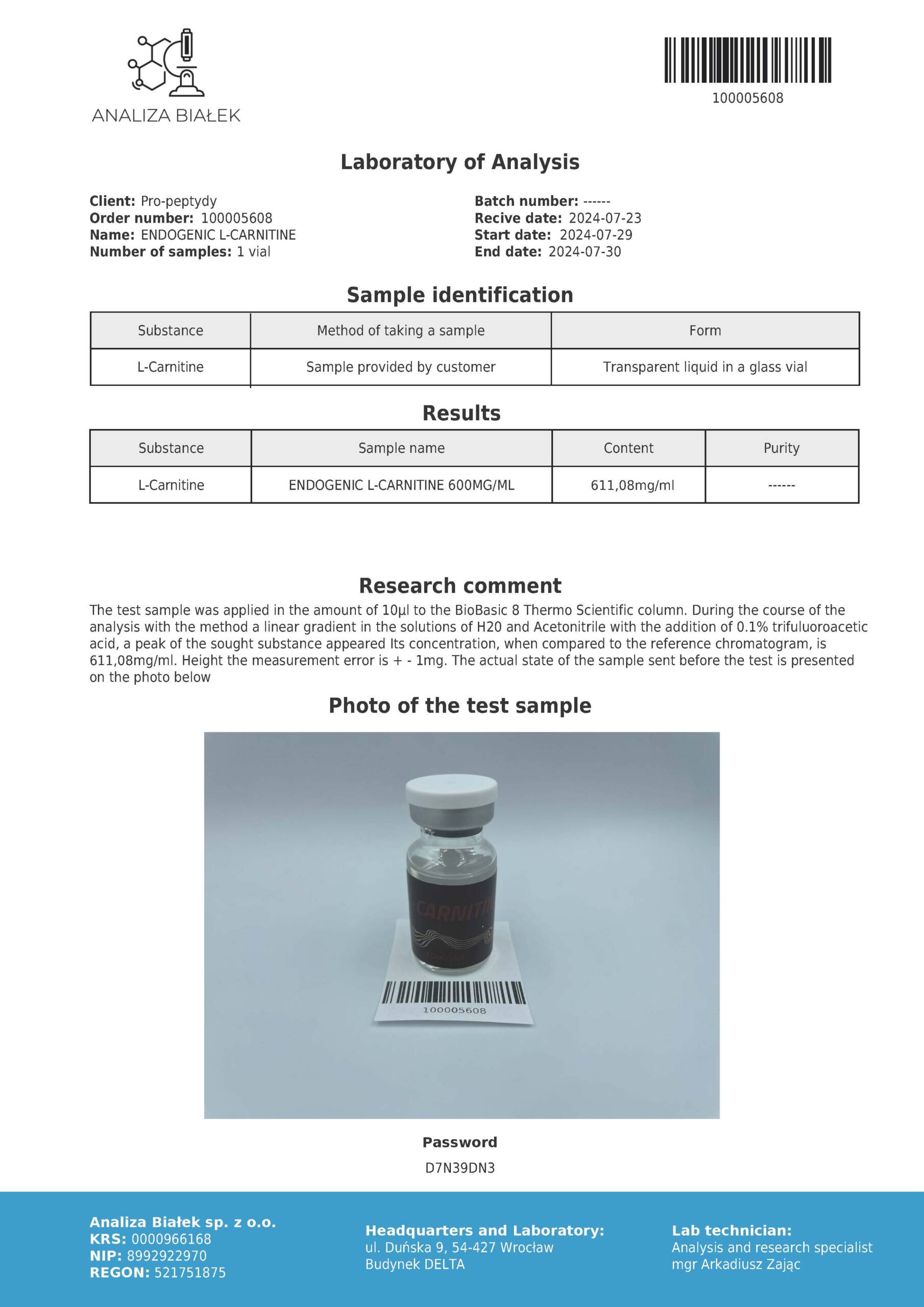
L-carnitine (levocarnitine) 600 mg/ml — the highest concentration in the catalog, solution for intramuscular injection in a single 10 ml vial (6000 mg), purity ≥98% HPLC, MS confirmation, COA per batch. Molecular transporter of fatty acids into the mitochondrion (CPT1/CPT2 shuttle), i.m. bioavailability ~100%.
64,99 €
Fast shipping
Delivery options
Free delivery from 350 €
Returns policy
L-Carnitine 600 mg/ml - injection solution
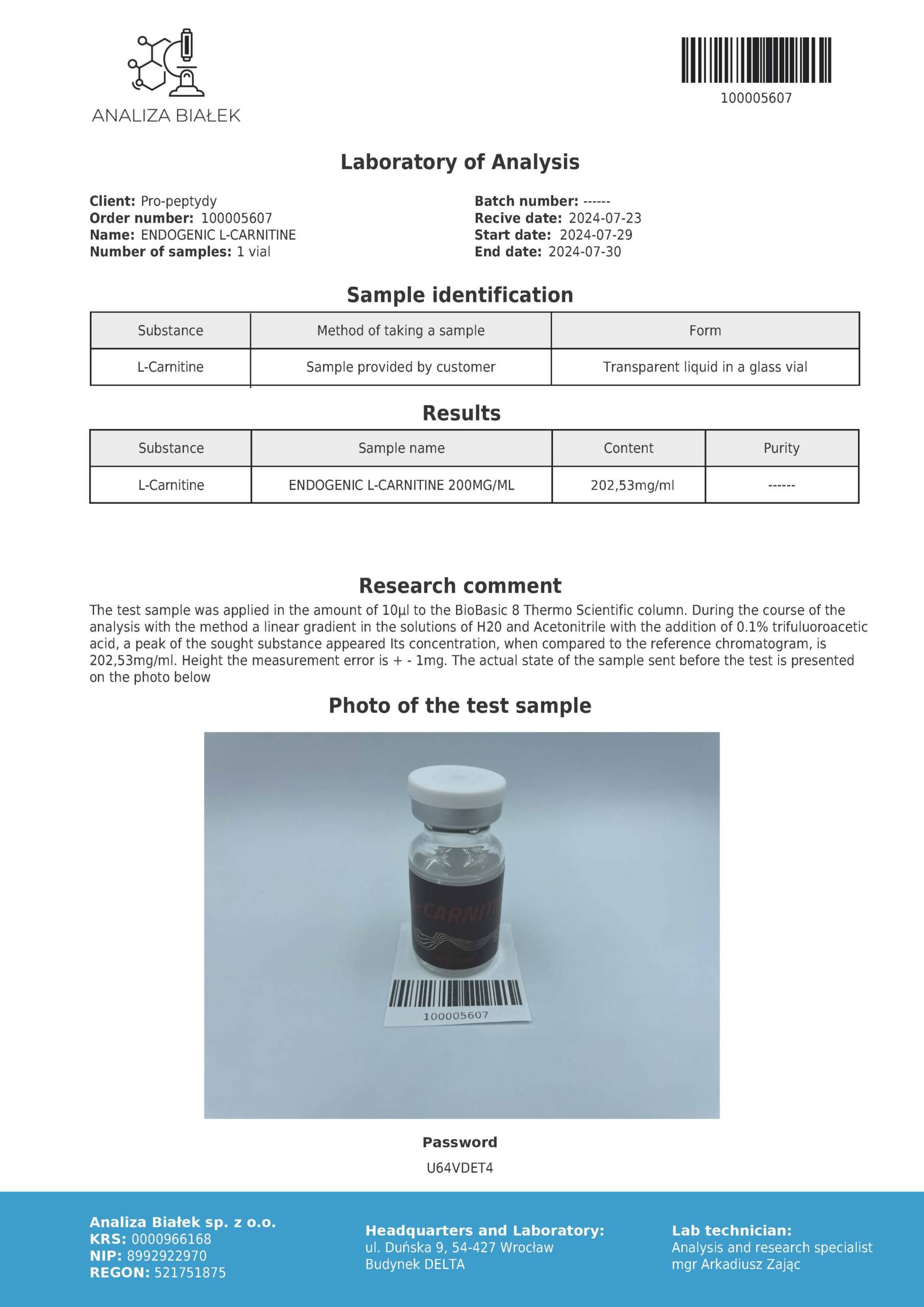
- L-carnitine (levocarnitine) 600 mg/ml — the highest concentration in the catalog, solution for intramuscular injection in a single 10 ml vial (6000 mg), purity ≥98% HPLC, MS confirmation, COA per batch.
- Molecular transporter of fatty acids into the mitochondrion (CPT1/CPT2 shuttle), i.m. bioavailability ~100%.
A specialized sports preparation in the form of a solution for intramuscular injection, intended only for adults (21+), for self-assessment of risk. Orally administered L-carnitine is assessed by EFSA as a food ingredient – the injection form is not a dietary supplement in the Polish and EU legal sense and is not a medicinal product.
This is a variant of highest concentration 600 mg/ml in the catalog, addressed to advanced users who already have documented experience with lower concentrations. Before making any decision, please read the “Critical Warnings”, “Legal Status” and Absolute Contraindications sections at the end of the description.
WARNING — WADA STATUS (Category M2.2)
Intravenous infusions and/or injections exceeding 100 ml in a period of 12 hours are prohibited by the World Anti-Doping Agency (WADA) under section M2.2 (chemical and physical manipulation) — regardless of the substance administered. The provision does not cover intramuscular or subcutaneous injections. L-carnitine itself in typical doses is not a prohibited substance, but route and volume of administration are subject to this rule.
Registered athletes (ADAMS) must check the current list of prohibited methods before making any decision regarding use.
WARNING – RISK OF LOCAL REACTION (hyperosmolarity, Z-track technique)
A concentration of 600 mg/ml is a highly hyperosmolar solution – thicker and more irritating to the tissue than the 200 and 400 mg/ml variants. This is related to higher risk of local reaction: post-injection pain, tissue hardening (fibrosis), and in extreme cases sterile abscess due to technique errors. For this reason, the 600 mg/ml variant requires Z-track techniques, absolute rotation of injection sites and previous experience with lower concentration.
The first attempt with injectable carnitine should never be at a concentration of 600 mg/ml — start with a variant L-carnitine 200 mg/ml injection or L-Carnitine 400 mg/ml and go step-up 200 → 400 → 600 only after confirming the tolerance.
Introduction
L-carnitine is one of the most studied compounds in the physiology of fat metabolism – and at the same time one of the most misunderstood. The name comes from Latin carnis (meat), because it was isolated from muscle tissue for the first time in 1905. Its function in the cell is precise and irreplaceable: it is a molecular “ferry” that transports long-chain fatty acids through the inner mitochondrial membrane to the place where they are burned for energy.
Without carnitine, fat won’t enter the mitochondrial furnace – it will get stuck outside the gate. In the Pro-Body catalog, injectable L-carnitine is available in three concentrations, of which this is the highest. The problem with the oral form is known to anyone who has looked into pharmacokinetics: the bioavailability of L-carnitine from tablets and capsules is only a dozen or so percent, and a large part of the dose never reaches the bloodstream in its active form.
The injection form bypasses this problem completely – intramuscular bioavailability is approaching 100%, which means that the entire measured dose goes where it is supposed to work. This is why injectable solution is the format of choice for advanced cutting athletes who want maximum ingredient availability with minimal volume. This preparation is the highest concentration in the catalog – 600 mg/ml – in a single 10 ml vial (total 6000 mg of L-carnitine).
The logic behind this concentration is purely practical: the higher the concentration, the smaller the injection volume for the same dose. 1 ml is 600 mg, 3 ml is 1800 mg, 4 ml is 2400 mg – that is, the full working dose can be administered in a volume that would require two or three injections with weaker solutions.
For an advanced person who uses carnitine regularly and values the comfort of small volumes, this is a real difference. Coach Marek would say directly: 600 mg/ml is a variant for someone who already knows how their body reacts to injected carnitine – not for the first time. The solution is pharmaceutical grade, ≥98% HPLC purity, identity confirmed by mass spectrometry, and COA is available for each batch.
The 10 ml vial is a single format – if you plan a longer cycle or use carnitine chronically, it is more economical set 3x L-Carnitine 600mg (four vials for the price of three).
Mechanism of action at the molecular level
L-carnitine is not a stimulant or a hormone – its action results from one, precisely defined transport function and several derivative effects, which together create a profile interesting for endurance sports and fat tissue reduction. It is this transport role that makes carnitine appear in almost every list when it comes to effective fat burners — although, as you will see below, its mechanism is more “logistical” than thermogenic.
Fatty acid transport – CPT1/CPT2 pendulum
The heart of carnitine’s action is the so-called carnitine pendulum. To be burned, long-chain fatty acids must enter the mitochondrial matrix – but the inner mitochondrial membrane is impermeable to them. This is where carnitine comes in. Enzyme carnitinepalmitoyltransferase 1 (CPT1), embedded in the outer membrane of the mitochondrion, attaches a fatty acid to a carnitine molecule, creating acylcarnitine.
This form passes through the membrane and on the other side the enzyme CPT2 detaches the fatty acid back, releasing it into the matrix and regenerating free carnitine. This pendulum—carnitine brings in a charge, comes back empty, and picks up another one—is the only route by which long-chain fats enter the mitochondrial furnace (Stephens et al. 2007). Without a sufficient pool of carnitine, this transport becomes a bottleneck.
Beta-Oxidation – Entering the Energy Furnace
After passing through the membrane, the fatty acid goes into the beta-oxidation — a multi-stage process in which it is “cut” into two-carbon fragments of acetyl-CoA, feeding the Krebs cycle and ATP production. The availability of carnitine directly limits how much fat can reach this pathway per unit of time. In the context of aerobic exercise, this means that the carnitine pool co-determines how efficiently the body uses fat as fuel – instead of limited glycogen stores (Karlic and Lohninger 2004).
Buffering the CoA pool – unlocking the metabolism
Carnitine has another, less obvious function: buffers the ratio of acyl-CoA to free CoA in the cell. During intense exercise, acetyl-CoA accumulates faster than it is used, “clogging” the pool of free coenzyme A, which is needed further in the metabolism. Carnitine takes over excess acetyl groups (forming acetylcarnitine) and thus releases free CoA, maintaining the fluidity of energy reactions. This is one of the mechanisms by which carnitine affects metabolism at higher intensities (Stephens et al. 2007).
Impact on post-exercise regeneration
Volek and colleagues (2002) showed in a human study that L-carnitine supplementation was associated with reducing markers of muscle damage and oxidative stress after resistance exercise — including a smaller increase in myoglobin and creatine kinase levels and a reduction in muscle pain. The proposed mechanism is to improve blood supply to muscle tissue (increased oxygen availability) and reduce hypoxia that accompanies intense load. This is a direction that shifts carnitine from the role of a “fat burner” towards a compound supporting regeneration.
Impact on strength and use of substrates
Wall and colleagues (2011) conducted one of the most powerful studies on humans: 24-week supplementation with L-carnitine (with simultaneous administration of carbohydrates increasing its uptake into muscles) led to increasing the content of carnitine in skeletal muscle, saving glycogen at lower intensities and improving exercise parameters at higher intensities. This study showed that the carnitine pool in the muscle is plastic and that increasing it has a real impact on the choice of energy substrate and endurance (Wall et al. 2011). The injection form with ~100% bioavailability bypasses the uptake barrier, which in oral studies required carbohydrate support.
Injection pharmacokinetics
- Bioavailability (i.m.): ~100% – intramuscular administration bypasses the intestinal absorption barrier, which limits oral availability to several percent. The entire measured dose enters the circulation in its active form.
- Half-life (T½): ~1–1.5 hours in the distribution phase — L-carnitine is an endogenous compound with efficient metabolic turnover; the body maintains its homeostasis mainly through renal reabsorption.
- Distribution: transport to muscle tissue (main reservoir) is an active and saturable process; injection raises plasma concentrations rapidly, and uptake into the myocyte occurs in the following hours.
- Elimination: mainly renal, with efficient tubular reabsorption at physiological concentrations; the excess above the threshold is excreted in the urine.
At a concentration of 600 mg/ml, a single injection of 1-1.5 ml delivers 600-900 mg in a volume small enough to reduce the number of injections needed at higher doses – which is of real practical importance in the case of injectable carnitine, where the main limitation of comfort is the volume and irritating nature of the solution.
Positioning of the 600 mg/ml variant - why the highest concentration
The catalog of injectable carnitine includes three concentrations, and the difference between them is not a matter of the “strength” of the ingredient – the molecule is identical – but injection volume and aggressiveness of the solution towards the tissue. This distinction is central to safe choice.
- 200 mg/ml — input concentration. The mildest for the tissue, the least hyperosmolar, recommended for the first attempt with injectable carnitine. The disadvantage is larger volumes at higher doses.
- 400 mg/ml — intermediate concentration. Compromise between volume and comfort; natural second step after confirming tolerance to 200 mg/ml.
- 600 mg/ml — highest concentration, this preparation. The smallest injection volumes at high doses (1 ml = 600 mg, 3 ml = 1800 mg, 4 ml = 2400 mg maximum), but highest risk of local reaction due to hyperosmolarity. Intended for advanced users with proven experience.
The step-up principle is mandatory here, not optional: 200 → 400 → 600. The 600 mg/ml variant assumes that the user has already been through lower concentrations without a local reaction and is familiar with the Z-track technique and rotation of injection sites. The lack of this experience is a contraindication to starting with 600 mg/ml – not because of the substance itself, but because of the characteristics of the solution. Check if the 600 mg/ml option suits your level of experience – if this is your first time using injectable carnitine, start with the entry concentration.
Critical warnings
The 600 mg/ml variant carries two risks, which are less pronounced at lower concentrations and which must be understood before the first injection. Both of them were separated at the beginning of the description as warning frames – practical development below.
Risk of local reaction and hyperosmolarity
The 600 mg/ml solution is thick and highly hyperosmolar – its osmolality significantly exceeds the tissue osmolality, making it more irritating. In practice this means:
- More severe post-injection pain than at 200/400 mg/ml – this is an expected characteristic of a concentrated solution, not an error.
- Risk of fibrosis (fibrosis) — repeated injections into the same place with a concentrated solution may lead to hardening of the subcutaneous and muscle tissue. Hence the absolute requirement to rotate places.
- Risk of sterile abscess — in case of technique errors or insufficient rotation, a sterile (non-infectious) inflammatory reaction may occur, requiring intervention. This is rare with correct technique, but real if neglected.
Risk mitigation measures: Z-track technique (below), slow administration, warming the solution to body temperature before injection, absolute site rotation, sterile technique and – above all – prior confirmation of tolerance at a lower concentration.
Z-track technique – why it is mandatory at 600 mg/ml
The Z-track technique involves moving the skin and subcutaneous tissue to the side before the injection, injecting the tissue into tight tissue, and after administration – releasing the skin, which “closes” the injection channel by shifting the layers. This traps the irritating solution in the muscle it does not retreat into the subcutaneous tissue or the skin surface, where it would cause the greatest irritation and risk of fibrosis. With hyperosmolar solutions such as 600 mg/ml carnitine, Z-track is not a stylistic choice – it is a standard that limits local reaction.
WADA Status – Section M2.2
As described in the box at the beginning, the limitation is not the L-carnitine itself (which is not prohibited in typical doses), but volume and route of administration. Section M2.2 of the WADA Prohibited List prohibits intravenous infusions and/or injections exceeding 100 ml per 12 hours; it does not cover intramuscular or subcutaneous injections. The registered athlete checks the current version of the List in the ADAMS system before making any decision.
Advanced protocol (21+)
The following protocol describes how L-carnitine injection 600 mg/ml is used by advanced adults assessing their own risk. This is not a medical recommendation. The overriding principle for this variant is: first experiment with a lower concentration, then 600 mg/ml. The guide describes how to include carnitine in a broader cycle plan protocol for reducing body fat.
- Starting dose (assessment of local tolerance): 0.5 ml (300 mg). Even when experimenting with lower concentrations, the first injection with the 600 mg/ml solution should be a small volume – the goal is to test the tissue response to the more hyperosmolar solution, not the metabolic effect.
- Standard dose: 1–1.5 ml (600–900 mg) per injection. This is the working range for most advanced reduction and strength protocols.
- Maximum dose: 4 ml (2400 mg) as the upper limit of a single injection. Higher volumes of concentrated solution increase local risk – do not exceed this value.
- Seat rotation – mandatory: perform each subsequent injection in a different place (alternately: buttock, side thigh, deltoid). Never give two injections in a row to the same site – this is a major risk factor for fibrosis at 600 mg/ml.
- Technique: Z-track, needle of appropriate length for intramuscular injection, warming the solution to body temperature, slow administration, sterile technique.
- Step-up concentrations: 200 → 400 → 600. Do not start at 600 mg/ml without first going through lower concentrations without a local reaction.
- Cycle length: Typically 4-8 weeks of cyclic use, then a break. Carnitine accumulates in the muscle gradually – the cycle allows you to fill the muscle pool, the break gives time to assess and regenerate the injection sites.
SCIENTIFIC PERSPECTIVE
Most data on the effects of L-carnitine on endurance, glycogen sparing and regeneration come from human studies with administration oral (often supported by carbohydrates to increase muscle uptake – Wall et al. 2011) or from animal models. The injectable form bypasses the intestinal absorption barrier, but there are few direct, large-scale, controlled studies of intramuscular L-carnitine in competitive sports. The metabolic benefits of carnitine are well documented mechanistically; the strength of evidence for a specific injection route should be assessed realistically.
Safety rules
L-carnitine has a favorable safety profile as an endogenous compound, but the injection form with the highest concentration carries specific risks that are not present with oral supplementation.
Local risk (600 mg/ml specific)
- Stronger post-injection pain than at lower concentrations – an expected feature of a hyperosmolar solution
- Risk of fibrosis and sterile abscess due to technique errors or insufficient rotation – countermeasures: Z-track, rotation, sterile technique
- Lack of experience with lower concentrations (200/400) is a contraindication to start at 600 mg/ml
Systemic risks and interactions
- TMA/TMAO: the metabolism of L-carnitine by intestinal bacteria leads to the formation of trimethylamine (TMA), which is oxidized in the liver to Trimethylamine N-oxide (TMAO) — a metabolite associated with cardiovascular risk in observational studies. This mainly concerns chronic oral administration with the participation of microbiota; the importance for injection administration is less, but worth awareness for long, repeated use.
- Kidneys: carnitine elimination is mainly renal – renal failure is a contraindication; with reduced kidney function, the excess is not excreted efficiently.
- Thyroid: L-carnitine may peripherally weaken the action of thyroid hormones – people with hypothyroidism or hormonal treatment should exercise caution.
- Coumarin (vitamin K antagonists): an interaction that intensifies the antithrombotic effect of acenocoumarol/warfarin has been described – a possible increase in INR. In anticoagulant therapy, this is an important relative contraindication.
Other rules
- Cyclical, not continuous use (4–8 weeks, then a break)
- Sterile injection technique, disposable equipment, absolute rotation of places
- Do not exceed a volume of 4 ml per injection
- Warm the solution to body temperature before administration – it reduces pain and irritation
Absolute contraindications
- Pregnancy and breastfeeding
- Age under 21
- No documented experience with lower concentrations (200/400 mg/ml) — contraindication to starting with 600 mg/ml
- Kidney failure
- Current treatment with coumarins (acenocoumarol, warfarin) without supervision and INR control
- Known hypersensitivity to L-carnitine
Legal status
The status of L-carnitine depends on the form and route of administration – this is a central distinction for this preparation.
- Oral form – food ingredient: L-carnitine administered orally is rated by EFSA as a food ingredient and is sometimes used in dietary supplements under applicable regulations. This is not the status of this preparation.
- Injection form – outside the framework of a dietary supplement: solution for intramuscular injection is not a dietary supplement in the Polish and EU legal sense — parenteral route excludes classification as food/supplement. We classify this preparation as: specialist sports preparation for adults (21+), for your own risk assessment.
- Medicine (Carnitor®): levocarnitine in pharmaceutical form is a registered drug used in carnitine deficiency, administered under medical supervision. Pro-Body is not this medicine, is not a substitute for it and is not intended to treat carnitine deficiency or any condition.
- GIS/EFSA: Due to the injectable form, the preparation functions outside the framework of a dietary supplement – the Chief Sanitary Inspectorate (GIS) does not qualify the parenteral form as a food ingredient/supplement, regardless of the EFSA assessment for oral administration.
- WADA — point M2.2: L-carnitine itself in typical doses is not a prohibited substance, but intravenous infusions and/or injections above 100 ml per 12 hours are prohibited as a method (M2.2). Registered Athletes (ADAMS) must verify the current list of prohibited methods before making any decision.
The preparation is intended only for adults (21+) to independently assess the risk. Communication of the product as a medicine, as a substitute for Carnitor®, as a “treatment for carnitine deficiency” or as a dietary supplement is unacceptable.
Summary
L-carnitine (levocarnitine, CAS 541-15-1, C₇H₁₅NO₃, 161.20 g/mol) is a quaternary ammonium derivative that serves as a molecular transporter of long-chain fatty acids across the inner mitochondrial membrane – through the CPT1/CPT2 shuttle, which determines the entry of fat into beta-oxidation (Stephens et al. 2007, Karlic and Lohninger 2004). The carnitine pool in the muscle affects the selection of energy substrate, glycogen sparing and endurance (Wall et al. 2011) and markers of post-exercise regeneration (Volek et al. 2002).
The injection form increases bioavailability to ~100%, bypassing the intestinal absorption barrier. This preparation is the highest concentration in the catalog – 600 mg/ml in a single 10 ml vial (6000 mg) — addressed to advanced users with documented experience with lower concentrations. The variant carries two critical risks: the WADA M2.2 restriction on intravenous administration and a higher risk of local reaction due to hyperosmolarity, requiring the Z-track technique, site rotation and step-up 200 → 400 → 600.
Purity ≥98% HPLC, MS confirmation, COA per batch. A specialized sports preparation for adults (21+), not a drug and not a substitute for Carnitor®.
Bibliography
- Stephens FB, Constantin-Teodosiu D, Greenhaff PL (2007). New insights concerning the role of carnitine in the regulation of fuel metabolism in skeletal muscle. PubMed
- Wall BT, Stephens FB, Constantin-Teodosiu D, Marimuthu K, Macdonald IA, Greenhaff PL (2011). Chronic oral ingestion of L-carnitine and carbohydrate increases muscle carnitine content and alters muscle fuel metabolism during exercise in humans. PubMed
- Volek JS, Kraemer WJ, Rubin MR, Gómez AL, Ratamess NA, Gaynor P (2002). L-Carnitine L-tartrate supplementation favorably affects markers of recovery from exercise stress. PubMed
- Karlic H, Lohninger A (2004). Supplementation of L-carnitine in athletes: does it make sense?. PubMed
- Pekala J, Patkowska-Sokoła B, Bodkowski R, Jamroz D, Nowakowski P, Lochyński S, et al. (2011). L-carnitine — metabolic functions and meaning in human life. PubMed
FAQ
The molecule is identical in all three – the differences are the injection volume and the aggressiveness of the solution towards the tissue. The 200 mg/ml variant is the entry concentration: the mildest, recommended for the first attempt, but requires larger volumes at higher doses. The concentration of 400 mg/ml is an intermediate compromise. 600 mg/ml (this formulation) produces the smallest volumes at high doses, but is the most hyperosmolar and carries the highest risk of local reaction.
Rule: start with 200, go step-up 200 → 400 → 600 only after confirming the tolerance. 600 mg/ml is not a concentration for the first time.
L-carnitine itself in typical doses is not a prohibited substance. It is prohibited method — point M2.2 of the WADA list prohibits intravenous infusions and/or injections exceeding 100 ml in a 12-hour period, regardless of the administered substance; intramuscular and subcutaneous injections are not covered. The ADAMS registered athlete checks the current list of prohibited methods before making any decision. This is an indication of where to look for binding information, not anti-doping advice.
Because a 600 mg/ml solution is highly hyperosmolar – thicker and more irritating to tissue than weaker concentrations. This is an expected feature of a concentrated solution and is not a sign of error or poor quality of the preparation. Pain can be reduced: warm the solution to body temperature before administration, administer slowly, use the Z-track technique and rotate the injection sites. If pain is unacceptable to you, a lower concentration (200 or 400 mg/ml) will be gentler on the tissue – at the expense of a larger injection volume.
Z-track is an intramuscular injection technique in which, before the injection, you move the skin and subcutaneous tissue to the side, inject the solution into the taut tissue, and after removing the needle, you release the skin – the moved layers “close” the injection channel. Thanks to this, the irritating, hyperosmolar solution is trapped in the muscle and does not flow back into the subcutaneous tissue or skin, where it would cause the strongest irritation and risk of fibrosis.
At 600 mg/ml carnitine, Z-track is not an option – it is a standard that limits local reaction and the risk of sterile abscess.
If you already have documented experience with injection carnitine at lower concentrations (200 and 400 mg/ml) without a local reaction, you know and use the Z-track technique, rotate the injection sites and care about the minimum injection volume at high working doses. 600 mg/ml is a volume comfort variant for advanced users – not a starting point. If this is your first contact with injectable carnitine, this preparation is not for you at this stage; start with the input concentration and proceed step-up.
TMAO (trimethylamine-N-oxide) is a metabolite formed when intestinal bacteria convert L-carnitine into trimethylamine (TMA) and the liver oxidizes it to TMAO. Observational studies have associated elevated TMAO with cardiovascular risk (Koeth et al. 2013). However, this mechanism mainly depends on chronic oral administration with the participation of intestinal microbiota — when administered by injection, which bypasses the intestine, the participation of the TMA/TMAO pathway is smaller. Nevertheless, with long-term, repeated use, it is worth keeping this relationship in mind, especially with existing cardiovascular risk factors. This is an area where data continues to evolve.
5.0
1 review
-
Piotr
 Polski
Wysokie stężenie 600 mg/ml i czysty skład roztworu
Roztwór L-Carnitine w stężeniu 600 mg/ml charakteryzuje się bardzo dobrą klarownością i brakiem niepotrzebnych dodatków. Zamówiony pakiet 3+1 wychodzi bardzo korzystnie cenowo. Sklep pro-body.com realizuje wysyłkę błyskawicznie. Jeśli ktoś szuka roztworów aminokwasowych o wysokiej czystości i konkretnym stężeniu na ml, oferta jest w pełni godna polecenia.
-
Rafal
Polski
Product review
Od razu zamówiłem kilka sztuk, bo wiedziałem, że jakość mnie nie zawiedzie. I miałem rację. Dodatkowo 600 mg/ml to więcej produktu w mniejszej objętości, co bardzo mi odpowiada. Polecam.
Black Week
Black Week deals before everyone else
Sign up for the newsletter and get access to the Black Week promotion before other customers.
By signing up you agree to receive the Pro-Body newsletter with news and promotions. You can unsubscribe at any time with one click in the e-mail. Privacy policy