
Highly soluble in water and in bacteriostatic water (0.9% benzyl alcohol). Limited solubility in DMSO (up to ~5 mg/ml), very limited in ethanol. An aqueous solution with a pH of 5.0–7.5 is the recommended form for in vivo research protocols.



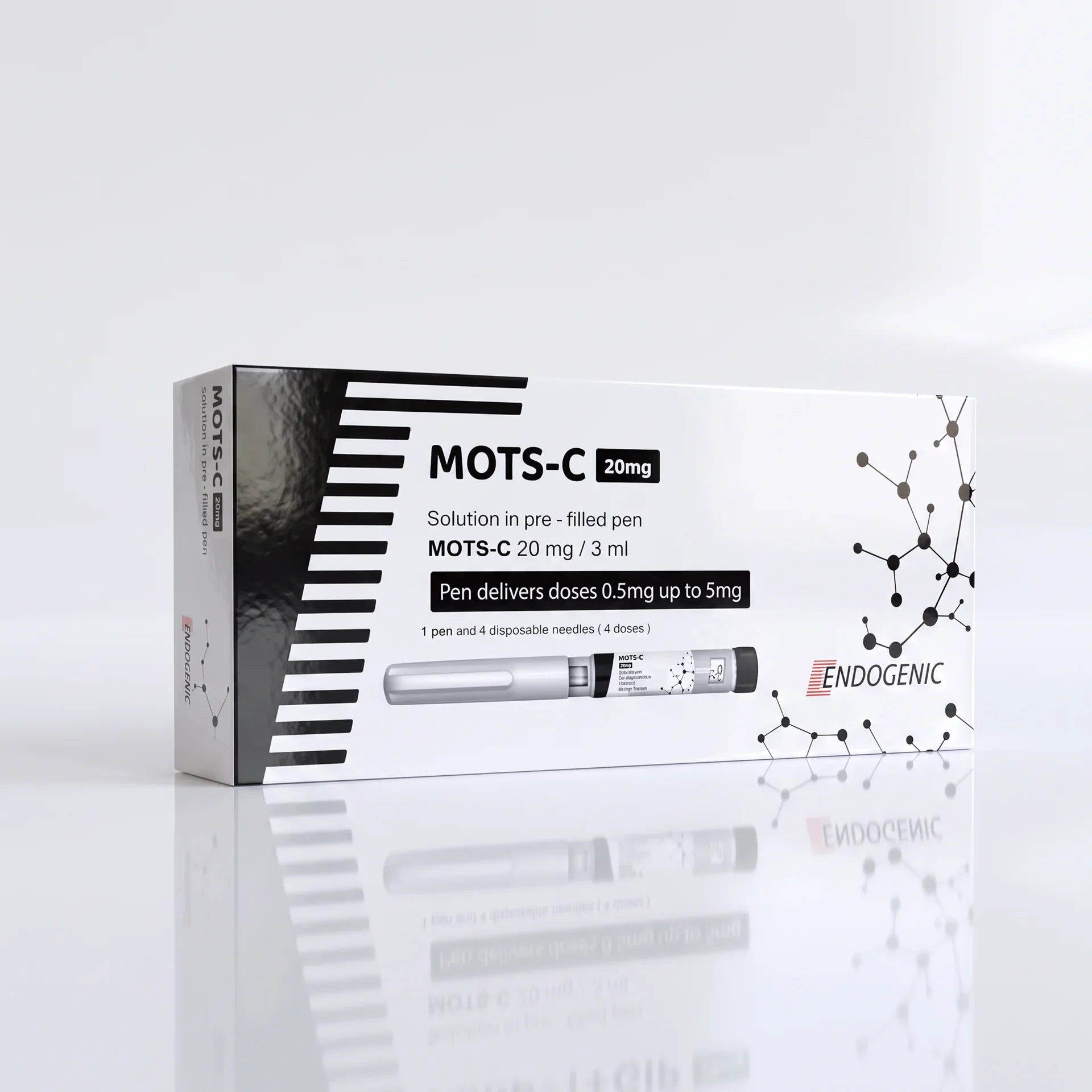
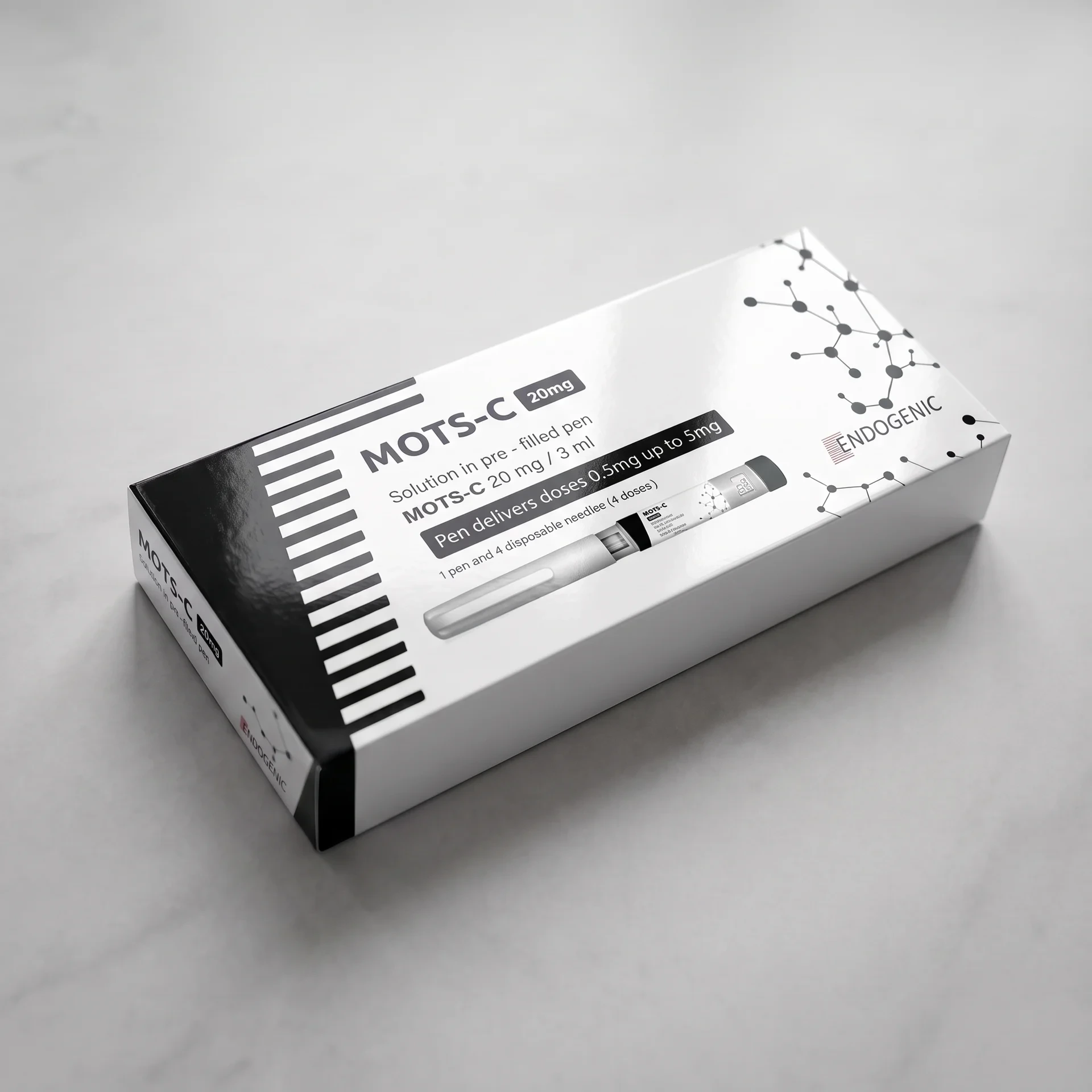
MOTS-C 20mg PEN
MOTS-C 20 mg PEN is a synthetic sixteen-amino-acid mitochondrial peptide in the form of a lyophilisate in a pen applicator cartridge. The substance is a molecular tool for research on the AMPK pathway, glucose metabolism, insulin sensitivity, mitochondrial biogenesis and mechanisms of metabolic aging – in animal models and in vitro systems.
87,99 €
With code BLACK: 70,39 €
Lowest price in the 30 days before the discount:
87,99 €
Fast shipping
Free delivery from 350 €
Returns policy
MOTS-C 20 mg PEN
- MOTS-C: a sixteen-amino-acid mitochondrial peptide.
- PEN format; nominal content: 20 mg.
- Reagent intended exclusively for laboratory research.
MOTS-C is a synthetic sixteen-amino-acid mitochondrial peptide (MDP), encoded by a short open reading frame within the mitochondrial gene. 12S rRNA. The molecule was first described in 2015 by the team of Changhan Lee and Pinchas Cohen from the University of Southern California (Lee et al., Cell Metabolism, 2015) and initiated a new class of regulatory peptides of mitochondrial origin – next to humanin and SHLP1–6. The acronym MOTS-C stands for Mitochondrial Open Reading frame of the Twelve S rRNA type-C.
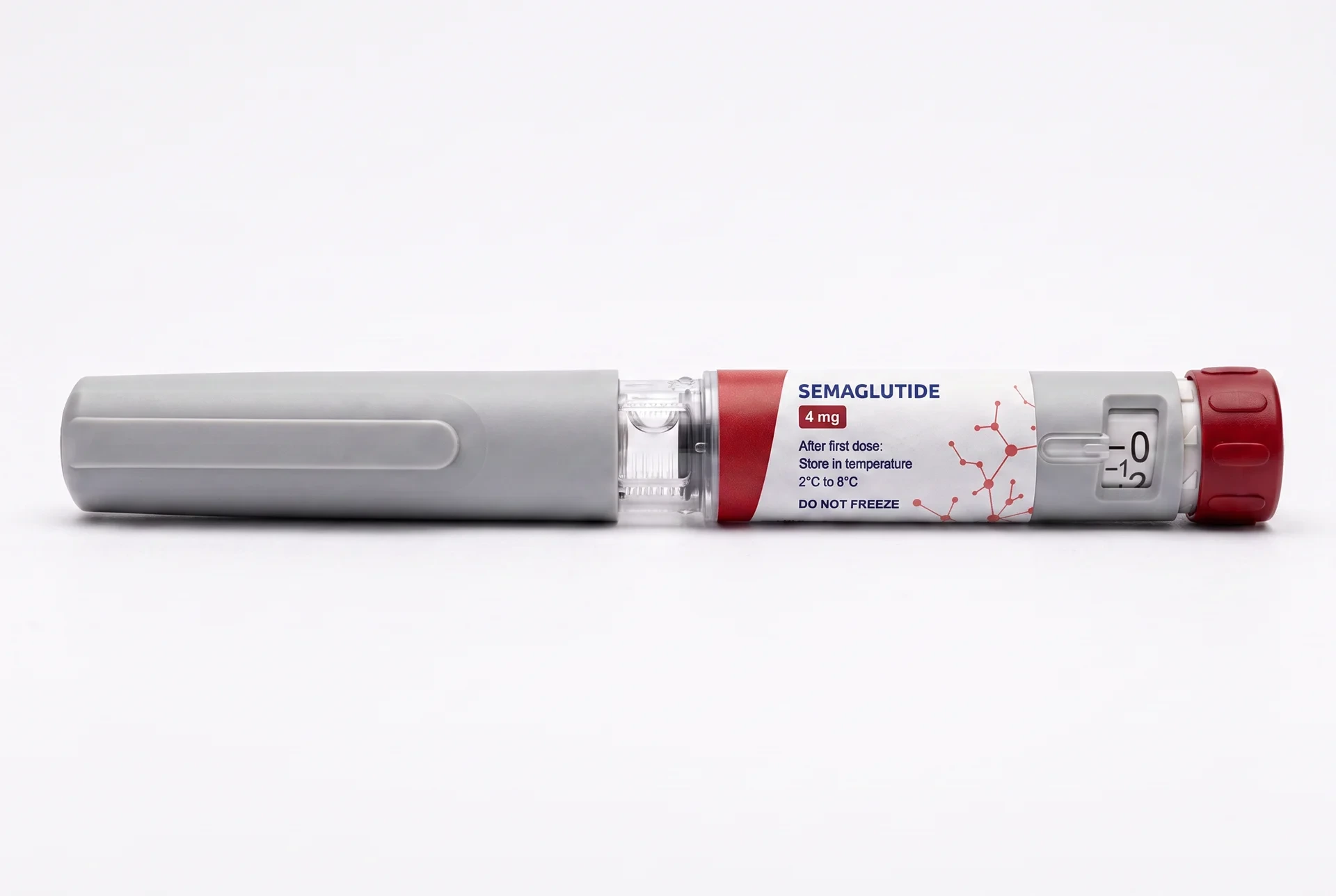
Pro-Body MOTS-C is delivered in the form of a pen-type applicator with a 20 mg lyophilisate in a multi-dose cartridge, compatible with protocols requiring precise micro-measuring of the volume after reconstitution with bacteriostatic water. The pen form fits into a broader family peptide pens used in multiple microdose protocols.
Context MOTS-C – mitochondrial peptide family
MOTS-C belongs to the family of mitochondrial-derived peptides (MDPs) – short proteins encoded by the mitochondrial genome, not the nuclear one. The discovery of this group changed the previous paradigm, according to which mitochondria are only recipients of signals from the cell nucleus. MDPs act like retrograde hormones – feedback signals sent by mitochondria to the rest of the cell and other tissues.
Among the mitochondrial peptides identified so far, the literature mentions:
- Humanin (24 aa) — described in 2001, modulator of the Bax/Bcl-2 pathway and oxidative stress response
- MOTS-C (16 aa) — described in 2015, modulator of the AMPK pathway and glucose metabolism
- SHLP1–6 (small humanin-like peptides) — described in 2016, modulators of metabolism and cell survival
MOTS-C stands out in this group for its direct influence on the AMPK (5’AMP-activated protein kinase) pathway – the central sensor of the cell’s energy state, which is activated in conditions of ATP deficiency and redirects the metabolism to the oxidation of fatty acids and glucose catabolism. In the literature, the peptide is described as an “endogenous exercise mimetic” – in animal models, its administration reproduces some of the metabolic adaptations observed after endurance training.
The concentration of endogenous MOTS-C in serum decreases with age – Lee et al. (2015) reported a correlation of the decline in MOTS-C levels with the development of insulin resistance and metabolic disorders in aging mouse models. This observation justifies the interest in this molecule as a research tool in geroscience and the biology of metabolic aging.
💡 SCIENTIFIC PERSPECTIVE Most published data on MOTS-C concern animal models (C57BL/6 mice, diet-induced obesity models, type 2 diabetes models) and cell cultures (C2C12 myoblasts, HepG2 hepatocytes, 3T3-L1 adipocytes). Single observational studies and small series of Phase I clinical trials are ongoing – full human RCTs have not been completed. Each statement in this description refers to laboratory observations in animal models or in vitro systems.
What is MOTS-C?
- Chemical name: Mitochondrial Open Reading frame of the Twelve S rRNA, type-C variant
- Single letter sequence: MRWQEMGYIFYPRKLR
- Three-letter sequence: Met-Arg-Trp-Gln-Glu-Met-Gly-Tyr-Ile-Phe-Tyr-Pro-Arg-Lys-Leu-Arg
- Compound class: synthetic sixteen-amino-acid peptide, mitochondrial-derived peptide (MDP)
- Summary formula: C₁₀₁H₁₅₂N₂₈O₂₂S₂
- Molar mass: 2174.6 g/mol
- CAS#: 1627580-64-6
- Sequence origin: open reading frame within the mitochondrial gene MT-RNR1 (12S rRNA), position ~951–1000 mtDNA
- Physical form: lyophilisate in a pen-type applicator cartridge, hermetically sealed under argon
The molecule is a mitochondrially encoded peptide – the mtDNA genetic code differs from the nuclear code in three codons (UGA, AGA, AGG), and the synthesis takes place on mitoribosomes. Pro-Body provides MOTS-C in a version synthesized using the SPPS (Solid Phase Peptide Synthesis) method in Fmoc technology – with sequence verification by tandem mass spectrometry (MS/MS).
Chemical characteristics table
|
Parameter |
Value |
| Sequence | Met-Arg-Trp-Gln-Glu-Met-Gly-Tyr-Ile-Phe-Tyr-Pro-Arg-Lys-Leu-Arg |
| Summary formula | C₁₀₁H₁₅₂N₂₈O₂₂S₂ |
| Molar mass | 2174.6 g/mol |
| CAS# | 1627580-64-6 |
| Purity (HPLC) | ≥98% |
| Identity confirmation | tandem mass spectrometry (MS/MS) |
| Character | lyophilisate in a pen cartridge |
| Peptide content in pen | 20 mg |
| Pen configuration | multi-dose precision applicator for micro-volume measurement |
| Protective atmosphere | argon (protection against oxidation of methionine residues) |
| Storage conditions (before reconstitution) | -20°C, protect from light |
| Storage conditions (after reconstitution) | 2-8°C, up to 28 days according to batch COA |
| Reconstituent recommended | bacteriostatic water (0.9% benzyl alcohol) |
| COA per batch | PDF inline on the product card |
Structure and physicochemical properties
MOTS-C is a linear peptide composed of sixteen amino acid residues in the sequence M-R-W-Q-E-M-G-Y-I-F-Y-P-R-K-L-R. The amino acid composition includes two methionine residues (M, positions 1 and 6) – sensitive to oxidation to methionine sulfoxide (Met-O), which determines the need to store the peptide under an argon atmosphere and limit exposure to oxygen after reconstitution.
Functionally important residues
Hydrophobic residues (Trp³, Tyr⁸, Ile⁹, Phe¹⁰, Tyr¹¹, Leu¹⁵) – are responsible for binding to the hydrophobic domains of molecular partners and for the peptide’s ability to interact with cell membranes. Three aromatic residues (Trp, two Tyr, Phe) create a characteristic UV absorption profile at 280 nm, used to assess the peptide concentration using the spectrophotometric method.
Basic residues (Arg², Arg¹³, Lys¹⁴, Arg¹⁶) – four positively charged residues determine the high isoelectric point (pI ~10), affect the solubility of the peptide in water and the electrostatic potential when interacting with the negatively charged surfaces of mitochondrial membranes.
Acidic residue (Glu⁵) – A single glutamate residue introduces a negative charge in the first third of the peptide.
Solubility
MOTS-C is highly soluble in water and in bacteriostatic water (0.9% benzyl alcohol). Limited solubility in organic solvents (DMSO up to 5 mg/ml, ethanol – very limited) is due to the hydrophilic nature of basic residues. In laboratory practice, aqueous solutions with a pH of 5.0–7.5 are preferred.
Solution stability
After reconstitution, the aqueous solution stored at 2–8°C retains peptide activity for the period declared in the batch COA (typically up to 28 days). Freeze-thaw cycles are not recommended – they may lead to aggregation, oxidation of methionine residues and a reduction in the purity of the active molecule. The pen applicator with a multi-dose cartridge is designed to limit exposure to air, which increases the stability of the solution compared to an open vial.
Sensitivity to oxidation
The two methionine residues constitute the weakest points of the molecule in terms of chemical stability. Oxidation of Met to Met-sulfoxide changes the conformation of the peptide and may reduce biological activity.
MOTS-C pen mechanism of action
MOTS-C functions as a mitokine, a signal sent by mitochondria that, once released into the cytoplasm and bloodstream, modulates metabolism in distant tissues. Several parallel pathways have been described in the literature in which peptide activity has been observed in animal models and cell cultures.
Activation of the AMPK pathway via the folate pathway
Lee et al. (2015) showed in C2C12 myoblasts and mouse liver that MOTS-C activates AMPK (5’AMP-activated protein kinase) by modulating the folate pathway – specifically the metabolite AICAR (5-amino-imidazole-4-carboxamide ribonucleotide). AICAR is a natural AMPK activator; MOTS-C increases its intracellular availability, which leads to AMPK phosphorylation at the Thr172 position and activation of catabolic pathways.
In laboratory practice, this means observing:
- Increase in AMPK-Thr172 phosphorylation in cell lysates after exposure to MOTS-C (typically 1–10 μM, 30–60 min)
- Decrease in the activity of acetyl-CoA-carboxylase (ACC) – an AMPK substrate
- Increased fatty acid oxidation in isolated mitochondria
Effect on glucose metabolism and insulin sensitivity
In a high-fat diet (HFD)-induced obesity model in C57BL/6 mice, administration of MOTS-C improved insulin sensitivity parameters in the glucose tolerance test (GTT) and the insulin tolerance test (ITT). The mechanism includes:
- Activation of the GLUT4 pathway in skeletal muscles
- Modulation of glycolysis gene expression (HK2, PFK)
- Inhibition of hepatic gluconeogenesis (PEPCK, G6Pase)
These observations are consistent with the role of AMPK as a regulator of glucose homeostasis under conditions of energy deficiency.
Modulation of metabolic gene expression by nuclear translocation
Kim et al. (2018, Cell Metabolism) reported a surprising observation: MOTS-C can translocate from mitochondria to the cell nucleus under conditions of metabolic stress (starvation, exposure to AICAR). Translocation occurs within ~30 minutes of stress, and the peptide returns to the cytosol within 24 hours. Nuclear transport requires activation of AMPK. In the nucleus, the peptide regulates the expression of adaptive stress response genes, including: genes with an ARE element (Antioxidant Response Element), interacting with stress-responsive transcription factors, such as NFE2L2/NRF2, and with autophagy pathways.
This mechanism suggests that MOTS-C functions simultaneously as a metabolic signaler in the cytoplasm and as a transcriptional modulator in the nucleus.
Effects on skeletal muscle function
Reynolds et al. (2021) and other research groups observed in mouse models:
- Increased endurance in treadmill running tests after MOTS-C administration
- Protection against age sarcopenia in aging mice
- Increased mitochondrial biogenesis (PGC-1α, TFAM)
The observations justify the description of MOTS-C as an “endogenous exercise mimetic” – the peptide reproduces some of the metabolic adaptations observed after endurance training, which places it in the area of research on peptides for endurance used in animal model protocols.
Modulation of cellular aging processes
Kim SJ et al. (2018) showed in mouse models that serum levels of endogenous MOTS-C decrease with age. Exogenous supplementation in aging mice improved metabolic parameters (insulin sensitivity, lipid profile) and markers of mitochondrial function. This observation placed MOTS-C in the field of geroscience as a research tool for testing the “mitochondrial theory of metabolic aging” hypothesis.
⚠️ IMPORTANT DISTINCTION The term “effect on insulin sensitivity and muscle endurance” in the context of this description means: “In vivo studies in animal models observed modulation of the AMPK pathway, Thr172 phosphorylation and improvement of GTT/ITT parameters and endurance in running tests.” This is not a guarantee of effect in humans and is not a claim of therapeutic effectiveness.
Applications in scientific research
MOTS-C is used as a molecular tool in several separate research areas. After reconstitution, the 20 mg pen allows precise microlitre measurement, which suits protocols with repeated exposure of animal models over several weeks. Lyophilisates in single vials are listed under peptides in vials.
Mitochondrial biology and MDP signaling
Cell culture (C2C12, HepG2, 3T3-L1, HUVEC) – MOTS-C serves as a reference mitokine in protocols for mitochondrial → cytoplasm → nucleus retrograde signaling studies. The peptide is used as a tool to test hypotheses about the role of mitochondria in intercellular and intertissue communication.
Studies of glucose metabolism and type 2 diabetes
DIO (diet-induced obesity) animal models, db/db and ob/ob genetic models, streptozotocin models – MOTS-C in these protocols serves as a tool for research on the mechanism of AMPK-dependent improvement of insulin sensitivity and the potential of mitochondrial peptides in modulating glucose homeostasis.
Endurance and mitochondrial biogenesis studies
Mouse models with a treadmill training protocol – MOTS-C as a positive control for the “endogenous exercise mimetic” effect. Measurements include parameters of mitochondrial biogenesis (mitochondrial density, mtDNA/nDNA ratio, PGC-1α, TFAM, NRF1 expression) and functional parameters (VO₂max, time to exhaustion).
Geroscience and the metabolism of aging
Aging mouse models (24+ months) – MOTS-C used as a tool to study the reversibility of age-related metabolic changes. Measurements of gene expression (Sirtuin family, FOXO3, mTOR), senescence markers (p16, p21) and mitochondrial function in selected tissues.
Studies on the pharmacokinetics of mitochondrial peptides
Radiolabeled animal models (³H, ¹⁴C) – measurement of tissue distribution, clearance, serum half-life and nuclear translocation in selected tissues. Pharmacokinetic data for MOTS-C are under active characterization in the literature.
Studies on the effect on liver function and lipid metabolism
NAFLD (non-alcoholic fatty liver disease) models – MOTS-C as a research tool on the mechanism of AMPK-dependent reduction of hepatic triglyceride accumulation and on the expression of de novo lipogenesis genes (SREBP-1c, FAS, ACC).
Summary
MOTS-C (Mitochondrial Open Reading frame of the Twelve S rRNA type-C, sequence MRWQEMGYIFYPRKLR, MW ~2174 g/mol) is a synthetic sixteen-amino-acid mitochondrial peptide, described in 2015 by Lee and Cohen’s team. The substance is a molecular tool for research on the AMPK pathway, glucose metabolism, insulin sensitivity, mitochondrial biogenesis and mechanisms of metabolic aging – in animal models and in vitro systems. The 20 mg pen form with lyophilisate in a multi-dose cartridge under an argon atmosphere meets protocols requiring precise micro-measuring of volume after reconstitution with bacteriostatic water.
MOTS-C is supplied with HPLC purity certificate ≥98%, identity confirmation by tandem mass spectrometry (MS/MS) and batch documentation (COA per batch). The argon atmosphere in the factory-sealed cartridge protects the two methionine residues of the peptide from oxidation.
Bibliography
- Lee C, Zeng J, Drew BG, Sallam T, Martin-Montalvo A, Wan J, Kim SJ, Mehta H, Hevener AL, de Cabo R, Cohen P. The mitochondrial-derived peptide MOTS-c promotes metabolic homeostasis and reduces obesity and insulin resistance. Cell Metab. 2015 Mar 3;21(3):443–54. doi:10.1016/j.cmet.2015.02.009. PMID: 25738459. PubMed
- Kim SJ, Mehta HH, Wan J, Kuehnemann C, Chen J, Hu JF, Hoffman AR, Cohen P. Mitochondrial peptides modulate mitochondrial function during cellular senescence. Aging (Albany NY). 2018 Jun 12;10(6):1239–1256. doi:10.18632/aging.101463. PMID: 29886458. PubMed
- Kim KH, Son JM, Benayoun BA, Lee C. The Mitochondrial-Encoded Peptide MOTS-c Translocates to the Nucleus to Regulate Nuclear Gene Expression in Response to Metabolic Stress. Cell Metab. 2018 Sep 4;28(3):516–524.e7. doi:10.1016/j.cmet.2018.06.008. PMID: 29983246. PubMed
- Reynolds JC, Lai RW, Woodhead JST, Joly JH, Mitchell CJ, Cameron-Smith D, Lu R, Cohen P, Graham NA, Benayoun BA, Merry TL, Lee C. MOTS-c is an exercise-induced mitochondrial-encoded regulator of age-dependent physical decline and muscle homeostasis. Nat Commun. 2021 Jan 20;12(1):470. doi:10.1038/s41467-020-20790-0. PMID: 33473109. PubMed
- Lu H, Tang S, Xue C, Liu Y, Wang J, Zhang W, Luo W, Chen J. Mitochondrial-Derived Peptide MOTS-c Increases Adipose Thermogenic Activation to Promote Cold Adaptation. Int J Mol Sci. 2019 May 17;20(10):2456. doi:10.3390/ijms20102456. PMID: 31109005. PubMed
- Yin Y, Pan Y, He J, Zhong H, Wu Y, Ji C, Liu L, Cui X. The mitochondrial-derived peptide MOTS-c relieves hyperglycemia and insulin resistance in gestational diabetes mellitus. Pharmacol Res. 2022 Jan;175:105987. doi:10.1016/j.phrs.2021.105987. PMID: 34798268. PubMed
- Merry TL, Chan A, Woodhead JST, Reynolds JC, Kumagai H, Kim SJ, Lee C. Mitochondrial-derived peptides in energy metabolism. Am J Physiol Endocrinol Metab. 2020 Oct 1;319(4):E659–E666. doi:10.1152/ajpendo.00249.2020. PMID: 32776825. PubMed
- Cataldo LR, Fernández-Verdejo R, Santos JL, Galgani JE. Plasma MOTS-c levels are associated with insulin sensitivity in lean but not in obese individuals. J Investig Med. 2018 Aug;66(6):1019–1022. doi:10.1136/jim-2017-000681. PMID: 29593067. PubMed
The bibliography includes peer-reviewed literature on MOTS-C and mitochondrial peptides as a class. Each statement in this description refers to laboratory observations in animal models or in vitro systems – extrapolation to humans requires caution and full clinical testing.
FAQ
Pharmacokinetic data for MOTS-C are under active characterization in the literature. Initial measurements in mouse serum suggest a half-life of several dozen minutes before proteolytic degradation and oxidation of methionine residues. Accurate measurement requires experimental verification in a specific laboratory and animal model.
Avoid strong oxidants (peroxides, hypochlorites, hypochlorites) – they oxidize methionine residues to sulfoxides and reduce the activity of the peptide. Avoid strong acids and bases (pH <3 or >9) – they may lead to hydrolysis of peptide bonds. Freeze-thaw cycles are not recommended. Exposure to direct UV light may accelerate the oxidation of aromatic residues (Trp, Tyr).
Before reconstitution: cartridge lyophilized under argon at -20°C, protected from light. After reconstitution with bacteriostatic water: 2–8°C, up to 28 days according to batch specification (COA). Do not freeze after reconstitution. The pen-type applicator is designed to limit exposure of the solution to air, which increases stability compared to an open vial.
NO. MOTS-C and humanin are two different mitochondrial peptides (MDPs), encoded in different regions of mtDNA. Humanin (24 aa) is encoded within the gene 16S rRNA and functions mainly as a modulator of the Bax/Bcl-2 pathway and the response to oxidative stress. MOTS-C (16 aa) is encoded in 12S rRNA and acts mainly through AMPK activation and glucose metabolism. Both peptides represent the same biological class (MDP) but different molecular mechanisms.
5.0
1 review
-
Kinga Wellness
 Polski
Bardzo go lubię
Na co dzień siedzę mocno w tematach fitness i wellness, więc nowości z tej kategorii zawsze przyciągają moją uwagę. MOTS-C w wersji PEN to ciekawa pozycja, szczególnie że zwykle spotykam ten peptyd w fiolkach. Podoba mi się, że można porównać różne wersje i wybrać tę, która odpowiada wymaganiom danego projektu. Fajnie widzieć trochę mniej oczywistych produktów w ofercie!
-
Patryk
Polski
Polecam
Jestem zadowolony. Polecam