

In molecular class and point of action. Somatropin (rhGH) is a ready-made growth hormone — a full-length, 191-amino-acid polypeptide identical to the pituitary one, acting directly through the GHR receptor. Secretagogues (Ipamorelin, CJC-1295, GHRP-2) are short synthetic peptides that act higher in the axis — they stimulate the pituitary to secrete its own, endogenous hormone (through the ghrelin receptor or GHRH). The “administer a ready-made hormone” mechanism differs fundamentally from the “stimulate secretion” mechanism. Comparison of the pathways is facilitated by the Ipamorelin + CJC-1295 stack.
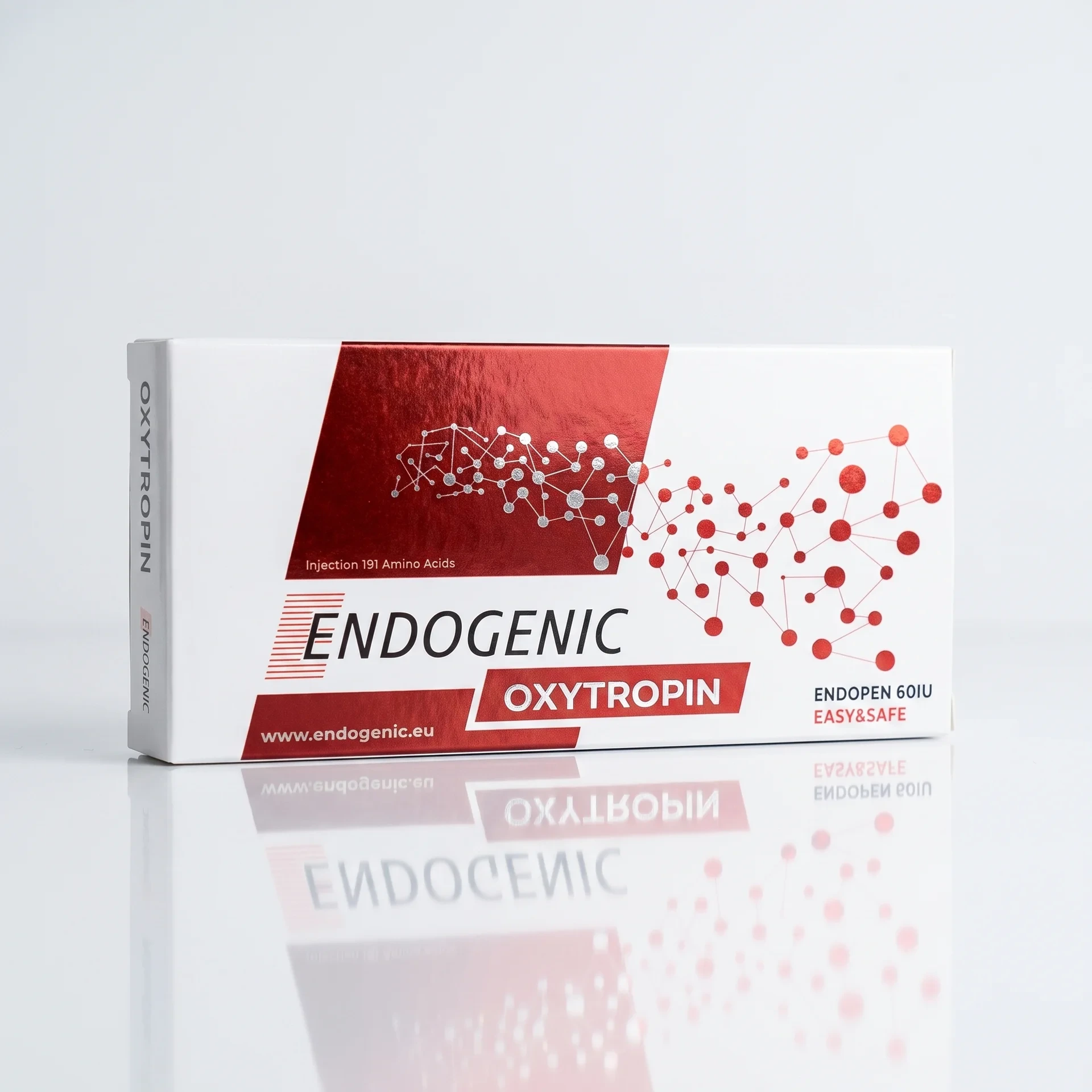
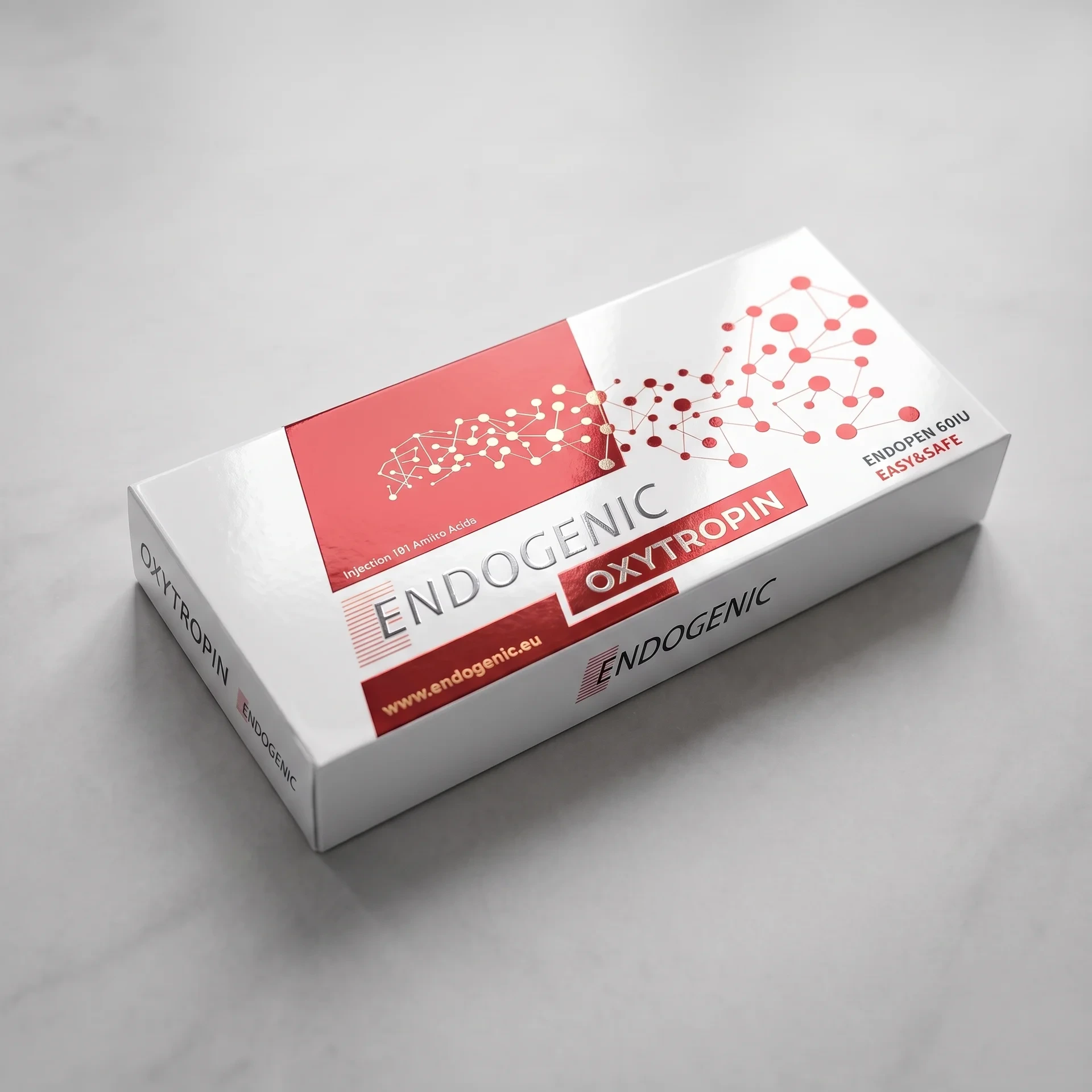
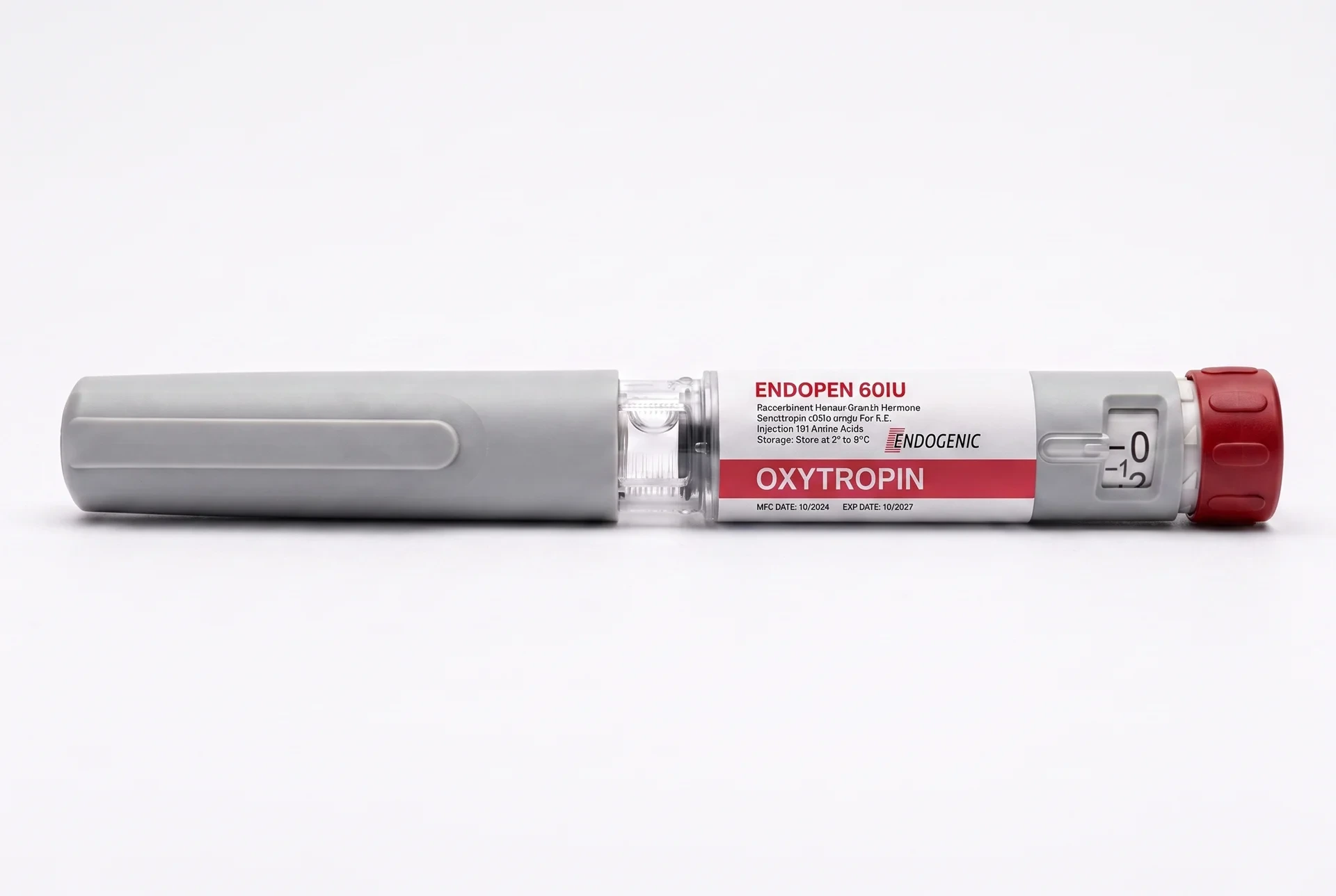
OXYTROPIN 60IU PEN
Oxytropin PEN 60 IU — somatropin (recombinant human growth hormone, rhGH, 191 amino acids) in a pen applicator for laboratory testing.
142,99 €
With code BLACK: 114,39 €
Lowest price in the 30 days before the discount:
142,99 €
Fast shipping
Free delivery from 350 €
Returns policy
Oxytropin PEN 60 IU — somatropin in an applicator pen
- Somatropin: recombinant human growth hormone (rhGH).
- PEN format; nominal activity: 60 IU.
- Research Use Only reagent, not a medicinal product.
Oxytropin PEN 60 IU is a research reagent in applicator format. The active substance — somatropin (recombinant human growth hormone, rhGH) — is also present on the market as a biological drug registered by the EMA and FDA under the trade names Genotropin®, Norditropin®, Omnitrope® and Humatrope®, also in pen format. These two occurrences of the same molecule represent two distinct regulatory frameworks.
Registered somatropin preparations are intended for strictly defined indications (growth hormone deficiency in children and adults, Turner syndrome, chronic renal insufficiency, short stature in children born SGA), are dispensed by prescription only and require endocrinological supervision. The RUO applicator in the Pro-Body catalogue is not a drug, is not intended for use in humans and is not subject to pharmaceutical regulation.
The RUO somatropin reagent is not a substitute for a medicinal product, holds no authorisation for administration in humans and does not replace medical consultation. Identity of the amino acid sequence does not remove this boundary.
Introduction
Growth hormone is one of the best-characterised molecules in endocrinology. Secreted in a pulsatile manner by the pituitary gland, it governs linear growth in childhood and, in adulthood, regulates body composition and the metabolism of proteins, fats and glucose. Endogenous human growth hormone is a 191-amino-acid polypeptide with a mass of about 22 kilodaltons. Somatropin, its recombinant counterpart produced in Escherichia coli cells, has an identical amino acid sequence to the pituitary hormone — and precisely for this reason it replaced, from the 1980s onward, the hormone extracted from cadavers in medical practice.
In the Pro-Body catalogue, the same molecule appears within a distinct regulatory framework — as an RUO biological hormone in applicator format. It belongs to the HGH and LR3 category, covering recombinant growth hormone and insulin-like growth factor. This format simplifies laboratory work: it allows precise, repeatable withdrawal of the hormone from a multi-dose applicator under controlled conditions.
It is a technical solution for researchers working with somatropin in in vitro and in vivo models — not a medicinal form, not a therapeutic analogue for administration to humans. This reagent is supplied in the format of an applicator (pen) with a nominal activity of 60 IU of somatropin. Growth hormone is quantified in international units (IU) reflecting biological activity, and not solely in units of mass.
For recombinant somatropin a conversion factor of 1 mg ≈ 3 IU applies, so a nominal activity of 60 IU corresponds to about 20 mg of peptide mass. Oxytropin already appears in the Pro-Body catalogue in Pillar II — body composition peptides; this description concerns the variant in the 60 IU applicator format.
General description — the GH/IGF-1 axis
Somatropin is a molecular tool for studying one of the organism’s central signalling axes: the growth hormone — insulin-like growth factor 1 (GH/IGF-1) axis. Growth hormone acts along two tracks. Part of its effects is direct action on peripheral tissues via the growth hormone receptor (GHR) — including lipolysis in adipose tissue and an influence on glucose metabolism.
The second, quantitatively dominant part of the anabolic and growth-promoting effects is indirect: growth hormone induces hepatic synthesis of IGF-1, and it is IGF-1 that is the principal mediator of the stimulation of protein synthesis and the growth of muscle and bone tissue. The growth factor itself is obtained by researchers separately as Oxymedin in the IGF-1 LR3 variant, which allows the peripheral effector of the axis to be modelled independently of the growth hormone signal.
In the reference literature, somatropin is described primarily in the context of the metabolism of proteins, fats and glucose (reviews by Møller and Jørgensen) and the physiology of growth and regulation of the GH/IGF-1 axis (reviews by Ranke and Wit). The molecule functions as a reference agonist of the growth hormone receptor in work on JAK2/STAT5 signalling and in research models of body composition.
Unlike synthetic peptides from the group of growth hormone secretagogues (GH-secretagogues), such as Ipamorelin or CJC-1295, somatropin does not stimulate the pituitary to secrete its own hormone — it is itself a ready-made growth hormone, identical to the pituitary one. This is a fundamental difference in molecular class, to which I will return in the section on mechanism. The entire class of axis stimulators is gathered in the growth hormone boosting peptides category.
What is somatropin — sequence and class
Somatropin is a recombinant 191-amino-acid polypeptide with a sequence identical to human growth hormone (hGH) secreted by the somatotroph cells of the anterior pituitary lobe. The chain is stabilised by two intramolecular disulfide bridges (Cys53–Cys165 and Cys182–Cys189), which enforce the characteristic four-helix spatial packing typical of the cytokine superfamily of hormones. The monomer mass is about 22,124 Da — hence the common term “22 kDa GH isoform”, distinguishing the main form of the hormone from the smaller, alternatively spliced 20 kDa isoform.
Somatropin is produced biotechnologically in Escherichia coli cells (in some registered preparations — in mammalian cells), which makes it possible to obtain a sequence identical to the human hormone without the risk associated with cadaver-derived material. It is a biologic with a complete, folded tertiary structure — and not a short, synthetic peptide built from a dozen or so residues.
This difference in scale and complexity has direct consequences for analytical requirements: the identity and activity of somatropin are determined not only by mass, but by correct folding of the chain and the presence of the proper disulfide bridges. Quantifying activity in international units (IU) follows precisely from the biological nature of the molecule. The IU reflects the activity of the hormone in a standardised biological assay, and not mass alone.
For recombinant somatropin a conversion factor of 1 mg ≈ 3 IU has been adopted. The nominal activity of the applicator, 60 IU, therefore corresponds to about 20 mg of peptide mass.
Chemical characterisation
| Parameter | Value |
|---|---|
| Name | Oxytropin (a somatropin brand); somatropin, rhGH, growth hormone |
| Class | Recombinant human growth hormone — GHR receptor agonist (cytokine superfamily) |
| Number of amino acids | 191 |
| Secondary structure | Four alpha helices, two disulfide bridges |
| Molecular mass | ~22,124 Da (22 kDa GH isoform) |
| Expression system | Escherichia coli (recombination) |
| Activity conversion factor | 1 mg ≈ 3 IU → 60 IU ≈ 20 mg |
| Physical form | Multi-dose applicator (pen) — lyophilisate or solution, depending on the batch |
| Nominal activity | 60 IU of somatropin / applicator |
| Activity verification | Bioassay (IU) |
| Identity confirmation | Mass spectrometry (~22 kDa mass), monomer purity profile |
Mechanism of action at the molecular level
Growth hormone acts through a single receptor, yet triggers several complementary metabolic effects well described in the literature. Below is each of them, with the name of the pathway and the correlate observed in research models.
GHR receptor agonism — the JAK2/STAT5 cascade
Somatropin binds to the growth hormone receptor (GHR) on the surface of target cells. One hormone molecule binds two receptor molecules, inducing its dimerisation — the central event initiating the signal. Dimerisation brings together the receptor-associated kinases JAK2 (Janus kinase 2), which mutually phosphorylate and activate one another. Active JAK2 phosphorylates transcription factors of the STAT family (mainly STAT5), which translocate to the cell nucleus and regulate the expression of growth hormone response genes. The JAK2/STAT5 pathway is the molecular core of GH signalling.
Induction of IGF-1 in the liver
The most important indirect effect of growth hormone. Stimulation of the JAK2/STAT5 pathway in hepatocytes triggers transcription of the IGF-1 (insulin-like growth factor 1) gene. Hepatic IGF-1 enters the circulation and is the principal mediator of the anabolic and growth-promoting effects attributed to growth hormone. This separation of the signal (GH at the top of the axis, IGF-1 as effector) is the axis that studies on somatropin describe most frequently.
Anabolic action — protein synthesis
Through IGF-1 and partly directly, growth hormone enhances protein synthesis and promotes a positive nitrogen balance. The metabolic literature (Møller and Jørgensen) describes an influence on the increase of muscle mass and on collagen turnover in bone and connective tissue. This is the molecular background for which the GH/IGF-1 axis is the subject of research on body composition.
Lipolysis — mobilisation of fatty acids
Growth hormone stimulates lipolysis in adipose tissue, increasing the breakdown of triglycerides and the release of free fatty acids (FFA) into the blood. Mobilisation of FFA shifts metabolism toward the oxidation of fats as an energy source. This is one of the direct, receptor-mediated effects of the hormone, independent of IGF-1.
Influence on glucose metabolism — the diabetogenic effect
Growth hormone has a counter-insulin (diabetogenic) action. Intensified lipolysis and the rise in FFA concentration weaken the sensitivity of tissues to insulin, and in hormone excess they promote insulin resistance and an elevation of blood glucose. In physiology this is a mechanism sparing glucose in favour of fat oxidation; under conditions of excess — a significant element of the metabolic risk profile described in the literature.
The reference data come from reviews of the physiology and metabolism of growth hormone (Ranke and Wit 2018; Møller and Jørgensen 2009) and from works devoted to GH abuse in sport (Holt and Sönksen 2008).
IMPORTANT DISTINCTION
Somatropin (rhGH) is a ready-made biological hormone — a full-length, 191-amino-acid polypeptide identical to the pituitary hormone, acting directly through the GHR receptor. It is a different molecular class than the synthetic peptides of the growth hormone secretagogue group (Ipamorelin, CJC-1295, GHRP-2), which are short peptides stimulating the pituitary to secrete its own hormone and act higher in the axis (through the ghrelin receptor or GHRH).
The “administer a ready-made hormone” mechanism differs fundamentally from the “stimulate secretion of the endogenous hormone” mechanism. Furthermore, the literature on growth hormone excess describes significant risks — acromegaly (overgrowth of soft tissues and bones), cardiomyopathy, insulin resistance and disturbances of carbohydrate metabolism. These risks are part of the scientific profile of the molecule and are among the reasons why somatropin remains a prescription hormone under endocrinological supervision — and, in Pro-Body’s trade, exclusively a research reagent.
All the mechanisms described refer to models and the literature — the reagent remains a molecular tool for laboratory research.
Applications in scientific research
Oxytropin PEN 60 IU, as an RUO biological hormone, finds application in several research directions. The multi-dose applicator format with a nominal activity of 60 IU proves useful in experimental series in which a researcher repeatedly withdraws material from a single source under controlled conditions.
GHR receptor signalling and the JAK2/STAT5 pathway. Analyses of growth hormone receptor activation in cell cultures, measurement of JAK2 and STAT5 phosphorylation, profiling of the transcriptional response of GH-dependent genes. Somatropin functions as a reference GHR agonist in work on the mechanism of cytokine signalling.
The GH/IGF-1 axis and IGF-1 induction. Models of hepatic IGF-1 production, correlation of the GH signal with IGF-1 expression, analyses of feedback on the hypothalamus–pituitary–liver axis. Growth hormone as a tool for studying the regulation of this axis.
Metabolism — lipolysis and glucose economy. Animal models of body composition, analyses of the influence on protein turnover, adipocyte lipolysis and insulin sensitivity. Endpoints: anabolic markers (IGF-1, protein synthesis), lipid profile, insulin resistance parameters (HOMA-IR). Somatropin as a reference GHR agonist in comparisons with secretagogues.
Comparative analyses with growth hormone secretagogues. Comparisons of the ready-made hormone (rhGH) with peptides stimulating secretion of endogenous GH (Ipamorelin, CJC-1295, GHRP-2) — studies of the response profile, kinetics and point of action within the axis. Somatropin as a “reference point” representing direct receptor agonism.
Specification of the applicator form
The pen applicator format for a biological hormone differs from the classic vial in several practical dimensions relevant to the researcher:
| Feature | Oxytropin PEN 60 IU | Classic vial |
|---|---|---|
| Nominal activity | 60 IU (≈ 20 mg of somatropin) | Batch-dependent |
| Form | Lyophilisate or solution (depending on the batch) | Most often lyophilisate |
| Reconstitution | Only when the batch is lyophilised (bacteriostatic water) | Usually requires reconstitution |
| Format | Multi-dose applicator | Single-/multi-use vial |
| Withdrawal | Repeatable from a single source | From a vial, separately |
| Quantification | In units of activity (IU) | In IU or mg |
The multi-dose applicator format simplifies experimental series: the researcher repeatedly withdraws material from a single, stably stored source, which increases repeatability between study days. For a biologic as thermally sensitive as somatropin, this translates into fewer cycles of opening and exposing the material. Researchers needing the classic variant may reach for Oxytropin in vial form, quantified by the same active substance.
Summary
Somatropin is a recombinant 191-amino-acid human growth hormone (~22,124 Da, two disulfide bridges), identical to the pituitary hormone, produced in Escherichia coli. It acts through the GHR receptor and the JAK2/STAT5 cascade, induces hepatic IGF-1 synthesis (the principal mediator of anabolic effects), enhances protein synthesis and lipolysis, and exhibits a counter-insulin action (a diabetogenic effect in excess).
Unlike growth hormone secretagogues (Ipamorelin, CJC-1295) it is a ready-made hormone, not a pituitary stimulator. The pen applicator format with a nominal activity of 60 IU (≈ 20 mg) provides researchers with a repeatable source of the hormone for experimental series on the GH/IGF-1 axis. The regulatory profile is unambiguous: somatropin is the active substance of registered biological drugs (Genotropin®, Norditropin®, Omnitrope®, Humatrope®) available by prescription only, and growth hormone appears on the WADA list in category S2.
In the Pro-Body catalogue, Oxytropin PEN 60 IU appears exclusively as a Research Use Only biological hormone — a molecular tool for research, with activity verification in IU, MS confirmation of ~22 kDa and a COA for every batch. The reagent is not a substitute for a medicinal product.
Bibliography
- Ranke MB, Wit JM (2018). Growth hormone — past, present and future. PubMed
- Møller N, Jørgensen JO (2009). Effects of growth hormone on glucose, lipid, and protein metabolism in human subjects. PubMed
- Brinkman JE, Tariq MA, Leavitt L, Sharma S (2024). Physiology, Growth Hormone. PubMed
- Liu H, Bravata DM, Olkin I, Nayak S, Roberts B, Garber AM, Hoffman AR (2007). Systematic review: the safety and efficacy of growth hormone in the healthy elderly. PubMed
- Holt RIG, Sönksen PH (2008). Growth hormone, IGF-I and insulin and their abuse in sport. PubMed
FAQ
IGF-1 (insulin-like growth factor 1) is a protein produced mainly in the liver in response to the growth hormone signal. It is the principal mediator of the anabolic and growth-promoting effects attributed to GH — growth hormone acts at the top of the axis, and IGF-1 is its effector on the tissues. In research, IGF-1 is one of the main markers of the response to somatropin: stimulation of the JAK2/STAT5 pathway in hepatocytes triggers transcription of the IGF-1 gene.
Because the IU (international unit) reflects the biological activity of the hormone in a standardised assay, and not mass alone — which makes sense for a biologic in which activity is also determined by correct folding of the chain and the disulfide bridges. For recombinant somatropin a conversion factor of 1 mg ≈ 3 IU has been adopted. An applicator with a nominal activity of 60 IU therefore corresponds to about 20 mg of peptide mass.
Growth hormone (GH) and GH-releasing factors appear on the WADA prohibited list in category S2 — peptide hormones, growth factors, related substances and mimetics. It is a category covering substances with anabolic and growth-promoting action deemed prohibited in sport. The prohibition applies at all times (in-competition and out-of-competition). Registered athletes (ADAMS) must check the current list before any decision.
The endocrinological literature and works on GH abuse in sport (Holt and Sönksen 2008) describe, in hormone excess, among others acromegaly (overgrowth of soft tissues, the bones of the face, hands and feet), cardiomyopathy (hypertrophy of the heart muscle), insulin resistance and disturbances of carbohydrate metabolism, fluid retention and joint pain. These risks are part of the scientific profile of the molecule and are among the reasons why somatropin remains a prescription hormone under endocrinological supervision.
The active substance is the same — somatropin (191 aa, ~22 kDa). The differences concern the regulatory framework. Oxytropin PEN 60 IU is a Research Use Only biological hormone with analytical documentation (COA, activity verification in IU, MS ~22 kDa). Genotropin®, Norditropin®, Omnitrope® and Humatrope® are biological drugs with full EMA/FDA registration documentation, available by prescription only for endocrinological indications under a physician’s supervision. The RUO applicator holds no authorisation for administration in humans, is not a medicinal form and does not replace medical consultation.
5.0
3 reviews
-
Aleksander
 Polski
Verified purchase
HGH w penie
Bardzo dobra relacja ceny do jakości. Super wygodne używanie w penie
-
Łukasz R.
Polski
Verified purchase
Product review
Jestem bardzo zadowolony! Liczę, że w ofercie pojawi się też MOTS-C w penie.
-
Michał
Polski
Product review
Nie zdejmujcie tylko tego produktu, rewelacja. Forma podania bajka.
-
Jack
Polski
Product review
Fajnie, że firma wprowadziła ten produkt w penie. Jest bardzo prosty w użyciu. Wcześniej używałem standardowej wersji i byłem tak samo zadowolony, ale tutaj wygoda wygrała.
Customers also bought
SEMA G 8mg PEN
SEMA G 8mg PEN
166,99 €