Bremelanotide dissolves well in bacteriostatic water (>10 mg/ml). Recommended solvent for reconstitution of the lyophilisate in laboratory conditions. The reconstituted solution is clear, without sediment, pH 5.0–6.5.


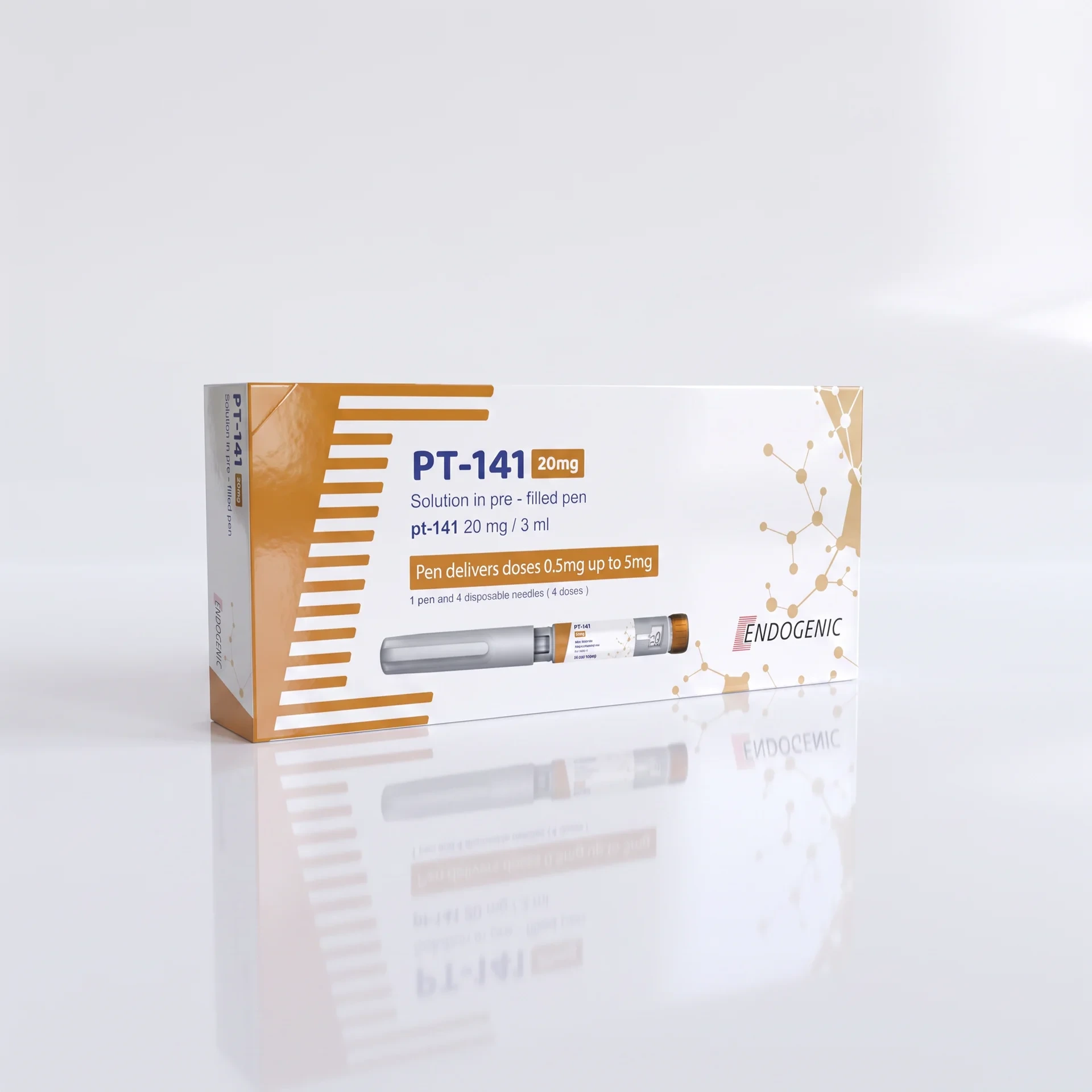
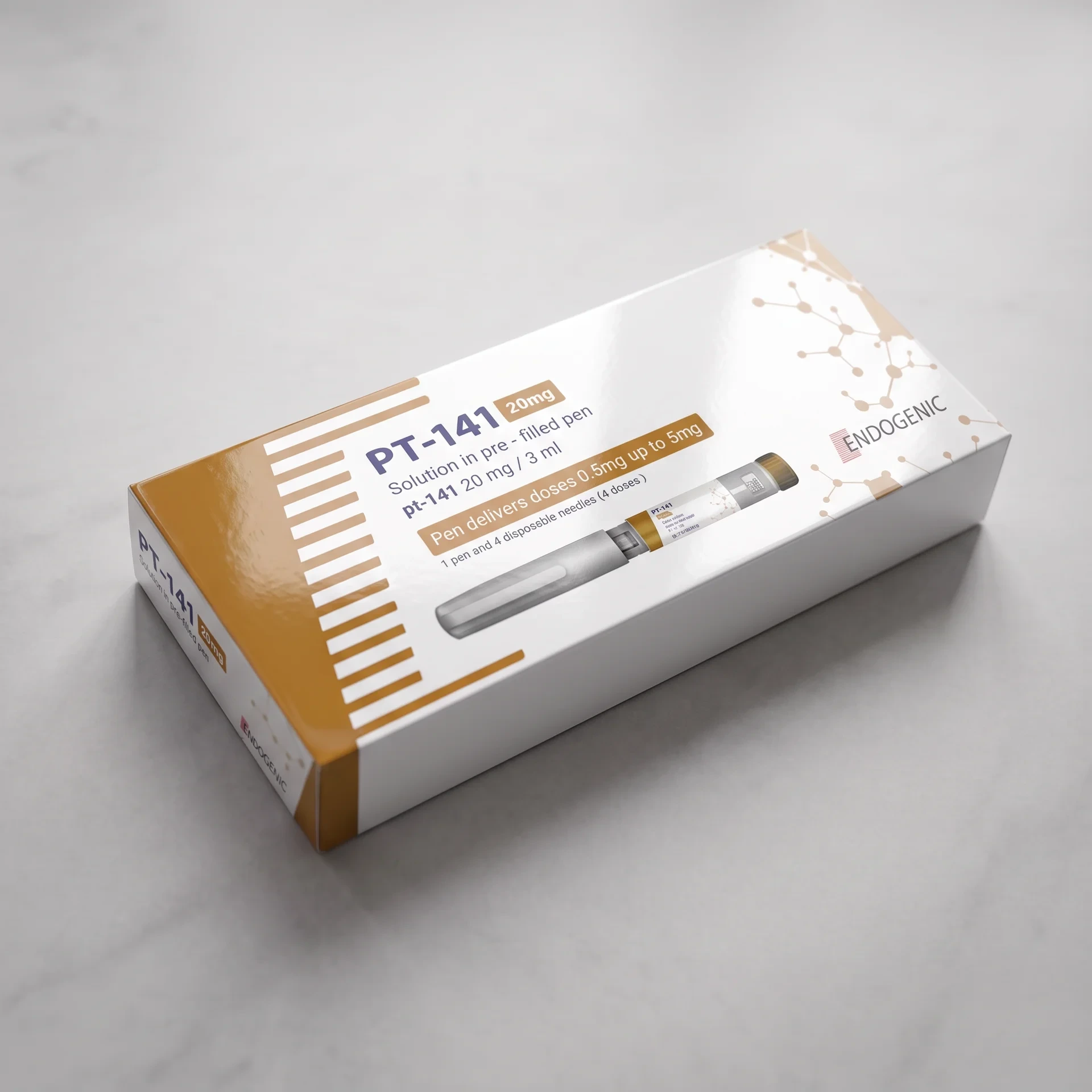
PT-141 20mg PEN
PT-141 (Bremelanotide) 20 mg in pen format – cyclic heptapeptide, MC4R receptor agonist, HPLC purity ≥98%, MS confirmation, COA per batch. A chemical reagent intended exclusively for laboratory research on the central modulation of melanocortin pathways in animal models and in vitro. Research Use Only – Not for use on humans or animals.
85,99 €
With code BLACK: 68,79 €
Lowest price in the 30 days before the discount:
85,99 €
Fast shipping
Free delivery from 350 €
Returns policy
PT-141 20 mg PEN - melanocortin receptor agonist (Bremelanotide), research reagent
- PT-141 (Bremelanotide): a cyclic heptapeptide.
- PEN format; content: 20 mg.
- Reagent for laboratory research.
PT-141, known internationally as Bremelanotide, is a synthetic cyclic heptapeptide with melanocortin receptor (MC3R, MC4R) agonist activity. Structurally, it is derived from α-MSH (alpha-melanocyte-stimulating hormone) – an endogenous peptide derived from proopiomelanocortin (POMC). PT-141 was created by optimizing the earlier Melanotan II molecule at the University of Arizona in the 1990s and was subsequently developed by Palatin Technologies.
The original research focus – pigmentation inducer – changed after the observation of an unexpected pro-sexual effect in Phase I clinical trials, which redirected the development of this molecule to the area of central modulation of sexual functions.
General description – melanocortin context
The melanocortin system constitutes one of the best characterized neuropeptidergic axes involved in the regulation of energy homeostasis, pigmentation, inflammatory response and – in the context of this reagent – central modulation of sexual behavior, an area encompassing the full category peptides for libido. Five receptor subtypes have been identified in humans and mammals (MC1R–MC5R), of which MC3R and MC4R are located mainly in the central nervous system (hypothalamus, limbic system, paraventricular nucleus).
Bremelanotide’s affinity for MC4R exceeds that for MC3R by approximately an order of magnitude, making it a relatively selective molecule for this receptor. The world of science is interested in PT-141 for three reasons: firstly, it offers a tool for studying central libido regulation pathways independent of the circulatory axis (unlike PDE-5 inhibitors such as sildenafil); secondly, it allows us to study the modulation of appetite and energy expenditure by the melanocortin system; thirdly, its potential impact on the process of neurogenesis and the inflammatory response in the CNS is observed in animal models.
The field of application remains an area of active research and not all observations have yet been confirmed in full-scale human clinical trials.
What is PT-141 (Bremelanotide)?
Chemically, PT-141 is a cyclic heptapeptide with the following amino acid sequence:
Ac-Nle-cyclo[Asp-His-D-Phe-Arg-Trp-Lys]-OH
- Common name: Bremelanotide
- Synonyms: PT-141, BMT, Melanocortin Receptor Agonist
- CAS Number: 32780-32-8 (free peptide form); 189691-06-3 (Bremelanotide acetate)
- Summary formula: C₅₀H₆₈N₁₄O₁₀
- Molar mass: 1025.18 g/mol
- Chemical classification: cyclic heptapeptide, melanocortin receptor agonist (class: CNS regulatory peptides)
- Delivered form: lyophilisate in a multi-dose applicator (PEN); reconstitution with sterile bacteriostatic water
Bremelanotide was created by modifying a molecule Melanotan II in a pen (MT-II): removal of the C-terminal lysine residue and substitution of the amide group with a free carboxylic acid (COOH) group increased the selectivity for MC4R and eliminated most of the pigmentation effect – the pathway responsible for the action MT-2 as a tan peptide.
Structure and physicochemical properties
The cyclicity of the peptide is ensured by a lactam bridge between the β-carboxyl group of aspartic acid (Asp) and the ε-amino group of lysine (Lys), which stiffens the spatial structure and increases proteolytic stability compared to linear peptides. Ring closure protects the molecule against degradation by whey exopeptidases and significantly extends the half-life in physiological solution (in vitro ~2.7 h in PBS at 37°C; in vivo in mammals ~2.1 h).
Physicochemical parameters:
| Parameter | Value |
| HPLC purity | ≥98.0% |
| Identity confirmation | MS (Q-TOF) |
| Solubility in water | good (>10 mg/ml) |
| Solubility in bacteriostatic water | good (recommended for reconstitution) |
| pH of the reconstituted solution | 5.0–6.5 |
| Stability in refrigerator (2-8°C) after reconstitution | up to 30 days |
| Stability at room temperature (reconstituted) | up to 7 days (degradation <5%) |
| Stability in the freeze-dried state (−20°C) | min. 24 months from the date of synthesis |
The cyclic conformation of the peptide is relatively resistant to pH changes in the range of 4–8. Highly polar organic solvents (DMSO in concentrations >5%) should be avoided – they may lead to destabilization of the lactam bridge.
Mechanism of action at the molecular level
Bremelanotide acts as a partial agonist of the MC4R receptor (Ki ~3.3 nM) with lower affinity for MC3R (Ki ~21 nM) and minimal activity on MC1R (responsible for pigmentation). MC3R and MC4R receptors are seven-transmembrane G-protein-coupled receptors (GPCRs, class A) located mainly in hypothalamic neurons (arcuate nuclei, paraventricular nucleus, ventromedial nucleus), nucleus accumbens and in the amygdala area.
Signaling cascade after agonist binding to MC4R (in vitro/in vivo animal model):
- Activation of the Gαs protein leads to stimulation of adenylate cyclase and an increase in intracellular cAMP concentration.
- The increase in cAMP activates protein kinase A (PKA), which phosphorylates effector proteins and transcription factors (CREB).
- CREB activation induces transcription of early response genes (c-fos, BDNF) in hypothalamic neurons.
- Stimulation of dopaminergic neurons projecting to the nucleus accumbens – increased dopamine release at mesolimbic synapses has been observed in animal models.
This is a key distinction from PDE-5 inhibitors: PT-141 acts centrally (at the CNS level), modulating the motivational component of sexual behavior, not peripheral vasodilation. In rat models (ovariectomized females, males with erectile dysfunction), an increased frequency of “prosex” behavior was observed after peripheral administration (s.c., i.v.) and after direct injection into the cerebral ventricle (i.c.v.). In vitro data confirm that Bremelanotide induces cAMP signaling in human MC4R-transfected CHO cell models with an EC50 value of several tens of nM.
IMPORTANT DISTINCTION “Reproductive activity” in the context of this description means: quantitative changes in behavioral parameters classified as sexual appetite were observed in in vivo studies in animal models (mainly the rat). This is not a guarantee of effect in humans or a suggestion for the use of PT-141 RUO in humans for this purpose.
The second pathway – MC4R modulation in the arcuate nuclei of the hypothalamus – is involved in the regulation of appetite and energy balance. Activation of MC4R by an agonist leads to inhibition of food intake and increase in energy expenditure in animal models. This observation makes PT-141 a research tool in work on the pharmacotherapy of obesity (although the side effects profile – mainly cardiovascular, with an increase in blood pressure – limits the practical use of this axis in therapy).
Applications in scientific research
PT-141 is used in research work in several areas. In vivo models (Wistar rat, C57BL/6 mouse) examine its impact on sexual behavior, appetite regulation, hemodynamic profiles and dopaminergic neurotransmission. In vitro models (HEK293 and CHO cell lines transfected with human MC4R) examine receptor affinity, activation kinetics and the impact on the expression of early response genes. Specific research directions include:
- Central modulation of sexual behavior – animal models of sexual dysfunctions, mapping of activation areas using c-fos imaging
- Regulation of appetite and energy balance – DIO (diet-induced obesity) models, studies of the effect on POMC neurons in the arcuate nuclei
- Neurogenesis and plasticity – the effect of MC4R activation on the expression of BDNF and neurogenesis markers in the hippocampus of rodent models
- Inflammatory reaction in the CNS – models of neuroinflammation where melanocortins have an immunomodulatory effect through MC1R and MC3R receptors
- Pharmacokinetics of cyclic peptides – comparative in vivo stability studies against linear analogues
Quality Specification - Pro-Body
Each batch of PT-141 20 mg PEN undergoes a full cycle of analytical control:
- HPLC ≥98% – high performance liquid chromatography with UV detection at 220 nm (peptides) – purity verification
- MS confirmation – Q-TOF mass spectrometry – confirmation of identity at the monoisotopic mass level
- COA per batch – Certificate of Analysis for each batch available as an inline PDF on the product page
- Batch traceability – each batch marked with a unique number, tracked in the internal QA system
- Scientific reviewer – product specification and literature description verified by a reviewer with academic affiliation
The pen format remains fully sealed until the first reconstitution. The internal freeze-dried chamber is protected against moisture and oxygen until the date of opening. The manufacturer recommends recording the date of first use on the pen body. For protocols that need a different format, a vial version is also available: PT-141 10 mg.
Reconstitution protocol
Reconstitution of the lyophilized product in the applicator requires sterility bacteriostatic water (0.9% benzyl alcohol). Standard procedure in laboratory conditions:
- Equalize the temperature of the pen and bacteriostatic water to room temperature (15–25°C).
- Prepare the target volume of solvent (typically 2-5 mL for a 20 mg applicator, depending on the desired working concentration).
- Introduce the solvent slowly along the wall of the freeze-dried chamber – do not direct the stream at the pellet.
- Leave to rest for 2-3 minutes. Gently roll the pen between your fingers; do not shake aggressively.
- The solution should be clear, without any sediment. Turbidity or sediment indicates degradation – discard material.
- After reconstitution, store at 2-8°C, protected from light. Stability up to 30 days.
You will set the working concentration individually depending on the research protocol (in vivo animal models, cell cultures). When micro-aspirating from the applicator, remember to perform volume calibration according to the manufacturer’s instructions.
Summary
PT-141 20 mg PEN is a synthetic cyclic heptapeptide delivered in a multi-dose applicator format, intended for advanced research protocols in the area of melanocortin neuropeptidology, appetite regulation and central modulation of sexual behavior in animal models and cell cultures. Regulatory status – Research Use Only.
Scientific references
- Shadiack AM, Sharma SD, Earle DC, Spana C, Hallam TJ (2007). Melanocortins in the treatment of male and female sexual dysfunction. PubMed
- Diamond LE, Earle DC, Heiman JR, Rosen RC, Perelman MA, Harning R (2006). An effect on the subjective sexual response in premenopausal women with sexual arousal disorder by bremelanotide (PT-141), a melanocortin receptor agonist. PubMed
- Pfaus J, Giuliano F, Gelez H (2007). Bremelanotide: an overview of preclinical CNS effects on female sexual function. PubMed
- Kingsberg SA, Clayton AH, Portman D, Williams LA, Krop J, Jordan R, Lucas J, Simon JA (2019). Bremelanotide for the Treatment of Hypoactive Sexual Desire Disorder: Two Randomized Phase 3 Trials. PubMed
- Clayton AH, Althof SE, Kingsberg S, DeRogatis LR, Kroll R, Goldstein I, Kaminetsky J, Spana C, Lucas J, Jordan R, Portman DJ (2016). Bremelanotide for female sexual dysfunctions in premenopausal women: a randomized, placebo-controlled dose-finding trial. PubMed
- Molinoff PB, Shadiack AM, Earle D, Diamond LE, Quon CY (2003). PT-141: a melanocortin agonist for the treatment of sexual dysfunction. PubMed
- King SH, Mayorov AV, Balse-Srinivasan P, Hruby VJ, Vanderah TW, Wessells H (2007). Melanocortin receptors, melanotropic peptides and penile erection. PubMed
FAQ
In vitro in PBS at 37°C – approximately 2.7 h (proteolytic degradation minimal due to cyclicity). In vivo in mammals (rat, macaque) – approximately 2.1 h when administered peripherally. When lyophilized at −20°C, the peptide remains stable for a minimum of 24 months.
Avoid high concentrations of DMSO (>5%) – it destabilizes the lactam bridge. Do not use freeze/thaw cycles after reconstitution. Be careful when mixing with other basic peptides (potential ionic interaction). In the case of co-experiments with melanocortin agonists (Melanotan II, NDP-α-MSH) – possible receptor competition influencing the results.
No – it shows clear selectivity for MC4R (Ki ~3.3 nM), but also binds MC3R (Ki ~21 nM). The affinity for MC1R (pigmentation) and MC5R is minimal, which distinguishes Bremelanotide from its precursor Melanotan II. In MC4R-specific pathway research protocols, selectivity is sufficient at working concentrations.
0.0
0 reviews
This product has no reviews yet.
Customers also bought