Skip to content
Black Week: 20% off everything, code BLACK

Search

What are you looking for?

Type at least 2 characters to see suggestions.

GHRP-2 10mg
GHRP-2 10mg

GHRP-2 10mg

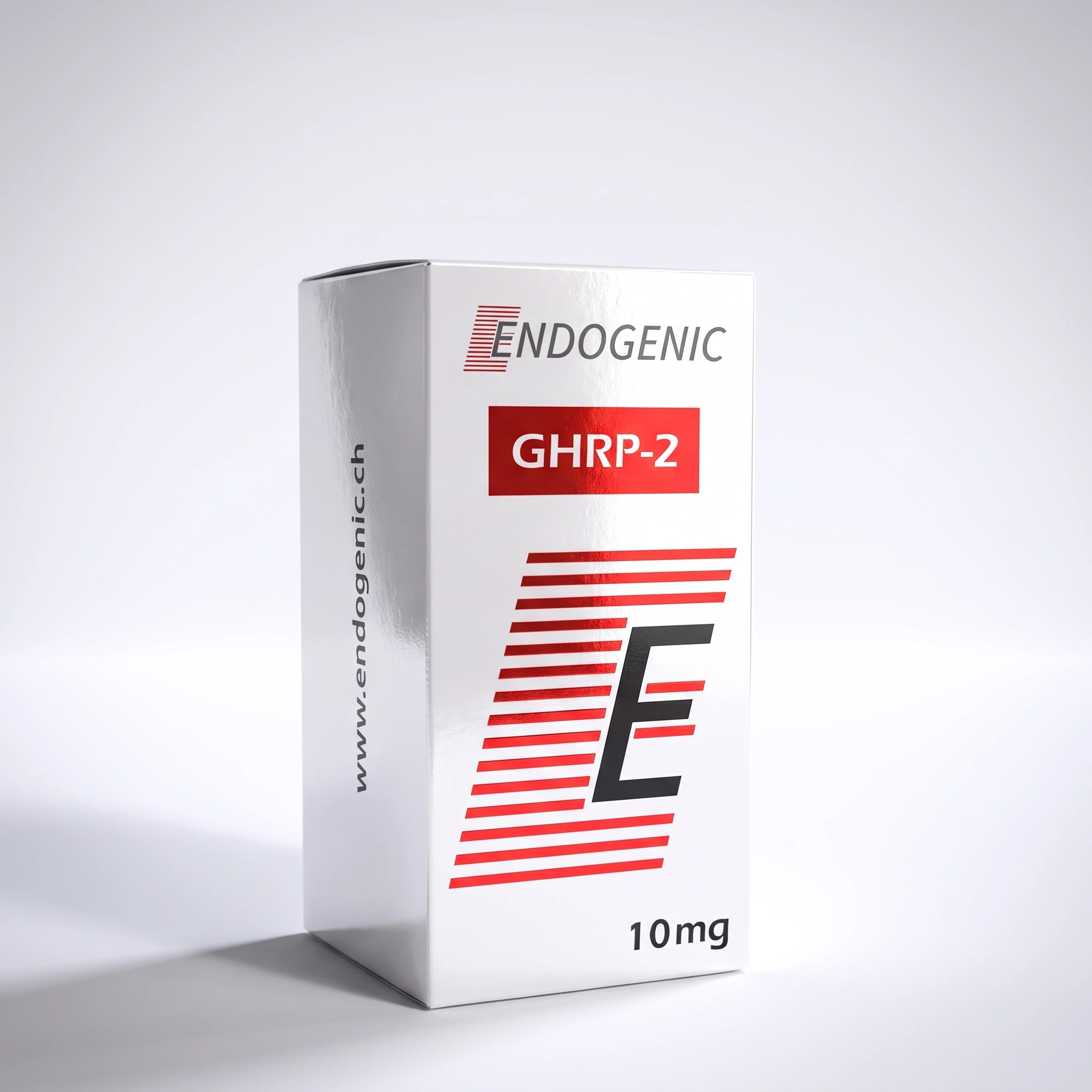
GHRP-2 10 mg — RUO reagent from the Endogenic line: a synthetic hexapeptide from the GHRP class, a strong ghrelin receptor agonist (GHS-R1a). In the reference literature, a stronger GH release signal than GHRP-6. Lyophilisate for reconstitution with bacteriostatic water

19,99 €
With code BLACK: 15,99 € Lowest price in the 30 days before the discount: 19,99 €
Buy more, pay less
Fast shipping
Free delivery from 350 €
Returns policy
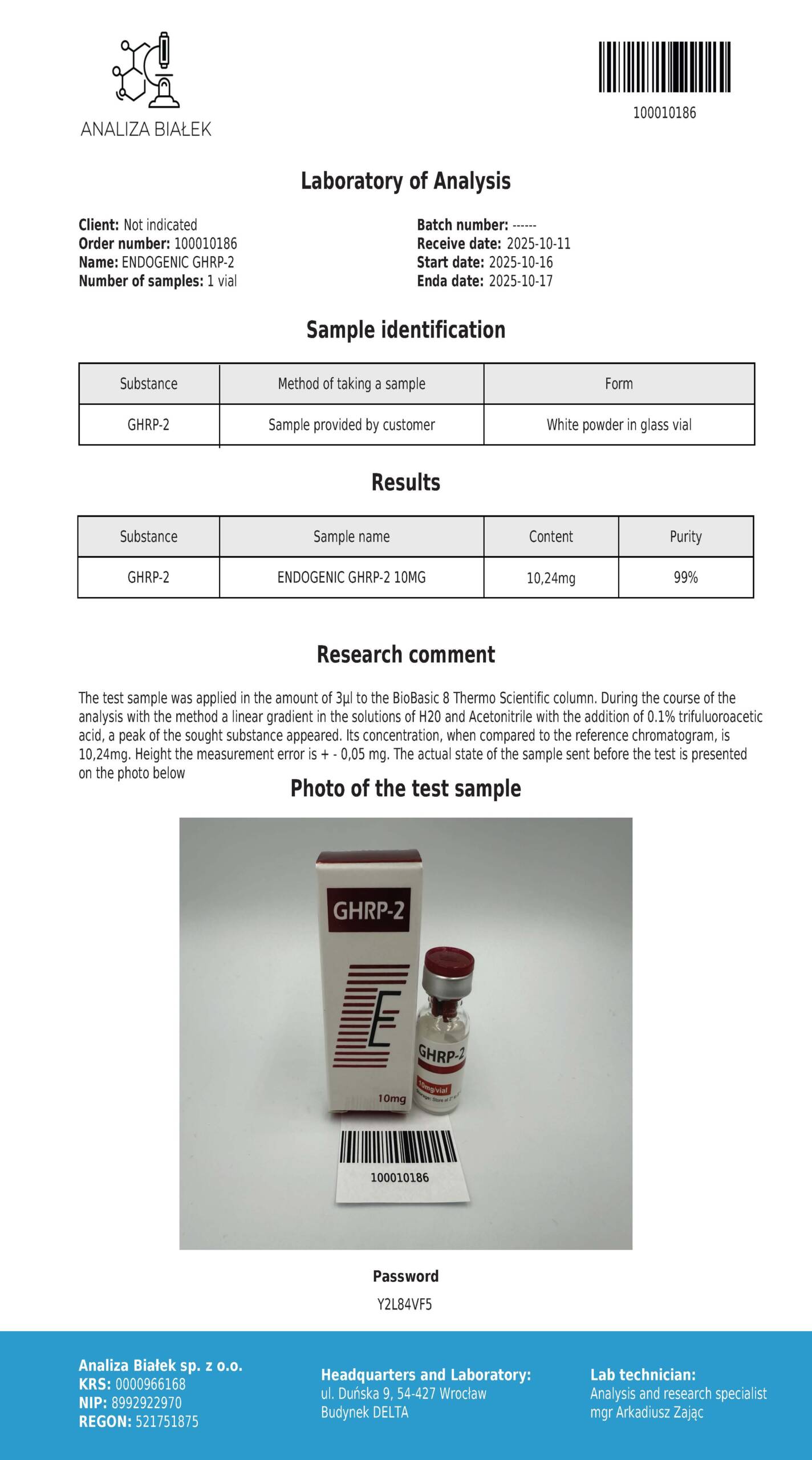
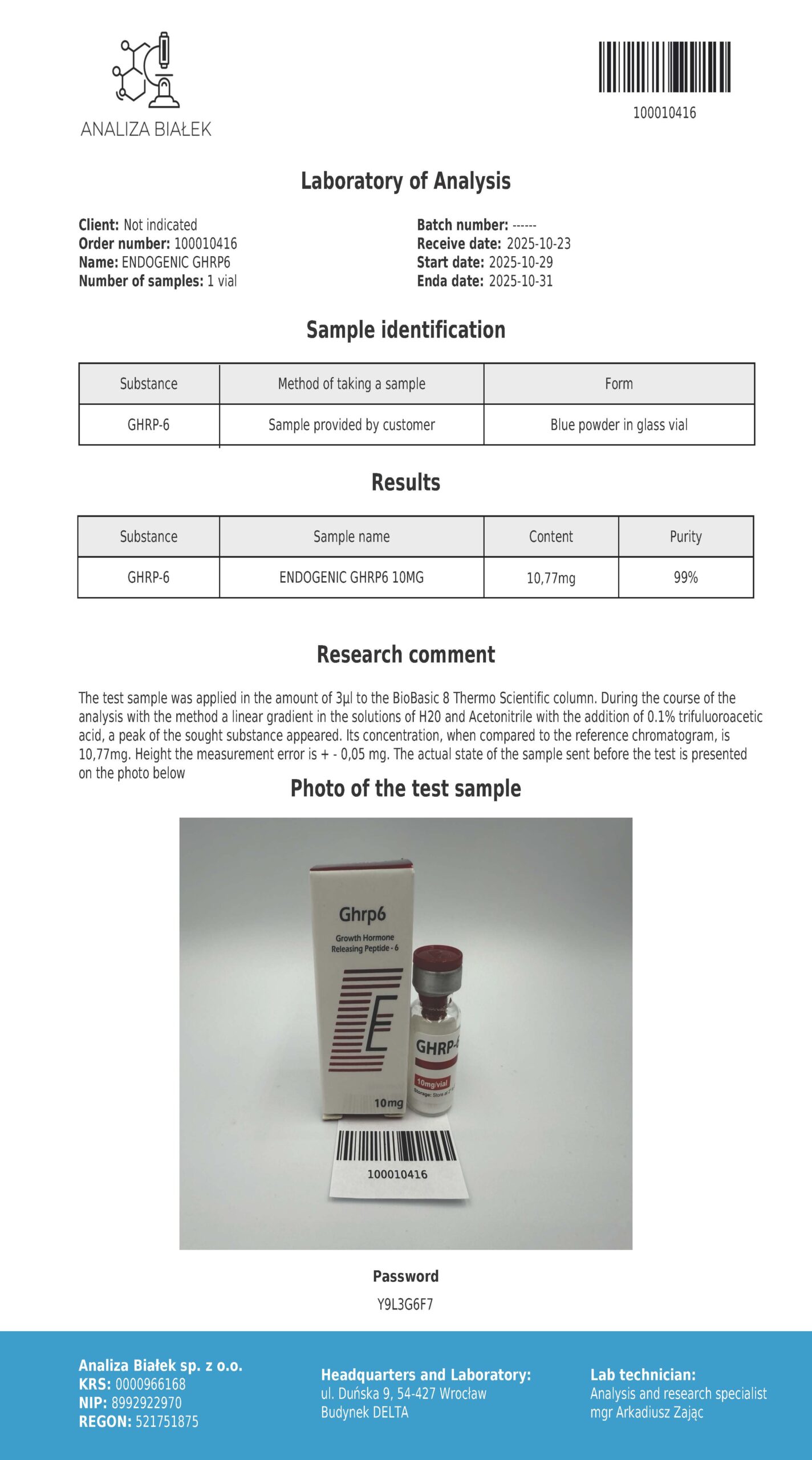
View the laboratory analysis report Peptide Calculator

GHRP-2 10 mg - growth hormone secretagogue (ghrelin mimetic), research reagent

  • GHRP-2 (pralmorelin): synthetic hexapeptide, ghrelin receptor agonist.
  • 10 mg lyophilisate in a vial.
  • Research Use Only reagent, not a medicinal product.

Product status information

Chemical reagent intended exclusively for laboratory tests (Research Use Only). It is not a medicinal product, dietary supplement or food. It is not intended for use on humans or animals. Sales only to registered research units and laboratories.

Regulatory framework – growth hormone secretagogue from the Endogenic line

GHRP-2 10 mg (Growth Hormone Releasing Peptide 2, pralmorelin) is hexapeptide from the class of growth hormone releasing peptides (GHRP) — synthetic ghrelin mimetic, growth hormone secretion receptor type 1a (GHS-R1a) agonist. As a line reagent Endogenic Pro-Body isolates this molecule as a testing tool endogenous, pulsatile release of growth hormone from its own pituitary gland – as opposed to exogenous, recombinant GH.

GHRP-2 belongs to the class of growth hormone secretagogues that WADA lists in Section S2 of the Prohibited List (peptide hormones, growth factors, related substances and mimetics) – a permanently prohibited substance, both in and outside competitions. Communication suggesting use in humans to increase growth hormone, IGF-1 levels, accelerate regeneration or change body composition is contrary to the Research Use Only framework and is unacceptable.

Introduction

The secretion of growth hormone is not a flat, steady stream – the pituitary gland releases GH impulses, in pulses of a specific amplitude and frequency, regulated by opposing signals from the hypothalamus. On the one hand, GHRH (growth hormone releasing hormone) tells the pituitary to “release”, on the other hand, somatostatin says “hold”. Superimposed on this system is a third player – ghrelin and its receptor (GHS-R1a) – which acts as a separate, complementary switch for GH release.

The pharmacology of growth hormone secretagogues arises precisely from the question: what happens when we stimulate the ghrelin arm with a synthetic ligand?

GHRP-2 (pralmorelin) is one of the best characterized members of this family – a hexapeptide that stands out in the reference literature strong, dose-dependent stimulation of GH release by the ghrelin receptor, stronger than the older GHRP-6, at the same time weaker appetite stimulation. This combination of features – a strong GH signal, a less pronounced orexigenic profile – has made GHRP-2 one of the most frequently cited GHRPs in the somatotropic axis literature.

Compound also has an unusual historical card: under the name pralmorelin was studied as diagnostic test for growth hormone deficiency in Japan, as a provocative agent in pituitary stimulation tests.

This reagent is supplied as 10 mg lyophilisate in a vial, for reconstitution with bacteriostatic water in laboratory conditions. The freeze-dried form ensures stability of the peptide before dissolution and allows researchers to prepare working concentrations tailored to the experimental design. Purity verified by HPLC ≥98%, identity confirmed by Q-TOF mass spectrometry, COA available for each batch.

General description - ghrelin axis and pulsatile GH secretion

To understand why GHRP-2 is an interesting research tool, you need to see that the pituitary gland receives the “GH secretion” signal through more than one channel. The somatotropic cell of the anterior pituitary has at least two separate receptors on its surface that stimulate the release of growth hormone: GHRH receptor and growth hormone secretion receptor type 1a (GHS-R1a), i.e. ghrelin receptor.

These are two different proteins, two different intracellular cascades and two different physiological signals – which converge on the same end result, the release of GH from secretory granules. GHRP-2 works on this second arm – ghrelin arm.

Ghrelin is an endogenous peptide hormone discovered as a natural ligand of the GHS-R1a receptor; serves as a hunger signal and at the same time a powerful stimulator of growth hormone release. GH-releasing peptides (GHRPs) are synthetic molecules that mimic ghrelin at the level of this receptor – except that they were designed with a pharmacological profile that is different from the full ghrelin molecule.

GHRP-2 is a classic representative of this group: a strong GHS-R1a agonist with a clear GH-secretagogic profile and a limited, compared to GHRP-6, effect on appetite. In the Endogenic catalog, GHRP-2 belongs to a broader family growth hormone-increasing peptides — GHRP and GHRH secretagogues acting on the somatotropic axis.

Ghrelin receptor (GHS-R1a) is a Gq protein-coupled receptor. Its stimulation activates phospholipase C, increases intracellular calcium and leads to the release of GH – in a way separate from GHRH. Importantly, the ghrelin arm additionally suppresses somatostatin (inhibiting hormone) and enhances its own GHRH action. Physiologically, secretagogues acting on this receptor influence frequency and pulsatility GH release, and in the case of strong GHRPs – such as GHRP-2 – also on the amplitude of a single burst.

The pulsatile nature of GH secretion is the main physiological detail here – and the reason why the Endogenic line singles out GHRP-2 as a research tool.

Unlike exogenous, recombinant growth hormone, which floods the circulation with a flat, non-physiological concentration, the secretagogue stimulates own pituitary to release GH in a way that preserves the pulsatile signal architecture – involving the somatostatin feedback loop. This “endogenous, pulsatile” release pattern is the subject of research on the physiology of the GH/IGF-1 axis, the regulation of slow-wave sleep (in which the strongest nocturnal GH pulse occurs), and the differences between secretagogue stimulation and the administration of recombinant GH. The pharmacology of growth hormone secretagogues includes two large classes of tools:

  • GHRH analogues — mimic the endogenous GH-releasing hormone, stimulate the GHRH receptor, increase the pulse amplitude (CJC-1295, sermorelin, tesamorelin)
  • GH-releasing peptides (GHRP) and ghrelin mimetics — stimulate the GHS-R1a ghrelin receptor, increase the pulse rate and suppress somatostatin (GHRP-2, GHRP-6, Ipamorelin, hexarelin)

Within the GHRP class, individual molecules differ in the strength of GH stimulation and profile of accompanying activities — influence on appetite (ghrelin axis), cortisol, prolactin and ACTH (stress axis). It is these differences – and not the receptor mechanism itself, common to the entire class – that define the position of each GHRP in the literature and make GHRP-2 a distinct tool for comparative research.

What is GHRP-2

Chemically, GHRP-2 is a synthetic hexapeptide with a C-terminal amide, a ghrelin receptor agonist.

  • Common name: GHRP-2, pralmorelin
  • Chemical name: D-Ala-D-2-Nal-Ala-Trp-D-Phe-Lys-NH₂
  • Synonyms: Growth Hormone Releasing Peptide 2, pralmorelin, KP-102, GPA-748
  • CAS number: 158861-67-7
  • Molecular formula: C₄₅H₅₅N₉O₆
  • Molar mass: 817.99 g/mol
  • Chemical class: synthetic hexapeptide, C-terminal amide; growth hormone releasing peptide (GHRP), ghrelin receptor agonist (GHS-R1a)
  • Delivered form: lyophilisate 10 mg in a vial, for reconstitution with bacteriostatic water; pharmaceutical grade ≥98% HPLC

Origin: GHRP-2 was developed as a product of the synthetic growth hormone-releasing peptide program that began with Cy Bowers’ work on the structure and kinetics of GHRP in the 1980s and 1990s (Bowers 1993). This line of research – from GHRP-6 through GHRP-2 to hexarelin – aimed to characterize synthetic ligands of a separate GH-releasing receptor, the endogenous ligand of which later turned out to be ghrelin.

GHRP-2 stood out in this series strong, dose-dependent stimulation of GH release in humans under conditions of controlled stimulation tests (Bowers et al.). Under the name pralmorelin compound, it was developed in Japan as provocative agent in the diagnostic test of growth hormone deficiency — application using its ability to induce a repeatable, measurable GH pulse (Pihoker et al.). Outside this diagnostic niche, the compound has not entered the market as a therapeutic drug.

Mechanism of action at the molecular level

GHRP-2 works by stimulation of the GHS-R1a ghrelin receptor on somatotroph cells of the pituitary gland. It is a single, well-defined molecular target – but the consequences of its activation are spread across several parallel effects that together define the profile of this hexapeptide. Pharmacological profile observed in preclinical models and stimulation tests:

  1. Strong ghrelin receptor agonism (GHS-R1a) → pulsatile GH release — stimulation of the Gq protein-coupled receptor activates the phospholipase C pathway, increases intracellular calcium and leads to the release of growth hormone from secretory granules. GHRP-2 has been demonstrated in the reference literature stronger, dose-dependent GH stimulation than the older one GHRP-6 — making it one of the more potent synthetic ghrelin arm secretagogues described in humans (Bowers et al.)
  2. Weaker appetite stimulation than GHRP-6 (less orexigenic) — the ghrelin receptor mediates both GH release and the hunger signal. Within the GHRP class, molecules differ in the separation of these two effects: GHRP-6 is clearly orexigenic (strongly stimulates appetite), while GHRP-2 in the literature shows weaker appetite stimulation profile with a preserved strong GH signal – a methodologically important difference for studies separating the GH axis from the appetite axis
  3. Mild increase in cortisol, prolactin and ACTH — as opposed to selective Ipamorelin (which did not significantly increase these hormones in the models), GHRP-2 shows moderate, mild effect on the stress axis — slight increase in cortisol, prolactin and ACTH when GH release is stimulated. This effect is weaker than in the case of GHRP-6, but present – which places GHRP-2 in the literature between orexigenic GHRP-6 and selective Ipamorelin
  4. Somatostatin suppression — the ghrelin arm not only stimulates the release of GH directly, but also abolishes somatostatin inhibition (a hormone that inhibits the GH pulse). This release of the brake enhances the GH response and potentiates the action of endogenous GHRH – the mechanism underlying the synergy of GHRP with GHRH analogues
  5. Synergistic effect with GHRH (CJC-1295) — because GHRP-2 and GHRH work through different receptors and different intracellular cascades (Gq/phospholipase C vs Gs/cAMP), and the ghrelin arm additionally suppresses somatostatin, simultaneous stimulation of both pathways produces an effect in the models greater than the sum of the separate actions – GHRP-2 increases the amplitude and frequency, GHRH provides a strong amplitude signal. This is a classic research pair for studying the interaction of both arms of somatotropic regulation

Pharmacokinetic profile (based on preclinical models and data from stimulation tests):

  • Half-life in plasma: short – on the order of several dozen minutes; a peptide sensitive to plasma and tissue proteolysis
  • GH release profile: rapid, pulsatile burst of GH after administration, returning to baseline within hours – pattern used in pituitary stimulation tests
  • Metabolism: hydrolysis of peptide bonds by peptidases; the presence of D-amino acid residues (D-Ala, D-2-Nal, D-Phe) increases resistance to degradation compared to peptides composed only of L-amino acids
  • Human PK profile: characterized in the context of GH diagnostic testing; not sufficiently documented outside this use

In in vivo models and in controlled stimulation tests, the administration of GHRP-2 led to rapid, dose-dependent release of growth hormone — phenotype interpreted as a strong stimulation of the ghrelin arm of the somatotropic axis, accompanied by a mild effect on the cortisol/prolactin/ACTH axis and a limited, compared to GHRP-6, orexigenic effect.

Applications in scientific research

GHRP-2 as an RUO reagent is used where the subject of research is ghrelin arm pharmacology in regulating the release of growth hormone. In vivo models (rat, mouse, pig as a model species for GH physiology) and in vitro models (isolated somatotropic pituitary cells, cell lines expressing the GHS-R1a receptor) are used to investigate the mechanism, kinetics and selectivity of ghrelin secretagogues. Specific research directions include:

  • Pharmacology of the GHS-R1a ghrelin receptor — GHRP-2 as a strong reference agonist; concentration-response curves, binding kinetics, characteristics of the Gq/phospholipase C/calcium pathway in somatotropic cells
  • Comparative GHRP studies — GHRP-2 vs GHRP-6 vs Ipamorelin: separation of GH release profile, orexigenic effect (appetite) and effect on the cortisol/prolactin/ACTH axis; GHRP-2 as an intermediate point between orexigenic GHRP-6 and selective Ipamorelin
  • Ghrelin axis and appetite — using the weaker orexigenic profile of GHRP-2 to separate the GH signal from the hunger signal at the ghrelin receptor level in behavioral models
  • GHRH + GHRP synergy — measurements of GH release from isolated pituitary cells when stimulated separately by GHRH, separately by GHRP-2 and both simultaneously; quantitative characterization of the synergistic effect for the GHRP-2 + GHRH analogue pair
  • Pulsatility and architecture of GH secretion — studies of how the strong secretagogue ghrelin modifies the amplitude and frequency of GH pulses; comparison of the release pattern with GHRH stimulation and with the administration of recombinant GH
  • Pituitary stimulation test (diagnostic context) — GHRP-2/pralmorelin as a historical provocative agent in the assessment of the GH secretory reserve; studies on the reproducibility of GH responses in models

The pair of GHRP-2 with a GHRH analogue is a model research system on the synergy of both arms of the somatotropic axis; in the Endogenic catalog, the GHRH arm represents, among others, CJC-1295 with DAC. The broader context of the place of GH/IGF-1 axis peptides in the pharmacology of body composition is discussed in the review peptides in bodybuilding.

Regulatory status

GHRP-2 belongs to a class growth hormone secretagogues, which WADA lists in section S2 of the prohibited list — “peptide hormones, growth factors, related substances and mimetics”. This section includes GH-releasing peptides and ghrelin mimetics (GHRP-2, GHRP-6, Ipamorelin, hexarelin) and growth hormone-releasing factors (GHRH and its analogues). GHRP-2 is there prohibited permanently — both in and out of competition.

There is an absolute ban for registered athletes (ADAMS). GHRP-2 is not registered as a medicinal product in the EU or the USA (apart from the limited historical use of pralmorelin as a diagnostic reagent in Japan). Registered athletes must check the current list of prohibited substances before making any decision regarding use.

Summary

GHRP-2 (pralmorelin) 10 mg is RUO research reagent from the Endogenic line — lyophilisate in a vial, synthetic hexapeptide from the class of growth hormone releasing peptides (GHRP), ghrelin receptor agonist (GHS-R1a). In the reference literature, GHRP-2 stands out strong, dose-dependent stimulation of GH release – stronger than GHRP-6 — at the same time a weaker orexigenic profile (less appetite stimulation) than GHRP-6 and a mild effect on the cortisol/prolactin/ACTH axis (stronger than selective Ipamorelin, weaker than GHRP-6).

The ghrelin arm additionally suppresses somatostatin and enhances the action of GHRH – hence the synergy of GHRP-2 with GHRH analogues (CJC-1295).

Compound has an unusual history as pralmorelin – a provocative agent in the GH deficiency diagnostic test in Japan. Lyophilized form 10 mg in a vial, reconstitution with bacteriostatic water, HPLC purity ≥98%, MS Q-TOF, COA for each batch. Regulatory Status – Research Use Only; WADA: Section S2, Permanent Prohibited Substance.

Bibliography

  1. Bowers, C. Y. (1993). GH releasing peptides — structure and kinetics. PubMed
  2. Smith RG, Van der Ploeg LH, Howard AD, Feighner SD, Cheng K, Hickey GJ, et al. (1997). Peptidomimetic regulation of growth hormone secretion. PubMed
  3. Sigalos JT, Pastuszak AW (2018). The safety and efficacy of growth hormone secretagogues. PubMed
  4. Bowers CY, Reynolds GA, Durham D, Barrera CM, Pezzoli SS, Thorner MO (1990). Growth hormone (GH)-releasing peptide stimulates GH release in normal men and acts synergistically with GH-releasing hormone. PubMed
  5. Pihoker C, Kearns GL, French D, Bowers CY (1998). Pharmacokinetics and pharmacodynamics of growth hormone-releasing peptide-2: a phase I study in children. PubMed