In the literature, Selank is described as a peptide with a multidirectional but consistent neuroregulatory profile. The literature indicates five complementary axes of molecular activity. Below, each with the name of the route or system and the practical translation observed in the research models.
Non-classical modulation of the GABAergic system – anxiolytic profile
This is the central axis of the Selanku profile. In studies on animal models (Zozulia et al. 2008), Selank was associated with anxiolytic effect without sedation and without the risk of addiction typical of benzodiazepines. Unlike classic anxiolytics, which directly enhance GABAergic transmission, Selank has been described as a non-classical modulator – influencing the balance of the inhibitory system indirectly, partly through signaling neuropeptide Y (NPY).
The effect observed in the models was a reduction in anxiety behavior while maintaining the animals’ activity and alertness – anxiolysis without calmness. This profile places the molecule in the field of research anxiolytic peptides and mood regulation.
Effect on BDNF – nootropic component
The second axis explains the nootropic and neuroprotective direction of research on Selank. In models, its effect on brain-derived neurotrophic factor (BDNF) was studied — a protein important for synaptic plasticity, neuron survival and memory processes. The only experimental paper with an available abstract shows that Selank prevented the chronic-ethanol-induced increase in BDNF content in the hippocampus and frontal cortex of rats (Kolik et al., 2019, PMID 31625062); the paper by Inozemtseva et al. (2008) has no available abstract, and there are no NGF data for Selank. This trophic component places the peptide in the field of research on neuroprotection and cognitive functions, distinguishing it from purely symptomatic anxiolytics.
Dopaminergic and serotonergic modulation – monoamine balance
The third axis concerns monoaminergic systems. In Selank models it was associated with modulation of dopamine and serotonin signaling — systems responsible for mood, motivation and emotional balance. Semenova et al. (2010) studied the effect of Selank on learning and memory processes in rodent models. Unlike drugs that directly block neurotransmitter reuptake, Selank has been described as a compound that fine-tunes monoamine balance in a more subtle way—making it an interesting model for studies of mood regulation.
Immunomodulation – the legacy of tuftsin
The fourth axis reaches to the regulatory roots of the molecule. As an analogue of tuftsin – a fragment of immunoglobulin G – Selank retains some of it immunomodulatory activity. In the literature, it was associated with the influence on the expression of interferons (IFN), modulation of cytokines (including IL-6) and influence on the enkephalin system. Uchakina et al. (2008) described the immunomodulatory profile of Selank in clinical observations. This axis makes Selank a molecule with a dual profile – neuroregulatory and immunological at the same time, consistent with the heritage of the parent tetrapeptide.
Enkephalinase inhibition – stabilization of endogenous peptides
The fifth axis details the regulatory mechanism. Selank was described as a relationship inhibiting enkephalinase activity — an enzyme that breaks down endogenous enkephalins and related regulatory peptides. Slowing down this degradation prolongs the action of endogenous peptides in the nervous system, which in the literature has been associated with the prolonged regulatory effect of Selank despite its own short half-life.
Kolomin et al. (2014) studied the effect of Selank on the temporal dynamics of the expression of genes related to the inflammatory response. This is an indirect but consistent element of the profile – the peptide acts not only on its own, but also by stabilizing endogenous signal carriers.
Reference data mainly comes from the work of the Russian school of peptide pharmacology (Zozulia et al. 2008; Inozemtseva et al. 2008) and from studies on immunomodulation and gene expression (Uchakina et al. 2008; Kolomin et al. 2014) – much of it from the Russian-language literature.
IMPORTANT DISTINCTION – 10 mg variant, Selank forms and reagent vs. Russian drug
The name “Selank” covers several separate products which should not be confused:
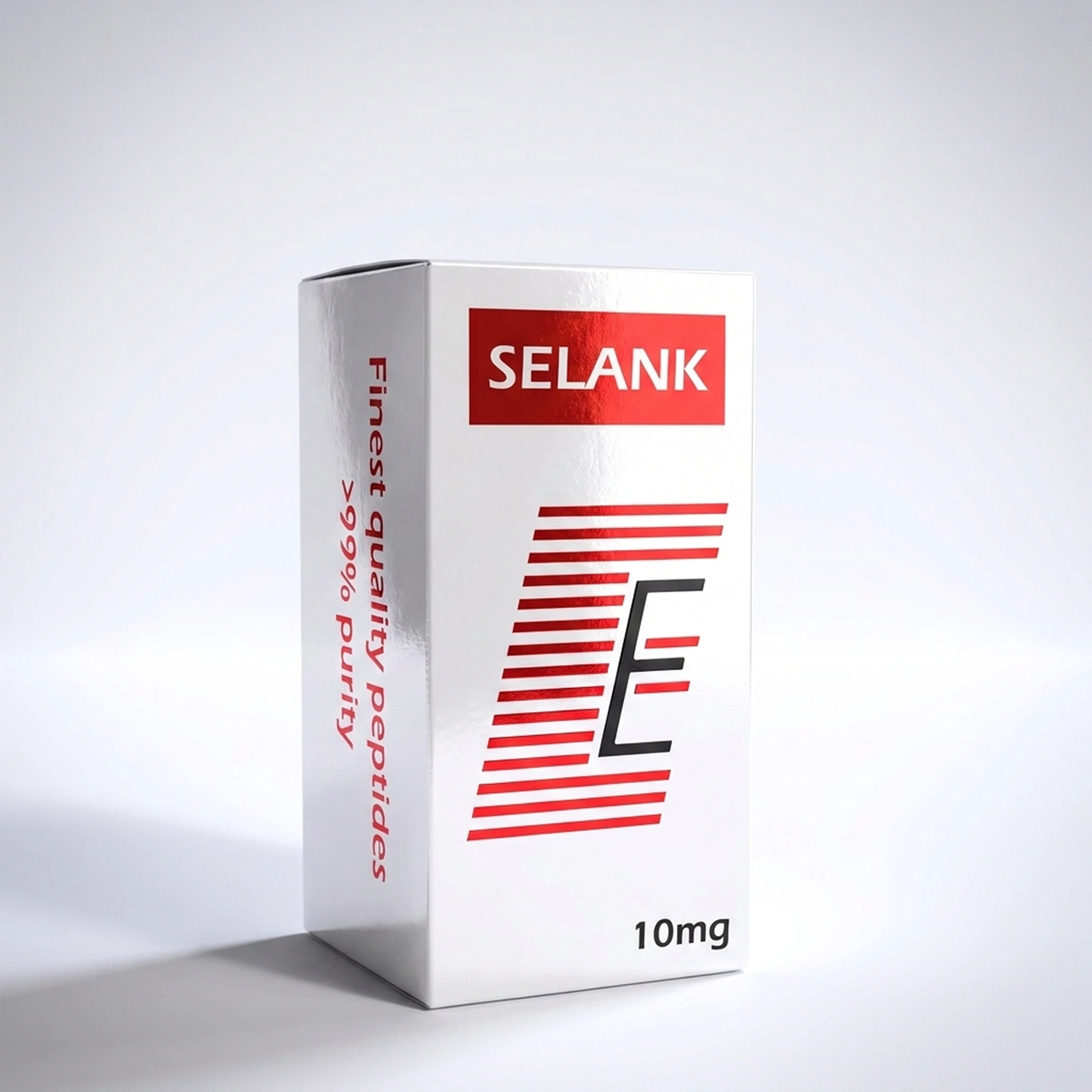
- Native Selank 10 mg (this product) — unmodified heptapeptide TKPRPGP in a 10 mg vial; a higher content compared to the 5 mg variant means more material for longer research protocols, with a short intrinsic half-life of the peptide (approx. 7–15 min).
- Selank 5 mg — the same native peptide in a smaller vial; the difference is only in the content, not the identity of the molecule – see Selank 5mg.
- N-Acetyl Selank — acetylated form at the N-terminus, designed for longer half-life and different pharmacokinetic profile; it is a separate molecule, not a replacement for the native form – see N-acetyl Selank 10mg.
- Selank Spray — ready solution for intranasal administration, not lyophilisate for reconstitution – see Selank spray.
This is a separate issue reagent status towards the Russian drug. Native Selank is registered as an anxiolytic (nasal drops/spray) in Russia. This regulatory fact applies to a specific pharmaceutical form registered in Russia and does not make the RUO reagent a medicinal product. The 10 mg lyophilisate vial in the Pro-Body catalog is a molecular tool for laboratory testing – without EMA or FDA authorization, and without drug status in the EU or USA.
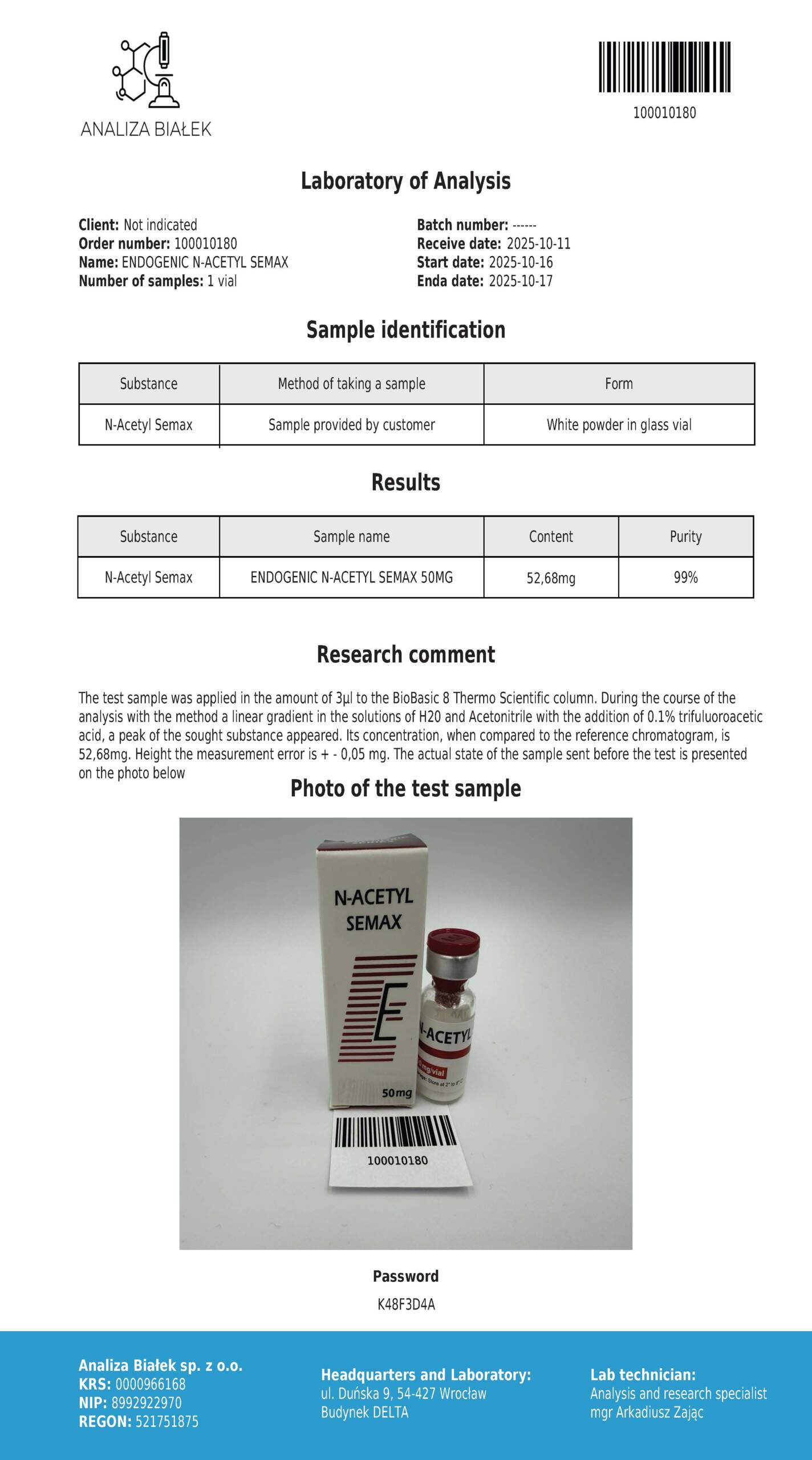
The identity of a batch is always determined by the sequence and mass spectrometric mass of the peptide recorded in the COA, not the trade name itself.