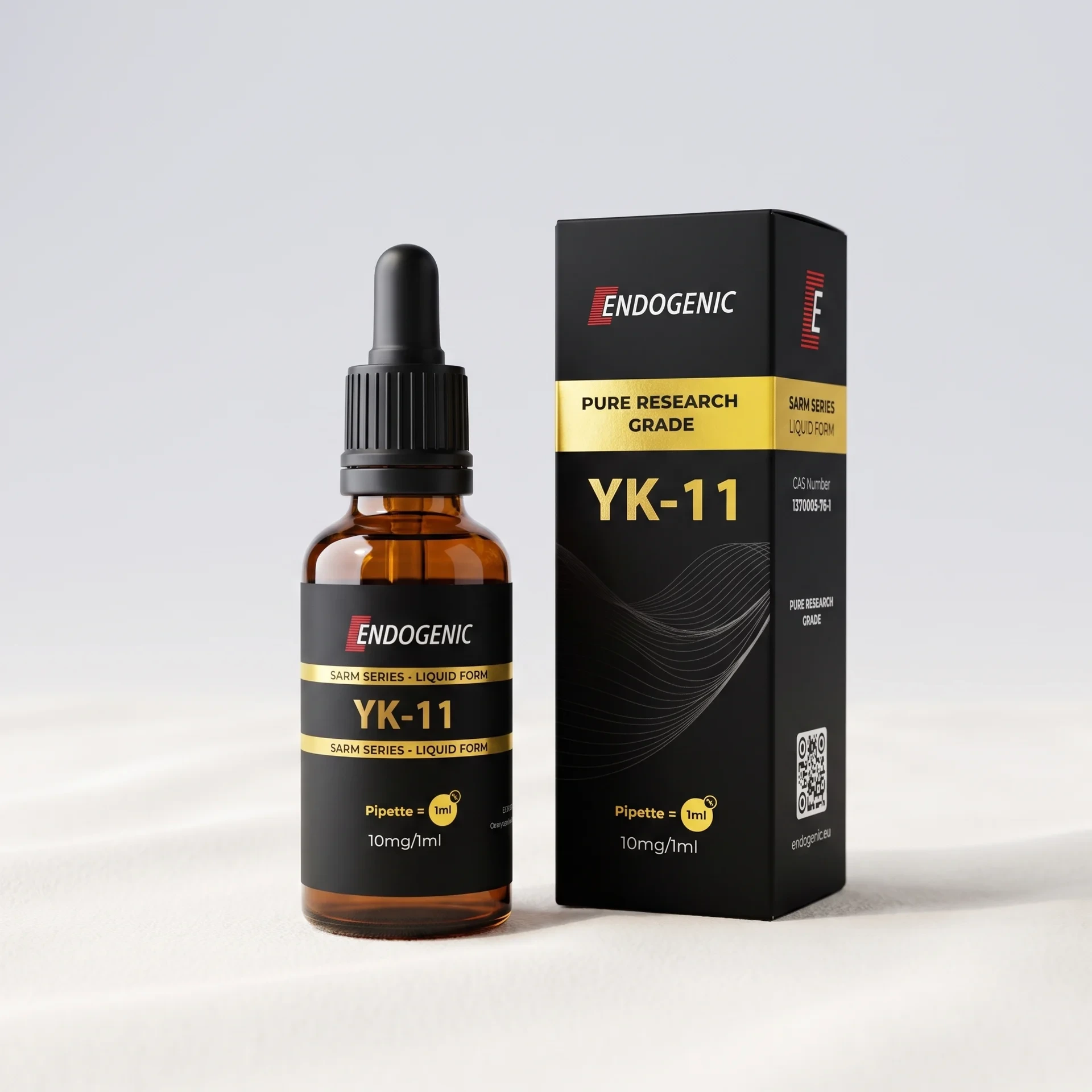
Agmatine is a biogenic amine produced in the body from the amino acid L-arginine by cutting off the carboxyl group (decarboxylation). It is found in supplements as agmatine sulfate. In the body, it functions as a neuromodulator – a signaling molecule in the nervous system with a wide receptor affinity, from imidazoline receptors to NMDA.
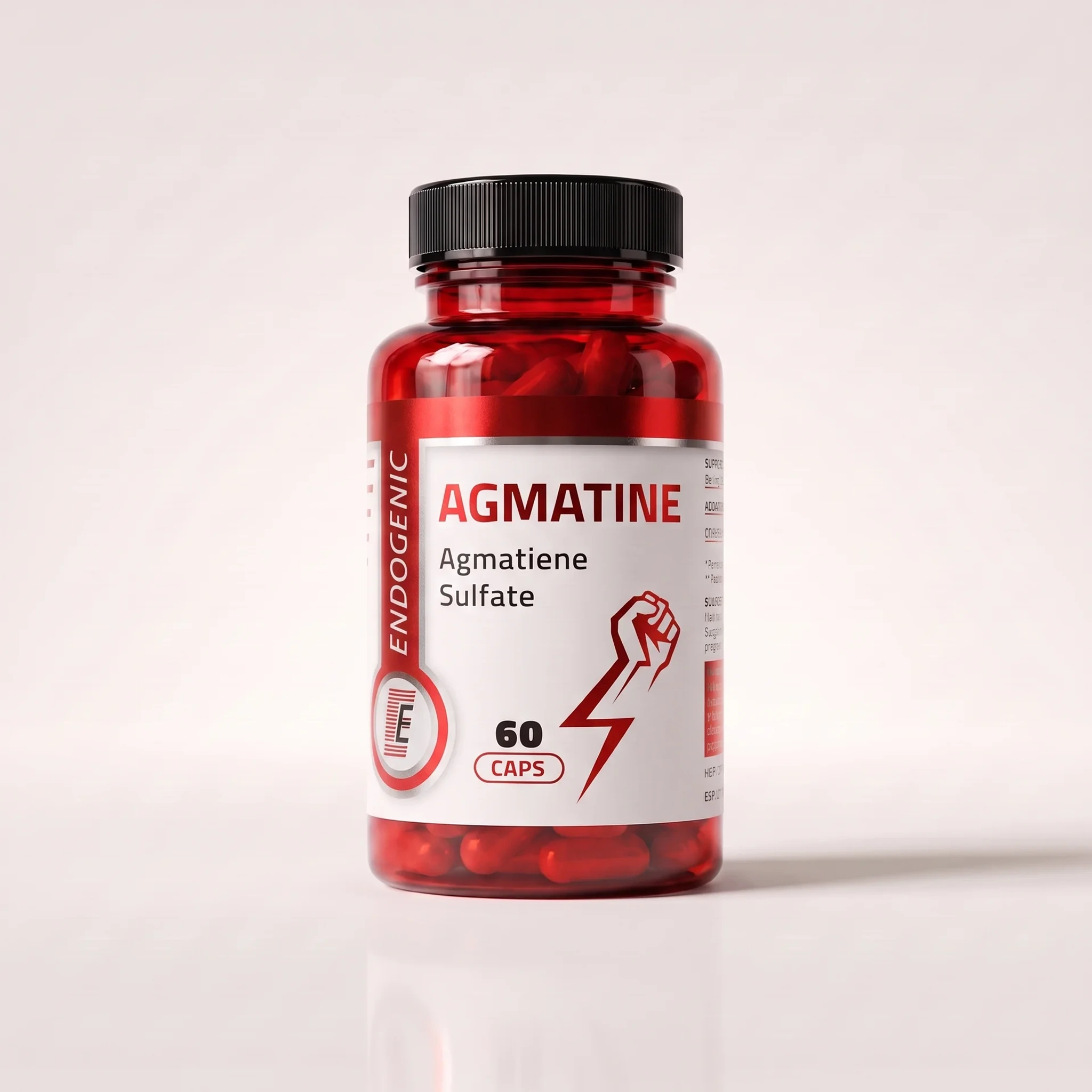
Agmatine 500 mg 60 caps
Agmatine 500 mg × 60 capsules is a dietary supplement providing agmatine sulfate — decarboxylated L-arginine, which modulates the nitric oxide (NO) pathway supporting muscle pump and blood flow. Pre-workout ingredient with a broad spectrum of neuromodulatory activity. Portion 500 mg before training, capsule form.
28,99 €
With code BLACK: 23,19 €
Lowest price in the 30 days before the discount:
28,99 €
Fast shipping
Free delivery from 350 €
Returns policy
Agmatine 500 mg 60 capsules - agmatine sulfate, nitric oxide modulator supporting
- Agmatine: agmatine sulfate.
- 500 mg, 60 capsules.
- Dietary supplement for adults, not a medicine.
Agmatine 500 mg (agmatine sulfate) is a dietary supplement intended for adults. The product is not a medicine and does not replace a varied diet or medical consultation. Do not use during pregnancy and breastfeeding. People taking medications that lower blood pressure should consult their doctor before using the product.
The muscle pump is a measurable signal that blood with oxygen and nutrients reaches the working fibers, and the aesthetic effect is only its visible side. It is caused by nitric oxide (NO), a signaling molecule that relaxes the smooth muscle of the vessels and increases their blood flow. The problem is that the classic “pump” ingredients work on the substrate supply side (citrulline, arginine provide material for the production of NO), and the production itself is regulated by a family of enzymes – nitric oxide synthases (NOS).
Agmatine enters this puzzle from a different direction: instead of just adding fuel, it modulates the engine itself. Agmatine (agmatine sulfate) is decarboxylated L-arginine – a compound that is formed in the body from arginine by cutting off the carboxyl group. For decades, it was treated as a simple byproduct of polyamine metabolism, until it turned out to function as an endogenous neuromodulator – a signaling molecule in the central nervous system with a wide range of receptor affinities.
Modern literature describes it as a compound acting at the interface of the vascular, nervous and metabolic systems. This is why agmatine is sometimes included in a broader group nootropic substances with a complex action profile on the nervous system. This product delivers 60 capsules of 500 mg agmatine sulfate in HPMC coating (plant-based, vegan).
A dose of 500 mg per capsule is within the typical range used in the context of muscle pump support and mood modulation. The capsule form eliminates the distinctly bitter, metallic taste of pure agmatine powder – a real inconvenience known to anyone who has tried to measure it on a scale. The raw material is checked for purity and identity, and the declared content of agmatine sulfate is confirmed analytically.
SCIENTIFIC PERSPECTIVE
Agmatine has real research behind it, including long-term safety data in humans – a rarity among pre-workout ingredients. However, most of the molecular mechanisms (NOS modulation, imidazoline receptors, NMDA antagonism) have been described mainly in animal models and cellular studies. Take agmatine with realistic expectations: it’s a blood flow support and transmission modulation, not a performance miracle switch.
What is agmatine and where does it come from
Chemically, agmatine is an amine formed from the amino acid L-arginine. The enzyme arginine decarboxylase cuts off the carboxyl group from arginine, and what remains is agmatine – a small, highly water-soluble molecule that functions in the body as a neurotransmitter and neuromodulator. In supplements, it is found in the form of a salt – agmatine sulfate – because this form is stable and easier to standardize than the free base. As a derivative of arginine, agmatine belongs to the broad family of compounds that it constitutes amino acid supplements supporting metabolism and performance.
- Common name: agmatine (agmatine sulfate)
- Biochemical origin: decarboxylated L-arginine (product of the action of arginine decarboxylase)
- CAS number: 2482-00-0 (agmatine), 2761-24-2 (sulfate)
- Summary formula: C₅H₁₄N₄ (base), molar mass 130.19 g/mol
- Compound Class: biogenic amine, endogenous neuromodulator
- Delivered form: HPMC capsule, 500 mg agmatine sulfate, 60 capsules
Agmatine is naturally present in the human body – stored in neurons and released in response to nerve signals, which puts it in line with classic neurotransmitters. Already in 2000, Reis and Regunathan asked whether agmatine deserves the status of a full-fledged neurotransmitter in the brain, pointing to its synthesis, storage and release in nervous tissue. This biochemical background explains why its action goes far beyond a simple “vascular pump”.
Nitric oxide and the muscle pump - context for the athlete
To understand how agmatine differs from a typical “NO booster”, you need to look at how the body produces nitric oxide. The family of enzymes responsible for the synthesis of NO is nitric oxide synthase (NOS), which exists in three main isoforms:
- eNOS (endothelial) — produces NO in the cells lining the vessels, is responsible for vasodilation and blood flow (it is a “good” pump)
- nNOS (neuronal) — produces NO in neurons, participates in nerve signaling and pain perception
- iNOS (induced) — triggered by inflammation, its excessive activity is associated with oxidative stress
Classic pump ingredients like citrulline and arginine provide the substrate from which NOS produces nitric oxide – a “more fuel” approach. Agmatine works differently: preclinical literature describes it as a modulator of the activity of individual NOS isoforms. In practice, this means that the effect is not on the amount of available substrate, but on the regulation of NO production itself. This is why agmatine often appears in pre-workout formulas alongside citrulline, not instead of it – they work at different stages of the same pathway.
Mechanism of action - five axes of activity
Agmatine is an unusually versatile molecule in terms of receptor affinity. Halaris and Plietz, in a 2007 review, described it as a compound with an exceptionally broad spectrum of activity in the brain. Below are five main directions that organize what is happening at the molecular level.
Modulation of nitric oxide (NO) synthesis
This is the most interesting axis from a training perspective. In preclinical models, agmatine affects the activity of nitric oxide synthases – it inhibits nNOS and iNOS isoforms, while leaving space for eNOS activity in the vascular endothelium. The practical background of this selectivity: limiting “bad” NO production (inflammatory, neuronal) while maintaining that related to vasodilation and blood flow.
In the context of the muscle pump, this translates into the hypothesis of supporting blood flow to working muscles – with the caveat that direct data on the pump in training humans is limited and the mechanism has been mainly described in animal models.
Imidazoline receptor agonism (I1/I2)
Agmatine binds to imidazoline receptors – a receptor system involved in, among others, blood pressure regulation and neuroprotective processes. It is this activity that is responsible for the effect of agmatine on the cardiovascular system observed in studies and for the neuroprotective potential reported in the literature. Imidazoline receptors are one of the reasons why agmatine is studied in contexts beyond sports – from mood to metabolic health.
NMDA receptor antagonism
Agmatine acts as an antagonist of the NMDA receptor, a glutamatergic receptor that plays a role in excitatory transmission, pain perception, and synaptic plasticity. This activity explains the analgesic and neuromodulatory component of agmatine reported in the preclinical literature. NMDA modulation is also one of the proposed mechanisms of agmatine’s influence on mood and stress response – the NMDA receptor is a target of interest in studies on mood regulation.
α2-adrenergic modulation and effects on catecholamines
Agmatine has affinity for α2-adrenergic receptors and affects the release of catecholamines (norepinephrine, adrenaline). This axis connects it to the sympathetic nervous system – the same system that controls the “fight or flight” response, arousal and mobilization of the body. In practice, the adrenergic component adds background to the discussion about the impact of agmatine on drive, training motivation and stress response, although this is an area requiring further research in humans.
Effect on polyamine metabolism
Agmatine is a precursor in the polyamine synthesis pathway – compounds (putrescine, spermidine, spermine) necessary in the processes of cellular growth, proliferation and tissue regeneration. This axis places agmatine in a broader metabolic context: it is not just a signaling molecule, but a node in the network of arginine and polyamine metabolism. This biochemical background is sometimes mentioned when discussing the role of agmatine in supporting regeneration.
What the research shows
Agmatine is one of the compounds that have come a long way from a biochemical curiosity to the subject of serious research. Piletz and colleagues in a 2013 review, tellingly titled “Agmatine: clinical applications after 100 years in translation”, summarized a hundred years of research on this molecule – from its discovery to contemporary directions of clinical applications. This is a rare case of a supplement ingredient with such an extensive review track record.
- Reis and Regunathan (2000) gathered arguments for considering agmatine as a neurotransmitter in the brain – pointing to its synthesis, storage in neuronal vesicles, depolarization-dependent release, and specific receptor affinities. This is work that solidified agmatine’s status as a signaling molecule rather than a passive metabolite.
- Halaris and Plietz (2007), in a review devoted to the metabolic pathway and spectrum of agmatine activity in the brain, described its multidirectional affinity – from imidazoline receptors through NMDA to the effect on the NO system. It is from this trend that the image of agmatine as a “multi-tasking” neuromodulator comes from.
- In the area of mood regulation, preclinical literature indicates the activity of agmatine in models of depressive behavior in animals – a direction associated with NMDA modulation and the imidazoline system. Neis and colleagues (2018) showed that a single administration of agmatine reversed corticosterone-induced depressive behavior in mice, comparing its effects with ketamine and fluoxetine. These data are mechanistic in nature and are derived from animal models; they should not be interpreted as evidence of antidepressant effects in humans. This is an area of research interest, with no proven clinical effect.
- Separately, it is worth pointing out the data on long-term safety, which I discuss in the section devoted to the safety profile – they distinguish agmatine from many pre-workout ingredients with little research.
- In the context of an athlete, proportions must be kept in mind: the molecular mechanisms and neuropharmacological background are most documented, and direct, controlled research on muscle pump and performance in training people is still limited. The literature suggests a rational mechanism for supporting blood flow – it does not promise a dramatic improvement in strength results.
Dosage and timing
Agmatine is used primarily in the context of pre-workout, because this is when the support of blood flow and muscle pump is of the greatest practical importance.
- Standard portion: 1 capsule (500 mg) approximately 30-45 minutes before training, on an empty stomach or with a light meal
- Scope used: in supplementation practice, portions of 500–1000 mg before training are common; start with a single capsule to assess your own tolerance
- Pre-workout timing: administration on an empty stomach usually improves the feeling of the pump effect; Fasting agmatine is absorbed more efficiently, without competition with amino acids from a protein meal
- Mood/recovery support: in the context of mood modulation, it is also used outside the peri-training window – then the time of administration is less important than in the case of pump use
- Do not exceed reasonable portion – more is not better, and high doses increase the risk of stomach discomfort
Start by assessing your tolerance with one capsule before training, before incorporating agmatine into a wider pre-workout stack. This is a reasonable approach for any ingredient that affects the vascular system and neurotransmission.
Stack - what to combine agmatine with
Agmatine best shows its potential as a modulator in a well-thought-out pre-workout stack, not as a solo ingredient. It regulates the NO pathway, so it perfectly complements ingredients that provide substrate and build the buffering capacity of the muscle.
- Citrulline (citrulline malate) — it is a natural partner of agmatine. Citrulline provides a substrate for the production of nitric oxide (raises the pool of arginine in the body), agmatine modulates the activity of NO-producing enzymes. Together they operate on two different stages of the same pathway – fuel plus engine tuning. Classic pump connection
- Beta-alanine — it works on a completely different axis (increases the pool of carnosine in the muscle, buffers acidification), so it does not compete with agmatine, but adds a component of muscle endurance in high repetition sets. Pump plus resistance to fatigue
- Caffeine — adds a component of stimulation of the central nervous system and drive, which agmatine itself does not provide sufficiently. The combination of “energy plus pump” is the foundation of most pre-workout formulas
- Sources of choline — in the context of the neuromuscular connection, agmatine is sometimes combined with sources of choline, although this is a more experimental direction than the classic one. The cognitive side of the stack can be taken by combining it with a ready-made nootropic MINDHUNTER X
If you are building your own stack from scratch, agmatine is the ingredient that is worth adding citrulline plus beta-alanine plus caffeine to the ready-made base when you are looking for a clearer, “fuller” pump. Check product availability in the store and plan your stack around your training goals. If you are interested in a ready-made pump formula based on nitric oxide without having to compose the ingredients yourself, check it out Endopump – muscle pump formula.
Safety and contraindications
Agmatine is usually well tolerated with reasonable supplementation – and importantly, it has long-term data. Gilad and Gilad reported safety follow-up of long-term (5 years) oral agmatine use, which provides a strong argument for a favorable profile when used appropriately. Most reported side effects occur at high doses:
- stomach discomfort, nausea, diarrhea (mainly with large portions)
- possible reduction in blood pressure (effect resulting from activity on imidazoline receptors and impact on the vascular system)
- in case of hypersensitivity – feeling of emptiness in the stomach when taken on an empty stomach
Absolute precautions and contraindications:
- Pregnancy and breastfeeding — lack of sufficient safety data, do not use
- Medicines that lower blood pressure — agmatine may have an additive effect with antihypertensive drugs; people taking such medications should consult their doctor
- Low blood pressure (hypotension) — be especially careful due to the potential impact on blood pressure
- Drugs acting on the central nervous system — due to activity on NMDA and α2-adrenergic receptors, consult the combination with psychotropic drugs with a doctor
Agmatine is not on the WADA prohibited substances list – this is important information for athletes under anti-doping control. It is available on the market as an ingredient of dietary supplements, but every competitive athlete should verify the current status of the raw material before including it in the protocol. This approach distinguishes a standardized and documented raw material from a powder of unknown purity, where the declaration on the packaging is loosely related to the actual contents in the capsule. Agmatine is part of a broader lineage that they constitute supplements covered by the same quality documentation standard.
Bibliography
- Piletz JE, Aricioglu F, Cheng JT, et al. (2013). Agmatine: clinical applications after 100 years in translation. PubMed
- Halaris A, Plietz J (2007). Agmatine: metabolic pathway and spectrum of activity in brain. PubMed
- Reis DJ, Regunathan S (2000). Is agmatine a novel neurotransmitter in brain?. PubMed
- Gilad GM, Gilad VH (2014). Long-term (5 years), high daily dose of dietary agmatine — evidence of safety: a case report. PubMed
- Neis VB, Bettio LB, Moretti M, et al. (2018). Single administration of agmatine reverses the depressive-like behavior induced by corticosterone in mice: comparison with ketamine and fluoxetine. PubMed
FAQ
Agmatine modulates the activity of nitric oxide synthases (NOS) – enzymes that produce NO, a molecule responsible for vasodilation and blood flow. In preclinical models, it inhibits nNOS and iNOS isoforms, leaving space for pump-bound endothelial eNOS. In practice, this means supporting blood flow to working muscles – a mechanism that has been mainly described in animal models.
The standard dose is 1 capsule (500 mg) 30-45 minutes before training, preferably on an empty stomach for better feeling of the pump. In supplementation practice, portions of 500–1000 mg before training are common. Start with a single capsule to assess your tolerance, and do not exceed a reasonable serving.
The natural partner is citrulline – it provides a substrate for the production of NO, while agmatine modulates the enzymes producing nitric oxide (fuel plus regulation). It is also well complemented by beta-alanine (a component of muscle endurance) and caffeine (stimulation of the central nervous system and drive). This is the foundation of the classic pump formula.
As long as the dosage is reasonable, it is usually well tolerated, and there is even long-term (5 years) safety follow-up data. Stomach discomfort may occur with high doses. Due to the effect on the vascular system, be careful with low blood pressure and antihypertensive medications – consult your doctor.
Agmatine is not on the WADA prohibited substances list. It is available as an ingredient of dietary supplements. Nevertheless, every competitive athlete subject to anti-doping control should verify the current status of the raw material and the purity of a specific product before including it in the supplementation protocol.
5.0
1 review
-
Kinga
 Polski
Product review
Polecam :)